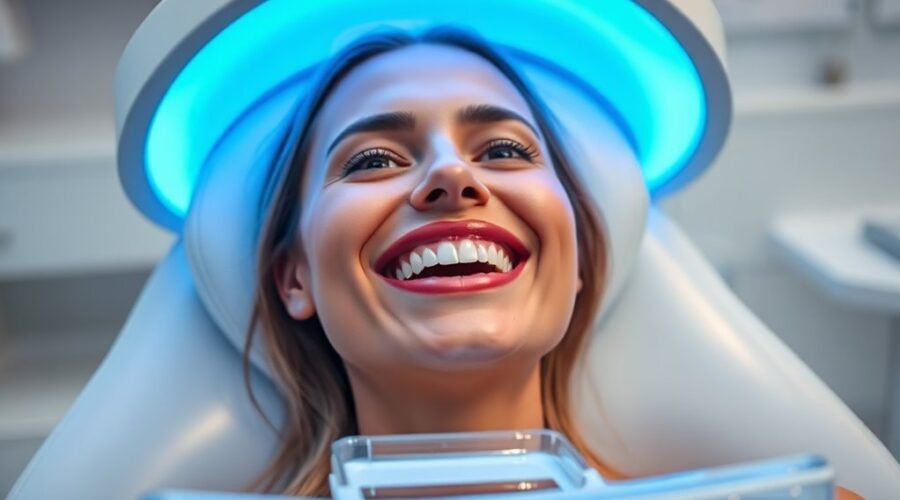
You may not know that UV teeth whitening side effects often come from the gel, not the light itself. You might notice temporary sensitivity, gum irritation, or uneven results if the product touches soft tissue or sits too long. The good news is you can lower these risks with careful application, shorter sessions, and the right strength gel. Keep going to see who should avoid it and when to call a dentist.
Common UV Teeth Whitening Side Effects

Common UV teeth whitening side effects are usually mild, but they can still catch you off guard. You may notice temporary tooth sensitivity, slight gum irritation, or brief mouth dryness after a session.
Some people also see uneven whitening at first, especially if enamel has natural variations. These reactions usually fade within a day or two, and you can keep control by following your provider’s guidance.
Your whitening frequency matters: spacing treatments properly lowers the chance of discomfort and helps you protect your smile. Treatment duration also counts, because longer exposure doesn’t always mean better results.
If you feel any burning, sharp pain, or swelling, stop and contact your dentist. You deserve a brighter smile without giving up comfort or confidence, so stay informed, use the lowest effective settings, and choose a plan that fits your goals.
Why UV Whitening Causes Sensitivity?
UV whitening can cause sensitivity because the gel and light work together to open tiny pathways in your enamel, which makes the nerves inside your teeth easier to trigger. When peroxide reaches these channels, it can briefly irritate nerve endings, and you may notice a sharp zing with cold air, drinks, or brushing. The effect usually fades as your tooth enamel rehydrates and closes back down.
| Trigger | What you feel | Why it happens |
|---|---|---|
| Cold water | Quick sting | Nerve endings react |
| Sweet foods | Brief ache | Enamel is more porous |
| Brushing | Twinge | Surface stays temporarily reactive |
You’re not stuck with discomfort; sensitivity is usually temporary and manageable. Knowing the cause helps you choose whitening with confidence, protect your comfort, and keep your smile journey on your terms.
How to Prevent Gum Irritation
To help prevent gum irritation during UV teeth whitening, focus on keeping the gel off your soft tissue and following the treatment directions closely.
Before you begin, dry your teeth and gums gently, then apply only the amount your kit recommends. If your whitening products include trays or strips, make sure they fit well and don’t press on your gums. You can also use a small cotton swab to remove any excess gel right away.
Keep sessions within the suggested time, because more product or longer exposure won’t give you better results.
Good gum care also means avoiding whitening when your gums already feel tender, swollen, or scraped. If irritation starts, stop the treatment and rinse with cool water.
You deserve a brighter smile without discomfort, and careful technique helps you stay in control while protecting your oral health and freedom.
Why UV Whitening Can Look Uneven?
Even when you follow the instructions carefully, UV whitening can still leave teeth looking a little uneven. That happens because your enamel isn’t uniform, so the light and gel can react differently across your smile, creating uneven results and subtle color discrepancies. Natural texture, prior stains, and tiny overlaps in application can all influence what you see.
| Cause | What You Notice | Simple Fix |
|---|---|---|
| Uneven gel | Patchy brightness | Reapply evenly |
| Deep stains | Duller spots | Repeat sessions |
| Enamel variation | Color shifts | Expect contrast |
| Light positioning | Missed areas | Center the tray |
You can reduce surprises by keeping trays snug, spreading gel in a thin layer, and whitening in balanced sessions. If one tooth still looks darker, give it time; shade changes often settle after a day or two. You deserve a result that feels clean, confident, and fully your own.
Who Should Avoid UV Teeth Whitening?
You should avoid UV teeth whitening if your teeth or gums are already sensitive, if you have untreated cavities or gum disease, or if you’re pregnant, breastfeeding, or under age 18.
These Pregnancy precautions and Age considerations help protect you from avoidable pain and results you can’t trust.
- Protect fragile teeth: active Dental conditions can worsen sensitivity and discomfort.
- Respect your body: if you’re pregnant or nursing, choose caution and ask your clinician first.
- Watch for Allergic reactions: if you react to gels, trays, or lights, stop and seek advice.
- Honor your age: younger teeth and gums may need gentler care.
You deserve whitening that supports freedom, not frustration.
If you have existing oral issues, get them treated before you brighten your smile. A quick dental check can help you move forward with confidence, reduce risk, and keep your options open without compromising comfort or safety.
Safer At-Home Whitening Tips
You can make at-home whitening safer by choosing lower-strength gels that are less likely to irritate your teeth and gums.
It also helps to keep treatment sessions shorter, since longer use doesn’t always mean better results.
If you want added reassurance, dentist-guided at-home kits can give you more control and better oversight.
Lower-Strength Whitening Gels
Lower-strength whitening gels can be a safer at-home option because they usually reduce the risk of irritation while still offering gradual results. You can protect your comfort and still move toward a brighter smile with steady, sensible use.
Their lower strength effectiveness means results may build more slowly, but they often fit better if you’ve had sensitivity before. Lower strength safety matters when you want freedom from harsh reactions and want control over your routine.
- You may feel calmer using a gentler formula.
- You can enjoy progress without overwhelming your teeth.
- You’re less likely to dread each application.
- You can keep whitening on your terms.
Choose products with clear instructions, and stop if discomfort appears.
Shorter Treatment Sessions
Shorter treatment sessions can help reduce the chance of irritation while still letting you whiten your teeth at home. You keep more control when you choose short sessions instead of pushing through discomfort.
If your gums feel sensitive, stop early and give your mouth time to recover. This approach supports treatment efficiency because you can still make progress without overexposing your teeth or soft tissue.
Follow the product’s timing closely, and don’t assume longer always means better. Your goal is steady, manageable whitening that fits your routine and protects comfort.
Dentist-Guided At-Home Kits
Dentist-guided at-home kits offer a safer way to whiten because they’re tailored to your teeth and monitored for comfort. You get at home convenience without giving up professional guidance, so you can brighten your smile on your schedule and still protect your enamel and gums.
Your dentist checks your shade, fits your trays, and sets the gel strength, which helps reduce sensitivity and uneven results.
- You feel more in control.
- You avoid guesswork.
- You whiten with confidence.
- You protect your freedom to smile boldly.
If anything feels sharp or sensitive, you can pause and ask for adjustments. That support lets you pursue results safely, steadily, and with less worry.
When to Call a Dentist
If your teeth or gums stay sensitive after UV whitening, or you notice pain, swelling, burns, or unusual color changes, you should call a dentist promptly.
Persistent toothache symptoms can signal enamel irritation, gum injury, or a deeper problem that needs attention. If pain is sharp, worsens with hot or cold drinks, or lasts more than a day or two, don’t wait it out.
Persistent tooth pain or sensitivity after whitening can signal irritation, injury, or a deeper issue—don’t ignore it.
Call right away if you see blistering, bleeding, trouble chewing, or swelling that spreads, because that may be a dental emergency. You deserve treatment that protects your comfort and your autonomy, not guesswork.
A dentist can check for damage, ease sensitivity, and tell you whether you need soothing care, a safer whitening plan, or another treatment. If you feel unsure, trust your body and seek help.
Early action can stop a small issue from becoming a bigger setback and help you keep your smile healthy.
Frequently Asked Questions
How Long Do UV Whitening Results Usually Last?
UV whitening results usually last about 6 months to 2 years, depending on your habits.
You’ll keep long lasting effects longer if you avoid staining foods, limit coffee and wine, and brush regularly.
Simple maintenance tips like touch-up treatments and fluoride toothpaste can help preserve your brighter smile.
If you smoke or skip care, results fade faster.
With consistent habits, you can enjoy a liberated, confident smile for much longer.
Can UV Whitening Damage Dental Fillings or Crowns?
UV whitening usually won’t blast your fillings or crowns into bits, but it can still stir up trouble if you’re not careful.
You might notice tooth sensitivity, and your dental health can be affected if old restorations don’t seal well.
The light and gel don’t typically harm porcelain or composite, yet they won’t whiten them either.
You’ll want your dentist to check fit, color, and condition first.
Is UV Teeth Whitening Safe During Pregnancy?
You shouldn’t assume UV teeth whitening is safe during pregnancy.
Most dental professionals advise you to avoid it because researchers haven’t confirmed its safety, and you may have safety concerns about sensitivity or irritation.
Instead, you can protect your smile with alternative methods like careful brushing, flossing, and a pregnancy-safe cleaning from your dentist.
If you want whitening later, talk with your obstetrician and dentist first to stay informed.
How Often Can I Repeat UV Whitening Treatments?
You can usually repeat UV whitening every 4 to 6 weeks, but your treatment frequency should match your enamel sensitivity and dentist’s guidance.
Like a Renaissance apothecary with a glowing lamp, you’ll get the best results by spacing sessions at ideal intervals.
Don’t rush; overdoing it can irritate your gums or dull your enamel.
You deserve a brighter smile without sacrificing comfort, so check in before scheduling your next session.
Does UV Whitening Work on All Tooth Stains?
No, UV whitening doesn’t work equally on all tooth stains.
You’ll usually see better whitening effectiveness on extrinsic tooth stain types, like coffee, tea, or tobacco marks.
It won’t fully lift intrinsic stains from injury, medications, or deep enamel changes.
You can still improve results with a dental exam, tailored treatment, and realistic expectations.
That way, you’ll choose the option that gives you the brightest, most liberating smile.
Conclusion
UV teeth whitening can brighten your smile like a spotlight, but it can also cast a few short-lived shadows, like sensitivity, irritation, or uneven results. By using the right amount of gel, protecting your gums, and keeping sessions short, you can make the process gentler and more comfortable. If pain lingers or something feels off, don’t push through it—reach out to your dentist. A safer approach helps your smile shine without the sting.