
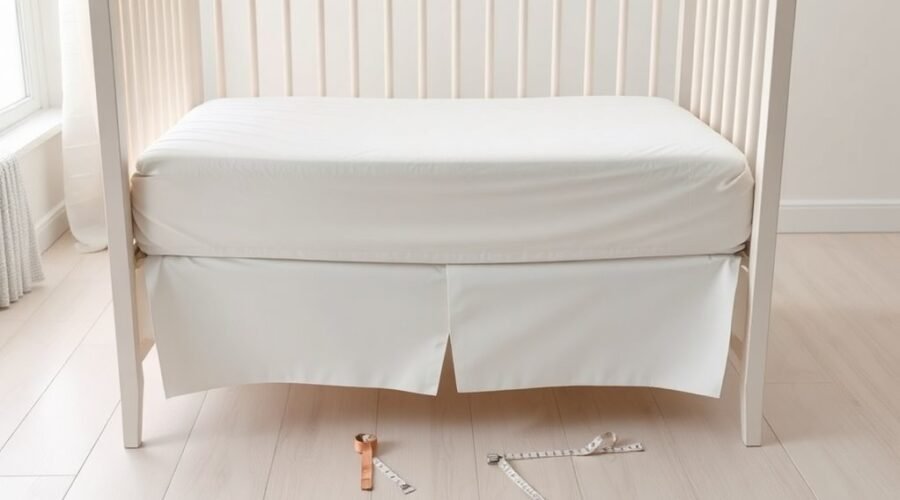
You might think crib sheet dimensions are all the same, but a small mismatch can leave the mattress unsafe or uncomfortable. Standard crib mattresses usually measure 28 by 52 inches, and fitted depths often run 5 to 9 inches, yet stretch, shrinkage, and corner tension all affect the fit. If you know what to measure and what labels to check, you’ll avoid the most common mistakes—and one detail matters more than most parents expect.
What Are Standard Crib Sheet Dimensions?
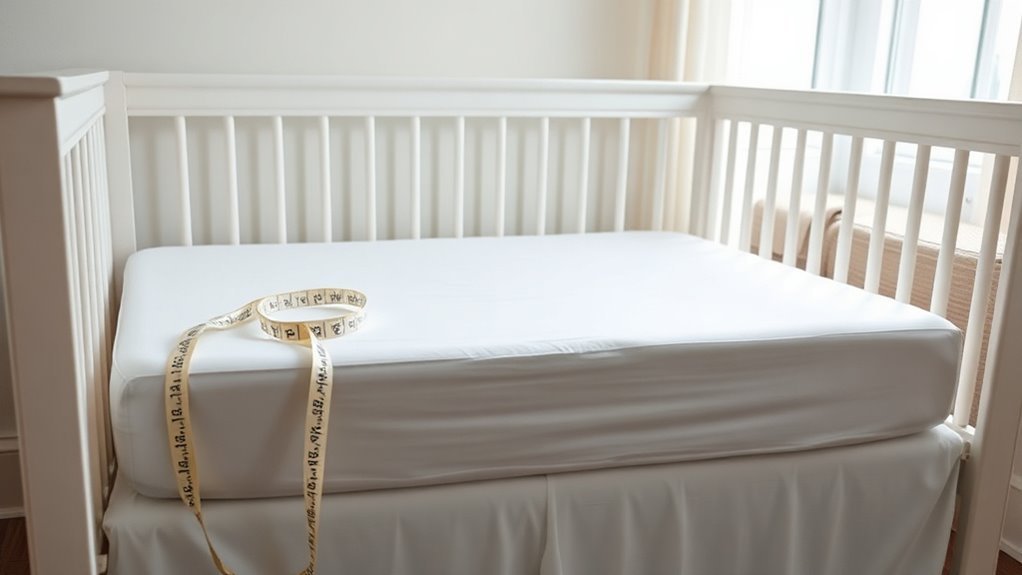
Standard crib sheet dimensions typically fit a mattress that measures about 28 inches wide by 52 inches long, with a fitted sheet depth of roughly 5 to 9 inches. You should expect a snug, elasticized fit that stays flat and doesn’t bunch at the corners.
That fit supports safer sleep and aligns with crib safety standards, which favor a tight sheet over loose fabric. When you shop, check crib sheet materials carefully; breathable cotton, bamboo blends, and jersey each feel different, but all should hold shape well.
A tight crib sheet supports safer sleep, while breathable materials should still hold a secure, snug fit.
You’ll want enough stretch to install the sheet without strain, yet not so much give that it loosens overnight. Avoid oversized sheets, because extra fabric can shift and create hazards.
If you choose wisely, you keep your setup simple, compliant, and freedom-focused: less fuss, fewer worries, and a crib that works exactly as intended for your baby.
How to Measure a Crib Mattress
To measure a crib mattress accurately, you’ll want a tape measure and a flat surface, then record the mattress’s width, length, and thickness from edge to edge. Keep the tape straight and avoid compressing the foam, since mattress safety depends on precise sizing. Use these measuring techniques:
| Step | What to do |
|---|---|
| 1 | Lay the mattress flat and remove bedding. |
| 2 | Measure the longest side for length. |
| 3 | Measure the shorter side for width. |
| 4 | Measure thickness at the center. |
Write each number in inches, then repeat once to confirm consistency. If the mattress has rounded corners or slight tapering, check both ends and note the smallest stable measurement. Accuracy helps you make informed choices without guesswork, giving you more freedom and confidence when evaluating crib gear. Keep your notes handy so you can compare dimensions quickly and choose with clarity.
How Crib Sheets Fit Different Mattress Sizes
Crib sheets fit best when you match the sheet’s pocket depth and elastic edge to the mattress’s exact length, width, and thickness. You’ll get the cleanest fit on standard crib mattresses when the sheet hugs all sides without shifting.
Match crib sheet pocket depth and elastic edge to your mattress’s exact dimensions for a secure, smooth fit.
For mini cribs, choose shorter, narrower sheets made for that footprint; oversized sheets won’t hold tension well. For portable or oval mattresses, confirm the listed dimensions before you buy, because shape matters as much as size.
Different crib sheet materials also change the feel and stretch: cotton often gives a crisp, stable fit, while jersey can flex more.
Crib sheet styles vary too, from snug basics to layered prints, but the dimensions should stay true to the mattress. If you want freedom from constant readjusting, compare the product label to your mattress measurements every time, and skip guesswork.
Why Fitted Corners Matter for Safety
Fitted corners help you lock the sheet tightly around the mattress, so it stays in place during sleep.
That secure fit reduces bunching, which can create uneven surfaces under your baby.
It also limits loose fabric, lowering the chance of unsafe gaps or tangles.
Secure Corner Fit
A secure corner fit keeps the crib sheet anchored at all four corners, so it won’t bunch, twist, or slip as your baby moves. You can check each corner for:
- corner elasticity that hugs the mattress
- secure fastenings that stay locked under tension
- smooth edges that lay flat
- precise sizing matched to crib sheet dimensions
- a snug hold that supports safe sleep
When you choose the right fit, you reduce guesswork and keep the sheet’s shape consistent. Measure your mattress depth and stretch the sheet over it before use.
If the corners lift, the fit isn’t secure enough. You deserve gear that works with ease, not against you, giving you confidence and more freedom to focus on your baby.
Prevent Sheet Bunching
When the corners hold securely, the sheet stays smooth instead of gathering into loose folds that can bunch up under your baby. You want that firm grip because it supports bunching prevention and keeps the sleep surface orderly throughout the night.
Check that the elastic hugs each corner tightly, then run your hand across the mattress to confirm sheet stability from edge to edge. If the fabric shifts when you tug gently, refit it before use. A snug fit lets you move through bedtime with confidence, not constant worry.
You’re choosing control, safety, and fewer interruptions. With the right crib sheet dimensions, you help the sheet stay anchored, which means less adjustment and more peace for both you and your baby.
Reduce Loose Fabric
Even a small amount of extra fabric can create slack spots that wrinkle, fold, or lift away from the mattress, and that loose material can compromise a crib sheet’s safety. You need fitted corners that grip firmly, because they keep the sheet stable during sleep and movement. Choose fabric types with controlled stretch, and verify they meet current safety standards.
- Measure your mattress depth first.
- Match the sheet pocket to that depth.
- Select elastic that runs fully around the edge.
- Check for smooth, flat contact at each corner.
- Replace sheets that loosen after washing.
When you reduce loose fabric, you create a cleaner, safer sleep surface and reclaim peace of mind without giving up comfort or freedom.
Pick Stretchy Crib Sheet Fabrics
Stretchy crib sheet fabrics can make fitting and removing the sheet much easier, especially if your mattress sits close to standard crib dimensions. You’ll get a cleaner, more secure wrap when you choose knits with enough give to hug the corners without fighting back.
Look for breathable fabrics that let air move freely and help you keep the sleep surface comfortable. A cotton-spandex blend often gives you the right balance of softness and stretch, while still holding its shape after washing. You can also pick vibrant patterns that make the nursery feel personal without sacrificing function.
Check the elastic edge too: it should grip firmly, not dig in or slip off. When the fabric stretches smoothly, you’ll spend less time adjusting and more time enjoying a setup that works with you, not against you, every day.
How to Choose Mini Crib Sheets
Mini crib sheets need a precise fit, so start by matching the sheet to your mini crib’s exact mattress dimensions rather than assuming a standard crib size will work.
Then choose a sheet that hugs the mattress without slack, so your baby sleeps safely and you get less hassle.
Choose a snug sheet that hugs the mattress, keeping sleep safer and daily fuss to a minimum.
- Look for deep, elasticized corners that stay put.
- Choose fabric options that feel soft yet hold shape.
- Match mini crib styles with low-profile or compact sheet cuts.
- Prefer breathable materials for warmer rooms and calmer rest.
- Pick easy-care sheets that wash well and regain tension.
You don’t need to settle for a generic fit.
When you compare construction, stretch, and finish, you keep control over comfort and convenience.
A well-chosen mini crib sheet supports a neat sleep space, reduces shifting, and frees you from constant readjustment.
Focus on precision, and you’ll find a sheet that works with your setup, not against it.
Check Crib Sheet Labels and Dimensions Before You Buy
Before you buy, check the label for the exact mattress size the sheet is meant to fit, because crib sheet dimensions can vary more than you’d expect.
You’ll also want to compare the stated length, width, and depth with your crib mattress, not just the product name. A sheet marked “standard” may still fit differently across brands, so read the measurements yourself.
If you’re choosing between crib sheet materials, look for fabric details that match your needs for breathability, stretch, and easy washing.
Then scan crib sheet colors and patterns only after confirming the fit, so style never outruns safety or function.
When labels list “fits mattresses up to” a depth, use that number as a guide and verify it against your mattress thickness. That small habit helps you buy with confidence, protect your time, and keep your nursery setup clean, calm, and under your control.
Avoid These Crib Sheet Fit Mistakes
You can avoid a bad fit by matching the sheet to the exact mattress depth, since a shallow pocket won’t stay secure on a thicker crib mattress.
Check that the corners pull tight with no slack, because loose corner fit can shift during use and reduce safety.
Don’t ignore shrinkage allowance, since washing can tighten the sheet and make an already snug fit too small.
Wrong Mattress Depth
Mattress depth is one of the most common reasons a crib sheet won’t fit properly, even when the length and width seem correct. You need to match sheet compatibility to mattress thickness, not just surface size. A deeper mattress can stretch the elastic beyond its design, while a thinner one can leave excess fabric.
Check the manufacturer’s depth range before you buy.
- Measure from top to bottom edge.
- Compare the depth to the label.
- Verify elastic is sized for that range.
- Avoid guessing from crib model alone.
- Recheck after using a mattress protector.
When you choose the right depth, you reduce strain, improve fit, and keep your setup clean, secure, and free from avoidable frustration.
Loose Corner Fit
Loose corners usually mean the sheet’s elastic can’t hold enough tension across the mattress edges, even if the depth looks right on paper.
You need a snug perimeter that grips without stretching the corners into a weak, sliding fit. Check corner elasticity first: if it feels limp, the sheet can’t anchor itself during movement.
Then assess fabric tension by tugging each corner after installation; the fabric should lie flat, not puddle or pull away. A loose corner fit invites bunching, wakes you up, and undermines the clean, secure setup you want.
Choose sheets with reinforced elastic and a pattern cut that matches your mattress shape, so you keep control and move freely without constant readjustment.
Ignoring Shrinkage Allowance
Cotton crib sheets often shrink after the first wash, so a size that fits perfectly out of the package can come up short once laundered. You need to plan for shrinkage allowance before you buy, because the shrinkage impact changes by fabric types. Measure the mattress, then add room for contraction.
- Check the fiber label
- Expect cotton to tighten
- Review wash instructions
- Compare prewashed options
- Buy slightly larger
If you ignore this, the corners can pull free and expose the mattress. Choose sheets with elastic that grips after washing, not just at checkout.
When you account for shrinkage, you keep the fit secure, reduce hassle, and protect your freedom to buy once, wash confidently, and move on.
When to Replace a Crib Sheet
You should replace a crib sheet as soon as it shows signs of wear that could affect safety or fit, such as thinning fabric, stretched elastic, frayed edges, tears, or persistent stains that won’t wash out. Track the crib sheet lifespan by checking it regularly, especially after frequent washing. When the fabric loses shape or the sheet no longer hugs the mattress tightly, it’s time for signs replacement. Freedom in the nursery starts with dependable basics.
| Checkpoint | Action |
|---|---|
| Elastic loosens | Replace immediately |
| Fabric pills or thins | Remove from use |
| Stains persist | Buy a new sheet |
You should also retire a sheet after mildew, heavy shrinkage, or any recall notice. If you can’t trust the fit, don’t gamble. A secure sheet supports safer sleep and gives you one less thing to manage.
Related Nursery Bedding Guides: Explore top fitted sheets in our KeaBabies 52" x 28" organic crib sheets review and waterproof crib mattress protector review.
Frequently Asked Questions
How Often Should Crib Sheets Be Washed?
You should wash crib sheets at least once a week, and more often if they get wet, dirty, or spit up on.That washing frequency helps protect crib hygiene and keeps your baby’s sleep space fresh and safe.Use a gentle, fragrance-free detergent, and dry sheets completely before reuse.If you want more freedom from mess and stress, keep two or three fitted sheets ready for quick swaps.
Can Crib Sheets Be Used on Bassinets?
Yes, you can use crib sheets on bassinets only if they fit the mattress snugly and meet the bassinet’s size limits.Check the manufacturer’s label first, because bassinets vs. cribs aren’t interchangeable.You’ll want a sheet material that stretches smoothly, stays secure, and won’t bunch up.If the fit’s loose, don’t risk it.A properly fitted sheet protects your baby and keeps sleep space clean, safe, and simple.
Are Organic Crib Sheets Worth the Extra Cost?
Yes, organic crib sheets can be worth it if you value organic materials and health benefits.You’ll usually pay more, but you may get softer fabric, fewer chemical residues, and better peace of mind for sensitive skin.Check the weave, fit, and wash durability, because quality matters more than the label alone.If you want cleaner choices and greater control over what touches your baby, the extra cost can feel justified.
Do Waterproof Crib Sheets Exist?
Yes, you can find waterproof crib sheets. You’ll usually see them made with waterproof materials like polyurethane-backed cotton, TPU, or vinyl-free laminates.These sheets help protect the mattress from spills and leaks while keeping crib safety in mind, since they should fit snugly and avoid loose layers.You’ll want breathable fabric, secure elastic, and easy laundering. Choose one that frees you from constant mattress stress without sacrificing comfort or peace of mind.
How Many Crib Sheets Should Parents Own?
You should own 4 to 6 crib sheets, so you can rotate through spills, laundry, and accidents without stress.Roughly 1 in 3 parents changes bedding multiple times a week, so extras really help.Choose crib sheet materials that wash easily and feel soft, and match crib sheet sizes to your mattress for a snug fit.With a few backups, you’ll stay prepared and keep your routine calm, flexible, and free.
Conclusion
When you choose the right crib sheet, you create a smooth, snug surface that hugs the mattress like a tailored blanket. Check the dimensions, measure carefully, and leave no room for loose corners or bunching. You’ll protect your baby’s sleep space and make every sheet change easier. Keep an eye on shrinkage, fabric stretch, and wear, and replace worn sheets before they lose their fit. A secure crib means safer, calmer nights for you both.


[…] Crib Sheet Dimensions Explained: Standard, Mini & Bassinet […]
[…] Crib Sheet Dimensions Explained: Standard, Mini & Bassinet […]