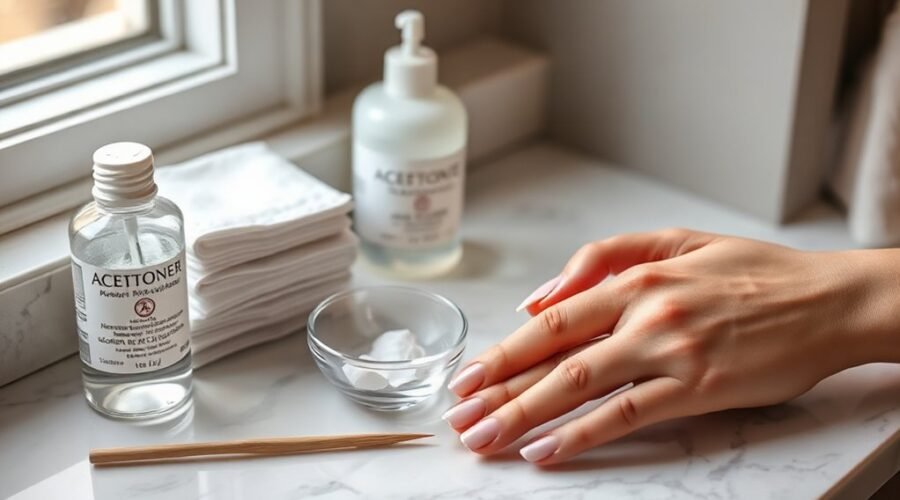
Like a clean slate after a storm, your nails can look fresh again with the right removal method. You’ll need remover, cotton pads, and a ventilated space before you start. Choose acetone for stubborn polish or a gentler option for regular wear, then soak, press, and swipe each nail toward the tip. Glitter takes extra time, and the steps that prevent damage matter even more.
What You Need to Remove Nail Polish
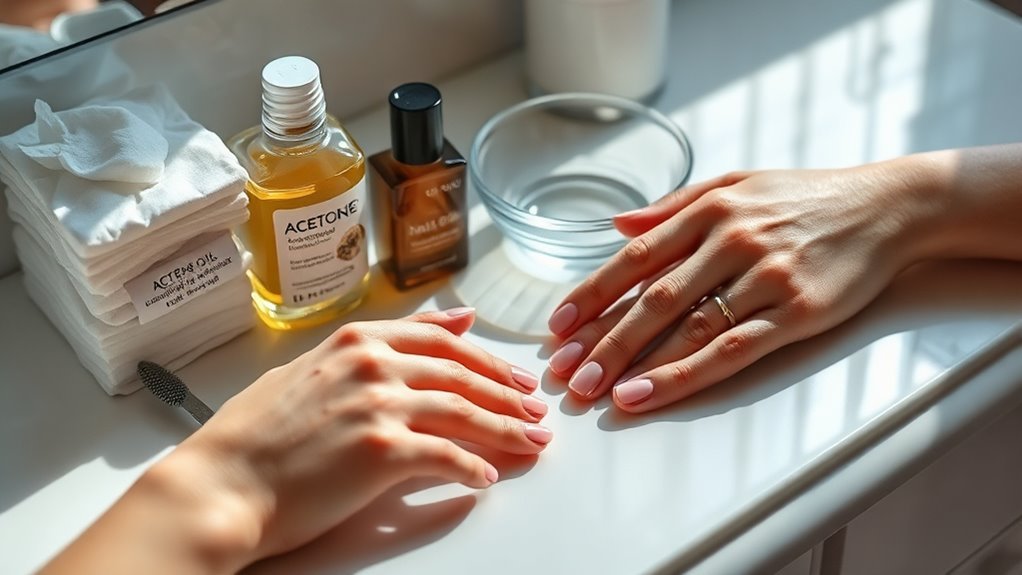
To remove nail polish cleanly, you’ll need a few basic supplies: acetone or non-acetone nail polish remover, cotton balls or pads, a small bowl or clip-on remover soak if you’re using gel polish, and a clean towel.
Choose remover types based on your nail care needs: acetone acts fast on standard polish, while non-acetone works more gently. Keep a nail file nearby to lightly break the surface seal on glitter or topcoat, and use cuticle oil afterward to restore moisture.
Acetone removes polish quickly; non-acetone is gentler. A light file and cuticle oil help protect nails.
Lay everything within reach so you can work efficiently and avoid unnecessary movement. If you’re removing polish from multiple nails, separate fresh cotton for each hand to prevent redepositing color.
Protect your workspace with paper or a towel, and wash your hands before you begin. With the right tools ready, you control the process, reduce damage, and keep your nails liberated, clean, and prepared for the next step.
Choose the Best Nail Polish Remover
Choose acetone for regular polish when you want the fastest, most effective removal, especially for dark colors, glitter, or multiple layers. You control the process by matching remover strength to polish type, so you waste less time and protect your nails better.
| Remover | Best use |
|---|---|
| Acetone | Regular, stubborn polish |
| Acetone alternatives | Sensitive or dry nails |
| Natural removers | Mild cleanup, light polish |
Use acetone alternatives if your nails feel brittle or your skin dries easily. Look for formulas with glycerin, oils, or conditioning agents to reduce dehydration. Choose natural removers only for very light polish; they work slower and need more patience. Check the label for “non-acetone” or “moisturizing” claims, then verify ingredients before you buy. If you want freedom from harsh effects, balance strength with nail health. Pick the least aggressive remover that still clears your polish efficiently, and you’ll keep your routine clean, simple, and effective.
Remove Nail Polish With Cotton Pads
Choose lint-free cotton pads that won’t shed fibers or leave residue on your nails.
Saturate a pad with remover, press it firmly onto the nail for a few seconds, then wipe in one controlled motion to lift the polish.
Use light pressure and repeat with a fresh pad as needed so you remove polish gently without irritating the nail surface.
Choosing Cotton Pads
Even before you apply remover, pick cotton pads that are dense, lint-free, and slightly textured so they hold liquid well without falling apart. You’ll get better control when you compare cotton pad types: quilted rounds offer more surface area, while flat pads can fit narrow nail beds.
Choose pads sized to cover each nail without excess overlap, so you don’t waste remover. If you want lower-impact cleanup, select eco friendly options made from organic cotton or reusable cloth pads.
Check that the pad doesn’t shed fibers; loose lint can interfere with a clean pass and force you to repeat the step. Keep a few extra pads nearby so you can work efficiently and move through the process with confidence, precision, and autonomy.
Gentle Polish Removal
Saturate a cotton pad with nail polish remover, but don’t drench it to the point of dripping. Place it on the nail and press lightly for 5–10 seconds so the solvent can break down the polish.
Then swipe from cuticle to tip in one controlled motion; don’t scrub. Use gentle techniques to preserve your nail plate and keep your skin free from unnecessary abrasion. Repeat with a clean section of the pad until the color lifts.
- Hold the pad flat for even contact.
- Re-wet only when the pad starts to dry.
- Finish by washing your hands and applying oil.
If you prefer natural alternatives, choose acetone-free remover or plant-based options, but expect slower results.
How to Remove Glitter Nail Polish
Glitter nail polish takes more effort to remove because the particles cling to the nail surface and surrounding polish. For efficient glitter polish removal, you’ll use effective techniques that reduce scraping and wasted motion. Soak a cotton pad with acetone, place it on the nail, and wrap it with foil to trap solvent and speed breakdown. Wait 10 minutes, then press and slide the pad off; don’t rub aggressively.
| Step | Action | Result |
|---|---|---|
| 1 | Saturate pad | Softens glitter layers |
| 2 | Wrap nail | Holds solvent in place |
| 3 | Wait and slide | Lifts polish cleanly |
| 4 | Repeat once | Removes residue |
If some glitter remains, reapply acetone and hold for 3 more minutes. Use a wooden stick to nudge stubborn edges only after they’ve loosened. This method keeps control in your hands and lets you remove polish without surrendering to endless scrubbing.
Protect Your Nails and Cuticles
Once the polish has lifted, protect your nails and cuticles by limiting acetone contact and handling the nail surface gently. You’re not just removing color; you’re preserving nail care integrity and cuticle protection so your hands stay strong and free.
- Wash your hands with lukewarm water and mild soap to stop the solvent from lingering on skin.
- Pat nails dry, then apply a thin layer of cuticle oil or petroleum jelly around the nail folds to create a barrier.
- Use a soft cotton pad to wipe any residue, moving in one direction and avoiding scrubbing.
If you feel dryness, stop and moisturize immediately. Reapply oil after removal to restore flexibility and reduce brittleness.
Keep tools clean and work with light pressure so you don’t abrade the nail plate. Careful technique gives you control, protects the surrounding skin, and leaves you ready for the next manicure without unnecessary damage.
Fix Common Nail Polish Removal Mistakes
Even with good protection, a few removal errors can slow the process or damage the nail surface. If your nail polish won’t lift, don’t scrub harder; re-saturate the cotton pad and hold it in place for 10 to 15 seconds. That pause lets the solvent break the bond, improving your removal techniques.
Even good protection can’t prevent every mistake—pause, re-saturate, and let the solvent loosen stubborn polish.
When polish spreads instead of dissolving, you’re using too little remover or too much pressure. Use a fresh pad for each nail to prevent re-depositing color. If glitter or dark lacquer lingers, apply brief, repeated passes rather than one aggressive wipe.
Avoid rushing between nails; give the solvent time to work. Keep your hands steady and fold the pad so it contacts only the coated area. These common mistakes waste effort and limit your freedom to finish cleanly.
Use these prevention tips consistently, and your nail polish removal stays efficient, controlled, and precise.
Avoid Damage When Removing Nail Polish
To avoid damage when removing nail polish, keep the solvent on the polish, not on the nail itself, and limit friction as much as possible. You protect nail care by saturating a cotton pad, pressing it on the surface for 10 to 15 seconds, then wiping in one controlled pass.
Don’t scrub; abrasion weakens the plate and dries surrounding skin. Follow these steps:
- Use acetone only when needed, and apply it sparingly.
- Shield cuticle health by coating the skin with petroleum jelly before removal.
- Stop as soon as the polish lifts, then wash and rehydrate.
If residue remains, repeat the contact step rather than rubbing harder. Finish with cuticle oil and hand cream to restore moisture and preserve strength.
When you work this way, you remove color without surrendering flexibility, comfort, or control.
Frequently Asked Questions
How Often Should I Remove Nail Polish?
You should remove nail polish every 5 to 7 days, or sooner if it chips, lifts, or smells stale. This nail polish frequency helps you protect nail health.
Tips you can trust: clean nails, reduce moisture trapping, and let the plate breathe between applications.
Use remover sparingly, then moisturize cuticles.
If you wear dark, heavily pigmented polish, don’t leave it on longer than two weeks to avoid staining.
Can Nail Polish Remover Expire?
Yes, nail polish remover can expire. You should check the bottle for a printed date, changes in smell, color, or separation, because degraded remover ingredients may reduce performance and irritate skin.
Store it tightly closed, away from heat and sunlight, to preserve efficacy and nail health. If it feels weak or looks cloudy, replace it. You deserve tools that work reliably, so don’t keep using compromised remover.
Is Acetone Safe for All Nail Types?
No, acetone isn’t safe for all nail types, and you shouldn’t assume it is.
If you think stronger means better, note that acetone can dry brittle, damaged, or acrylic-enhanced nails.
You should protect nail health by limiting contact, moisturizing afterward, and choosing acetone alternatives for sensitive, peeling, or fragile nails.
For liberation from damage, match remover strength to your nail condition and remove polish with precision.
How Do I Remove Polish From Skin?
Use a cotton swab dipped in non-acetone remover to lift polish from your skin, then wipe gently.
For stubborn spots, apply a little oil or petroleum jelly first, wait 30 seconds, and rub softly with a clean cloth.
These nail polish removal techniques reduce abrasion and support skin protection tips.
Wash the area with soap and water, then moisturize.
Don’t scrape; you deserve a clean finish without irritation.
Can I Use Remover on Gel Polish?
Indeed, you can use remover on gel polish, but only acetone-based remover works well.
You’ll need proper gel polish techniques: lightly file the glossy topcoat, soak cotton with remover, then wrap each nail in foil for 10 to 15 minutes.
Don’t pry the gel off.
If you want remover alternatives, use an e-file or professional soak-off system.
Choose the method that frees your nails without damage, and proceed with patience.
Conclusion
When you remove polish, treat your nails like delicate glass, not a paint bucket. One rushed scrub can leave them dry and peeling; a quick 2019 salon survey found acetone misuse was a top cause of brittle nails. If you soak, swipe, and moisturize after, you’ll keep your nails smooth and healthy. Finish by washing your hands, applying cuticle oil, and letting your nails rest before the next color.