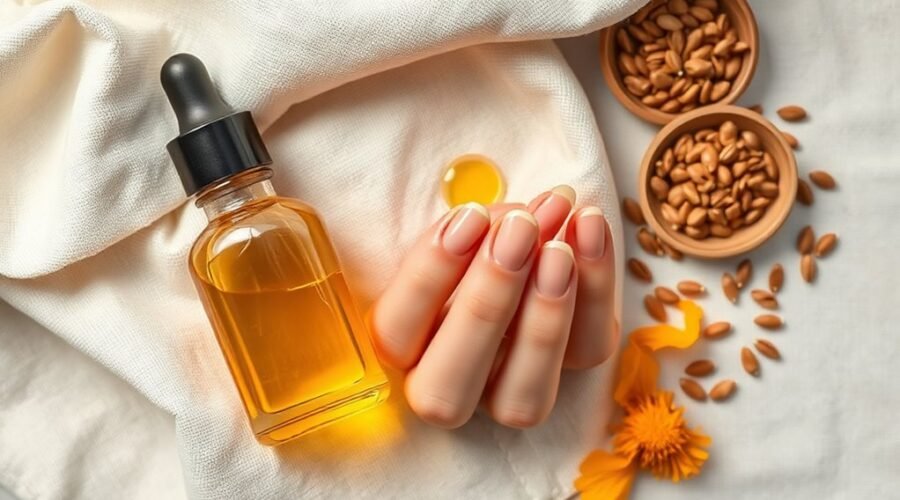
The simplest, most effective cuticle oil recipe combines 80–85% pure jojoba oil (5 teaspoons / 25 mL) with 15–20% vitamin E oil (1 teaspoon / 5 mL) in a clean 1 oz (30 mL) dark glass dropper bottle. If you want light fragrance, add no more than 6 to 12 total drops of skin-safe essential oil (1–2% dilution)—or leave it fragrance-free for sensitive skin.
Why Jojoba and Vitamin E Work So Well Together

Jojoba oil is technically a liquid wax ester whose molecular structure closely resembles human sebum, allowing it to absorb smoothly into the nail folds without leaving a heavy greasy film. Adding a smaller portion of vitamin E oil (tocopherol) provides rich slip and helps slow oxidation so your blend stays fresher longer. To see how regular oiling supports nail flexibility and barrier health, read our full breakdown of what cuticle oil does for your nails and cuticles.
3 Easy DIY Cuticle Oil Recipes (Exact Measurements)
Pick the batch size and richness that matches your dispenser and climate.
| Recipe Blend | Container Size | Carrier Oil Measurements | Vitamin E Oil | Optional Essential Oil (1–2% Max) |
|---|---|---|---|---|
| Classic Everyday Blend | 1 oz (30 mL) dropper bottle | 25 mL (5 tsp) pure jojoba oil | 5 mL (1 tsp) | 6–12 drops total (e.g., lavender) |
| On-the-Go Brush Pen | 10 mL twist pen or roller | 8 mL (~1.5 tsp) jojoba oil | 2 mL (~0.4 tsp) | 2–4 drops total |
| Extra-Dry Winter Blend | 1 oz (30 mL) dropper bottle | 15 mL (3 tsp) jojoba + 10 mL (2 tsp) sweet almond or avocado oil | 5 mL (1 tsp) | 6 drops total (1% for cracked skin) |
How to Mix Your Cuticle Oil Step by Step
- Sanitize your container: Wash a dark amber or cobalt glass dropper bottle (or refillable brush pen) with warm soapy water, rinse well, and let it air-dry completely so zero water enters the oil.
- Measure the carrier oil first: Use a small funnel or glass pipette to pour jojoba oil (and optional sweet almond or avocado oil) into the bottle.
- Add vitamin E oil: Measure your vitamin E oil (from a bottle or pierced pure vitamin E capsules) and add it to the carrier base.
- Add optional essential oils carefully: Count drops accurately to stay within the 1–2% safe topical limit—or omit essential oils entirely.
- Blend gently and label: Cap tightly and roll or invert the bottle slowly 10 to 15 times to combine without whipping excess air into the oil. Write the mixing date and ingredients on a small label.
Essential Oil Dilution & Skin Safety Guide
Essential oils are highly concentrated plant extracts that can trigger contact dermatitis if overused. Aromatherapy safety guidelines (such as NAHA and the Tisserand Institute) recommend keeping leave-on adult topical blends at 1% to 2% total essential oil—counting all essential oils combined, not per scent.
| Dilution Level | Drops per 10 mL Pen | Drops per 1 oz (30 mL) Bottle | Best For |
|---|---|---|---|
| 0% (Unscented) | 0 drops | 0 drops | Very sensitive skin, eczema-prone hands, or pregnancy |
| 1% (Gentle) | 2 drops | 6 drops | Daily leave-on cuticle care and sensitive skin |
| 2% (Standard Adult Max) | 4 drops | 12 drops | Healthy, intact adult skin |
- Watch for phototoxic citrus oils: Cold-pressed lemon, lime, bergamot, and bitter orange essential oils can cause sunburn-like skin reactions when exposed to UV light. If you want citrus scent, use steam-distilled citrus oils or stick to lavender, frankincense, or chamomile.
- Check nut allergies: Skip sweet almond oil if you or anyone sharing the bottle has a tree-nut allergy; jojoba, squalane, or grapeseed oil are safer swaps.
- Patch-test first: Dab a drop on your inner forearm and wait 24 hours if you are trying a new essential oil.
Count all essential oils together—for a 1 oz (30 mL) bottle, 6 to 12 drops total keeps your blend within the safe 1–2% topical range.
How to Apply & Store Your Blend for Maximum Freshness
Place one small drop along each proximal nail fold and sidewall, then massage in gentle circles for 20 to 30 seconds until absorbed. The best times to apply are right after washing your hands, before bed, and immediately after solvent-heavy removals—such as finishing a soak from our nail dip powder removal guide or cleansing your nails after learning how to take off press-on nails gently.
Store your bottle tightly capped in a cool, dark drawer rather than a steamy bathroom counter or sunny windowsill. Keep droppers and brush tips clean and dry; discard the batch if it turns cloudy, separates permanently, or develops a sour or stale odor.
Pros & Limitations of Homemade Cuticle Oil
- Pros: Full ingredient transparency (no synthetic fragrance or mineral oil if you prefer plant oils), lower cost per ounce than boutique cuticle pens, and easy texture customization for summer vs. winter.
- Limitations: Requires measuring accurately when using essential oils, lacks commercial preservatives if water accidentally contaminates the bottle, and can feel messy if over-applied right before typing.
Frequently Asked Questions
What is the best jojoba to vitamin E ratio for a DIY cuticle oil recipe?
A reliable starting ratio is about 80% to 85% pure jojoba oil and 15% to 20% vitamin E oil—roughly 5 teaspoons (25 mL) of jojoba oil to 1 teaspoon (5 mL) of vitamin E oil in a 1 oz (30 mL) dropper bottle. Vitamin E is very thick, so keeping it at 15% to 20% adds cushioning without making the blend sticky.
How many drops of essential oil are safe in 1 ounce of cuticle oil?
Follow standard aromatherapy topical dilution guidelines: keep total essential oils between 1% and 2% for leave-on adult blends. In a 1 oz (30 mL) bottle, that equals about 6 drops total for a gentle 1% dilution (best for sensitive skin) and no more than 12 drops total for a 2% dilution.
Can I skip essential oils completely in homemade cuticle oil?
Yes. Essential oils only add scent and are completely optional. A fragrance-free blend of jojoba oil and vitamin E oil is just as moisturizing and is the safest option for sensitive skin, eczema-prone hands, or during pregnancy.
How long does homemade cuticle oil stay fresh?
Pure jojoba oil is a liquid wax ester with a long shelf life, so a jojoba-and-vitamin-E blend typically stays fresh for 6 to 12 months when stored in a tightly sealed dark glass bottle away from heat, steam, and direct sunlight. Discard it sooner if it smells sour, crayon-like, or rancid.
Should I apply cuticle oil before or after painting my nails?
Apply cuticle oil only after your polish is dry to the touch (or after curing gel top coat). Oil left on the bare nail plate before polishing prevents base coat and press-on glue from adhering properly.