
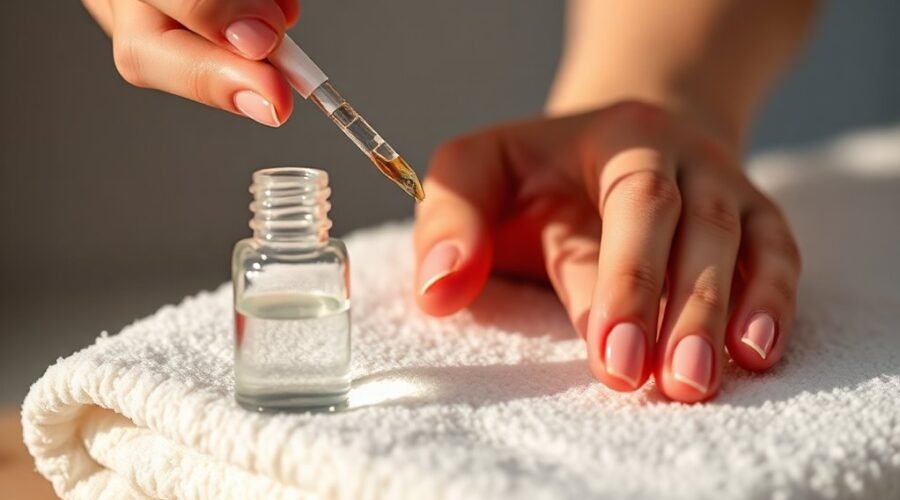
If you have ever wondered what does cuticle oil do, its main job is to hydrate the dry skin around your nail folds, soften hangnails, and replenish lipids in the nail plate so your nails stay flexible instead of brittle. While cuticle oil does not make nails grow biologically faster, daily use reduces peeling and breakage so nails look healthier and hold up better between manicures.
What Does Cuticle Oil Do for Your Nails & Skin?

Frequent handwashing, alcohol hand sanitizers, cold weather, and polish removers strip natural oils from both your skin and the porous keratin layers of your nail plate. Cuticle oil replaces those lost lipids, creating a light moisture barrier that slows water loss.
- Softens dry, rough cuticles: Keeps the proximal nail fold supple and helps prevent painful hangnails and cracking.
- Improves nail flexibility: Conditioned keratin bends slightly on impact instead of snapping or peeling in layers.
- Protects salon enhancements: Daily oiling around the perimeter helps keep the natural nail flexible under acrylics and gel—see our guide on how long acrylic nails last for full aftercare timing.
- Restores moisture after solvent exposure: Replenishes dryness right after removing lacquer—especially helpful after using acetone or a nail polish remover substitute.
Best Cuticle Oil Ingredients Compared
Not all nail oils absorb the same way. Lightweight plant oils penetrate the skin barrier cleanly, while heavier oils sit on top to lock in moisture:
| Ingredient | Absorption Feel | Key Benefit | Watch-Out |
|---|---|---|---|
| Jojoba oil | Very fast, non-greasy | Closest structure to human sebum; penetrates easily | Check for 100% pure cold-pressed jojoba |
| Vitamin E (Tocopherol) | Rich, slightly viscous | Antioxidant barrier support; keeps plant oils fresh | Often blended with lighter carrier oils |
| Sweet almond oil | Light to medium | Smooths dry skin and hangnails affordably | Avoid if you have tree-nut allergies |
| Argan / Grapeseed oil | Fast, lightweight | Rich in linoleic and oleic fatty acids for barrier repair | Store away from heat and light to prevent oxidation |
| Coconut oil | Heavier, surface barrier | Seals in moisture over damp skin | Solidifies below ~75°F (24°C); sits on surface |
Want to blend your own jojoba and vitamin E bottle at home? Follow our simple cuticle oil recipe to customize a fragrance-free mix.
How to Apply Cuticle Oil Correctly (Step-by-Step)
- Start with clean, slightly damp hands: Applying right after handwashing or a shower helps trap surface hydration.
- Use one small drop per nail: Brush or drop a small amount along the cuticle line, sidewalls, and under the free edge if your nails are long.
- Massage for 20–30 seconds: Rub in gentle circles across each nail fold and plate to boost absorption and avoid greasy fingertips.
- Seal with hand cream (optional): At bedtime, layer a fragrance-free hand cream over the oil to lock in overnight hydration.
When to Use Cuticle Oil (and When to Skip It)
- Best times to apply: After washing hands, after removing nail polish, right before sleep, and after a fresh manicure has completely dried or cured.
- When to skip it: Never apply cuticle oil right before painting regular polish, curing gel, or applying press-on nails. Any oil residue on the nail plate prevents polish and nail glue from bonding and causes immediate peeling or lifting.
Safety, Allergies & Storage Checklist
- Patch-test new blends: Test a drop on your inner wrist and wait 24 hours if the formula includes essential oils, fragrance, or nut oils.
- Do not oil open wounds or infections: If the nail fold is red, swollen, throbbing, or oozing (paronychia), keep it clean and consult a clinician rather than sealing it with oil.
- Check shelf life: Natural plant oils oxidize over time; store bottles tightly capped away from sunlight and replace any oil that smells rancid or turns cloudy.
Pros and Limitations of Cuticle Oil
- Pros: Takes less than 30 seconds a day, visibly reduces hangnails and dry cuticles, works over bare nails or finished manicures, and helps prevent brittle breakage.
- Limitations: Requires consistent daily use to see lasting results, does not directly accelerate biological nail growth speed, and must be washed off with alcohol before any polish or glue application.
Frequently Asked Questions
Does cuticle oil make your nails grow faster?
No—cuticle oil does not speed up the biological rate at which your nail matrix produces new keratin. Instead, it keeps the nail plate and surrounding skin hydrated and flexible, which reduces peeling, splitting, and breakage so your nails can grow longer without snapping.
How often should you apply cuticle oil?
Applying cuticle oil once or twice a day—especially after washing your hands and right before bed—gives the most noticeable improvement. If your hands are frequently in water, sanitizer, or cold dry air, you can reapply an extra drop midday.
Can you use cuticle oil over nail polish, gel, or acrylics?
Yes, once your polish is completely dry or your gel/acrylic manicure is finished. Applying oil around the cuticle and under the free edge keeps the surrounding skin soft and helps prevent dryness from acetone or salon prep. Just never apply oil right before painting or gluing, as oil blocks adhesion.
What is the best ingredient to look for in cuticle oil?
Jojoba oil is widely considered the gold standard because its wax-ester structure closely resembles human sebum, allowing it to absorb quickly without feeling greasy. Formulas pairing jojoba oil with vitamin E (tocopherol) or sweet almond oil offer strong hydration and barrier support.
Can cuticle oil cause an allergic reaction?
Yes, especially formulas containing added synthetic fragrances, essential oils (like lavender, tea tree, or citrus), or nut-derived oils such as sweet almond oil. If you have sensitive skin or nut allergies, choose a fragrance-free jojoba oil formula and patch-test on your inner wrist first.

[…] oil into your cuticles and bare nail plates, then lock it in with hand cream. Understanding what cuticle oil does for dry, stressed nails explains why daily oiling restores flexibility and prevents peeling after solvent exposure. If your […]