If you’ve got an old breast pump sitting in a closet, you might be wondering whether you can reuse, donate, recycle, or toss it. The answer depends on the pump’s condition, which parts are still safe, and how well you can clean it. Before you make a decision, it helps to know which pieces can be kept and which ones should never be shared. The details matter more than you might expect.
Start by Sorting Reusable Pump Parts
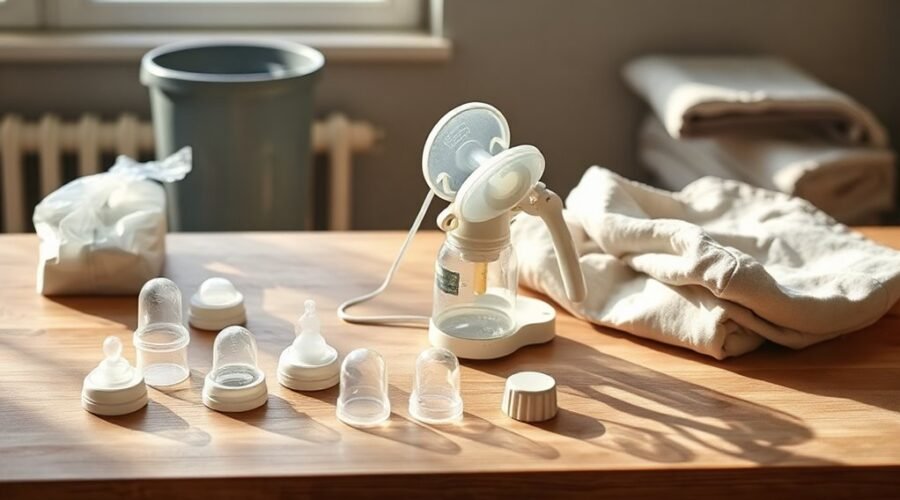
Start by laying out every pump part and separating what you can reuse from what you should replace. You’ll make better choices when you see each piece clearly, and that keeps breast pump safety front and center.
Check tubing, flanges, valves, membranes, bottles, connectors, and any seals for cracks, cloudiness, stiff spots, or lingering odor. If a part feels worn, warped, or hard to clean, don’t force it back into service. You deserve tools that support your body, not add stress.
Next, compare the parts against the manufacturer’s guidance, then note what’s compatible with your model. This simple sort helps you avoid guesswork and saves time later.
If you’re aiming for eco friendly options, reusing only what’s truly safe can reduce waste without compromising hygiene. When you’re unsure, choose caution and replace the item. That’s not wasteful—it’s a way to protect your milk, your health, and your freedom.
Which Breast Pump Parts Can You Reuse?
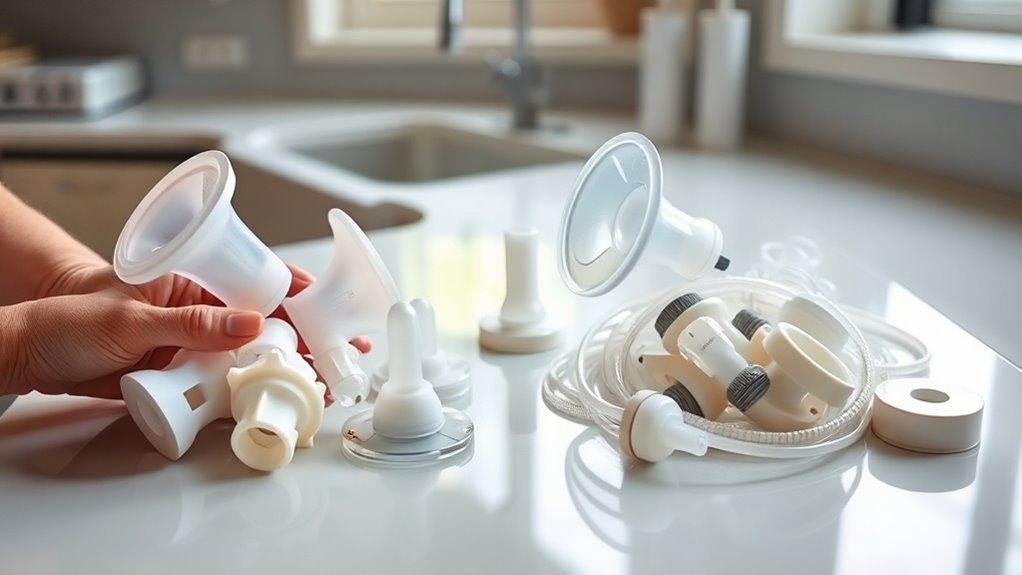
You can usually reuse the hard, nonporous pump parts that stay intact and clean well, like bottles, flanges, connectors, and caps, as long as the manufacturer says they’re safe for your model.
You should also check pump part compatibility before keeping anything in rotation, because even small design changes can make a part unsafe or useless. If a piece is cracked, warped, cloudy, or no longer fits tightly, let it go.
Check pump part compatibility before reuse; even small changes can make a part unsafe or no longer fit securely.
Tubing is a maybe: reuse it only if it stays dry, unbent, and odor-free, and your pump allows it.
Valves and membranes often wear out faster, so replace them when suction drops or they look stretched.
If you’ve made breast pump upgrades, confirm that older parts still work with the new setup.
You deserve tools that support your body, not stress it. Choosing only reliable parts helps you protect your time, your milk, and your peace.
How to Clean and Store Reusable Pump Parts
Once you’ve set aside the reusable parts that still fit and function well, keep them safe by cleaning and storing them with care after every use. You deserve routines that make pumping easier, not heavier. Rinse parts right away, then wash them with warm, soapy water using cleaning techniques that reach creases and valves. Air-dry fully on a clean towel or rack before putting anything away.
| Part | Clean | Store |
|---|---|---|
| Flanges | Wash after each session | Keep dry |
| Valves | Rinse gently | In a sealed bag |
| Membranes | Use mild soap | Flat, out of heat |
| Tubing | Dry if needed | Hang freely |
| Bottles | Sanitize as directed | With lids off |
These storage tips help protect shape and function. Once dry, place parts in a clean, covered container away from dust, sunlight, and moisture. If anything looks cloudy, cracked, or sticky, let it go. Caring for your tools can feel like self-respect.
How to Donate or Recycle an Old Breast Pump Safely
Before you pass along or toss an old breast pump, check its condition, model, and hygiene needs so you can choose the safest next step.
If you want to donate, review the organization’s donation guidelines first; many accept only unopened accessories or specific hospital-grade units. Call ahead, confirm they’ll take your model, and ask how they sanitize or redistribute equipment. You’ll protect another parent’s peace of mind and avoid wasting anyone’s time.
If donation isn’t a fit, look into recycling options. Some manufacturers and medical supply stores offer take-back programs for motors, cords, and plastic parts.
Separate components as directed, remove batteries, and follow local e-waste rules so you can keep harmful materials out of landfills.
You’re allowed to let go of gear that no longer serves you. Choosing a thoughtful path honors your care, your community, and the freedom to make practical decisions without guilt.
When to Toss an Old Breast Pump
Sometimes an old breast pump has reached the point where keeping it around does more harm than good. You deserve tools that support your body, not stress it. Check the pump lifespan first, then weigh health considerations. If the motor weakens, suction drops, parts crack, or milk backs up in hidden crevices, it’s time to let it go. Don’t push past worn-out tubing, stains, or odors.
| Sign | What it means |
|---|---|
| Weak suction | The pump isn’t working well |
| Damaged parts | Safety may be compromised |
| Mold or residue | Cleaning won’t fix it |
| Recall notice | Replace it immediately |
If repairs cost more than a replacement, toss it. When you’re unsure, trust your instincts and protect your peace. A pump should help you move freely, not trap you in worry. Letting it go can be a powerful, practical act of care.
Frequently Asked Questions
Can I Sell My Old Breast Pump Online?
Yes, you can sell your old breast pump online, but you’ll want to check the model first.
Many closed-system pumps are safest for breast pump resale, while some used pumps may be restricted by health rules or platform policies.
On online marketplaces, be honest about condition, clean it well, and include accessories.
If selling feels off, you can also donate or recycle it.
You deserve choices that fit your life.
How Long Do Breast Pump Motors Usually Last?
You can expect a breast pump motor to last about one to three years with regular use, though motor lifespan varies by brand and how hard you work it.
Good pump maintenance helps you stretch it further: clean parts well, store it dry, and replace worn tubing or valves on time.
If you hear strange noises, lose suction, or feel pain, you deserve a safer replacement that supports your needs.
Can I Use an Old Pump After Replacing Tubing?
Yes, you can often use an old pump after replacing the tubing, but you should check more than that—an ounce of prevention is worth a pound of cure.
You’ll want to inspect pump hygiene, valves, membranes, and other replacement parts before using it again. If the motor still works well and you clean everything thoroughly, you may be fine.
When in doubt, protect your comfort and freedom by asking a lactation professional.
Are Hospital-Grade Pumps Treated Differently for Resale?
Yes—hospital-grade pumps usually face stricter resale regulations because you’re dealing with a higher-standard medical device.
You should check local resale regulations, and you may need proof of professional servicing before you sell it. Good pump maintenance matters too, since buyers want cleanliness, reliable suction, and replaced parts.
If resale isn’t allowed, you can donate, recycle, or contact the maker. You deserve options that honor your needs and your budget.
What Should I Do if My Pump Has Mold Inside?
If your pump has mold inside, stop using it right away and replace any contaminated parts.
You can’t safely clean mold from all hidden areas, so protect yourself and your baby first.
Use gentle cleaning techniques on removable pieces, then inspect tubing, valves, and motor areas.
Focus on mold prevention by drying parts fully and storing them in a clean, open space.
You deserve tools that support your freedom and peace.
Conclusion
If your old breast pump still works, you can clean it, sort the reusable parts, and choose donation or recycling with care. If it’s damaged, moldy, or losing suction, you can let it go safely and responsibly. You can protect your health, support another parent, and reduce waste. You can make a thoughtful choice, a practical choice, and a compassionate choice. Whatever you decide, you’re doing the right thing for you and your family.