If your scalp were a garden, black seed oil could be the steady rain that helps it thrive. You’ll find that *Nigella sativa* seed oil offers anti-inflammatory and antioxidant compounds, plus emollient fats that may support scalp comfort, reduce dandruff, and improve hair resilience. It won’t promise regrowth, but it can create a healthier base for stronger hair. The next step is knowing how to use it well.
What Is Black Seed Oil?
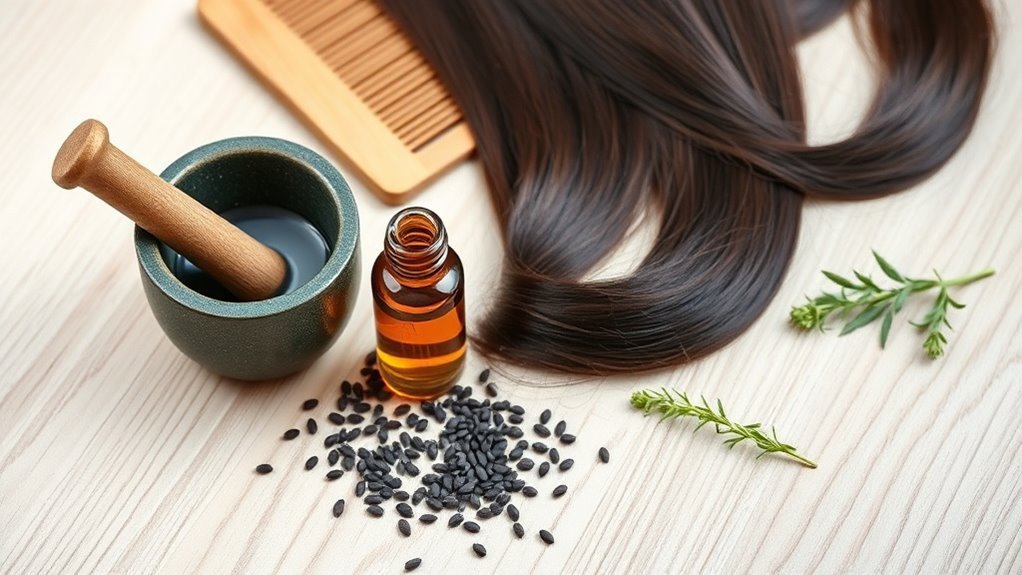
Black seed oil comes from the seeds of *Nigella sativa*, a flowering plant used for centuries in traditional medicine and now studied for its bioactive compounds, especially thymoquinone.
When you see this oil, you’re looking at a concentrated lipid extract produced through cold or solvent oil extraction from the black seed. Its composition includes fixed oils, volatile fractions, alkaloids, and antioxidants that researchers examine for pharmacological activity.
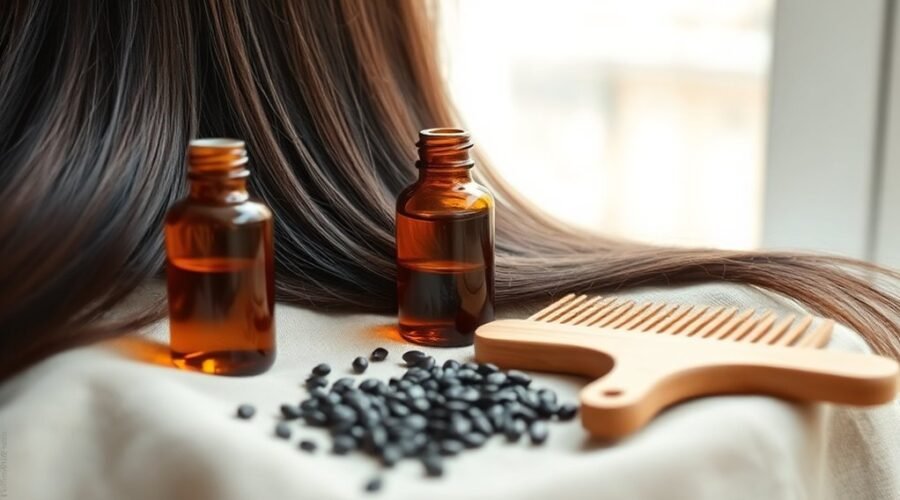
You’ll often find it as a golden to dark amber liquid with a pungent, peppery aroma.
Scientific analyses show variable concentrations depending on seed origin, harvest conditions, and extraction method, so product quality matters.
If you choose it, you’re selecting a botanical ingredient with measurable chemistry, not a miracle cure. That distinction helps you make informed decisions about what you put on your body and why.
Black Seed Oil Benefits for Hair Growth
For hair growth, the biggest potential advantage of black seed oil lies in its anti-inflammatory and antioxidant activity, which may help create a healthier scalp environment for follicles to function normally.
When you apply it consistently, thymoquinone and related compounds may reduce oxidative stress that can interrupt the hair cycle and weaken strand production.
Small studies suggest black seed oil can support greater hair thickness by improving the condition around follicles and limiting breakage, so you may retain more visible length over time.
Its emollient fats also aid scalp nourishment, which can help hair fibers stay more resilient and less prone to dryness-related shedding.
While it isn’t a guaranteed regrowth treatment, you can use it as a supportive, science-informed option alongside proven care.
For best results, choose a pure product, patch test first, and track changes over several weeks rather than expecting instant transformation.
How Black Seed Oil Supports Scalp Health
A healthy scalp is the foundation that lets those hair-growth benefits show up more reliably, and black seed oil may help by supporting the skin environment around each follicle.
You get a blend of thymoquinone, fatty acids, and antioxidants that can help calm oxidative stress and support a balanced inflammatory response in the skin. That matters because chronic irritation can disrupt the barrier, increase flaking, and make follicles less resilient.
Research suggests black seed oil may aid scalp hydration by helping reduce transepidermal water loss, which can leave your scalp less dry and more comfortable.
Research suggests black seed oil may help reduce transepidermal water loss, keeping the scalp more hydrated and comfortable.
It may also contribute to dandruff reduction by discouraging the microbial and inflammatory conditions that often fuel visible flakes.
When your scalp barrier functions well, you’re less likely to deal with itching, tightness, and sensitivity.
That means your hair can grow in a steadier, more supportive environment, with less interference from irritation or excess shedding.
How to Use Black Seed Oil on Hair
One practical way to use black seed oil on hair is to apply it as a pre-shampoo scalp treatment, since direct contact with the skin lets the oil work where follicles are active. You can part your hair, massage a small amount into the scalp, and leave it on 20 to 30 minutes before washing. This supports targeted application methods and reduces waste.
- Use 3 to 5 drops for short hair.
- Use 1 teaspoon for medium-length hair.
- Use up to 2 teaspoons for longer hair.
- Dilute with a carrier oil if your scalp feels sensitive.
Evidence suggests that controlled use helps you balance exposure and tolerance, rather than overloading the scalp. Follow practical dosage recommendations, not extremes, and track how your skin responds over several uses.
You can also smooth a tiny amount onto the ends after washing to help reduce friction, but keep it light so your strands stay free and breathable.
How to Choose the Best Black Seed Oil
How do you choose a black seed oil that’s actually worth using? You should check quality indicators first: look for cold-pressed extraction, dark glass packaging, a recent harvest or bottling date, and a clear ingredient list with no fillers or synthetic fragrance.
These factors help preserve thymoquinone and fatty acids, the compounds linked to scalp support and reduced oxidative stress. You’ll want third-party testing for purity, heavy metals, and microbial safety, because contaminated oils can irritate the scalp and undermine results.
These factors help preserve thymoquinone and fatty acids, supporting scalp health and helping guard against oxidative stress.
Compare brands by country of origin, seed sourcing, and verified concentration, not marketing claims. A reputable brand will disclose batch numbers and provide a certificate of analysis.
If you have sensitive skin, patch test before full use. Choosing well isn’t just consumer savvy; it’s self-protection. You deserve an oil that supports your hair without exploiting your health or your wallet.
Frequently Asked Questions
What Side Effects Can Black Seed Oil Cause on the Scalp?
Black seed oil can cause scalp irritation, including itching, burning, redness, or flaking, especially if you apply it undiluted or leave it on too long.
You may also develop allergic reactions, such as swelling, hives, or increased tenderness, if you’re sensitive to its compounds.
Evidence suggests patch testing lowers risk.
If you notice persistent symptoms, stop use and seek medical advice.
Your scalp deserves safe care, not forced exposure.
Can Black Seed Oil Be Mixed With Other Hair Oils?
Yes—you can mix black seed oil with other hair oils, and you should think of it like a dark, nutrient-rich current joining lighter streams.
You can use oil blending to tune viscosity, absorption, and scalp comfort. During a scalp massage, combining it with jojoba, coconut, or argan oil may reduce irritation and improve spreadability.
Evidence suggests carrier oils can enhance delivery, but you should patch-test first and monitor your scalp’s response.
How Often Should Black Seed Oil Be Applied to Hair?
You should apply black seed oil 1–3 times weekly, depending on your scalp health and hair’s tolerance.
Start with one application method, like a scalp massage or pre-wash treatment, and observe for irritation, buildup, or improved moisture retention.
Evidence suggests regular but not excessive use supports barrier function without clogging follicles.
If your scalp feels balanced, you can increase frequency; if not, cut back and keep your routine responsive.
Is Black Seed Oil Suitable for Color-Treated Hair?
Yes, you can usually use black seed oil on color-treated hair, and it may help with color protection by reducing dryness and breakage.
You should patch-test first, because your scalp and strands can react differently.
Choose gentle application methods, like a light pre-wash treatment or a few drops on damp ends.
Evidence is limited, but its fatty acids and antioxidants can support your hair’s barrier, helping you keep control over your look.
Can Black Seed Oil Help With Dandruff-Related Itching?
Yes, black seed oil may help calm dandruff-related itching by supporting scalp health and reducing irritation, though it won’t address every cause.
Dandruff causes often include yeast overgrowth, inflammation, and excess oil, so you’ll get the best results when you pair it with targeted antifungal care.
Early evidence suggests thymoquinone in black seed oil can soothe the scalp and may ease flakes, but you should still monitor your symptoms closely.
Conclusion
So, as you weigh black seed oil for your routine, remember it’s no magic elixir, but it can help you create a healthier scalp environment. Thanks to its anti-inflammatory, antioxidant, and emollient effects, you may see less flaking, better moisture, and improved hair resilience over time. Think of it less like a fountain of youth and more like steady maintenance—small, consistent care that supports stronger strands and a calmer scalp.