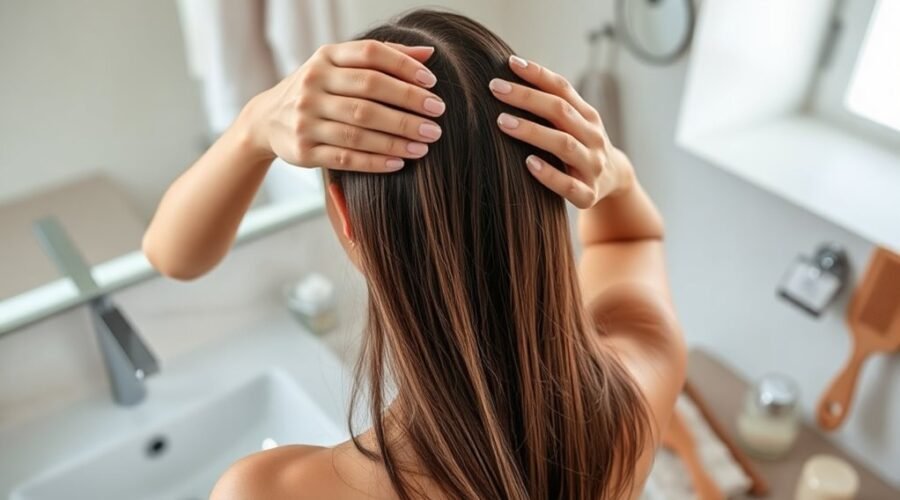
Think of a hair mask like a glass of water for thirsty strands: it only works when you pour it where it matters most. You’ll get better results when you prep your hair, apply the mask evenly, and leave it on for the right amount of time. Skip the common mistakes, and you’ll turn a simple treatment into a routine that actually softens, smooths, and strengthens—if you know the details that follow.
What You Need for a Hair Mask
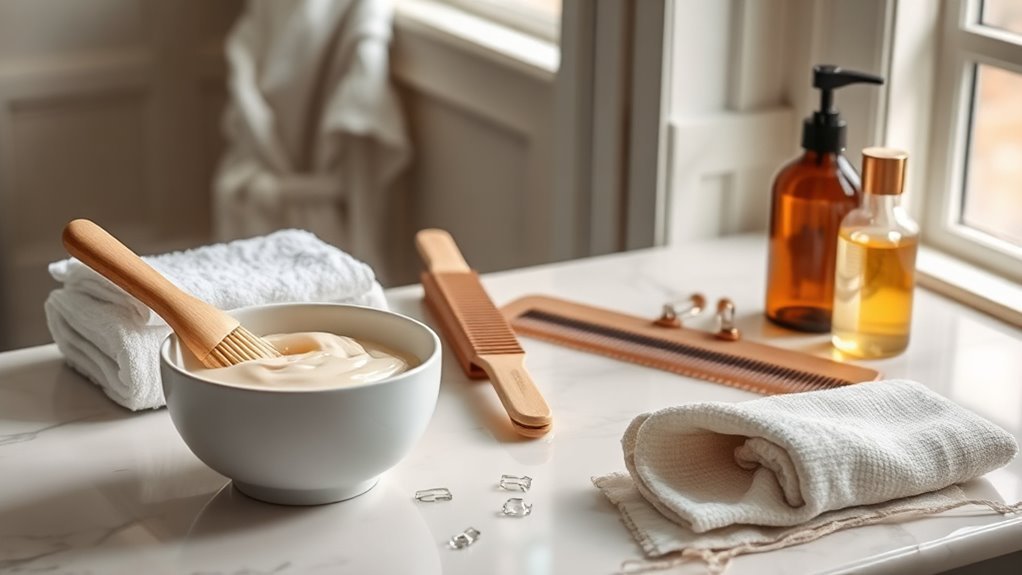
To give your hair mask the best chance of working, you’ll need a few simple basics: the mask itself, a wide-tooth comb, a towel, and a shower cap or clip to keep your hair in place.
Choose your formula with care, because thoughtful ingredients selection shapes the results you want. If your hair feels dry, damaged, or weighed down, pick a mask that matches your needs rather than one that promises everything.
Choose a mask with care—thoughtful ingredients make all the difference for hair that feels dry, damaged, or weighed down.
Your application tools should stay simple: a bowl if you’re mixing, a brush if you prefer control, and clips to section hair neatly. Keep a clean towel nearby to protect your clothes and create an easy, confident process.
With the right items at hand, you can treat your hair on your own terms, without fuss or guesswork. That clarity helps you move smoothly into application and focus on giving your strands exactly what they need.
How to Prep Your Hair for a Mask
Start with clean, damp hair so the mask can spread evenly and sink in where it’s needed most. Gently shampoo first if you notice product buildup; this clears the way for deeper conditioning and supports scalp health. Then squeeze out excess water with a soft towel, because soaking strands can dilute the formula and keep it from working as intended.
| Prep step | Why it matters | Feeling you’ll get |
|---|---|---|
| Cleanse | Removes residue | Lightness |
| Towel-dry | Helps absorption | Control |
| Detangle | Reduces stress | Freedom |
Take a moment to part your hair and check your roots and ends. If your scalp feels irritated, keep your prep simple and soothing. Avoid rough rubbing, and let your hair rest before you apply the mask. When you prep with care, you claim a small ritual that honors your texture, your time, and your right to healthier-looking hair.
How to Apply a Hair Mask Evenly
To apply a hair mask evenly, section your hair into manageable parts before you start.
Work one section at a time so you can coat every strand without missing spots. This method helps the mask distribute more evenly and gives your hair the full benefit.
Section Hair
Sectioning your hair helps the mask coat every strand evenly, especially if your hair is thick or long. With simple hair sectioning, you improve product distribution and keep control as you prep. Use your fingers or a comb to divide your hair into manageable parts, then clip each one away so nothing gets lost.
This approach lets you move with intention and gives every strand a fair chance to benefit.
- Create 4 to 6 sections for better control.
- Keep sections neat, but don’t overcomplicate the process.
- Work methodically so your mask reaches roots, mids, and ends.
When you section first, you honor your time and make care feel easier, not restrictive.
Apply Section by Section
Take one section at a time and smooth the hair mask from roots to ends, using your fingers or a wide-tooth comb to help spread it evenly.
This section strategy keeps every strand coated without wasting product. Use application techniques that fit your hair’s texture: glide through fine hair lightly, or work the mask in more generously if your curls need extra moisture.
Keep each section manageable so you can check for missed spots and detangle as you go. Focus on the mid-lengths and ends, where dryness often shows up first, but don’t ignore the roots if your mask is designed for scalp use.
When you move methodically, you claim better results and give your hair the care it deserves.
How to Apply a Hair Mask by Hair Type
Your hair type should guide how you apply a mask, because fine hair usually needs a lighter layer, while thick hair can handle more product for full coverage.
If your hair is curly, focus on coating the mid-lengths and ends so you keep moisture where it’s needed most without weighing down your roots.
Tailoring your technique this way helps the mask work better and keeps your hair feeling balanced.
Fine Hair Techniques
If your hair is fine, lighter application is the way to go. For fine hair care, choose lightweight products and spread the mask from mid-lengths to ends, avoiding the roots so you don’t flatten volume.
Use volume boosters sparingly, and pair your routine with heat protection and smart styling techniques to keep lift intact. Focus on moisture balance without overloading strands, and support scalp health with gentle cleansing between treatments.
If your mask includes protein treatments, use them only when your hair needs extra strength, not every wash. Regular trims also help your hair look fuller and healthier.
- Apply a pea-size amount first.
- Detangle gently with fingers or a wide-tooth comb.
- Rinse thoroughly to keep movement and softness.
Thick Hair Methods
For thick hair, use a richer mask and apply it more generously so every strand gets coated without feeling weighed down. You’ll reveal thick hair benefits when you section your hair and work the product from mid-lengths to ends, then gently smooth any excess toward the crown.
| Step | What to do | Why it helps |
|---|---|---|
| 1 | Section hair | Guarantees even coverage |
| 2 | Add more mask | Matches density |
| 3 | Massage lightly | Spreads product well |
| 4 | Wait 10–20 minutes | Boosts absorption |
| 5 | Rinse thoroughly | Prevents residue |
Choose thick hair ingredients like shea butter, avocado oil, or ceramides for softness and strength. Keep the mask on long enough to nourish, not so long that buildup steals your shine.
Curly Hair Tips
Curly hair needs a mask that boosts moisture without disrupting the curl pattern. You can protect definition by applying the mask to damp, detangled hair in sections, then smoothing it from mid-lengths to ends. This approach supports curly hair care and helps you keep control over dryness without weighing your curls down.
Focus on moisture retention by choosing rich ingredients like shea butter, aloe, or coconut oil, then leave the mask on for the recommended time.
- Finger-comb gently to preserve your curl shape.
- Cover your hair with a shower cap for deeper absorption.
- Rinse with cool water to seal in softness and shine.
When you finish, scrunch lightly and air-dry or diffuse. Your curls deserve care that honors their texture and freedom.
How Long to Leave a Hair Mask On
How long should you leave a hair mask on? Usually, you’ll get the best hair mask duration from 5 to 20 minutes, depending on the formula and your hair’s needs. Shorter sessions can still boost softness, while richer masks often need extra time for better mask effectiveness.
| Hair Type | Time Range | Main Benefit |
|---|---|---|
| Fine hair | 5–10 min | Light hydration |
| Curly hair | 10–15 min | Defined moisture |
| Dry hair | 15–20 min | Deep nourishment |
You don’t need to overdo it to claim your care. Follow the label, then adjust based on how your strands respond. If your hair feels limp, use less time next round. If it still feels thirsty, let the mask work a little longer. The goal is balance: give your hair enough time to absorb goodness without weighing it down.
How to Rinse Out a Hair Mask Properly
Rinse your hair mask with lukewarm water, working gently from roots to ends so you lift away product without roughing up your strands.
Use your fingers to help loosen any thick areas, then keep rinsing until the water runs clear.
If you still feel residue, add a light shampoo to clean the hair without stripping away all the mask’s benefits.
Rinsing Techniques
Once your hair mask has finished working, start rinsing with lukewarm water to help remove the product without stripping away moisture.
Keep the rinse temperature comfortable, and adjust water pressure to a gentle flow so your strands stay smooth and untangled. Move your fingers through your hair as you rinse to help the water reach every section, especially near the roots and ends.
- Use lukewarm water first to protect softness.
- Keep water pressure low for better control.
- Rinse until your hair feels light and fluid.
If your hair feels heavy, spend a little longer under the stream, then finish with a brief cool rinse for extra shine.
You’re in control here, so let your rinse feel calm, deliberate, and easy.
Residue Removal
To make sure no residue stays behind, work your fingertips through your hair as the water flows, especially around the scalp, mid-lengths, and ends.
Keep rinsing until the water runs clear and your strands feel clean, not coated. If you still sense slip or heaviness, spend a little more time on those areas, because leftover mask can lead to residue buildup and limp roots.
Your product choice matters too: richer masks may need a longer rinse, while lighter formulas often wash out faster.
Use lukewarm water so you don’t shock your hair or seal in excess product. Finish with a gentle squeeze, not a rough rub.
When you rinse well, you free your hair to move, breathe, and shine on your terms.
Hair Mask Mistakes That Weigh Hair Down
A few common hair mask mistakes can leave your strands limp instead of lush. When you pile on too much product, you can trigger product buildup that coats hair and steals bounce. Heavy formulas can also sink into fine hair, so choose a lighter texture when you want movement.
Application errors matter too: if you spread the mask from roots to ends without need, you may flatten volume at the scalp and overload the lengths. Instead, focus on the mid-lengths and ends, where dryness shows most.
Apply hair masks to mid-lengths and ends, not roots, to avoid flattening volume and overloading strands.
- Use only the amount your hair can absorb.
- Keep the mask away from your scalp unless the label says otherwise.
- Distribute it evenly so no section gets overwhelmed.
You can also skip rough handling; wringing or piling wet hair can stretch strands and make them look lifeless. Apply with intention, and your hair stays soft, free, and full of body.
How Often to Use a Hair Mask
How often you use a hair mask depends on your hair’s needs, not just the calendar. If your hair is dry, curly, color-treated, or exposed to heat, you may benefit from a mask once a week.
If your hair is finer or oilier, every two weeks can support hair health without overwhelming your strands.
Listen to how your hair feels: brittle ends, frizz, and dullness often mean it needs more care, while softness and balance suggest you’re on track.
Build a weekly schedule that fits your routine, so treatment feels like self-care, not a chore. You don’t need to mask after every wash to get results; consistency matters more than frequency.
Adjust as seasons change, too, since sun, wind, and indoor heat can shift your hair’s needs.
The goal is simple: give your hair enough nourishment to stay strong, flexible, and free.
Hair Mask Tips for Better Results
For better results, start with clean, damp hair so the mask can absorb evenly and work from mid-lengths to ends unless your scalp needs extra care. You’ll get stronger payoff when you section your hair, apply the mask with your fingers or a wide-tooth comb, and coat each strand without piling on excess.
Gentle, even coverage helps the formula do its job while keeping your routine intentional and freeing.
- Check the label for ingredient benefits, then choose a mask that matches your hair’s needs.
- If your scalp is dry or flaky, massage a small amount in to support scalp health.
- Use lukewarm water when rinsing so you don’t strip away softness.
Let the mask sit for the recommended time, no longer than needed. Overdoing it won’t make it work harder; it can weigh hair down.
Finish by rinsing thoroughly and styling as usual so your hair feels nourished, light, and ready to move.
How to Get More From Your Hair Mask
To get even more out of your hair mask, focus on the small habits that help it penetrate better and last longer.
Start with clean, damp hair, since buildup can block ingredient benefits. Gently squeeze out excess water so the mask doesn’t slide off, then section your hair and work the product through the mid-lengths and ends.
If your roots need care, choose a formula made for scalp health and massage it in with your fingertips to boost circulation and comfort.
Let the mask sit for the full recommended time, but don’t overdo it; more time isn’t always better. Use a wide-tooth comb for even coverage, then cover your hair with a shower cap or warm towel to trap heat and help absorption.
Rinse thoroughly with cool water to seal the cuticle, and follow with a lightweight conditioner only if needed.
Small, consistent steps help you claim stronger, softer hair.
Related Hair Care Guides: Learn ideal schedules in how often you should use a hair mask and what a hair mask does.
Frequently Asked Questions
Can I Use a Hair Mask on Colored Hair?
Yes, you can use a hair mask on colored hair, and it can help you protect your shade while boosting hair health.Choose a color-safe formula with nourishing ingredients, then apply it to clean, damp strands.Let it sit for the recommended time, and rinse well.You’ll keep your hair softer, shinier, and more resilient without stripping your color.Regular masking helps you maintain vibrant results and freedom to style confidently.
Should I Apply a Hair Mask Before or After Shampoo?
After shampoo, you usually get the best results—unless your mask is made for pre shampoo benefits.Why choose clean strands? Because shampoo clears buildup, so your hair can absorb treatment better and you’ll notice richer post shampoo effects.If your hair feels very dry or damaged, you can also apply a mask before washing for added protection.Follow the label, and you’ll free your routine from guesswork.
Can I Leave a Hair Mask on Overnight?
Yes, you can leave a hair mask on overnight, but only if the formula says it’s safe.You’ll often get benefits overnight, like deeper moisture and softer strands, especially if your hair needs extra care.Still, too much product can weigh hair down or irritate your scalp.Protect your hair with a silk cap or pillowcase, then rinse thoroughly in the morning to support healthy hair health.
Do Hair Masks Replace Conditioner?
Not usually—think of a hair mask as a power tool, not a daily wrench. You’ll get richer benefits, but the comparison with conditioner isn’t one-to-one: conditioner smooths and detangles after most washes, while a mask dives deeper for repair.Your application frequency should be lower, often once a week or as needed. Use conditioner regularly, and let a mask free your hair from stress when it needs extra care.
Can I Use a Hair Mask on My Scalp?
Yes, you can use a hair mask on your scalp if the formula’s designed for it.You’ll get scalp benefits like extra moisture or soothing relief, but avoid rich masks that can clog pores.Use gentle application techniques: section your hair, apply a thin layer, and massage lightly.Leave it on only as directed, then rinse well.If your scalp feels oily or irritated, skip it and focus on your strands instead.
Conclusion
With the right steps, your hair mask can work like a rescue team for thirsty strands, sinking in where your hair needs it most. You’ve got the tools, the timing, and the technique—now it’s all about consistency. Keep your routine simple, avoid overdoing it, and let each treatment do its magic. When you rinse and reveal softer, shinier hair, you’ll know you’ve turned a basic step into a beauty ritual.