Is a hair mask really more than a richer conditioner, or just marketing with a thicker texture? You use it when your hair needs deeper hydration, fewer breakage signs, or better softness than a standard rinse-out product can deliver. The formula sits on your hair longer, so the ingredients have more contact time. But whether it helps depends on your hair type, the damage level, and how you apply it.
What Is a Hair Mask?
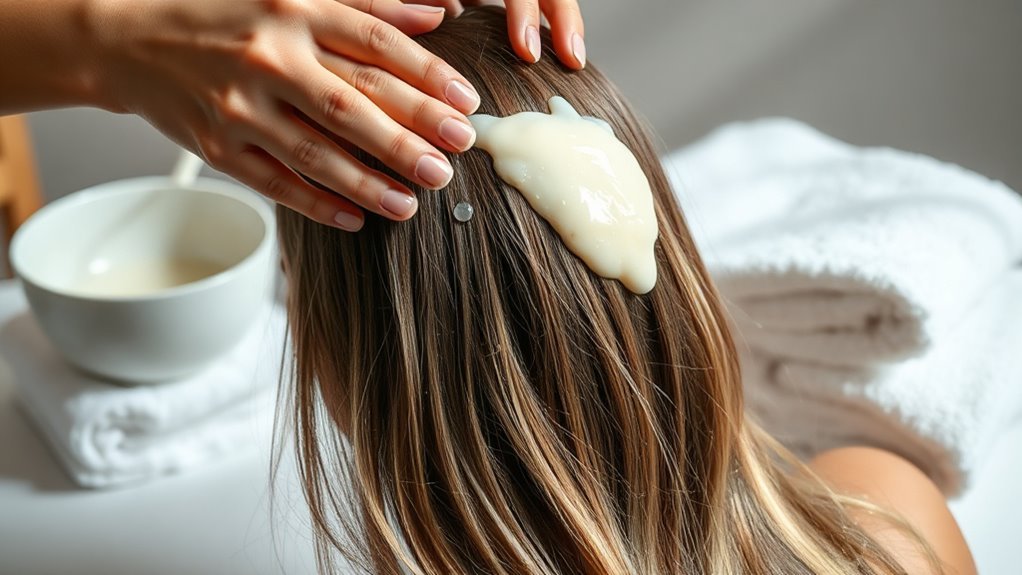
A hair mask is a concentrated conditioning treatment designed to deliver a higher level of moisturizing, strengthening, or reparative ingredients than a standard conditioner. You apply it to your hair for a targeted interval so the active agents can interact with the fiber more intensely.
In practice, you use it when your hair shows dryness, breakage, frizz, or chemical stress, and you want measurable support, not vague promises. Hair mask benefits often include improved softness, reduced surface roughness, and better manageability, especially when you choose a formula matched to your hair’s needs.
Use it when hair shows dryness, breakage, or frizz, and you want measurable support.
You can select store-bought options or follow DIY recipes with simple ingredients, but you should still prioritize ingredient quality and scalp tolerance.
A hair mask gives you a practical, evidence-based way to care for your hair on your terms, with fewer assumptions and more control.
How Does a Hair Mask Differ From Conditioner?
You use conditioner after regular washing to provide quick surface smoothing and detangling, while a hair mask delivers a more intensive treatment aimed at deeper repair or hydration.
You’ll usually notice that masks have a thicker, more concentrated formula than conditioners, which makes them better suited for longer contact time.
Because of this difference in potency, you don’t use hair masks as often as conditioner.
Purpose And Function
While conditioners primarily smooth the hair cuticle and reduce tangling after washing, hair masks are designed to deliver a higher concentration of conditioning agents that penetrate more deeply and remain on the hair longer. You use a mask when your hair needs targeted support, not routine detangling. Its purpose is to increase hydration benefits and deliver repair properties after stress from heat, chemicals, or friction.
| Feature | Conditioner | Hair Mask |
|---|---|---|
| Primary role | Surface smoothing | Intensive treatment |
| Contact time | Brief | Extended |
| Outcome | Easier combing | Stronger moisture retention |
You’ll notice masks work like a reset, giving your hair room to recover and stay more resilient.
Formula And Texture
Hair masks usually contain a higher load of oils, humectants, proteins, and film-forming agents than conditioners, which is why they feel denser and more concentrated on the hair.
You’ll often notice texture differences: a mask may be thicker, creamier, or balm-like, while conditioner usually spreads more easily and rinses faster.
These formulation variations change how the product deposits on strands and how much slip, occlusion, and surface smoothing you experience.
In evidence-based terms, masks are engineered for deeper cosmetic conditioning, not just quick detangling.
You can choose one with a lighter or richer base depending on your hair’s needs, so your routine stays deliberate, not dictated by marketing.
The result is targeted care that supports your hair’s structure and your autonomy.
Usage Frequency
Usage frequency is one of the main ways hair masks differ from conditioner: conditioners are usually used after every wash, whereas masks are applied less often because they’re formulated for more intensive conditioning.
You can treat a mask as a periodic intervention in your daily routines, not a replacement for regular conditioning. Most evidence-based schedules recommend once weekly, though damaged, porous, or chemically treated hair may benefit from two applications per week.
Overuse won’t necessarily improve hair health; in fact, excess emollients or proteins can leave hair limp, coated, or brittle. You should adjust frequency to your hair’s response, texture, and wash pattern.
That flexibility lets you care for your hair on your terms, with targeted support rather than constant treatment.
What Does a Hair Mask Do for Your Hair?
A hair mask delivers a concentrated dose of conditioning agents that penetrates the hair shaft and coats the cuticle to reduce moisture loss, improve softness, and increase manageability.
You get targeted support for dry, stressed, or chemically treated strands, because these formulas usually include humectants, emollients, and proteins that help reinforce the fiber.
In practice, that means less roughness, less breakage from combing, and smoother alignment of the cuticle. You may also notice better elasticity, which can make hair feel more resilient during styling.
Some masks support scalp health by reducing dryness at the root, while others emphasize hair repair by helping restore surface integrity after heat or coloring.
The result isn’t transformation into a different hair type; it’s measurable improvement in feel, control, and appearance.
Used consistently, a mask can help you maintain hair that looks healthier, behaves better, and responds with less friction to daily manipulation.
How Do You Choose the Right Hair Mask?
To choose the right hair mask, match the formula to your hair’s main problem: dryness, damage, frizz, or scalp irritation. You should also consider hair types, since fine, coarse, curly, and color-treated strands respond differently to ingredient benefits. Look for humectants like glycerin for dryness, proteins for weakened cuticles, lipids for rough texture, and soothing agents for sensitive scalps. Avoid heavy occlusives if your hair collapses easily.
| Hair type | Main concern | Best ingredients |
|---|---|---|
| Fine | Flatness | Lightweight humectants |
| Curly | Dryness | Oils, shea, ceramides |
| Damaged | Breakage | Hydrolyzed protein |
| Sensitive scalp | Irritation | Panthenol, aloe |
Read labels, not marketing claims. You deserve a formula that supports your biology, not one that asks you to conform. If a mask aligns with your texture and needs, it’ll work with your hair, not against it.
How Often Should You Use a Hair Mask?
How often you use a hair mask should match your hair type, damage level, and scalp condition.
You’ll often benefit from weekly use if your hair is dry, chemically treated, or prone to breakage, while monthly use may be enough if your hair is fine or minimally damaged.
Watch for signs of overuse, such as limp texture, buildup, or increased oiliness, and reduce frequency if they appear.
Hair Type Matters
Hair type should guide how often you use a hair mask, because different textures and conditions absorb moisture and tolerate treatment at different rates.
You can use curly care more often, since coils usually lose water faster and benefit from denser emollients. If you have an oily treatment profile, apply masks sparingly and keep them on mids and ends to avoid collapse at the scalp.
For dry nourishment, choose richer formulas that restore lipids and reduce breakage. If you need color protection, select masks with low-friction conditioners that help limit fade.
For fine volume, use lighter masks so you don’t flatten strands. When you manage heat damage, prioritize protein-balanced formulas that support structure without stiffness.
Your hair’s biology, not rules, should decide the schedule.
Weekly vs. Monthly
Most people do best with a hair mask once a week, but the right frequency depends on strand condition, porosity, and how much chemical or heat stress your hair absorbs. Use this guide:
| Hair need | Frequency |
|---|---|
| Mild dryness | Every 10–14 days |
| Color, bleach, or heat damage | Weekly |
| Intensive hair restoration | 2 times weekly, short-term |
You don’t need daily treatments; they rarely improve outcomes and can disrupt balance. If your hair feels rough, tangles easily, or loses slip, increase use modestly. If it already feels soft and resilient, monthly masking may be enough. Track response over 3–4 weeks and adjust with intention. Your routine should support liberation, not dependence on products.
Signs Of Overuse
Too much masking can overload the hair shaft and scalp, especially if you’re using rich, occlusive formulas too often. You may notice overuse symptoms such as limp strands, greasy roots, dullness, reduced volume, or hair that feels soft yet weak and stretchy.
If your scalp gets itchy, congested, or flake-prone after conditioning, your routine may be too heavy. Excess protein or emollients can disrupt your hair’s balance and impair hair health, especially when you layer masks with leave-ins and oils.
Back off frequency if your hair stops absorbing product or looks coated after washing. Liberation means choosing what your hair needs, not following a rigid schedule. Use a mask only when your hair actually benefits, and adjust based on texture, porosity, and scalp response.
How Do You Use a Hair Mask the Right Way?
To use a hair mask correctly, start with clean, damp hair so the formula can penetrate more evenly. Remove excess water with a towel, then section your hair to improve coverage and control.
Apply the mask from mid-lengths to ends, unless the label directs you to the roots. Use application techniques that distribute product uniformly, such as smoothing with your fingers or a wide-tooth comb.
Follow the ideal duration listed on the package; leaving it on longer doesn’t reliably increase benefit and may weigh hair down. Rinse thoroughly with lukewarm water until no residue remains.
If your hair is fine, use a smaller amount; if it’s coarse or very dry, use a bit more. For most people, once weekly is enough, but you can adjust based on texture, chemical processing, and environmental stress.
Consistent, targeted use helps you care for your hair on your terms, without unnecessary excess or guesswork.
When Isn’t a Hair Mask Worth It?
A hair mask isn’t always worth the time, cost, or buildup risk, especially if your hair is already healthy, low-porosity, or easily weighed down. You’re unlikely to gain measurable benefit if your cuticle already retains moisture and your strands feel elastic after routine conditioner. In those cases, cost effectiveness favors simpler care.
- You notice flat roots after every treatment.
- You spend more time rinsing than improving results.
- You use masks without a clear damage pattern.
Timing considerations matter, too. If you’re short on time, a regular conditioner can meet your needs with less residue and less effort. Masks make more sense when you’re correcting dryness, chemical damage, or high friction.
Otherwise, they can add product load without solving a real problem. Choose targeted care, not compulsory rituals, so your routine supports freedom rather than obligation.
Frequently Asked Questions
Can Hair Masks Help With Color-Treated Hair?
Yes, hair masks can help with color-treated hair by improving moisture balance and reducing the roughness that can accelerate fading.
You’ll get better color retention when you use a mask formulated for dyed hair, since hydrated cuticles reflect less damage and hold pigment longer.
Choose protein only if your hair feels weak; otherwise, prioritize emollients and humectants.
Use it weekly, and you can protect your color without sacrificing softness or control.
Are Hair Masks Safe for Oily Scalps?
Yes, hair masks can be safe for oily scalps if you choose light, noncomedogenic formulas.
Like many things, moderation matters. You should avoid heavy oils and silicones, then check hair mask ingredients for salicylic acid, clay, or protein.
Apply only to mid-lengths and ends, not your scalp. Evidence supports targeted use, and these oily scalp remedies can improve balance without clogging follicles.
You don’t need to choose between care and freedom.
Should You Apply a Hair Mask Before Shampooing?
Yes—you can apply a hair mask before shampooing if you want pre-shampoo benefits like reduced protein overload and better scalp comfort.
You’ll use application techniques that target mid-lengths and ends, then leave it on briefly before washing. This method can help fine or oily hair avoid heaviness, while still delivering hydration.
You don’t need to follow one rule; test your hair’s response and choose the routine that supports your freedom.
Can You Leave a Hair Mask on Overnight?
Yes, you can leave a hair mask on overnight, but you shouldn’t always do it.
As the saying goes, “Too much of a good thing isn’t good.” You’ll often get stronger hydration benefits and improved overnight results with richer masks, yet prolonged contact can also irritate your scalp or over-soften strands.
You should follow the product label, test your hair’s tolerance, and rinse thoroughly by morning for safer, evidence-based care.
Do Hair Masks Work on Curly Hair?
Yes, hair masks can work well on curly hair, especially when you choose formulas with moisturizing ingredients.
You’re likely to see less dryness, better slip, and improved curl definition because curly haircare often needs extra hydration and cuticle support.
Use the mask consistently, and you may reduce breakage and frizz.
Don’t expect repair of severe damage, though; masks improve condition, not structure.
Match the product to your curl porosity and needs.
Conclusion
In the end, a hair mask is a targeted treatment, not a miracle cure. You use it to deliver a higher concentration of conditioning agents to hair that’s dry, frizzy, or damaged, while letting it sit long enough to work. If your hair already feels balanced, the payoff may be small. Choose it like a precise tool, not a luxury add-on, and it can help your strands recover and perform more smoothly.