If you’re considering a crib with a changing table, you’re probably weighing space, convenience, and safety all at once. These units can streamline a nursery, but only if they’re sturdy, well built, and easy to keep clean. You’ll want to know which features actually matter, which styles fit different rooms, and what safety rules can’t be ignored before you choose one.
What Is a Crib With Changing Table?

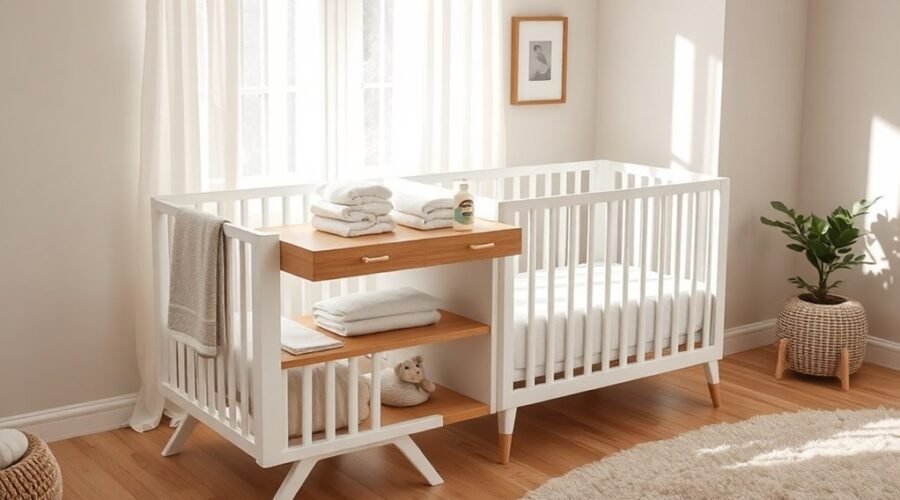
A crib with changing table is an all-in-one nursery unit that combines a standard baby crib with an attached changing surface, often along with storage such as drawers or shelves.
You choose it when you want one piece of furniture that supports everyday care and keeps essentials close at hand. Among crib types, this hybrid design stands out for compact layouts and space saving options, especially if you’re setting up a small room or shared space.
It can reduce the need for separate furniture, which may simplify movement and keep pathways clearer. You’ll also find variations with convertible frames, fixed dressers, or detachable changing tops, so you can match the unit to your routine and room size.
Look for sturdy construction, easy-to-clean materials, and dimensions that fit your nursery without crowding it. A well-designed model helps you stay organized while preserving more open space for safer, calmer caregiving.
Crib With Changing Table Safety Rules
Because a crib with an attached changing surface combines sleep and diaper-changing zones, you need to treat safety as nonnegotiable: keep the changing area within the manufacturer’s weight limit, never leave your baby unattended on the surface, and make sure the changing top locks securely in place when it’s in use.
Treat crib-changing tops as safety-critical: respect weight limits, lock securely, and never leave baby unattended.
Follow safety standards by using only the hardware and straps provided, and check that every latch clicks before you step away. Proper usage also means placing the unit on a flat floor, away from cords, blinds, and heat sources that could pose a hazard.
- Inspect the frame daily for loosened screws, cracks, or wobble.
- Keep wipes, diapers, and creams within reach so you won’t stretch or turn away.
- Stop using the changing area as soon as your child outgrows the specified limits.
This simple discipline protects your child while preserving your peace of mind.
What Features Matter Most?
When you compare cribs with changing tables, focus first on stability, secure hardware, and a design that meets current safety standards. You deserve a setup that protects your baby and keeps your daily routine efficient.
Check that the changing surface has raised sides, a firm, wipeable pad, and a weight limit you won’t outgrow too quickly. Look for drawers, shelves, or other storage options that let you keep diapers, wipes, and clothes within arm’s reach, so you never leave your baby unattended.
Easy-to-clean finishes matter because messes happen fast, and you shouldn’t waste time scrubbing. Measure the unit carefully to confirm it fits your room without crowding movement.
Favor designs that support your freedom to organize, simplify, and parent on your terms. Strong construction and thoughtful design aesthetics should work together, giving you safety, function, and calm confidence every day.
Common Crib With Changing Table Styles
Several crib with changing table styles meet different nursery needs, and the safest choice depends on how you plan to use the space. You’ll usually see combo units that pair a crib with a fixed changer, convertible models that shift as your child grows, and compact designs built for tight rooms.
Look for smooth edges, stable frames, and secured changing surfaces that reduce wobble during use.
Look for smooth edges, sturdy frames, and secured changing surfaces that minimize wobble during use.
- Standard combo cribs: These give you a clear nursery station with storage close by.
- Convertible styles: These support longer use while keeping the layout simple and orderly.
- Compact space saving options: These fit smaller rooms without crowding your movement.
Modern designs often add drawers, shelves, and clean lines, but you should still check weight limits, hardware quality, and changing height.
When you choose thoughtfully, you protect your back, preserve freedom of movement, and create a nursery that works for you.
Is a Crib With Changing Table Worth It?
A crib with a changing table can be worth it if you want to save space and keep diapering supplies within arm’s reach, but the value depends on how safely and conveniently it fits your nursery.
You gain clear space saving benefits in small rooms, and you may reduce clutter by combining two tasks in one footprint.
Still, check the changing surface height, guardrails, and storage layout so you can move freely and avoid awkward lifting.
A smart cost comparison also matters: one unit may cost less than buying a crib and separate changer, but quality, durability, and long-term use should guide you.
If your room feels cramped, this setup can support a calmer routine and more independent caregiving.
If it blocks access or feels unstable, choose separate pieces instead.
Your space should work for you, not the other way around.
Frequently Asked Questions
How Do You Clean a Crib With Changing Table Safely?
You clean a crib with changing table safely by removing your baby, stripping bedding, and wiping surfaces with mild cleaning solutions and warm water.
You’ll want to avoid harsh chemicals, keep electrical parts dry, and follow safety precautions like checking for loose screws and drying all surfaces fully.
Use a soft cloth for corners, sanitize the changing pad if needed, and let everything air out before your baby returns.
Can the Changing Table Be Removed Later?
Yes, often you can remove it later, like peeling a training wheel from a growing bike.
Check your model’s manual first, because removable features vary by design. You should confirm the hardware leaves no sharp edges and that the crib stays stable after conversion.
For long term use, choose a unit tested for both modes. If you’re unsure, ask the manufacturer before altering anything.
What Mattress Size Fits a Crib With Changing Table?
You need a standard crib mattress, usually 27 1/4 by 51 5/8 inches, unless your crib’s manual says otherwise.
Check that the fit is snug, with no gaps larger than two fingers, because crib safety depends on it.
Choose mattress thickness that matches the crib rails and supports safe sleep.
Avoid oversized or soft mattresses.
You deserve a setup that protects your baby while giving you flexibility and peace of mind.
How Much Does a Crib With Changing Table Usually Weigh?
You’re typically looking at a gently hefty 80 to 120 pounds for a crib with changing table, though some models run lighter or heavier.
You should factor in weight considerations before you move it, assemble it, or place it upstairs. Check the manufacturer’s specs for crib safety, because sturdier builds often weigh more.
If you need true liberation from strain, choose a modular design that you can relocate and maintain easily.
Are Crib Changing Tables Compatible With Storage Baskets?
Yes, you can often use storage baskets with crib changing tables, but you’ll need to check the shelf size, weight limit, and clearance first.
You should choose baskets that fit snugly, don’t block access, and won’t tip or snag. Good storage solutions can improve safety and design aesthetics, but only if they keep supplies organized and reachable.
Measure carefully, avoid overcrowding, and prioritize sturdy, non-toxic materials for your baby’s space.
Conclusion
A crib with a changing table can make your nursery more efficient, but only if you choose it carefully. You’ll want sturdy construction, secure hardware, and a changing surface with raised sides to help keep your baby safe. Check storage, materials, and ease of cleaning before you buy. When you match space-saving design with strong safety features, you’re setting up a practical nursery where every inch pulls its weight.