

If you want to oil your hair correctly, the details matter more than the product itself. You’ll need to match the oil to your hair type, apply just enough to coat the right areas, and leave it on for the proper time. Done well, oil can reduce dryness and improve manageability. Done poorly, it can leave buildup and grease. The next step is knowing exactly how to do each part.
What You Need to Oil Hair
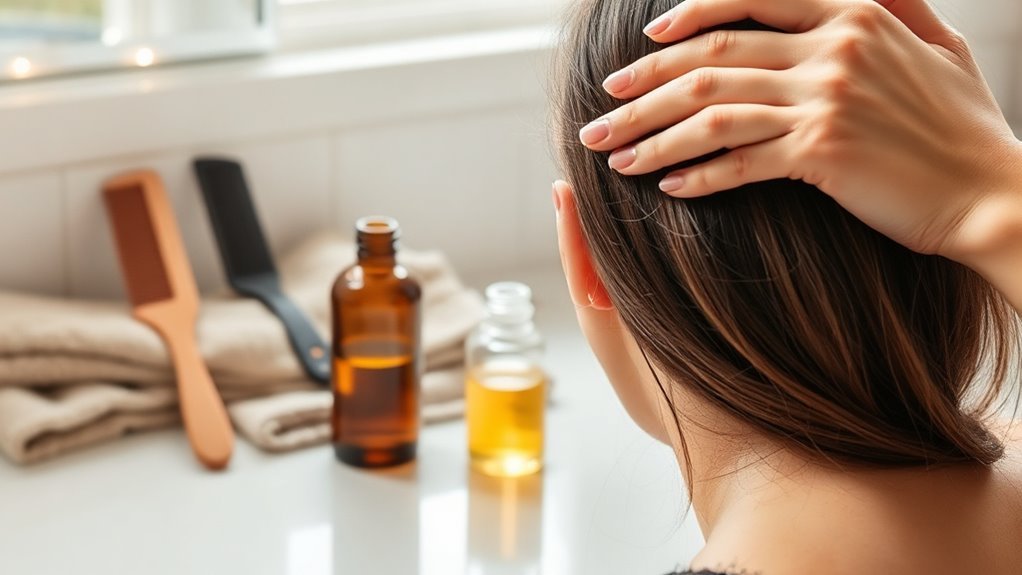
To oil your hair effectively, you need just a few basic supplies: a suitable hair oil, a clean applicator or your fingertips, a comb for sectioning, and a towel to protect your clothing and surfaces.
You also need a mirror and a calm, distraction-free space so you can work with precision. These tools let you control placement, reduce waste, and support even coverage from roots to ends.
Your goal is to prepare for efficient application techniques, not to overcomplicate the process. Sectioning helps you reach dense areas, while the applicator lets you target the scalp or lengths without excess friction.
A towel keeps the process clean and protects your environment, so you can focus on the oil benefits without mess. When you gather these simple items first, you make the routine more intentional, more effective, and easier to repeat.
Choose the Best Hair Oil
Now that you’ve gathered your tools, the next step is selecting an oil that matches your hair type, scalp condition, and styling goals. You’ll get the best results when you choose oils by function, not hype.
Choose oils by function, not hype, and match them to your hair type, scalp condition, and styling goals.
If your hair feels dry or brittle, look for richer carrier oil options such as coconut, avocado, or olive oil, which can reduce friction and help limit moisture loss. If your scalp is oily or acne-prone, choose lighter oils like jojoba or grapeseed, which absorb faster and feel less occlusive.
For targeted support, consider essential oil benefits carefully: rosemary may support scalp circulation, tea tree can help with buildup, and lavender may soothe irritation. Always dilute essential oils in a carrier oil before use to lower irritation risk.
Check ingredient purity, avoid added fragrance if your skin is sensitive, and select oils that support your texture, comfort, and autonomy.
How to Apply Hair Oil Step by Step
Start with dry or slightly damp hair, because oil spreads more evenly when excess water isn’t diluting it. Pour a small amount into your palm, warm it between your hands, then use controlled hair oiling techniques to distribute it. Apply with clean fingertips, not your nails, and move in sections to maintain precision and reduce waste.
| Step | Action |
|---|---|
| 1 | Measure a modest amount |
| 2 | Warm the oil in your palms |
| 3 | Spread it with fingertips |
| 4 | Finish with scalp massage |
Use a gentle scalp massage in small circles to improve distribution and encourage circulation without irritation. Keep pressure light and consistent, so you support the scalp rather than stressing it. If the oil feels heavy, stop adding more; efficiency matters more than excess. Afterward, let the oil sit for the planned time before cleansing. This method gives you control, protects your hair’s natural structure, and helps you care for it with intention and autonomy.
Where to Apply Hair Oil
Apply hair oil where your hair needs the most support: the mid-lengths, ends, and any dry or frizzy sections, since these areas are usually the most porous and prone to damage.
You’ll improve oil distribution by working from the outside in, so each strand gets targeted coverage without overwhelming the roots. If your scalp feels dry, add a small amount at the roots for scalp care, especially along part lines or areas exposed to friction.
Use your fingertips to map the oil along the hair shaft, focusing on sections that tangle, split, or lose moisture fast. This precise placement helps reduce breakage and supports the hair’s lipid barrier.
Avoid saturating every area equally; strategic application respects your hair’s structure and keeps it lighter. When you direct oil to the zones that need it most, you choose control, efficiency, and healthier-looking hair without waste.
How Much Hair Oil to Use
The amount of hair oil you use should match your hair length: short hair needs just a few drops, while longer hair usually needs more.
You can start with a small amount and add more only if your hair still feels dry, since excess oil can weigh it down.
Apply enough to coat the scalp lightly and distribute the rest through the ends for balanced coverage.
Hair Length Guide
Hair length directly affects how much oil your hair can absorb without looking greasy. If your hair is short, start with 2 to 4 drops; for shoulder-length hair, use 5 to 8 drops; for long hair, use 9 to 12 drops.
These amounts give you control and keep your routine efficient. Measure by warming the oil between your palms, then distribute it evenly in your hands before application. You can adjust slightly based on density and texture, but don’t overload the strand surface.
Smart styling tips include using less on fine hair and a touch more on coarse hair. Your goal is balance: enough oil to improve slip and shine, not enough to weigh your hair down.
Scalp And Ends
For the scalp and ends, you need different amounts of oil because each area absorbs and retains it differently. You usually need a light dose for scalp benefits and a slightly larger dose for ends nourishment. Massage 2 to 4 drops into a short scalp, 5 to 8 drops for medium length, and 8 to 12 drops for long hair. Apply what your strands can hold, not what tradition demands.
| Area | Amount |
|---|---|
| Scalp | 2-8 drops |
| Ends | 4-12 drops |
Focus oil on the driest sections first. If your scalp feels slick within minutes, you’ve used too much. If your ends still feel rough after spreading, add one drop at a time. This measured method supports balanced hydration and keeps your routine freeing, efficient, and precise.
How Long to Leave Hair Oil In
The ideal oil soak duration depends on your hair’s porosity, thickness, and scalp sensitivity, so you should time it to match your hair type.
You can leave oil on for a short period, such as 30 minutes to 2 hours, or use an overnight treatment if your hair tolerates prolonged exposure.
Longer contact times don’t always improve results, and fine or low-porosity hair often needs less time than coarse or dry hair.
Oil Soak Duration
How long you leave hair oil in depends on your hair type, the oil’s weight, and your goal, but most treatments work best within 30 minutes to a few hours.
Fine hair usually needs less time because it absorbs oil quickly, while coarse or dry hair can tolerate longer contact.
Choose oil types that match your texture: lighter oils spread easily, while richer ones coat more densely.
Shorter soaks help you capture oil benefits without saturating the scalp or weighing strands down.
If you’re targeting dryness or friction, keep the application focused on midlengths and ends, then rinse thoroughly with shampoo.
You’ll get more controlled results by tracking how your hair responds and adjusting duration based on shine, softness, and residue.
Overnight Vs Short
Short oil treatments and overnight applications serve different purposes, so your choice should match your hair’s porosity, thickness, and scalp tolerance. A short application, usually 20 to 60 minutes, reduces residue risk and lets you assess response quickly. Overnight benefits include deeper occlusive contact and reduced breakage from friction, but only if your scalp stays comfortable.
| Duration | Main effect |
|---|---|
| 20 min | Light conditioning |
| 60 min | Improved softness |
| 2–4 hr | Moderate penetration |
| Overnight | Maximum occlusion |
| Too long | Possible buildup |
Use short timing when you want control and easy cleanup. Choose overnight only when your skin tolerates prolonged exposure, and cleanse thoroughly afterward. You deserve a method that fits your body, not outdated rules.
Hair Type Timing
Hair type strongly influences how long you should leave oil in, because porosity, density, curl pattern, and scalp sensitivity all change absorption and residue risk.
If you have curly hair or thick locks, you can often keep oil on 1 to 8 hours, since coils trap moisture and slow evaporation.
With fine hair or an oily scalp, limit contact to 15 to 60 minutes to avoid limpness and buildup.
If you’re treating dry ends or damaged strands, focus oil on the lengths, not the roots, and watch for seasonal changes that increase dryness.
High hair porosity usually absorbs faster, so shorter sessions may still work well.
Low porosity hair needs warmth and patience, but you shouldn’t force overnight wear if your scalp reacts.
How to Wash Out Hair Oil
Start by rinsing your hair with lukewarm water to loosen the oil and help lift residue from the scalp and strands.
Then apply a sulfate-free shampoo directly to your scalp and massage with your fingertips for 60 seconds. This step emulsifies the oil and removes buildup without stripping the fiber.
If you used heavier oils, repeat the shampoo once more, focusing on the roots, where residue concentrates. Let the lather move through the lengths as you rinse; don’t scrub the ends, because friction can cause breakage.
Follow with a light conditioner on mid-lengths and ends to restore slip and reduce static. Rinse thoroughly until water runs clear and your hair feels clean, not coated.
These hair oiling techniques support the hair oil benefits you want while keeping the scalp breathable.
Finish by blotting with a microfiber towel and air-drying or using low heat to preserve cuticle integrity and liberation from excess weight.
How Often to Oil Your Hair
How often you oil your hair depends on your scalp type, hair texture, and how much buildup your strands can tolerate. If your scalp feels dry, you can oil once or twice a week to support barrier function and reduce moisture loss.
If you have fine or low-porosity hair, a lighter oil frequency may protect hair health without weighing strands down. Coarse, curly, or highly porous hair often benefits from more regular oiling because it loses lipids faster and needs extra lubrication.
You can adjust based on response: softer texture, less breakage, and fewer tangles usually mean your schedule works. If your scalp becomes greasy, flat, or itchy, extend the interval.
Oiling should serve your needs, not control them. Treat your routine like a tool for self-care and autonomy, and let your hair’s condition guide the cadence.
Common Hair Oiling Mistakes
A few common oiling mistakes can reduce the benefits you’re trying to get, especially if you apply too much product, leave oil on a scalp that already feels greasy, or use it inconsistently.
You can protect scalp health by correcting these errors and choosing oiling techniques that match your texture and routine. Common misconceptions say more oil always works, but excess can clog follicles and weigh hair down.
Pick oil types based on your needs: lightweight oils suit fine strands, while richer oils may help dry hair. Adjust application frequency to your environment, washing habits, and porosity; overdoing it can disrupt balance.
Use clean hands, section hair, and focus on mid-lengths unless your scalp needs treatment.
- Don’t oil dirty hair.
- Don’t skip patch testing.
- Don’t leave oil overnight if it irritates you.
- Don’t use heavy oils on fine hair.
- Don’t ignore scalp feedback.
Related Hair Care Guides: Compare oils with black seed oil benefits for hair and deep condition using how to apply a hair mask.
Frequently Asked Questions
Can I Oil Hair Every Day?
Yes, you can oil hair every day, but you shouldn’t assume it’s best for your hair health.Daily oiling can reduce friction and moisture loss, yet too much oil may weigh hair down, clog the scalp, or trap dirt.You should observe your scalp’s response and adjust frequency based on texture, porosity, and sebum production.For liberation through self-care, choose what supports your body, not rigid routines.
Should I Oil Dirty Hair or Clean Hair?
Clean hair is usually better—you don’t oil a canvas before you wash away the dust.You should apply oil after hair washing, when your scalp and strands are free of buildup, so the oil types you choose can penetrate more evenly.If your hair’s very dry, you can oil slightly dirty hair, but heavy grime blocks absorption.Use a light touch, and let your routine serve your hair, not control it.
Does Hair Oil Help With Dandruff?
Yes, hair oil can help with dandruff by softening flakes and reducing dryness, but it won’t fix every case.You should know that dandruff causes often include yeast overgrowth, scalp inflammation, and skin barrier dysfunction.Oil benefits include improved moisture retention and less friction, yet excess oil can worsen symptoms in some people.Use lightweight oils sparingly, and pair them with an antifungal shampoo if your scalp stays itchy or flaky.
Can I Use Oil on Colored Hair?
Yes, you can use oil on colored hair, and it can reduce dryness, boost shine, and support colored hair benefits if you choose lightweight formulas.Use gentle oil application techniques: warm a small amount, apply mainly to mid-lengths and ends, and avoid saturating the scalp. You’ll minimize pigment loss and maintain fiber integrity.Patch-test first, and don’t overapply; excess oil can weigh hair down and dull color.
Is It Okay to Sleep With Hair Oil?
Yes, you can sleep with hair oil, and you may gain the benefits of overnight absorption if you use a light amount.Choose the best oils, such as coconut, argan, or jojoba, to reduce protein loss and friction.You should protect your pillow with a towel or cap, and you shouldn’t leave heavy oil on too long if your scalp feels irritated.Rinse or shampoo in the morning for balance.
Conclusion
You’ve learned how to oil your hair with care, precision, and purpose. By choosing the right oil, applying a small amount to dry or damp hair, and focusing on mid-lengths and ends, you support stronger, smoother strands. Let the oil rest for the right time, then cleanse gently. With consistent, measured use, you can reduce dryness, improve shine, and protect your hair’s health. Avoid overdoing it, and you’ll keep your routine simple, smart, and effective.

[…] How to Apply Oil to Hair: Pre-Wash & Post-Blowout Guide […]