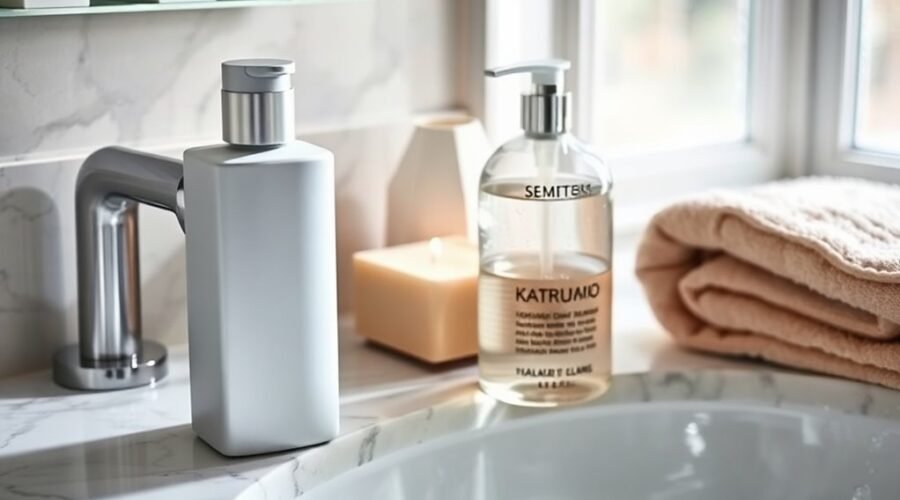
Yes—if you are wondering can you use shampoo as body wash in a one-off hotel or gym emergency, a mild shampoo will safely remove sweat and surface dirt from intact skin, but you should not make it your daily habit. Most shampoos use stronger oil-cutting surfactants to clean dense scalp sebum (or leave cationic hair-conditioning polymers behind), which can strip your body’s lipid barrier or clog back and chest pores with daily use.
Can You Use Shampoo as Body Wash? How Shampoo vs. Body Wash Formulas Differ
Both bottles create foam in the shower, but cosmetic chemists formulate hair shampoo and body wash for two very different surfaces. Here is what happens when you swap them:
| Formulation Factor | Standard Hair Shampoo | Dedicated Body Wash | Impact of Using Shampoo on Body Skin |
|---|---|---|---|
| Surfactant Strength | Higher concentration of oil-cutting detergents to strip scalp sebum & styling oils | Milder surfactant blend balanced for thinner body skin lipids | Can leave arms, legs, and shins feeling tight, itchy, or chalky |
| Conditioning Polymers | Contains cationic polymers (Polyquaternium, silicones) meant to cling to hair | Uses water-rinsable humectants (glycerin) or skin emollients (ceramides/oils) | 2-in-1 or moisturizing shampoos can leave a pore-clogging film on the back |
| Target pH Range | Typically pH 4.5–5.5 (to keep hair cuticles flat) | Typically pH 5.0–6.0 (syndet) to match the skin’s acid mantle | pH is actually close to skin—surfactant strength is the real drying culprit |
| Active / Special Variants | Clarifying chelators, menthol, or anti-dandruff actives (ketoconazole/zinc) | Salicylic acid, benzoyl peroxide, or colloidal oatmeal | Clarifying shampoos over-strip; dandruff shampoos have targeted fungal uses |
Which Shampoo Types Work in a Pinch (and Which to Avoid on Skin)
If you run out of body wash while traveling, check which bottle is sitting in the shower caddy before lathering up:
| Shampoo Type on Your Shelf | Emergency Body Wash Rating | How to Use or Why to Skip |
|---|---|---|
| Fragrance-Free Baby Shampoo | Best Backup: Mild amphoteric/glucoside surfactants | Safe for a 1–3 day trip; follow with body lotion on dry shins |
| Sulfate-Free Gentle / Daily Shampoo | Good One-Off Fix: Moderate cleansing power | Dilute a dime-sized drop in wet hands and focus on underarms/feet |
| 2-in-1 Conditioning or Color-Repair Shampoo | Use With Caution: Leaves hair-coating silicones/polymers | Rinse back and shoulders extra thoroughly to avoid clogged pores (“bacne”) |
| Clarifying, Volumizing, or Menthol Shampoo | Avoid on Body: High detergent load and cooling irritants | Strips barrier lipids rapidly and stings freshly shaved skin or sensitive zones |
| Anti-Dandruff Shampoo (Ketoconazole / Zinc) | Targeted Dermatologic Use Only: Antifungal active | Used 2–3x/week on chest/back for fungal acne (Malassezia), not for all-over daily washing |
How to Use Shampoo as an Emergency Body Wash Without Drying Your Skin
- Check your sink for facial cleanser first: If you packed a gentle hydrating face wash, use that on your body before reaching for hair shampoo—it is already formulated for skin.
- Dilute a dime-sized amount with warm (not hot) water: Rub a tiny drop of shampoo between wet palms to create a thin foam rather than squeezing thick shampoo straight onto a loofah.
- Spot-wash only high-sweat areas: Cleanse underarms, groin creases (external skin only), and feet while letting plain warm water rinse your arms, legs, and torso.
- Never apply shampoo to freshly shaved skin or mucous membranes: Hair fragrances, menthol, and sulfates sting micro-nicks and delicate intimate tissue immediately.
- Lock in moisture within 3 minutes of stepping out: Pat dry with a towel and smooth on a plain body lotion or cream to replace any surface lipids the shampoo removed.
Pros and Limitations of Using Shampoo on Your Body
When It Makes Sense
- Works as a one-night travel, camping, or gym-bag backup when you forget body wash
- Medicated ketoconazole or zinc pyrithione dandruff shampoos double as an effective dermatologist-backed wash for chest and back fungal folliculitis
Limitations for Daily Use
- Daily all-over washing with standard hair shampoo accelerates winter itch, flaky shins, and eczema flares
- Film-forming hair conditioners inside moisturizing shampoos can worsen acne on the upper back and shoulders
Skin-Barrier Safety Notes
Keep hair shampoo strictly away from internal intimate areas, broken or sunburned skin, and active eczema plaques. Even when washing your hair normally in the shower, tilt your head back or wash your body last (after rinsing conditioner out of your hair) so leftover hair surfactants and silicones do not sit on your shoulders and back.
Related Hair and Skin Cleansing Guides
- Is Baby Shampoo Good for Your Hair? What You Should Know
- Clean & Clear Deep Action Face Wash: How to Use Safely
- How Long Does Sunscreen Last? Reapplication & Expiry Guide
Frequently Asked Questions
Can using shampoo as body wash trigger eczema or psoriasis flares?
Yes. Regular shampoos use stronger anionic surfactants (such as sodium lauryl sulfate or sodium laureth sulfate) engineered to strip dense sebum and styling buildup from hair, along with higher fragrance loads that easily disrupt an eczema- or psoriasis-prone skin barrier.
Are sulfate-free shampoos safer to use as an emergency body wash?
Yes. A sulfate-free, fragrance-free, or baby shampoo formulated with mild amphoteric or glucoside surfactants (like cocamidopropyl betaine or decyl glucoside) is much gentler on body skin in a one-off travel pinch than a clarifying or volumizing shampoo.
Can you use medicated dandruff shampoo (ketoconazole or zinc pyrithione) as body wash?
Dermatologists sometimes specifically recommend using ketoconazole, selenium sulfide, or zinc pyrithione dandruff shampoo as a short-contact wash (left on for 3 to 5 minutes before rinsing) on the chest, back, and shoulders to treat fungal acne (Malassezia folliculitis) or tinea versicolor—follow your clinician's exact schedule.
Can regular conditioning shampoo cause back or chest acne ("bacne")?
Yes. Moisturizing 2-in-1 shampoos contain cationic conditioning polymers (like polyquaternium-10) and heavy silicones designed to cling to hair shafts after rinsing; left on the back and shoulders, that film can trap sweat and clog pores.
What is the best emergency substitute if you run out of body wash?
Use your gentle facial cleanser or unscented baby shampoo first—facial cleansers are formulated at a skin-friendly pH (4.5–5.5) with non-stripping surfactants. If regular shampoo is your only option, dilute a dime-sized drop in wet hands, wash only high-sweat zones, rinse thoroughly, and apply body lotion right after towel-drying.