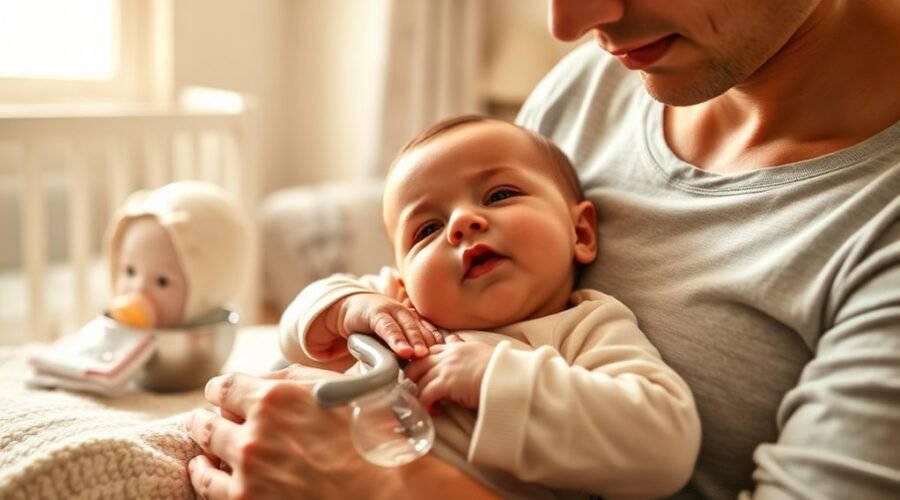
If you are asking can teething cause vomiting, pediatric guidelines from the American Academy of Pediatrics (AAP) are clear: no—teething does not directly cause true, forceful vomiting. While excess teething drool or pushing a teething ring too far back in the mouth can occasionally trigger a brief gag-reflex spit-up, repeated vomiting points to a viral stomach infection (gastroenteritis), reflux, ear infection, or food reaction that requires close hydration monitoring.
Can Teething Cause Vomiting? Gag Spit-Up vs. True Vomiting
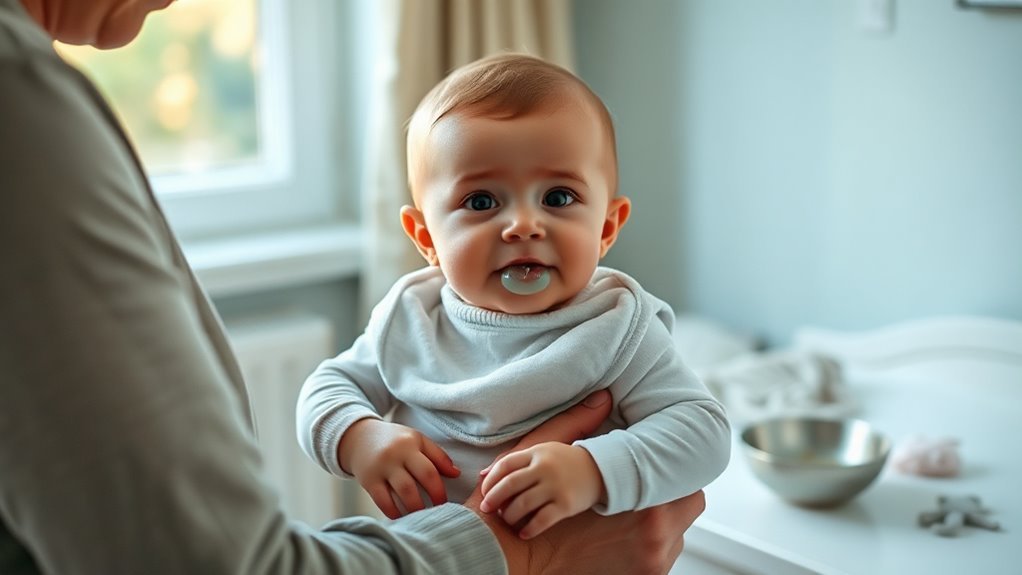
Because babies typically cut their first teeth around 6 months—the exact same age passive maternal immunity drops and babies start putting every object into their mouths—viral illnesses frequently get misblamed on teething. Use this table to tell a harmless drool-or-gag spit-up from true vomiting when evaluating can teething cause vomiting:
| Symptom Marker | Teething Drool / Gag Spit-Up | True Vomiting (Illness / Food Reaction) |
|---|---|---|
| How It Comes Up | Effortless dribble or single cough/gag right after chewing fingers or a deep teether | Forceful abdominal contraction that empties the stomach repeatedly |
| Volume & Appearance | 1–2 tablespoons of milk mixed with stringy, frothy clear saliva | Large volume of curdled milk or solids; repeated episodes every 30–60 minutes |
| Temperature | Normal to slightly warm (<100.4°F / 38.0°C) | Often paired with a true fever (≥100.4°F / 38.0°C) during viral infections |
| Other Symptoms | Swollen gum ridge, chin drool rash, chewing on hands, otherwise alert | Watery diarrhea, lethargy, refusal to drink, or hives/facial swelling after a new food |
When Baby Vomiting Requires a Pediatrician or Urgent Care
Never wait on “teething” to pass if your infant shows signs of dehydration or systemic illness:
| Severity Level | Warning Signs to Watch For | Recommended Action |
|---|---|---|
| Emergency / ER Now | Green/yellow-green (bilious) vomit, blood or “coffee grounds” in vomit, rigid/swollen belly, extreme lethargy, or breathing trouble | Seek immediate emergency medical care |
| Call Pediatrician Today | Vomiting lasting >12–24 hours, inability to keep fluids down, fever ≥100.4°F, sunken soft spot (fontanelle), crying with no tears, or no wet diaper in 6+ hours | Contact your pediatrician for same-day evaluation and oral rehydration guidance |
| Monitor at Home | One isolated gag spit-up while chewing a teether; baby is happy, drinking well, and producing normal wet diapers | Switch to a wider ring-shaped teether that cannot reach the back of the throat |
How to Care for a Teething or Spitting-Up Baby Safely
- Switch to anti-gag ring or mushroom-shaped teethers: Long stick-shaped teethers easily poke the back of an infant’s tongue and trigger gagging right after a full feed.
- Offer small, frequent breast or formula feeds if vomiting occurred: After a stomach episode, pausing 15 to 20 minutes and offering smaller, slower feeds prevents overfilling an irritated stomach (ask your doctor before giving infant oral electrolyte solution).
- Keep your baby upright for 20 to 30 minutes after meals: Holding your baby upright—and waiting 30 minutes after a big feed before handing them a teether—reduces gag-triggered spit-up.
- Use chilled (never frozen) silicone teethers or a cool damp washcloth: Refrigerator-cooled pressure soothes swollen gums safely without bruising gum tissue.
What Teething Actually Causes vs. Common Myths
Confirmed Teething Signs
- Heavy drooling, chin or neck-fold moisture rash, and constant gnawing on fingers or bibs
- Localized gum bulging, tenderness, or a small bluish eruption cyst directly over the incoming tooth
- Mild fussiness or brief ear-pulling on the side of an erupting molar
Symptoms Teething Does NOT Cause (Check for Illness)
- Repeated forceful vomiting or projectile vomiting
- Watery diarrhea or foul-smelling, mucus-filled stools
- A true rectal fever of 100.4°F (38.0°C) or higher, full-body rashes, or severe cough/congestion
Teething Product Safety Notes
Stay clear of over-the-counter benzocaine or lidocaine teething gels, homeopathic belladonna tablets, and amber teething necklaces, all of which carry FDA and AAP warnings for severe infant harm. If your baby develops hives, lip swelling, wheezing, or repetitive vomiting within 1 to 4 hours of trying a new solid food (such as peanut, egg, dairy, or oats/rice), contact a doctor promptly to evaluate for an IgE food allergy or FPIES.
Related Teething and Infant Digestion Guides
- How Many Baby Teeth Do You Lose? Age Chart & Timeline
- Baby Diarrhea After Starting Solids: What to Feed
- Baby Coughing During Solids: Causes and What to Do
Frequently Asked Questions
How long does teething discomfort usually last per tooth?
True teething gum soreness typically peaks during the 3 to 5 days right before a tooth crown breaks through the gumline and fades within a day or two after eruption. If your baby seems unwell or vomits for multiple days in a row, look for an illness rather than teething.
Can teething cause a fever alongside vomiting?
No. Pediatric research and the American Academy of Pediatrics confirm that teething does not cause a true fever (a rectal temperature of 100.4°F / 38.0°C or higher). Vomiting paired with a fever ≥100.4°F almost always indicates a viral or bacterial infection.
Can swallowing extra teething drool make a baby spit up?
Yes. When a teething infant swallows large amounts of frothy saliva—or pushes fingers or a teething toy too far back toward their soft palate—it can trigger the gag reflex and bring up a small, effortless mouthful of milk mixed with clear drool.
What age do most babies start teething—and why do infections overlap?
Most babies cut their first lower central incisors around 6 months (ranging from 4 to 12 months). That exact 6-month window is also when passive maternal antibodies from pregnancy wane and babies start mouthing every toy and floor surface, making stomach viruses much more common.
Which teething remedies should parents avoid completely?
Never use topical numbing gels containing benzocaine or lidocaine (the FDA warns of life-threatening methemoglobinemia), unregulated homeopathic belladonna tablets, rock-hard frozen teethers that bruise gums, or amber teething necklaces (choking and strangulation hazards).