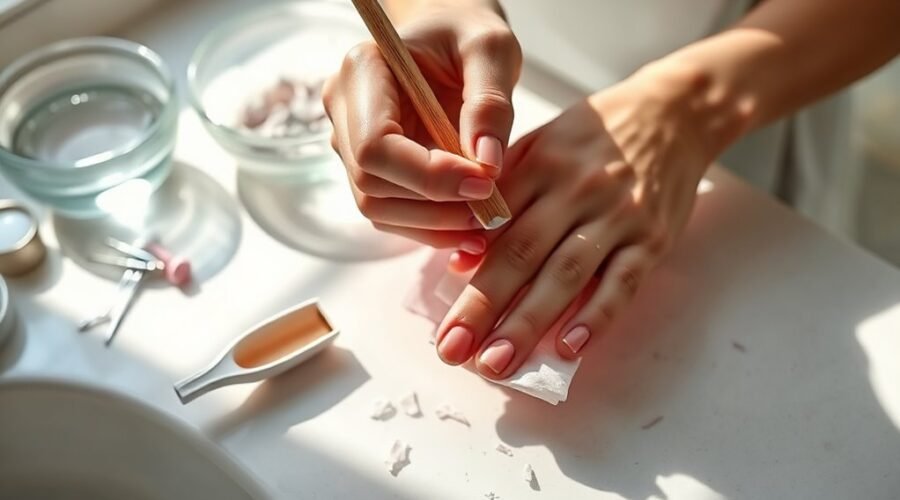
If you’ve run out of remover, you can still get polish off with items you likely already have at home. Rubbing alcohol, hand sanitizer, vinegar and lemon juice, toothpaste, or even perfume can help loosen stubborn color when you let it sit briefly and rub gently. The trick is knowing which option works best for your nails without drying them out, and that’s where the right method makes all the difference.
Best Household Items for Removing Nail Polish
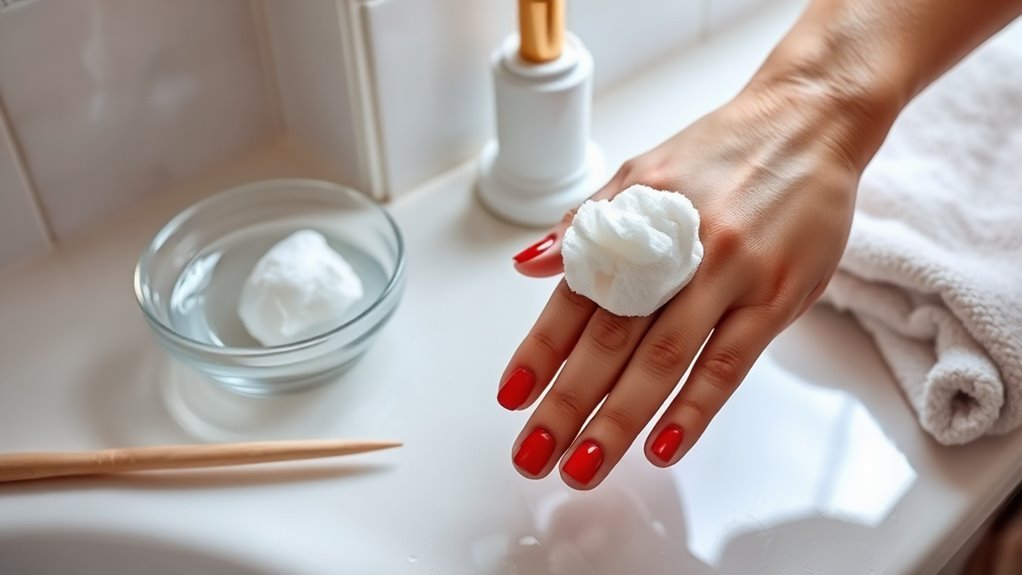
If you’re out of nail polish remover, you can still get the polish off with a few common household items. You can use rubbing alcohol, white vinegar mixed with lemon juice, or a simple baking soda paste for effective household alternatives.
These natural solutions work by softening the polish so you can wipe it away with a cotton pad or cloth. For best results, soak the nail for a minute, then rub gently in small circles. You may need to repeat the process if the color is stubborn.
Keep your hands clean and moisturized afterward, because some ingredients can dry your skin. If you want a safer, more flexible option, choose mild ingredients you already trust at home. That way, you stay in control, avoid an extra store run, and remove polish on your own terms.
How to Remove Nail Polish With Hand Sanitizer
If you don’t have remover, hand sanitizer can help lift nail polish because its alcohol content softens the color.
You’ll want to coat each nail, let it sit briefly, then gently rub the polish away with a cotton pad or cloth.
Afterward, wash your hands and moisturize to clean off residue and keep your nails from drying out.
Hand Sanitizer Method
Hand sanitizer can help lift nail polish when you don’t have remover on hand, thanks to its alcohol content. You’re using one of the most practical hand sanitizer ingredients: ethanol or isopropyl alcohol, which can soften polish and free you from being stuck without options.
It’s a smart pick among effective alternatives when you want a simple, portable solution. Because formulas vary, choose a clear gel or liquid sanitizer with a high alcohol percentage for better results.
This method gives you more control, especially if you value quick fixes that keep you moving. It won’t always work as fast as remover, but it can still loosen color enough to make cleanup easier and less frustrating when you need a graceful, independent workaround.
Application Steps
Start by coating each nail with a generous layer of hand sanitizer, making sure the polish is fully covered. Let it sit for 20 to 30 seconds, then rub each nail firmly with a cotton pad or lint-free cloth. Repeat until the color lifts. This simple method gives you control when you’re exploring nail polish alternatives and keeping up with DIY nail care.
| Step | Purpose |
|---|---|
| Apply sanitizer | Soften polish |
| Wait briefly | Break down color |
| Rub nails | Lift polish |
| Reapply as needed | Improve removal |
| Finish evenly | Reveal clean nails |
You’ll work faster if you stay patient and keep pressure steady. Stick with it, and you can free your nails without harsh remover.
Cleanup Tips
Once the polish starts to loosen, clean up any leftover edges with a fresh cotton pad lightly dampened with hand sanitizer. Then wipe around the cuticles and nail tips until the surface looks even.
Keep pressure gentle so you don’t dry out your skin or weaken the nail plate. If traces remain, repeat with a new pad rather than rubbing hard.
Afterward, wash your hands, apply cuticle oil, and seal in moisture with a nourishing hand cream for better nail care.
This simple method gives you control when you want practical, eco-friendly options that fit your routine. You don’t need harsh chemicals to look polished; you just need patience, clean tools, and a little attention to detail that supports healthy, confident hands.
Try Toothpaste to Loosen Polish
You can use a small amount of toothpaste to help loosen nail polish when you’re out of remover.
Apply a thin layer to the nail, let it sit for a minute, then gently rub it with a cotton pad or soft cloth.
Keep the pressure light so you don’t irritate your nails or skin.
Toothpaste Application Steps
Apply a small amount of non-gel toothpaste to each nail and rub it in with an old toothbrush or cotton pad for a minute or two. Choose mild toothpaste types, since gritty formulas can be harsher on your nails. Use clean application tools so you can spread the paste evenly and avoid waste.
| Step | What to do |
|---|---|
| 1 | Cover each nail lightly |
| 2 | Let the paste sit briefly |
| 3 | Wipe with a damp cloth |
| 4 | Repeat if needed |
Keep your pressure gentle and focused on the polish, not your skin. If the color starts to lift, continue with slow, steady strokes until the surface looks lighter. This simple method gives you a practical, affordable way to reclaim your nails without traditional remover.
Gentle Rubbing Technique
Gently work the toothpaste over each nail with small, circular motions to help loosen the polish without irritating the skin.
Use gentle pressure, letting the paste do the work instead of scrubbing hard. As you massage each nail, focus on the edges where polish grips most tightly.
Keep your movements steady and controlled, and reapply a little toothpaste if it starts to dry out. This approach supports a calm, effective routine that respects your nails and your time.
After a minute or two, wipe the nail clean with a damp cloth or cotton pad. If any color remains, repeat the process once more.
You’re not fighting your polish; you’re guiding it off with care and confidence.
Use Perfume or Cologne as a Last Resort
If you’re truly stuck, perfume or cologne can work as a temporary nail polish remover because many formulas contain alcohol that may help break down the polish.
Choose a stronger fragrance strength for better results, but keep your skin sensitivity in mind before you start. Spray or dab a small amount onto a cotton pad, then press it against the nail for a few seconds. Rub gently until the color lifts, and repeat as needed rather than scrubbing hard.
Choose a stronger fragrance, then press it on a cotton pad and gently rub until the polish lifts.
This isn’t a perfect fix, but it can free you when you need your nails to look presentable and you don’t have remover on hand. Afterward, wash your hands well, then moisturize your nails and cuticles to restore comfort.
Because perfume isn’t designed for this job, use it sparingly and only as a last resort.
Remove Nail Polish With Vinegar and Lemon Juice
Vinegar and lemon juice offer a more household-friendly way to loosen nail polish when you don’t have remover on hand.
Mix equal parts white vinegar and fresh lemon juice in a small bowl, then soak cotton pads in the blend. Hold each pad on your nails for several seconds so the liquid can soften the polish. You may need to repeat the process a few times, but patience helps.
The vinegar benefits come from its mild acidity, which can help break down polish, while lemon properties add another acidic boost and a fresh scent.
After the polish lifts, wipe your nails clean and wash your hands with soap and water.
This simple method gives you a practical, low-cost option that fits a more independent routine. It won’t replace remover for every manicure, yet it can help you take care of your nails with what you already have nearby.
How to Remove Stubborn Polish Safely
When polish clings on, increase the contact time rather than scrubbing harder. Soak a cotton pad in warm soapy water, vinegar mix, or rubbing alcohol, then press it firmly over each nail for 20 to 30 seconds. That pause softens the layers and lets you lift color with less friction.
Wipe in one direction, then repeat with a fresh pad instead of rubbing back and forth. If a stubborn edge remains, use a wooden orange stick to nudge it free gently, keeping pressure light to protect nail health.
For glitter or thick coats, wrap each nail with a soaked pad and foil for a few minutes, then remove.
If you’re done with harsh formulas, try polish alternatives like clear shine or breathable tints. Your nails deserve freedom, but they also need care, so stay patient and let the solvent do the work.
Keep Nails Healthy After Polish Removal
Once the polish is gone, give your nails a little recovery time so they stay strong and flexible. Wash your hands with mild soap, then pat them dry instead of rubbing. Follow with a rich hand cream and cuticle oil to support post removal hydration, especially if you used acetone, scrubbing, or soak-off methods.
For the next few days, keep nails short and file them in one direction to prevent snags. Choose breathable base coats before your next color so your nail care routine works with your schedule, not against it. You can also wear gloves for dishes and cleaning to protect the natural nail from water and chemicals.
If your nails feel tender, skip polish for a bit and let them breathe. Healthy nails don’t need perfection; they need consistency, moisture, and a little freedom to recover.
Frequently Asked Questions
Can I Remove Gel Nail Polish Without Acetone?
Yes, you can remove gel nail polish without acetone, but you’ll need patience.
You can try gel polish alternatives designed for peel-off wear, or use natural removers like warm oil, soap, and careful filing to lift the shine.
Soak, buff gently, and never force the polish off, since that can damage your nails.
Choose a method that frees you from harsh chemicals while protecting nail health.
How Long Does Polish Removal Usually Take?
Most polish removal takes 10 to 20 minutes, but you’ll see the truth vary by nail polish types and removal techniques.
Imagine a timeline: quick-dry lacquer fades fast, while glitter or gel can stretch the process.
You can speed things up with gentle soaking, cotton, and patience. If you rush, you’ll damage nails, so work steadily and let each layer loosen before you lift it away.
Will These Methods Damage Acrylic Nails?
Yes, some methods can damage acrylic nails if you’re too rough or soak them too long.
You can protect your nail health and support acrylic care by choosing gentle options, like lightly buffing polish or using non-acetone alternatives sparingly.
Avoid scraping or peeling, since that can lift the acrylic and weaken the surface.
If you’re careful, you can remove polish without sacrificing the freedom and strength your nails deserve.
Can I Reuse Cotton Balls for Polish Removal?
Yes, you can reuse cotton balls for polish removal, but you’ll get better results if you don’t.
Fresh cotton grabs polish more cleanly, while reused cotton tends to smear it around.
If you’re trying nail polish alternatives or natural removers, swap in a clean ball or pad once the old one gets saturated.
You’ll save time, protect your nails, and keep the process smoother, cleaner, and more effective.
Should I Wash My Hands After Removing Nail Polish?
Yes—you should wash your hands after removing nail polish.
Think of it as a clean slate: you’ll lift away residue, dust, and any leftover chemicals. Use mild soap and warm water, then dry well to support nail health.
If you tried alternative methods, washing helps restore your skin and nails, keeping them fresh, comfortable, and ready for whatever liberated look you choose next.
Conclusion
When you’re ready to part ways with old polish, you don’t need to reach for a harsh remover right away. A little rubbing alcohol, hand sanitizer, toothpaste, or even a splash of perfume can help you gently lift the color. Take your time, work softly, and let your nails breathe afterward. Once you’ve washed up and added moisturizer, you’ll leave your nails refreshed, cared for, and ready for their next polished chapter.