
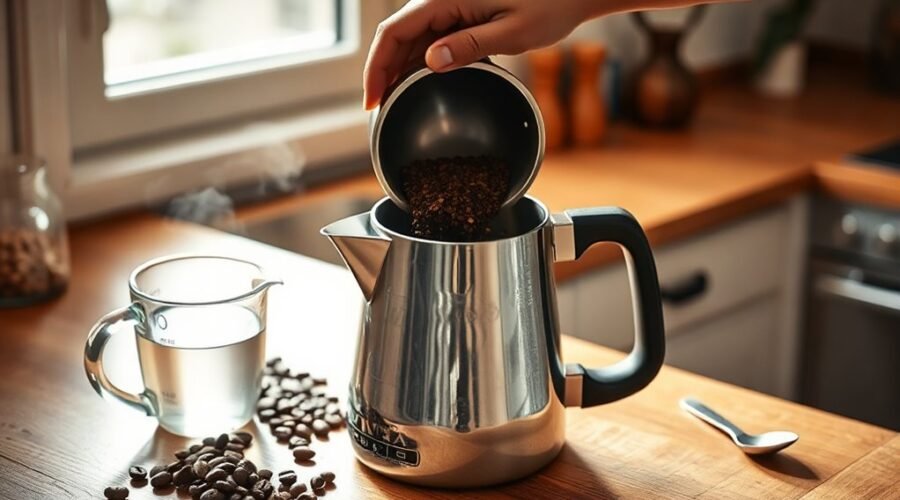
To master how to brew coffee in a percolator without bitterness, use a coarse grind (like rough sea salt), measure 1 to 2 tablespoons of coffee per 6 ounces of water (roughly 1:15 to 1:17 by weight), lower the burner to a gentle simmer as soon as perking starts, and stop the brew after 5 to 10 minutes depending on pot size. Controlling heat and extraction time is the key to a bold, smooth cup instead of an over-extracted, scorched pot.
How to Brew Coffee in a Percolator: Choosing the Right Grind Size
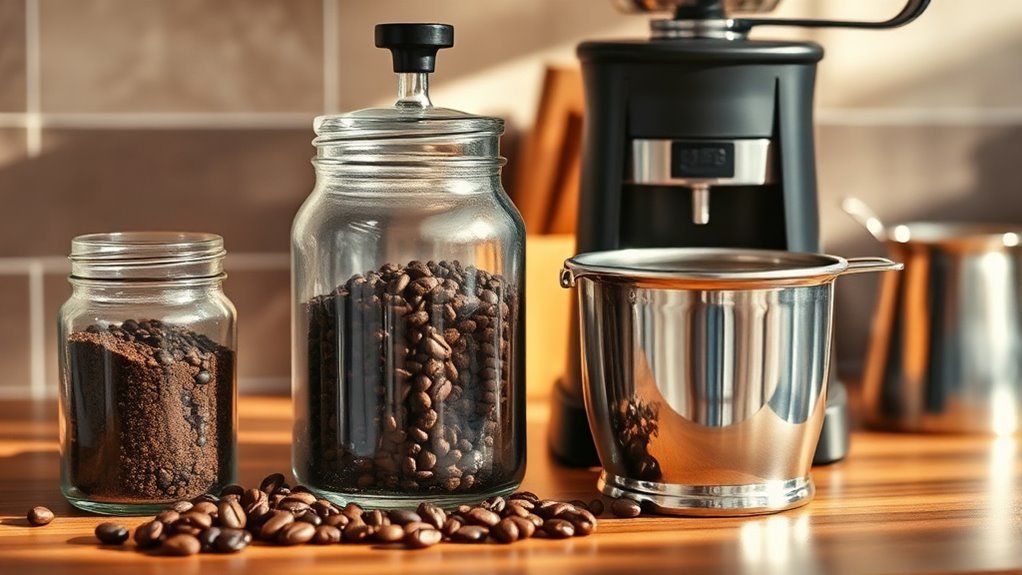
Because a percolator repeatedly cycles hot coffee back through the grounds, grind size has a bigger impact on bitterness here than in almost any other brew method. Standard pre-ground drip coffee is medium-fine and extracts too quickly under recirculation, leaving harsh tannins and gritty sediment at the bottom of your mug.
- Target texture: Aim for a uniform coarse grind resembling rough sea salt or French press grounds.
- Use a burr grinder when possible: Blade grinders mix fine dust with large chunks—the dust slips through the metal basket holes and over-extracts while the chunks stay weak.
- Roast pairing: Medium and medium-dark roasts hold up cleanly to percolator heat; very dark roasts turn bitter faster and benefit from shorter perk times (closer to 5–6 minutes).
If you need help assembling the stem, basket, and spreader plate—or choosing between electric and stovetop models—start with our setup guide on how to use a coffee percolator.
Percolator Coffee-to-Water Ratio Chart
Percolator “cups” are typically 5 to 6 fluid ounces—not 8-ounce mugs. Measuring by weight with a kitchen scale (around 1:16, or 1 gram of coffee per 16 grams of water) gives the most repeatable strength, while level tablespoons work well on the stovetop or at camp.
| Water Volume | Percolator “Cups” (6 oz) | Mild–Medium (1 tbsp/cup) | Bold (1.5–2 tbsp/cup) | Approx. Weight (1:16) |
|---|---|---|---|---|
| 12 fl oz (355 mL) | 2 cups | 2 tbsp | 3–4 tbsp | 22 g |
| 24 fl oz (710 mL) | 4 cups | 4 tbsp | 6–8 tbsp | 44 g |
| 36 fl oz (1,065 mL) | 6 cups | 6 tbsp | 9–12 tbsp | 66 g |
| 48 fl oz (1,420 mL) | 8 cups | 8 tbsp | 12–16 tbsp | 88 g |
| 72 fl oz (2,130 mL) | 12 cups | 12 tbsp | 18–24 tbsp | 132 g |
Load the measured grounds evenly into the basket without tamping or pressing them down—packed grounds block water flow and cause uneven channeling. If you enjoy dialing in coarse-grind ratios across immersion brewers too, compare our French press coffee-to-water ratio guide.
Heat Control and Brew Timing to Avoid Bitterness
A common mistake is leaving the stove on medium-high until the pot boils violently. Boiling coffee strips delicate aromatics and accelerates bitter extraction. Instead, manage heat in two deliberate stages:
- Stage 1 — Bring up to perk (medium heat): Place the assembled pot on medium heat (never high, which scorches the base). Watch the clear knob for the first steady pulses of water hitting the top.
- Stage 2 — Drop to a gentle simmer (low heat): Immediately turn the burner down to the lowest setting that maintains a calm, rhythmic perk every 1 to 2 seconds.
- Time by pot size and color: Start your timer once steady perking begins. Aim for 5 to 7 minutes for 4- to 6-cup batches and 7 to 10 minutes for 8- to 12-cup batches, watching the knob shift from pale amber to rich chestnut brown.
- Stop early and remove the basket: Pull the pot off the burner right when the aroma turns rich and balanced, let bubbling stop for 30 seconds, and carefully lift out the basket and stem using a pot holder so extraction halts immediately.
Understanding why water temperature and recirculation speed matter becomes even clearer when you see the internal pressure cycle in how a percolator works.
Troubleshooting Percolator Flavor
| Taste / Issue | Likely Cause | Fix on Next Brew |
|---|---|---|
| Bitter, burnt, or astringent | Heat too high (boiling), grind too fine, or perked too long | Lower to gentle simmer, grind coarser, cut perk time by 1–2 minutes |
| Weak or watery | Too little coffee, perked too briefly, or grind too chunky | Increase dose by 1/2 tbsp per cup or add 1–2 minutes of gentle perking |
| Muddy or gritty cup | Fine grounds slipping through basket perforations | Switch to coarse burr grind and/or add a round paper percolator filter |
| Stale or metallic off-taste | Rancid coffee oils stuck inside stem or basket | Scrub stem with a bottle brush and soak parts in warm baking soda water |
Safety, Pros, and Limitations
- Safety note: Always let active perking subside before removing the lid or basket to avoid scalding splashes, and keep gas flames narrower than the base of the pot so the handle does not overheat.
- Pros: Produces a hot, full-bodied, aromatic brew; scales effortlessly from 4 to 12 cups; lets you tune strength visually through the glass knob.
- Limitations: Narrower sweet spot than drip or pour-over (a couple of extra minutes on high heat can turn a pot bitter); less flavor clarity for delicate single-origin light roasts.
Frequently Asked Questions
What grind size prevents bitter percolator coffee?
A coarse grind—similar in texture to rough sea salt—works best for percolators. Coarse particles extract slowly across repeated hot-water cycles and stay inside the perforated metal basket instead of falling into the pot and turning the brew muddy or bitter.
How long should coffee perk in a stovetop percolator?
Most stovetop percolators reach balanced strength after 5 to 8 minutes of gentle perking for smaller 4- to 6-cup pots, or 7 to 10 minutes for larger 8- to 12-cup pots. Start timing when steady perking begins and pull the pot off heat before the stream turns dark and harsh.
Why does my percolator coffee taste burnt or bitter?
Bitterness almost always comes from one of three causes: boiling the coffee too hard instead of maintaining a gentle simmer, using a fine or standard drip grind that over-extracts, or leaving the basket of spent grounds inside the hot pot after brewing.
What coffee-to-water ratio should I use in a percolator?
Start with 1 to 2 level tablespoons of coarsely ground coffee per 6 fluid ounces of water (roughly 10 to 12 grams per 180 mL, or about a 1:15 to 1:17 ratio by weight), then adjust up or down by half a tablespoon per cup to match your preferred strength.
Can you use flavored coffee beans in a percolator?
Yes, as long as you grind them coarsely (not medium or fine) and keep the heat low so the flavoring oils do not scorch. Wash the basket, stem, and pot thoroughly with warm soapy water right afterward so flavored oils do not linger in your next batch.



[…] Once your setup is solid, dial in your exact grind texture, coffee-to-water ratio, and timing to prevent bitterness using our companion guide on how to brew coffee in a percolator. […]