
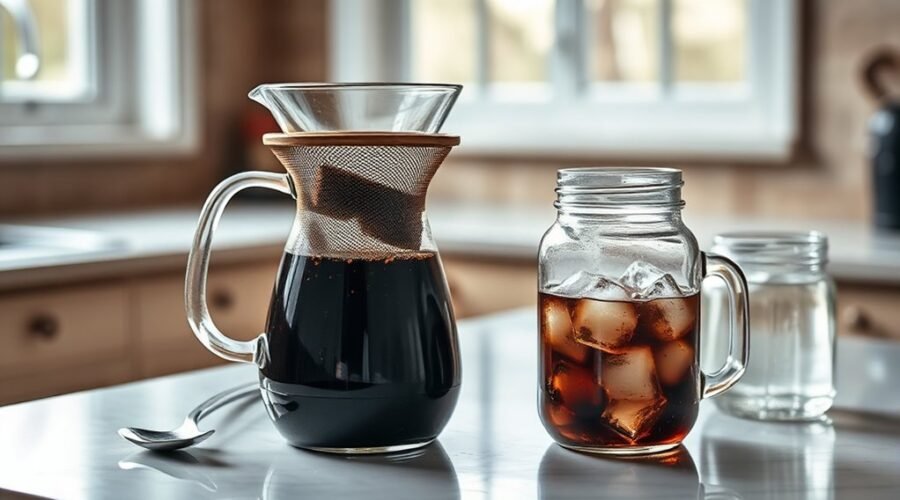
To learn how to make cold brew concentrate with clean flavor and minimal grit, steep extra-coarse coffee grounds (roughly 1,000 to 1,400 microns) in cold filtered water at a 1:4 to 1:5 coffee-to-water ratio by weight for 12 to 18 hours, then filter through a Toddy felt pad, brew bag, or two-stage paper setup. Store the strained concentrate undiluted in an airtight jar at 40°F (4°C) or below for up to 7 to 10 days and dilute 1:1 with water or milk when serving.
How to Make Cold Brew Concentrate: 3 Equipment Methods Compared
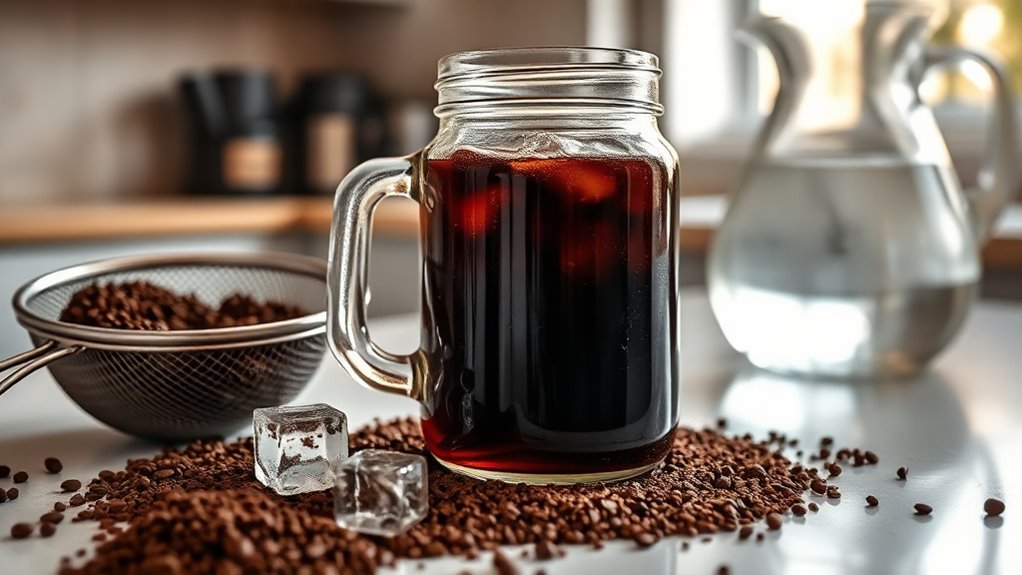
Your brewing vessel and filtration method control how clear, heavy-bodied, and repeatable your concentrate turns out. If you want exact weight-based batch measurements first, check our cold brew coffee concentrate recipe and our cold brew concentrate ratio guide, then match your batch to one of the three equipment workflows below.
| Method | Filtration Medium | Clarity & Body | Cleanup Effort | Best For |
|---|---|---|---|---|
| Toddy-Style System | Dense reusable felt pad + optional paper bag | Very clean, syrupy body, minimal silt | Moderate (rinse and chill felt pad) | Weekly 1-lb batches with cafe-level clarity |
| Cold Brew Filter Bag | Fine nylon or organic cotton mesh bag | Medium clarity, fuller coffee oils | Fast (lift bag, dump grounds, rinse) | Pitchers, buckets, and low-mess brewing |
| Mason Jar + Two-Stage Strain | Fine-mesh sieve followed by paper pour-over filter | Crisp and grit-free after second pass | Slower draining (paper clogs if grounds are fine) | Beginners using standard kitchen gear |
1. Toddy-Style Gravity Drainage Method
A dedicated Toddy-style brewer uses a thick felt disk seated at the bottom of a plastic or glass brewing bucket with a removable rubber stopper. Because the liquid drains slowly through the felt pad by gravity, it traps fine sediment while preserving natural sweetness.
- Dampen the felt filter and press it firmly into the bottom well, then insert the stopper on the underside.
- Layer 1 cup of water first, add half your extra-coarse grounds, pour half the remaining water, add the rest of the grounds, and top with the remaining water—avoiding vigorous stirring so the felt pad does not clog.
- Cover and steep 12 to 16 hours at room temperature (65°F to 70°F) or 16 to 20 hours in the refrigerator.
- Set the brewer over a glass decanter, pull the stopper, and let the concentrate drain undisturbed for 20 to 30 minutes.
2. Pitchers With Reusable Filter Bags
A 75-to-100-micron nylon nut milk bag or disposable commercial cold brew filter bag turns any wide-mouth pitcher into a concentrate brewer. Place the coarse grounds inside the bag, knot or cinch the top loosely so the grounds have room to expand, and submerge it in cold filtered water.
When steeping finishes, lift the bag out and let it drip for 3 to 5 minutes. Resist the urge to twist or wring the bag tightly—squeezing forces bitter micro-fines and astringent oils into the concentrate.
3. Mason Jar With Two-Stage Filtration
If you brew loose grounds directly in a glass jar, use two separate passes to keep the liquid clear. First, pour the slurry slowly through a stainless-steel fine-mesh sieve to remove 90% of the coarse particles. Second, line a funnel or pour-over dripper with a pre-rinsed paper coffee filter and pour the pre-strained concentrate through slowly. Swap in a fresh paper filter if drainage stalls.
Extraction Troubleshooting: Fixing Weak, Bitter, or Muddy Concentrate
Because cold water extracts soluble coffee compounds much more slowly than hot water, small mistakes in grind size, temperature, or filtration show up clearly in the glass. Use the diagnostic matrix below to adjust one variable at a time on your next batch.
| Problem in the Cup | Most Likely Cause | How to Fix It Next Batch |
|---|---|---|
| Bitter, harsh, or dry finish | Grind too fine, over-steeped past 20 hours, or squeezed filter bag | Coarsen grind to 1,000–1,400 microns, cap counter steep at 16 hours, and let gravity drain |
| Sour, thin, or underdeveloped | Under-extracted from very cold water, short steep (<12 hrs), or light roast | Steep 16–18 hours, switch to a medium or medium-dark roast, or tighten ratio to 1:4 |
| Sludgy sediment at bottom | Blade grinder dust (fines) or single-pass mesh strainer only | Use a burr grinder or finish with a paper coffee filter as a second straining pass |
| Stale or papery taste | Pre-ground old beans or unsealed storage in the fridge | Grind fresh whole beans right before steeping and store in a full, airtight glass bottle |
Dilution Bar Recipes Using Cold Brew Concentrate
A standard 1:4 to 1:5 concentrate is intentionally strong and meant to be diluted before drinking. Always pour over large, solid ice cubes (which melt more slowly than crushed ice) and add liquid sweeteners rather than granulated sugar, which dissolves poorly in cold drinks.
- Classic Iced Black (1:1): Combine 4 oz cold brew concentrate with 4 oz cold filtered water over ice for a crisp, balanced everyday cup.
- Creamy Cold Brew Latte (1:1.5): Pour 4 oz concentrate over ice, stir in 1/2 oz vanilla or simple syrup, and top with 6 oz cold whole milk or barista oat milk.
- Hot Cold Brew Americano (1:2): Mix 3 oz concentrate with 6 oz hot water (185°F to 195°F) for a low-acid hot cup with zero bitterness.
- Citrus Cold Brew Tonic (1:2): Fill a tall glass with ice, pour 6 oz chilled tonic water, slowly float 3 oz concentrate on top, and garnish with a fresh orange peel twist.
- Strong Ready-to-Sip (2:1): Combine 4 oz concentrate with 2 oz cold water or half-and-half over ice when you want a bold, espresso-leaning profile.
Pros, Limitations, and Food Safety Checklist
Making concentrate saves daily prep time and stretches one steeping session across a full workweek, though it requires advance planning and strict cold storage. For a deeper breakdown of spoilage signs and commercial versus homemade timelines, see our guide on how long cold brew is good for.
- Pros: Lower perceived acidity than hot-brewed coffee, customizable strength per glass, and one batch yields 6 to 10 diluted drinks.
- Limitations: Uses more coffee beans per cup than drip brewing, requires 12 to 18 hours of lead time, and masks delicate floral notes found in hot pour-over.
- Food Safety Rules: Sanitize jars, lids, and felt pads with hot soapy water before every batch. Refrigerate strained concentrate immediately at 40°F (4°C) or below. Consume undiluted concentrate within 7 to 10 days, diluted water-based cold brew within 3 to 5 days, and never store milk-mixed cold brew at room temperature for more than 2 hours. Discard immediately if you notice sour/fermented odors, surface film, mold, or lid swelling.
Frequently Asked Questions
How much caffeine is in cold brew concentrate?
Undiluted cold brew concentrate typically contains roughly 180 to 250 mg of caffeine per 8-ounce serving, depending on the coffee-to-water ratio, steep time, and whether you use Arabica or Robusta beans. Once diluted 1:1 with water or milk, an 8-ounce glass drops to about 90 to 125 mg.
Can I make cold brew concentrate with a Toddy system versus a mason jar?
Yes. A Toddy system uses a dense felt filter and bottom drainage valve to produce a cleaner, low-sediment concentrate in larger batches, while a mason jar is inexpensive and compact but requires pouring through a fine-mesh sieve and paper filter or cheesecloth to remove grit.
Why does my cold brew concentrate taste bitter or muddy?
Bitterness and muddiness usually come from grinding too fine, steeping longer than 18 to 20 hours at room temperature, or squeezing the filter bag hard at the end. Switch to an extra-coarse grind (about 1,000 to 1,400 microns) and let gravity drain the liquid.
How long does homemade cold brew concentrate last in the fridge?
Stored undiluted in a clean, airtight glass bottle at 40°F (4°C) or below, homemade cold brew concentrate stays fresh for 7 to 10 days. Once diluted with water, drink it within 3 to 5 days, and discard any serving mixed with dairy milk within 2 hours at room temperature.
What is the best water temperature for steeping cold brew concentrate?
Use cold or cool room-temperature filtered water between 60°F and 70°F (15°C to 21°C) for a 12-to-16-hour counter steep, or refrigerate at 40°F or below for an 16-to-20-hour steep. Avoid hot water, which extracts sharper acids and bitter compounds rapidly.



[…] Because cold brew is steeped without heat, it never goes through a boiling kill step—making cold-chain hygiene critical. Food safety guidance for ready-to-drink cold brew stresses keeping the finished liquid at or below 40°F (4°C) to slow microbial growth and oxidation. If you are still dialing in your concentrate workflow, see our guide on how to make cold brew concentrate. […]