

Typical ready-to-drink cold brew caffeine content ranges from 100 to 200 mg per 8 fl oz (roughly 12.5 to 25 mg per fluid ounce), with a standard 16 oz café pour landing near 200 to 205 mg—about half of the FDA’s 400 mg daily guideline for healthy adults. Undiluted 1:4 or 1:5 cold brew concentrate is much stronger, often delivering 200 to 250+ mg in just 6 to 8 fl oz before water or milk is added.
Cold Brew Caffeine Content by Ounce and Dilution

Unlike standard hot drip coffee—which USDA FoodData Central averages at roughly 95–96 mg per 8 fl oz—cold brew varies dramatically depending on whether you pour ready-to-drink coffee or undiluted concentrate. Use the table below to estimate your intake by glass size.
| Cold Brew Style & Size | Volume | Typical Caffeine Range | Reference Benchmark |
|---|---|---|---|
| Ready-to-Drink (Small) | 8 fl oz (240 ml) | 100–150 mg | ~105 mg (diluted 1:10 home brew) |
| Ready-to-Drink (Tall) | 12 fl oz (355 ml) | 150–180 mg | 155 mg (Starbucks Tall Cold Brew) |
| Ready-to-Drink (Grande) | 16 fl oz (473 ml) | 200–240 mg | 205 mg (Starbucks Grande Cold Brew) |
| Ready-to-Drink (Venti) | 24 fl oz (710 ml) | 300–350 mg | 310 mg (Starbucks Venti Cold Brew) |
| Undiluted Concentrate (1:4–1:5) | 6 fl oz (177 ml) | 200–250 mg | ~235 mg (Starbucks Multi-Serve Concentrate) |
| Concentrate Diluted 1:1 (4 oz + 4 oz) | 8 fl oz (240 ml) | 130–170 mg | Balanced iced black or latte |
Wondering how those numbers stack up against a single or double espresso shot? Read our direct comparison on whether cold brew has more caffeine than espresso.
4 Factors That Control Cold Brew Caffeine
- Coffee-to-water ratio (biggest factor): A 1:4 concentrate uses 250 g of coffee per liter of water, while a 1:12 ready-to-drink batch uses ~83 g per liter. More grounds per ounce of water directly raises total extractable caffeine. See our cold brew concentrate ratio chart to compare batch strengths.
- Bean species (Arabica vs. Robusta): Specialty Arabica beans typically contain about 1.2–1.5% caffeine by dry weight, whereas Robusta beans can contain roughly 2.2–2.7%—nearly double.
- Dilution and serving size: Pouring 6 oz of 1:5 concentrate into a 16 oz cup with milk gives the exact same caffeine as drinking that 6 oz straight; only reducing the concentrate pour lowers the dose.
- Steep time and grind size: Most caffeine dissolves within 12 to 16 hours. Finer grinds extract slightly faster but create bitter silt; coarse grinds extract smoothly over 14 to 18 hours.
How to Make Lower-Caffeine Cold Brew (Step-by-Step)
- Switch to a ready-to-drink ratio: Brew at 1:12 (85 g coffee to 1,000 ml water) instead of 1:4 concentrate so every 8 oz pour stays near ~90–110 mg. Follow our ready-to-drink cold brew coffee recipe for exact steps.
- Blend half-caf beans: Mix 50% Swiss Water decaf beans with 50% regular Arabica beans to cut caffeine roughly in half without losing body.
- Cap your steep at 12 hours: Pull the grounds at 12 hours instead of 18–20 hours for a lighter, crisper cup.
- Measure every pour: Use a 4 oz jigger or measuring cup when pouring concentrate, then top with 6–8 oz of cold water or milk over ice.
Pros and Limitations of Cold Brew’s Caffeine Profile
- Pro — Customizable potency: You can dial a homemade batch anywhere from ~10 mg (decaf) to 250+ mg per serving simply by adjusting bean choice, ratio, and dilution.
- Pro — Smooth enough to drink black: Lower perceived bitterness lets you get a strong morning lift without heavy sugar or flavored syrups.
- Limitation — Easy to overshoot 400 mg/day: Two 16 oz café cold brews (~410 mg) or a single large 24 oz cup plus an afternoon coffee can push you past the FDA daily guideline, causing jitters or poor sleep.
- Limitation — Unlabeled homemade strength: Without weighing beans and measuring dilution, homemade concentrate strength can swing noticeably from batch to batch.
Troubleshooting Caffeine Jitters and Safe Storage
- Feeling jittery after cold brew? Cut your concentrate pour in half (from 6 oz to 3 oz), switch to 100% Arabica beans, avoid drinking cold brew on an empty stomach, and stop caffeine 6 to 8 hours before bedtime.
- Does refrigeration change caffeine? No—caffeine stays chemically stable in the fridge, though flavor and safety degrade over time. Store strained black cold brew in a sealed glass jar at 40°F (4°C) or below for up to 3 to 5 days (ready-to-drink) or 7 to 14 days (undiluted concentrate).
Frequently Asked Questions
How much caffeine is in 16 oz of cold brew coffee?
A standard 16 fl oz ready-to-drink café cold brew typically contains around 200 to 205 mg of caffeine (for example, Starbucks lists 205 mg for a 16 oz Grande Cold Brew). Homemade batches range widely from 150 mg to over 300 mg depending on your ratio and dilution.
Does adding milk or ice reduce the caffeine in cold brew?
No. Adding milk, cream, or ice lowers the caffeine concentration per ounce, but the total milligrams of caffeine in your glass remain identical unless you pour less cold brew to make room for the mixer.
How much caffeine is safe to drink in a day?
The U.S. FDA cites 400 mg of caffeine per day as an amount not generally associated with dangerous negative effects for most healthy adults. Pregnant individuals and people sensitive to caffeine are typically advised to limit intake to 200 mg or less per day and consult a healthcare provider.
Can you make low-caffeine or decaf cold brew at home?
Yes. Using decaf beans produces a smooth cold brew with only trace caffeine (typically 2 to 15 mg per 8 oz cup). You can also blend 50% decaf and 50% regular beans for a half-caf batch.
Does steeping cold brew for 24 hours double the caffeine?
No. Most caffeine extracts within the first 12 to 16 hours because caffeine is readily water-soluble. Extending a steep to 24 hours adds only a modest bump in caffeine while increasing bitter, woody flavors.


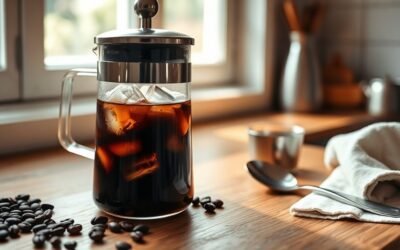

[…] For a complete ounce-by-ounce and dilution breakdown—including homemade 1:4 vs. 1:10 batches—see our full cold brew caffeine content guide. […]
[…] Note that café values are published approximations for standard recipes with ice. Ordering “light ice” or “no ice” at a chain café often adds more cold brew liquid to the cup, noticeably raising total caffeine. For a deeper ounce-by-ounce breakdown of dilution math, see our cold brew caffeine content by ounce and ratio guide. […]