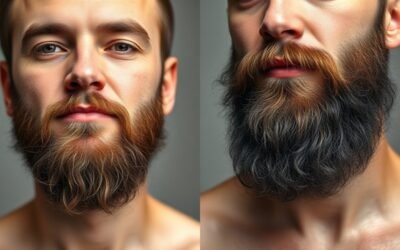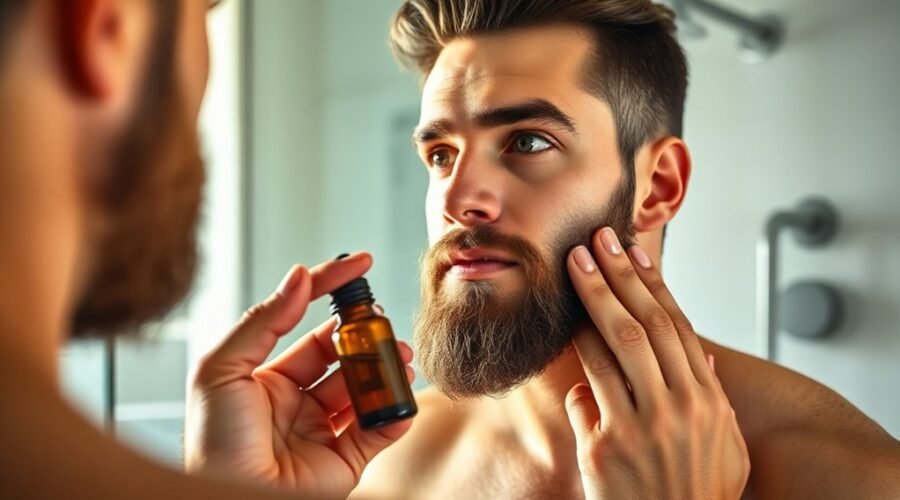
Does beard oil help growth? No—despite common marketing claims, beard oil cannot stimulate new hair follicles, fix genetic patchiness, or accelerate your biological growth rate. Real beard growth is governed by genetics, hormones, age, overall nutrition, and—in some cases—medical options like off-label topical minoxidil, while beard oil serves as a daily skin and hair conditioner that keeps existing hairs healthy.
Does Beard Oil Help Growth? Common Myths vs. Scientific Reality
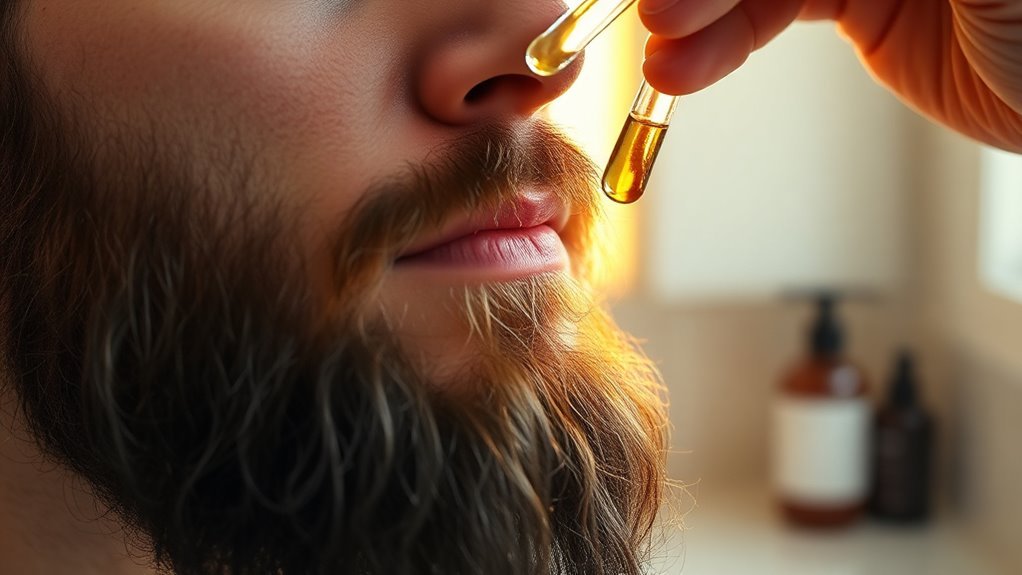
Many bottles labeled “beard growth oil” combine standard plant oils with trendy botanicals and promise thicker cheeks in weeks. Separating marketing myths from dermatological evidence saves you money and frustration.
| Popular Claim or Ingredient | Verdict | What the Evidence Actually Shows |
|---|---|---|
| “Beard growth” carrier oils (jojoba, argan, castor) | Myth for new follicles | Condition hair and reduce dryness/breakage, but do not trigger new follicle formation. |
| Rosemary or peppermint essential oil | Unproven for beards | Small scalp or animal studies exist, but no clinical trials prove faster human beard growth; over-concentrated oils irritate facial skin. |
| High-dose biotin gummies | Only helps if deficient | True biotin deficiency is rare; extra biotin does not boost growth in healthy people and can skew medical blood tests. |
| Shaving frequently makes hair grow thicker | Myth | Shaving blunts the hair tip so stubble feels coarser temporarily, but it does not change follicle count or thickness. |
If you want a closer look at how conditioning prevents breakage and improves visual fullness without changing follicle count, see our companion guide on conditioning science and whether beard oil helps your beard grow.
What Actually Drives Beard Growth (Evidence-Backed Factors)
Because facial hair follicles respond to internal biology rather than surface oils, the strongest influences on how thick and fast your beard grows are internal:
- Genetics and androgen sensitivity: Your DNA sets both the number of facial follicles you have and how sensitive their receptors are to testosterone and dihydrotestosterone (DHT). Two men with identical testosterone levels can have completely different beard density.
- Age and patience: Facial hair often continues maturing well into a man’s late 20s and 30s. Giving a new beard 8 to 12 weeks of uninterrupted growth also lets slower cheek hairs fill in areas that look patchy at week two.
- Nutrition and correcting deficiencies: Hair is made of keratin protein, and follicles rely on adequate dietary protein, iron, zinc, vitamin D, and B vitamins. Fixing a documented deficiency supports normal hair cycling, though mega-dosing supplements will not override genetics.
- Sleep, exercise, and stress control: Chronic sleep deprivation and severe stress disrupt hormone regulation and can push hairs prematurely into the shedding (telogen) phase.
- Off-label topical minoxidil (medical option): Topical minoxidil is FDA-approved for scalp hair loss, not beards, so facial use is off-label. A small 16-week randomized placebo-controlled trial (48 men using 3% minoxidil lotion) and dermatology case reports have shown increased facial hair counts, likely by lengthening the growth phase and helping fine vellus hairs mature.
Important Safety Notes Before Considering Off-Label Minoxidil
If you are considering topical minoxidil for a persistently patchy beard, speak with a board-certified dermatologist or physician first rather than self-treating blindly:
- Skin and systemic side effects: Common side effects include facial dryness, flaking, and redness; rarer systemic effects include dizziness, rapid heartbeat, or swelling—stop immediately and seek medical advice if systemic symptoms appear.
- Pet toxicity warning: Topical minoxidil is highly toxic—even fatal—to cats and dogs through direct contact or residue on pillowcases and hands.
- Maintenance uncertainty: On the scalp, minoxidil-dependent hair typically regresses after stopping; long-term facial retention data remain limited.
Where Beard Oil Fits Into a Realistic Beard Routine
Even though beard oil is not a growth drug, dermatologists still view it as a practical grooming staple once you start growing facial hair:
- Prevents early-stage shave-offs: Moisturizing the skin beneath prickly stubble calms the itch and flaking that make many men give up during weeks 2 to 4.
- Protects skin barrier health: Healthy, non-inflamed skin lets existing follicles cycle normally without irritation from scratching or harsh soaps.
- Keeps longer hair resilient: Lubricating coarse strands cuts down on split ends and combing breakage.
For most men, applying 2 to 6 drops once daily after a warm shower is plenty—check our schedule on how often to apply beard oil, or learn how to mix a fragrance-free or gently scented batch with our safe DIY beard oil recipe guide.
5 Habits That Make Beard Growth Look Worse
- Washing with harsh bar soap: Strips natural skin lipids, causing dry flakes and brittle hair.
- Scratching or picking itchy skin: Triggers localized follicle inflammation and hair loss in small patches.
- Trimming too early: Judging patchiness at 2 weeks instead of letting slower zones grow out for 8 to 12 weeks.
- Over-applying heavy or fragranced oils: Clogs pores or triggers contact dermatitis around the jawline.
- Ignoring persistent red, scaly patches: Seborrheic dermatitis (“beard dandruff”) or fungal infections need targeted medical care, not more oil.
Frequently Asked Questions
What actually makes a beard grow thicker?
Beard thickness and coverage are controlled primarily by genetics, age, and how strongly your facial hair follicles respond to androgen hormones (testosterone and DHT). Good nutrition, adequate sleep, and managing skin inflammation help follicles reach their natural potential, while off-label topical minoxidil is the main topical medication with clinical evidence for increasing facial hair density.
Does castor oil or rosemary oil make a beard grow faster?
Neither castor oil nor rosemary oil has clinical proof showing it grows new beard follicles. Castor oil is a thick emollient that can coat and protect existing hairs, and rosemary oil has limited small-scale research on scalp hair—not proven beard trials—and must be diluted to 1%–2% in a carrier oil to avoid facial irritation.
Is minoxidil FDA-approved for beard growth?
No. Topical minoxidil is FDA-approved for scalp hair loss, so using it on the face is an off-label use. A small 16-week randomized clinical trial of 48 men found higher facial hair counts than placebo, but you should consult a doctor or dermatologist first—especially because minoxidil can cause skin dryness, unwanted hair elsewhere, cardiovascular side effects, and is highly toxic to cats and dogs.
Do biotin supplements speed up beard growth?
Only if you have a true biotin deficiency, which is uncommon in people eating a balanced diet. Taking high-dose biotin when your levels are already normal has not been shown to accelerate beard growth, and excess biotin can interfere with certain medical lab tests (such as thyroid and troponin panels).
If beard oil does not grow hair, is it still worth using?
Yes. Beard oil plays a valuable supporting role by hydrating the skin under your beard, relieving early-stage itch, and softening coarse strands so they break less during grooming. That helps you comfortably grow your beard long enough to see your natural coverage.