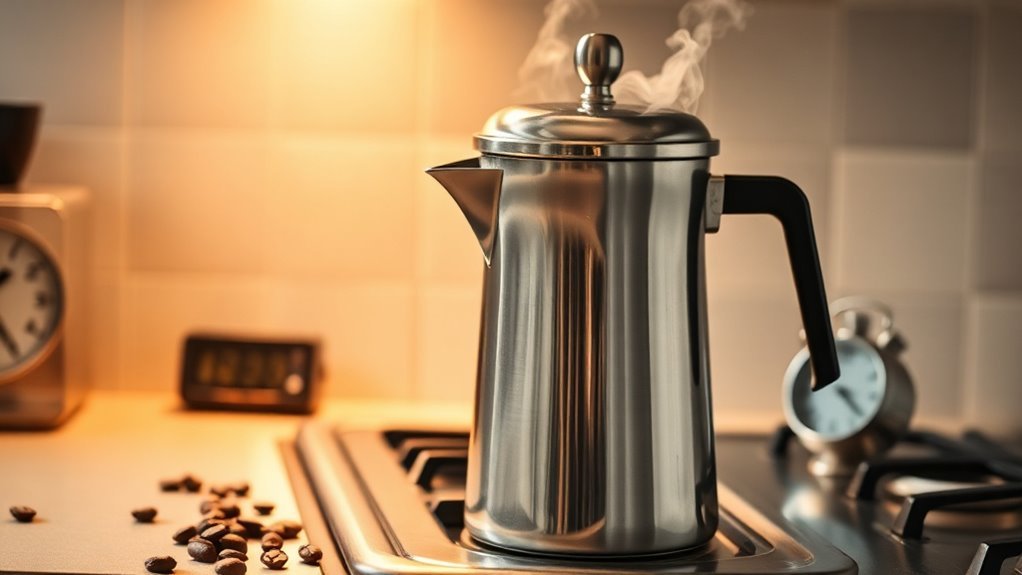
The ideal coffee percolator time is 7 to 10 minutes of active, gentle perking on a stovetop pot—timed from the first steady pulse in the glass knob after you lower the heat—or 7 to 12 minutes (about 1 minute per cup) on an automatic electric percolator. Keeping the brew just below a rolling boil and pulling the pot off heat before the 12-minute mark prevents the burnt, bitter over-extraction that gives percolated coffee a bad reputation.
Stovetop vs. Electric Coffee Percolator Time
Stovetop and electric percolators use the same central siphon tube, but they heat water differently and require different timing cues. If you are still assembling your pot or learning each component, start with our setup guide on how to use a coffee percolator, then use the timing benchmarks below to dial in extraction.
| Percolator Type | Target Active Brew Time | Heat & Cadence Control | Finish Cue |
|---|---|---|---|
| Stovetop (Mild / Light) | 5–7 minutes after first perk | Medium-high to start; drop to low immediately at first spurt (1 pulse every 2–3 sec) | Amber stream in glass knob |
| Stovetop (Balanced / Medium) | 7–9 minutes after first perk | Low simmer; 1 gentle pulse every 2–3 seconds | Rich mahogany brown in knob |
| Stovetop (Bold / Strong) | 9–10 minutes after first perk | Low simmer; never let it hit a rolling boil | Deep dark brown; full roasted aroma |
| Automatic Electric | 7–12 minutes total (~1 min per cup) | Internal heating element cycles automatically | Indicator light switches to Keep Warm |
How to Control Stovetop Heat and Pulse Cadence
Most bitter percolator pots happen because the burner stays too high after brewing starts. Follow a two-stage heat curve instead of leaving the flame untouched:
- Stage 1 — Heat-Up (Medium-High): Place the filled pot on medium-high heat until you hear the first gurgle and see clear water splash into the glass dome. Do not start your timer during heat-up; depending on water volume and starting temperature, heat-up takes 4 to 8 minutes.
- Stage 2 — Active Perking (Low): Immediately drop the burner to low. Watch the glass knob and adjust the flame until the liquid rises in a gentle rhythm of 1 pulse every 2 to 3 seconds.
If the knob fills continuously with violent frothing, your burner is too hot. Slide the pot partially off the burner for 10 seconds while lowering the heat so the water settles back to a controlled simmer.
Why Boiling Over 205°F–212°F or Perking Past 12 Minutes Causes Bitterness
Standard coffee extraction tastes cleanest between 195°F and 205°F. Unlike a pour-over or drip machine where fresh hot water passes through the grounds once, a percolator continuously pumps already-brewed coffee back up the stem and showers it over the same spent grounds.
Two things happen when water climbs to a rolling boil (212°F) or cycles past 12 minutes:
- Volatile aromatics boil away: Delicate floral and sweet compounds evaporate with steam, leaving a flat, hollow cup.
- Astringent compounds over-extract: Recirculating near-boiling coffee strips harsh, woody bitter compounds from depleted grounds and scorches dissolved oils already in the reservoir.
If you want strong coffee without bitterness, increase your dose slightly (around 1 to 1.5 tablespoons of coarse grounds per 6 ounces of water) rather than pushing brew time past 10 minutes. For ultra-low-acidity smoothness without any heat bitterness at all, compare percolator timing with a slow-steeped cold brew coffee recipe.
How Coarse Grind Sizing Protects Your Brew Time
Grind size directly controls how fast water drains through the perforated metal basket. Always use a coarse grind—roughly the texture of kosher sea salt or standard French press grounds.
- Too fine: Fine particles slip through basket holes, clog drainage slots, trap boiling water in the basket, and over-extract quickly.
- Coarse and even: Water trickles smoothly through the bed between pulses, keeping extraction balanced across the full 7–10 minute window.
No burr grinder on hand? You can still produce an even, percolator-friendly coarse texture using a rolling pin or mortar—see our practical guide on how to grind coffee beans without a grinder.
The 3–5 Minute Post-Perk Settling Rest
Turning off the burner is not the final step. As soon as your timer finishes, remove the pot from the hot element and carefully lift out the stem and grounds basket (using a potholder) so lingering droplets stop extracting into the pot. Even on electric percolators, unplugging or removing the basket once the Keep Warm light turns on prevents slow stewing.
Let the brewed coffee rest undisturbed for 3 to 5 minutes before pouring your first mug. This brief rest accomplishes two things: fine sediment sinks to the bottom of the pot for a cleaner pour, and the liquid drops from near-boiling down to a drinkable temperature where subtle flavor notes actually open up.
Frequently Asked Questions
How long should a stovetop coffee percolator perk?
A stovetop coffee percolator should actively perk for 7 to 10 minutes after the first spurts appear in the glass knob and you reduce the burner to low. Stop around 7 minutes for a milder cup or up to 10 minutes for bold strength, and avoid exceeding 12 minutes.
How long does an electric coffee percolator take to brew?
Most automatic electric coffee percolators brew in 7 to 12 minutes—roughly 1 minute per 5-ounce cup—before an internal thermostat shuts off the main heating element and switches to Keep Warm.
Why does percolator coffee turn bitter if it perks too long?
Percolators continuously recirculate brewed coffee back through the same grounds. Running above 205°F–212°F or perking past 10–12 minutes over-extracts harsh, astringent bitter compounds and drives off delicate aromatic oils.
How fast should the bubbles pulse in the glass percolator knob?
Once perking begins, lower the stovetop heat until you see a gentle, steady pulse every 2 to 3 seconds. Rapid, violent spurting means the water is at a hard boil, which scorches the brew and increases bitterness.
Should you remove the basket and let percolator coffee rest before pouring?
Yes. Immediately lift out the stem and grounds basket when brewing finishes so residual drip does not keep extracting, then let the pot sit for 3 to 5 minutes so fine sediment settles to the bottom before pouring.
What grind size keeps percolator timing consistent?
Use a coarse grind similar to kosher sea salt. Fine or standard drip grinds fall through basket perforations, clog water drainage, slow circulation, and create muddy, over-extracted coffee.