

To learn how to use an espresso machine reliably, preheat the machine and portafilter fully, dose 18 to 20 grams of finely ground coffee into a dry double basket, distribute and tamp the puck level, lock it in, and pull a 1:2 brew ratio (36 to 40 grams of liquid espresso) in 25 to 30 seconds at roughly 9 bars of pressure and 195°F to 205°F (90°C to 96°C). Changing one variable at a time—starting with grind size—is the fastest way to fix sour or bitter shots.
How to Use an Espresso Machine: Step-by-Step Workflow
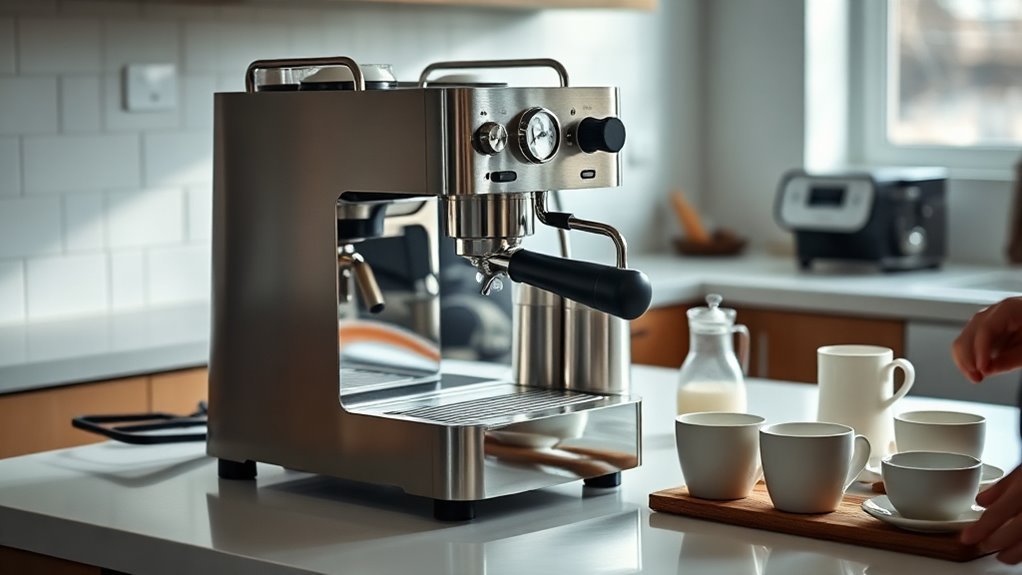
Whether you own a semi-automatic home machine or a thermoblock entry model, following a consistent sequence eliminates most extraction swings.
- Fill and preheat thoroughly: Fill the reservoir with fresh, cold filtered water, turn the machine on with the empty portafilter locked in place, and allow the boiler and group head to stabilize (typically 3 to 5 minutes for thermoblock machines or 15 to 25 minutes for traditional boilers).
- Flush and dry the basket: Run a quick 2-second blank water shot through the group head to warm the path and clear old grounds, then wipe the portafilter basket completely dry with a clean towel.
- Grind fine and weigh your dose: Use a burr grinder set to a fine espresso grind—finer than table salt and much finer than drip coffee, closer to soft fine sand (not as powdery as Turkish coffee). Weigh 18 to 20 grams for a standard double basket.
- Distribute and tamp level: Tap the portafilter gently or stir with a WDT/distribution tool to break up clumps, then press straight down with a fitted tamper until the coffee bed is completely compressed and perfectly level. Wipe loose grounds off the rim so the gasket seals cleanly.
- Lock in and pull the shot: Twist the portafilter snugly into the group head, place a preheated cup on a scale underneath, and start the pump immediately. Watch for dark drips in 4 to 8 seconds that merge into a syrupy, warm-honey stream, stopping at 36 to 40 grams (25 to 30 seconds total).
- Clean up right away: Knock out the spent puck, flush the group head briefly, and wipe the shower screen. Learn how this component affects temperature stability in our espresso machine group head guide.
Espresso Extraction Targets at a Glance
| Parameter | Double Shot Starting Target | Notes |
|---|---|---|
| Dry coffee dose | 18–20 g | Match to your basket’s rated capacity |
| Liquid yield | 36–40 g (1:2 ratio) | Lighter roasts often shine at 1:2.5; darker roasts at 1:1.5 |
| Extraction time | 25–30 seconds | Timed from pump start (including brief pre-infusion) |
| Water temperature | 195°F–205°F (90°C–96°C) | Slightly hotter for light roasts, slightly cooler for dark |
| Brew pressure | ~9 bars | Standard espresso extraction pressure |
If you are curious how concentrated espresso stacks up against cold-steeped coffee in caffeine content, see our comparison of whether cold brew has more caffeine than espresso.
Steaming Milk and Safety Basics
Pour cold milk (dairy or barista-blend oat/almond milk) into a chilled stainless pitcher just below the bottom of the spout so it has room to expand. Purge condensation from the steam wand first, submerge the tip just under the milk surface, and open the steam valve fully.
- Stretch, then texture: Listen for gentle paper-tearing sips of air for the first few seconds (less for silky latte microfoam, slightly more for thicker cappuccino foam), then dip the tip slightly deeper to create a smooth whirlpool that blends bubbles evenly.
- Stop at 140°F–150°F (60°C–65°C): Shut off steam when the pitcher feels hot to hold for more than a second; overheating scorches milk sugars and flattens sweetness.
- Safety & wand care: Never touch the metal steam wand shaft or unlock the portafilter while the pump is under pressure (wait a couple seconds after stopping the shot for pressure to bleed). Wipe and purge the wand immediately after every drink.
Prefer iced drinks on warm days? Explore our cold brew espresso beginner’s guide for chilled variations.
Troubleshooting Sour, Bitter, or Watery Shots
| Problem | Likely Cause | Fix |
|---|---|---|
| Runs fast (<20 sec), tastes sour/thin | Under-extracted (grind too coarse or dose too low) | Grind 1–2 notches finer; keep dose and yield steady |
| Drips slowly (>35 sec), tastes bitter/harsh | Over-extracted (grind too fine or dose too high) | Grind coarser or lower dose by 0.5–1 g |
| Spritzing / uneven flow from spouts | Channeling from clumps or crooked tamp | Distribute grounds evenly and tamp straight and level |
| Pale, thin crema that vanishes fast | Stale beans or low brew temperature | Use freshly roasted beans (1–4 weeks off roast) and preheat longer |
Pros and Limitations of Home Espresso Machines
- Pros: Café-quality espresso, lattes, and Americanos at a fraction of coffee-shop cost; full control over roast, ratio, and milk texture.
- Limitations: Steeper learning curve than drip or pod brewers; requires a capable burr grinder and scale for consistent results; demands daily wiping/purging plus regular backflushing and descaling.
Frequently Asked Questions
What is the ideal espresso extraction time and brew ratio?
A reliable starting recipe for a double shot is a 1:2 brew ratio—for example, 18 grams of finely ground coffee yielding about 36 grams of liquid espresso in 25 to 30 seconds from the moment the pump starts. Adjust grind size slightly finer or coarser based on taste.
What water temperature and pressure do espresso machines use?
Most espresso machines brew best at 195°F to 205°F (90°C to 96°C) and around 9 bars of brew pressure. Lower temperatures often accentuate sourness (especially with light roasts), while overly hot water can extract harsh bitterness.
Can you use pre-ground coffee in an espresso machine?
Yes, especially if your machine includes a pressurized (dual-wall) filter basket designed to compensate for coarser or uneven pre-ground coffee. However, freshly ground whole beans from a dedicated espresso burr grinder deliver far better crema, sweetness, and dialing-in control.
How do you clean the steam wand after frothing milk?
Immediately after steaming, wipe the wand shaft and tip with a dedicated damp cloth, then open the steam valve for 1 to 2 seconds to purge any milk drawn back into the tip. Never let milk bake onto a hot wand.
How often should you descale an espresso machine?
Descale every 1 to 3 months depending on your water hardness and daily shot count, using a manufacturer-approved descaling solution (not harsh household chemicals that can damage boilers or seals). Using filtered water reduces scale buildup significantly.


