
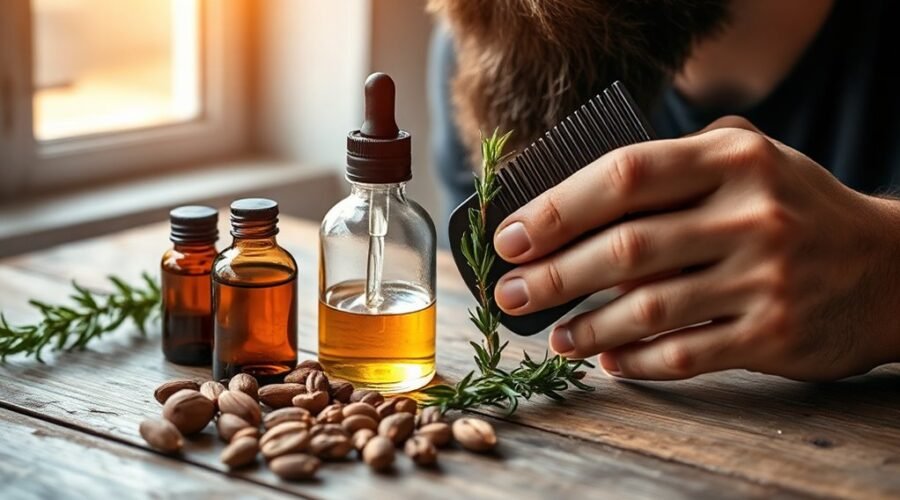
A reliable beard oil recipe combines 98% to 99% skin-friendly carrier oils (such as jojoba, argan, or sweet almond oil) with 1% to 2% essential oils—roughly 6 to 12 drops of essential oil per 1 oz (30 mL) amber glass dropper bottle. Keeping essential oils diluted to 1% or lower is safest for daily facial use and sensitive skin, while the carrier base does the real work of softening coarse hair and moisturizing dry skin underneath.
Beard Oil Recipe Basics: What You Actually Need
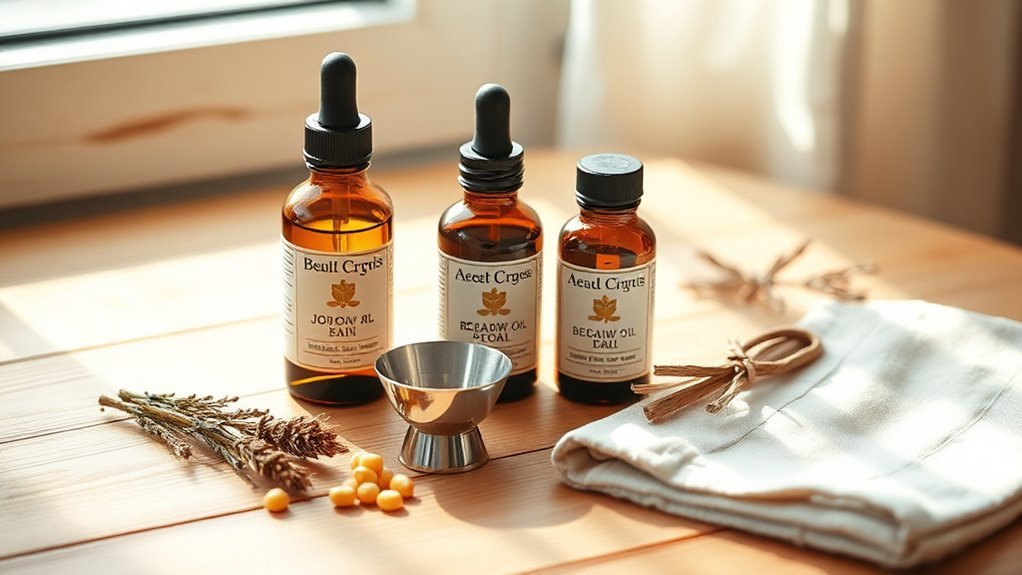
Commercial beard oils are mostly plant-based carrier oils with a small amount of fragrance. Mixing your own lets you control every ingredient, skip synthetic perfumes, and tailor the weight of the oil to your beard texture and skin type.
- Carrier oils (98%–99.5% of the bottle): Cold-pressed plant oils that hydrate skin, soften coarse facial hair, and dilute essential oils safely.
- Essential oils (0%–2% max): Optional aromatic oils for light scent. Unscented blends are completely fine and often best for reactive skin.
- Dark glass dropper bottle (1 oz / 30 mL): Amber or cobalt glass blocks UV light that speeds up oxidation.
- Clean mini funnel or graduated glass pipette: Keeps measurements accurate and prevents spills or contamination.
- Waterproof label: Record the exact recipe and mixing date so you know when to replace the batch.
Keep realistic expectations about what any DIY blend can do: beard oil conditions the hair you already have and calms dry skin, but it does not stimulate new follicles. For the science behind conditioning versus growth, see our guide on whether beard oil helps your beard grow.
How to Choose Carrier Oils for Your Beard Type
Your carrier oil choice determines how fast the blend absorbs, how much shine it leaves, and whether it feels comfortable on oily or acne-prone skin. Most DIY formulators use one primary lightweight base (70%–85%) plus an optional richer oil (15%–30%) for coarse or dry beards.
| Carrier Oil | Weight & Feel | Best Beard & Skin Type | Key Notes |
|---|---|---|---|
| Golden Jojoba Oil | Light, non-greasy | All skin types, including oily & acne-prone | Liquid wax ester similar to natural sebum; very long shelf life. |
| Argan Oil | Light to medium | Dry, coarse, or frizzy beards | Softens wiry hair without heavy buildup; rich in vitamin E. |
| Sweet Almond Oil | Medium | Normal to dry skin | Smooth slip and budget-friendly; avoid if you have a tree nut allergy. |
| Grapeseed Oil | Very light | Oily skin and short beards | Absorbs rapidly with minimal shine; shorter shelf life (about 6 months). |
| Hemp Seed Oil | Light | Dry, flaky, or sensitive skin | Soothing omega fatty acids; store cool because it oxidizes faster. |
| Castor Oil | Very thick | Coarse, long beards (as an additive only) | Keep to 10%–15% max of the carrier blend to avoid stickiness. |
Safe Essential Oil Dilution Ratios (1%–2% Rule)
Never apply undiluted essential oils directly to your face. Because beard oil is a daily leave-on facial product, aromatherapy safety references such as the Tisserand Institute recommend a 0.5% to 1% dilution for facial skin and sensitive users, and capping leave-on blends at 2% maximum for resilient skin.
| Target Dilution | Drops per 1 oz (30 mL) Carrier | Drops per 2 oz (60 mL) Carrier | Recommended Use |
|---|---|---|---|
| 0% (Unscented) | 0 drops | 0 drops | Very sensitive, eczema-prone, or reactive skin |
| 0.5% | 3 drops | 6 drops | Sensitive skin or strong essential oils |
| 1% (Recommended) | 6 drops | 12 drops | Everyday facial beard oil for most men |
| 2% (Maximum) | 12 drops | 24 drops | Short-term or stronger scent on non-sensitive skin only |
Important safety warnings: Avoid cold-pressed citrus oils (like standard bergamot, lime, or lemon) in daytime beard oil unless labeled bergapten-free (FCF), as they can cause phototoxic burns in sunlight. Skip strongly irritating oils such as cinnamon bark, clove bud, and oregano on facial skin, and keep essential oil blends away from pets—especially cats.
4 Tested-Ratio Beard Oil Recipes (1 oz / 30 mL Bottles)
Each recipe below fills one standard 1 oz (30 mL) dropper bottle and stays within a gentle ~1% essential oil dilution (6 drops total) unless noted as unscented.
| Recipe Blend | Carrier Base (30 mL Total) | Essential Oils (~1% = 6 Drops) | Best For |
|---|---|---|---|
| 1. Sensitive Unscented | 20 mL jojoba + 10 mL argan oil | None (0 drops) | Acne-prone, reactive, or fragrance-sensitive skin |
| 2. Classic Woodsman | 15 mL jojoba + 15 mL sweet almond oil | 3 drops cedarwood + 2 drops pine or fir needle + 1 drop bergamot (FCF) | Normal to dry beards; crisp woody scent |
| 3. Fresh Mint & Herb | 20 mL grapeseed + 10 mL jojoba oil | 3 drops rosemary + 2 drops cedarwood + 1 drop peppermint | Oily skin and short beards; light cooling feel |
| 4. Coarse Beard Softener | 15 mL argan + 12 mL jojoba + 3 mL castor oil | 3 drops sandalwood + 2 drops lavender + 1 drop frankincense | Thick, wiry, or winter-dry beards |
How to Mix Your Beard Oil Step by Step
- Clean and dry your tools: Wash your glass bottle and funnel with warm soapy water, rinse thoroughly, and let them air-dry completely. Trapped water can introduce bacteria into oil blends.
- Measure the carrier oils first: Pour your chosen carrier oil(s) into the 1 oz (30 mL) dark glass bottle, leaving a small gap at the neck for the dropper stem.
- Add essential oils drop by drop: Count carefully so your total stays at 6 drops (1%) or up to 12 drops max (2%) per 30 mL.
- Cap and swirl gently: Screw the dropper cap on tightly and roll the bottle between your palms or invert it 10–15 times instead of shaking vigorously (which traps air bubbles).
- Label and patch-test: Write the date and formula on the bottle. Apply 1 drop to clean skin behind your jaw or on your inner forearm and wait 24–48 hours before applying it across your full beard.
How to Apply and Store Homemade Beard Oil
Apply your finished blend right after a warm shower or face wash while your beard is towel-dried and slightly damp. Warm 2 to 4 drops between your palms for a short beard (or 5 to 8 drops for a longer beard), massage it into the skin beneath first, then smooth the rest through the hair shafts and comb through evenly. For a complete schedule by beard length and season, check our guide on how often to apply beard oil, or see our step-by-step beard oil application guide.
Store the bottle tightly capped in a cool, dark drawer rather than a steamy bathroom windowsill. Heat, humidity, and direct sunlight accelerate oxidation and shorten shelf life.
Pros and Limitations of DIY Beard Oil
- Pros: Lower cost per ounce over time, full control over allergens and fragrance strength, and easy customization for oily, dry, or coarse beards.
- Limitations: Requires buying multiple base oils upfront, lacks commercial stabilizers (so shorter shelf life if stored poorly), and requires careful drop-counting to avoid essential oil irritation.
Frequently Asked Questions
What is a safe essential oil dilution for a homemade beard oil recipe?
For facial leave-on products like beard oil, aromatherapy safety guidelines generally recommend keeping essential oils between 0.5% and 1% for daily or sensitive-skin use, and no higher than 2% overall. In a standard 1 oz (30 mL) bottle of carrier oil, 1% equals about 6 drops of essential oil and 2% equals about 12 drops.
How long does homemade beard oil last before going rancid?
Most homemade beard oils stay fresh for 6 to 12 months depending on the carrier oils used. Jojoba oil is very stable and can last over a year, while delicate oils like grapeseed or hemp seed oxidize faster (often within 6 months). Discard any batch that smells sour, stale, or crayon-like.
Is DIY beard oil safe for sensitive or acne-prone skin?
Yes, if you keep the formula simple. Choose lightweight, low-comedogenicity carrier oils such as jojoba, squalane, or grapeseed, skip essential oils entirely (or keep them at 0.5% or less), and patch-test the blend on your inner forearm or behind your jaw for 24 to 48 hours before full use.
Which essential oils should you avoid in a beard oil recipe?
Avoid cold-pressed citrus oils (such as regular bergamot, lime, or bitter orange) unless they are labeled bergapten-free (FCF), because they can cause phototoxic skin burns in sunlight. Also avoid hot or strongly sensitizing oils like cinnamon bark, clove bud, oregano, and lemongrass on facial skin.
Can homemade beard oil make a patchy beard grow faster?
No. Homemade beard oil conditions existing hair shafts and moisturizes the skin beneath your beard, which reduces dryness, itch, and breakage. It cannot create new hair follicles or change your genetic growth pattern.
[…] If you want to customize carrier weight for your exact skin type and keep essential oils at a safe 1% dilution, check our DIY beard oil recipe guide. […]