Disclosure: As an Amazon Associate, we earn from qualifying purchases. If you click a link on this page and make a purchase, we may receive a small commission at no extra cost to you.
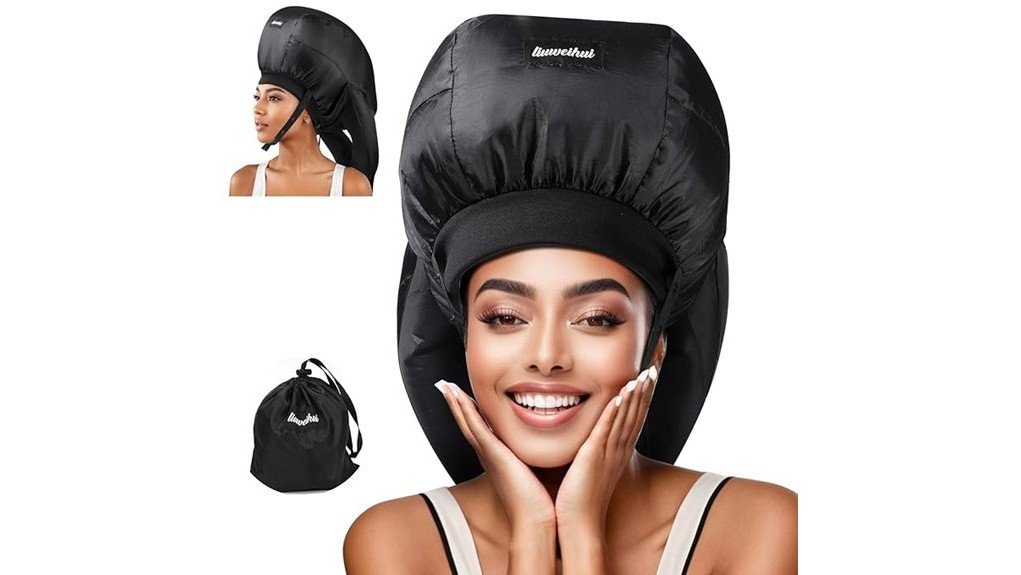
Drying curly or thick hair without blasting individual sections with direct airflow can take patience, especially when you want to keep your hands free for the rest of your routine. The liuweihui Bonnet Hair Dryer, model A123, is a soft hood attachment that connects to your existing hair dryer and spreads warm air around the bonnet through two tubes. Its large hood, adjustable chin strap, soft knit headband, and packable design make it practical for curls, long hair, conditioning sessions, and home styling. The main tradeoff is that this is an attachment, not a complete dryer, so comfort and drying performance still depend heavily on the hair dryer you connect to it and how well you keep the airflow tubes positioned.
Quick Verdict
Rating: Recommended with caveats
Best For: Curly, thick, or longer hair when you want a portable, hands-free bonnet attachment for an existing blow dryer.
Bottom Line: The dual-tube design, roomy hood, adjustable fit, and storage bag make this a practical alternative to holding a dryer by hand. You should skip it if you need a self-powered bonnet dryer or regularly style with large rollers that may restrict the bonnet’s airflow.
| Specification | Detail |
|---|---|
| Brand | liuweihui |
| Model | A123 |
| ASIN | B0D8WNSDSJ |
| Product type | Soft bonnet hair dryer attachment |
| Airflow design | Dual-tube bonnet design |
| Product dimensions | 19 × 14.99 × 21 inches |
| Listed weight | 3.53 ounces |
| Material | High-temperature-resistant flame-retardant fabric, according to the Amazon listing |
| Comfort features | Soft knit headband and adjustable chin strap |
| Dryer connection | Elastic adjustable opening designed to fit many hair dryers |
| Power source | Your separate hair dryer supplies the airflow and heat |
| Included accessory | Storage bag |
| Listed colors | Black, Red and Black, Starry Night Black |
| Important limitation | Seller states that the cap is not suitable for large curling rods or rollers |
What Is the liuweihui Bonnet Hair Dryer?
The liuweihui A123 is a soft bonnet attachment rather than a stand-alone electrical hair dryer. You place the hood over your hair, connect its elastic hose opening to a compatible blow dryer, and let your dryer push air through the two tubes and around the bonnet.
The seller designed the hood with increased capacity for long and thick hair. A soft knit section sits around the head, while an adjustable chin strap helps hold the bonnet in place. The two airflow tubes are intended to distribute warm air around the hood more evenly than a single-tube design.
This format can also be useful when you want hands-free airflow during a styling or conditioning routine. Because the bonnet itself does not replace your blow dryer, however, the heat level, airflow strength, noise, and much of the drying speed still depend on the dryer you attach.
Who Should Buy It?
Best For
- You have curly, thick, or longer hair and want airflow around more of your head at once.
- You already own a suitable hair dryer and want a compact bonnet attachment instead of another full-size appliance.
- You want hands-free drying or gentle warm airflow during an at-home conditioning routine.
Skip If
- You want a bonnet dryer with its own motor, heat controls, and power cord.
- Your hair dryer does not fit the elastic attachment opening securely.
- You regularly use large curling rods or rollers, which the seller says are not suitable for this bonnet.
Before You Buy: This is a bonnet attachment, not a complete hair dryer. Check the shape and size of your existing dryer’s nozzle and remember that the seller specifically advises against using the bonnet with large curling rods or rollers.
Dual-Tube Airflow Design
The most important feature is the dual-tube hose arrangement. Instead of feeding air through one entry tube, the bonnet has two tubes that supply the hood. The manufacturer describes this as an upgrade intended to make heat distribution more even.
For you, the practical benefit is broader airflow around the bonnet instead of concentrating everything at one point. That can be helpful when drying curls or thicker sections of hair without continuously moving a handheld dryer around your head.
The design still depends on keeping both tubes open. A sharp bend or collapsed section can restrict airflow, so hose position matters just as much as the number of tubes.
Cap Size, Fit, and Comfort
The roomy hood is designed for long and thick hair. The adjustable chin strap helps secure it during use, while the soft knit headband creates a gentler contact point around your head than a simple plastic edge.
The dryer connection uses an elastic adjustable opening. Amazon’s product content says it is designed to fit most kinds of dryers, but that should not be read as universal compatibility. Dryer nozzle shapes and diameters vary, so check that the attachment grips your dryer securely before committing to a full drying session.
Do not force a nozzle into an opening that is clearly too small. Likewise, stop if the connection repeatedly slips off during use.
Material and Construction
Amazon currently lists the bonnet material as high-temperature-resistant flame-retardant fabric. The product’s enhanced content also describes a mesh lining, waterproof and heat-resistant fabric qualities, and clean stitched construction.
Those details make sense for a hood that repeatedly receives warm air, but you should still treat it as a fabric accessory rather than protective equipment. Heat resistance does not mean the bonnet can safely tolerate unlimited temperature.
The seller also includes a storage bag, which is useful because the bonnet folds down much smaller than a hard hood or stand dryer.
Hands-Free Styling and Ease of Use
Once the cap and dryer connection are secure, the main convenience is being able to stop holding a blow dryer over individual sections. You can sit while the hood directs air around your hair, provided your dryer is positioned safely and its intake remains unobstructed.
This does not mean you should ignore the setup. You still need to monitor the heat, check that both tubes remain open, and make sure the hair dryer stays on a stable surface.
The seller also markets the bonnet for at-home conditioning. Warm airflow can fit into some conditioning routines, but you should follow the directions for your hair product and avoid assuming that more heat will automatically produce a better result.
How to Use the Bonnet Hair Dryer Correctly
- Prepare your hair. Arrange your curls, set, or conditioning treatment before putting on the bonnet.
- Place the bonnet over your hair. Make sure your hair sits comfortably inside instead of being tightly compressed.
- Adjust the chin strap. Secure it enough to hold the hood in place without creating uncomfortable pressure.
- Connect your dryer. Slide the elastic opening over the dryer nozzle and make sure it grips securely.
- Straighten both tubes. Avoid twists, folds, or sharp bends that can restrict airflow.
- Start with warm or lower heat. The seller specifically recommends testing with warm air before gradually increasing the temperature if needed and comfortable.
- Monitor the session. Check the bonnet, hose connection, dryer position, and your comfort regularly.
The Amazon listing also suggests that humidity around 50% to 60% may provide better curling results and says higher humidity can increase styling time. Treat that as manufacturer guidance rather than a universal requirement, since your hair texture, products, dryer, and local conditions can all change the result.
Pro Tip: Before putting the bonnet on, connect it to your dryer for a short low-heat test. Check that both tubes inflate freely and that the elastic opening stays attached without you having to hold it in place.
Material and Safety Considerations
Heat management is the most important safety issue with any bonnet attachment. Start at a comfortable temperature instead of immediately using your dryer’s hottest setting. If your scalp, ears, forehead, or neck becomes uncomfortably hot, stop and lower the temperature.
Keep your hair dryer’s air intake clear and place the dryer according to its own operating instructions. Do not cover its vents with fabric, bedding, towels, or clothing. The bonnet changes how you use the dryer, but it does not override the dryer’s safety requirements.
Keep the two tubes as straight as practical. Restricted airflow can reduce performance and may cause the section near the dryer to become hotter than expected.
You should also stay awake and attentive while the bonnet and dryer are running. Do not treat a hands-free setup as an unattended appliance. Stop using the bonnet if you notice damaged fabric, loose connections, unusual odors, excessive heat, or other signs that the setup is not operating normally.
How It Performs in Real Use
For Curly or Wavy Hair
The bonnet’s main advantage is that it surrounds your hair with airflow rather than directing a concentrated stream at one small section. This may help you reduce how much you physically disturb curls while they dry. Your final curl definition will still depend on your products, technique, heat level, and starting hair condition.
For Long or Thick Hair
The enlarged hood gives longer or fuller hair more room than a tight shower-cap-style attachment. That makes the product more practical when you need to keep a larger amount of hair inside the bonnet. Drying time cannot be predicted from the cap alone because density, moisture level, dryer output, and airflow restrictions all matter.
For Conditioning Sessions
The bonnet can provide warm surrounding airflow during conditioning routines that call for heat. This can be more convenient than repeatedly holding a dryer. Follow the directions on the conditioner or treatment you are using, especially regarding temperature and treatment time.
For Travel and Storage
A soft bonnet has a clear space advantage over a hard hood or stand dryer. The liuweihui bonnet is lightweight and comes with a storage bag, so you can fold it away when you are finished. You still need access to a compatible hair dryer at your destination.
Pros and Cons
Pros
- Dual airflow tubes are designed to distribute warm air around the hood more evenly.
- Large bonnet gives long and thick hair more room.
- Adjustable chin strap and soft knit headband improve fit and comfort.
- Elastic dryer opening works with many common hair-dryer nozzles.
- Lightweight folding design and included storage bag are convenient for travel and small spaces.
Cons
- Requires a separate compatible hair dryer, so it is not an all-in-one appliance.
- Tube bends or a poor nozzle connection can reduce airflow and make setup more frustrating.
- The seller says it is not suitable for large curling rods or rollers.
Is It Worth the Price?
This bonnet makes the most sense as a simple accessory for a hair dryer you already own. Instead of buying and storing another powered appliance, you get a collapsible hood, two airflow tubes, an adjustable fit, and a storage bag.
That makes it worth considering if portability and hands-free use matter more to you than having independent temperature controls built into the bonnet itself. The value is less convincing if your current blow dryer does not fit securely or if you would rather have a complete soft-bonnet or hard-hood dryer with its own motor.
Because Amazon pricing and seller availability can change, compare the current listing with powered bonnet dryers before deciding which format offers better value for your routine.
How It Compares to Alternatives
The BRJ Eleganty Soft Bonnet Hood Hairdryer Attachment is a closer alternative because it also connects to an existing blow dryer and is designed for portable bonnet-style drying. Comparing attachment size, hose fit, headband comfort, and how securely the hose connects to your particular dryer is more useful than comparing motor power because neither attachment supplies its own main airflow source.
The Gold ‘N Hot Professional Ionic Soft Bonnet Dryer and powered bonnet models such as the Conair Pro Style Bonnet Dryer take a different approach. They include their own powered drying unit and heat controls, so they are better choices if you want a self-contained system. The liuweihui attachment makes more sense if you prefer a lighter, simpler accessory and already have a dryer you like.
Frequently Asked Questions
Does the liuweihui bonnet have its own heating element?
No. It is an attachment that receives warm air from a separate hair dryer. Your dryer’s heat and airflow settings therefore have a major effect on how the bonnet performs.
Will it fit every hair dryer?
The bonnet uses an adjustable elastic opening that the seller says fits many types of dryers, but universal compatibility is not guaranteed. Check that your dryer’s nozzle can sit securely inside the opening without slipping out or blocking airflow.
Is it suitable for long or thick hair?
Yes, that is one of its intended uses. The seller describes the bonnet as having increased capacity for long and thick hair, although your actual drying time will depend on hair density, moisture, airflow, and dryer output.
Can I use large rollers inside the bonnet?
The seller specifically states that this diffuser cap is not suitable for large curling rods or rollers. If large roller sets are a regular part of your routine, a larger powered soft bonnet or hard hood may be a better choice.
How long will my hair take to dry?
There is no reliable fixed drying time for this attachment. Hair thickness, length, starting moisture, your blow dryer’s airflow, temperature, room humidity, and whether the tubes remain fully open can all change the result.
Should I use the hottest dryer setting?
Not automatically. The seller recommends starting with warm air and increasing the temperature gradually only if it remains comfortable. Stop or reduce the heat if your scalp, ears, forehead, or neck feels too hot.
Can I use the bonnet for deep conditioning?
The manufacturer’s product content promotes the bonnet for at-home conditioning. Use only a temperature and treatment duration that match the directions for your conditioning product, and monitor the heat throughout the session.
Can I sleep while the bonnet dryer is running?
No. A hands-free bonnet still uses a running electrical hair dryer and heated airflow. Stay awake and attentive so you can respond if the dryer shifts, airflow becomes blocked, or the bonnet becomes uncomfortably hot.
The Bottom Line
The liuweihui A123 Bonnet Hair Dryer attachment is worth considering if you already own a compatible blow dryer and want a lightweight, hands-free way to distribute warm air around curly, thick, or longer hair. Its strongest features are the roomy hood, dual airflow tubes, adjustable fit, and packable storage, while its biggest limitations are dependence on your existing dryer and incompatibility with large rollers.
If you want a self-contained dryer with built-in heat controls, choose a powered bonnet model instead. For buyers who value portability and a simple attachment-based setup, this one earns a Recommended with caveats verdict.