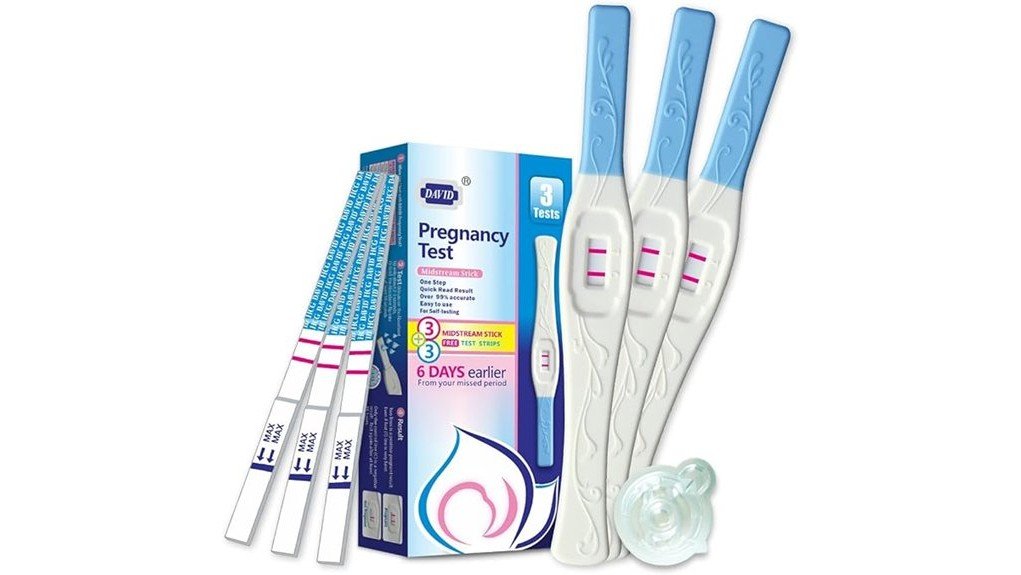
The DAVID Pregnancy Test is designed for early detection, achieving over 99% accuracy in results. It can identify HCG levels as low as 10 mIU/ml, allowing users to confirm pregnancy as early as six days before a missed period. This sensitivity is essential for making timely decisions regarding reproductive health. Understanding how to use the test properly can greatly enhance the accuracy of the outcomes. What specifics should one consider for ideal testing?
Key Takeaways
- DAVID Pregnancy Test offers over 99% accuracy, providing high confidence in early detection of pregnancy.
- It can detect HCG levels as low as 10 mIU/ml, allowing for early results.
- Testing six days before a missed period maximizes early detection chances.
- Results are available within 5-15 minutes, facilitating timely decision-making.
- Following instructions closely enhances reliability and reduces the risk of invalid outcomes.
How to Use the DAVID Pregnancy Test for Accurate Results
Using the DAVID Pregnancy Test effectively requires careful attention to the provided instructions to guarantee accurate results.
Test preparation begins with ensuring all components, including the individual test strips and urine cups, are ready. A user should collect urine samples at the recommended time, preferably in the morning when hormone levels are highest.
Ensure all test components are ready and collect urine samples in the morning for accurate hormone level readings.
Following the instructions for use is essential, as improper techniques can lead to invalid outcomes. Result interpretation is straightforward; positive or negative results should be read within 5-15 minutes.
Any results observed after this time frame are deemed invalid, ensuring clarity and precision in determining pregnancy status.
What Does 99% Accuracy Mean?
Accuracy is a critical factor when evaluating the reliability of a pregnancy test, and the DAVID Pregnancy Test boasts an impressive accuracy rate of over 99%. This level of accuracy interpretation means that out of 100 tests conducted, fewer than one may yield a false result, enhancing test reliability. Understanding this statistic empowers users in their decision-making process.
| Accuracy Rate | False Positive Rate | Confidence Level |
|---|---|---|
| 99% | <1% | High |
| 98% | 2% | Moderate |
| 95% | 5% | Low |
| 90% | 10% | Very Low |
Comparing HCG Sensitivity: Why It Matters for Your Results
When selecting a pregnancy test, understanding the sensitivity of human chorionic gonadotropin (HCG) detection is crucial, as it directly influences the ability to confirm a pregnancy early.
HCG levels rise considerably in early pregnancy, and tests with higher sensitivity, such as those detecting 10 mIU/ml, provide greater test reliability than those requiring 25 mIU/ml. This means users can obtain results sooner, potentially as early as six days before a missed period.
Choosing a test with superior sensitivity not only enhances confidence but also empowers individuals to make informed decisions about their reproductive health promptly.
User Experience: How to Achieve Quick and Accurate Results
Achieving quick and accurate results with the DAVID Pregnancy Test involves several key steps that guarantee reliability.
First, users should consider test timing; the ideal period is at least six days before a missed period for maximum sensitivity.
User preparation is important; collecting urine in the provided cup promotes cleanliness and accuracy.
Following the instructions meticulously will enhance the likelihood of reliable results, as deviations can lead to inaccuracies.
Results are visible within 5-15 minutes, so patience is advised during this brief wait.
Tips for Ensuring Reliable Testing Outcomes
To guarantee reliable testing outcomes with the DAVID Pregnancy Test, several practical tips can be embraced.
- Choose a quiet and private testing environment to minimize distractions.
- Test timing is essential; early morning urine often contains the highest hormone concentration.
- Follow the instructions carefully, ensuring no steps are skipped.
- Check results within the specified timeframe to avoid invalid outcomes.
Frequently Asked Questions
Can I Use the Test at Any Time of Day?
The test can be used at any time of day; however, morning testing is recommended for ideal accuracy. This timing aligns with hormonal changes, enhancing the likelihood of detecting pregnancy early and reliably.
What Should I Do if I Get a Faint Line?
Upon observing a faint line, one should consider it a potential positive result. For accurate faint line interpretation, retesting in a few days is advisable, offering clarity and peace regarding the next steps in this journey.
Are the Tests Safe for All Women to Use?
The tests are safe for all women to use, prioritizing women’s health. Designed with user-friendly features, they empower individuals to take charge of their reproductive choices, promoting informed decisions with confidence and privacy in testing.
How Should I Store the Pregnancy Tests?
Proper storage of pregnancy tests is essential for maintaining their accuracy, with a shelf life often exceeding two years. Keeping them in a cool, dry place guarantees ideal performance, allowing women to confidently plan their futures.
What Is the Expiration Date for the Tests?
The tests typically have an expiration date printed on the packaging, indicating their shelf life. It’s crucial to adhere to these expiration guidelines to guarantee accuracy and reliability when detecting pregnancy.
Conclusion
To summarize, the DAVID Pregnancy Test stands out for its high sensitivity and remarkable accuracy, providing users with reliable results as early as six days before a missed period. With a detection threshold of 10 mIU/ml and a success rate exceeding 99%, it empowers individuals to make informed decisions about their reproductive health. As the saying goes, “A stitch in time saves nine,” so taking the test early can lead to timely insights and peace of mind regarding pregnancy status.