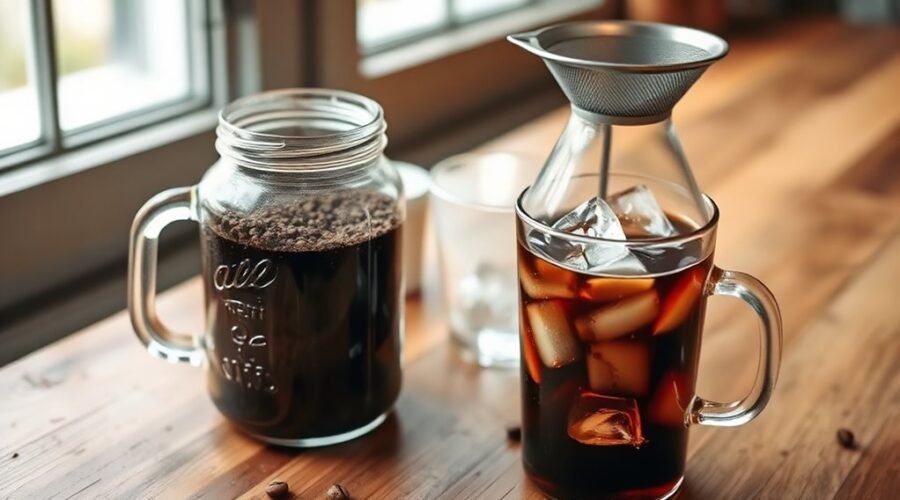
To learn how to make cold brew coffee at home, combine extra-coarse coffee grounds (1,000 to 1,400 microns) with cold filtered water in a mason jar, French press, or dedicated cold brew maker, steep for 12 to 18 hours, and strain out the grounds. Choose a medium or medium-dark roast for smooth chocolatey sweetness, and refrigerate the strained brew at 40°F (4°C) or below.
How to Make Cold Brew Coffee: 3 Beginner Methods Compared
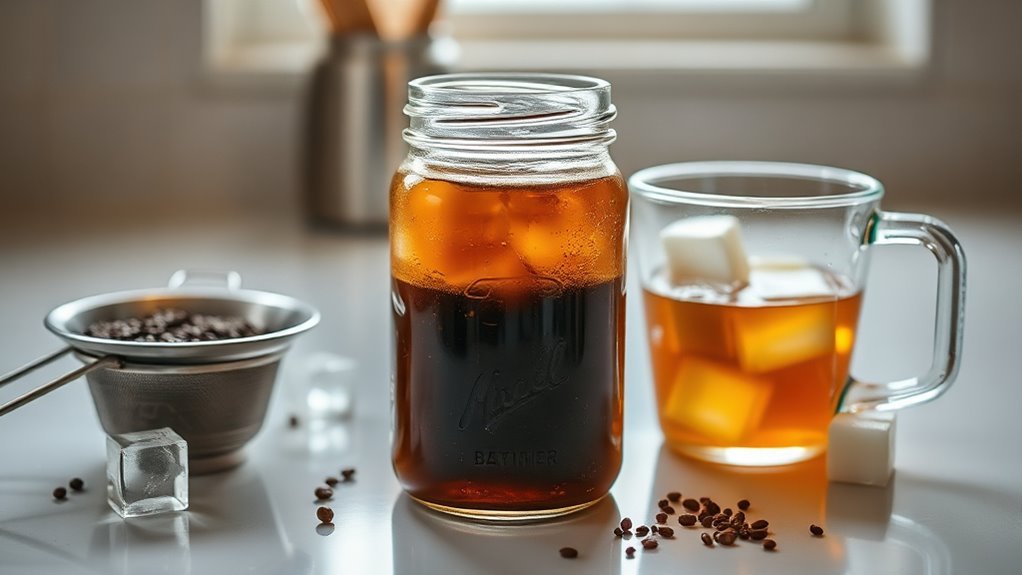
You do not need expensive equipment to brew smooth cold coffee, but the vessel you pick determines batch size, sediment level, and cleanup time. If you want exact ready-to-drink measurements without doing ratio math, jump straight to our cold brew coffee ready-to-drink recipe, or compare the three starter setups below first.
| Brewing Method | Upfront Cost | Batch Size | Clarity & Sediment | Cleanup Speed | Best For |
|---|---|---|---|---|---|
| Mason Jar + Strainer | Very low (use existing jar) | 16 oz to 64 oz | Very clean if finished with paper filter | Moderate (two-step pour) | Budget beginners testing cold brew |
| French Press | None if you own one | 16 oz to 34 oz | Full-bodied; noticeable fine silt | Fast plunge; rinsing mesh takes 1 min | Small 2-to-3-day batches with zero extra gear |
| Dedicated Cold Brew Maker | Moderate (dedicated pitcher) | 32 oz to 64 oz+ | Clean (fine mesh core or felt pad) | Fastest (lift core, dump, rinse) | Weekly batch brewers who want convenience |
Choosing the Best Coffee Beans & Roast Level
Cold water pulls out sweet, rounded flavor compounds slowly while leaving behind many sharp aromatics. Because of that, your roast level shapes the glass far more dramatically than in hot drip brewing:
- Medium Roast (Best All-Around): Delivers balanced sweetness, milk-chocolate and caramel notes, and gentle acidity. Single-origin beans from Colombia, Brazil, or Guatemala work reliably well.
- Medium-Dark to Dark Roast (Best With Milk): Produces a bold, roasty, cocoa-forward base that cuts through oat milk, cream, and flavored syrups without tasting watery.
- Light Roast (Best Black & Bright): Highlights berry, citrus, or floral notes, though it can taste thin or tart if under-steeped—extend steeping to 16–18 hours when using dense light roasts.
Always grind beans to an extra-coarse texture right before steeping—see our cold brew grind size guide for exact micron targets and burr versus blade grinder tips.
Why Water Quality Makes or Breaks Cold Brew
Coffee is roughly 98% water, and cold brewing never boils away chlorine or off-flavors. Using the wrong water is one of the most overlooked reasons homemade cold brew tastes flat or harsh:
- Use cold filtered water (Best): A standard activated-carbon pitcher filter removes chlorine and metallic tastes while keeping balanced minerals (calcium and magnesium) that help extract sweetness.
- Avoid distilled or reverse-osmosis water without minerals: Pure zero-mineral water extracts poorly and leaves cold brew tasting hollow and sour.
- Avoid heavily softened or hard tap water: Excess bicarbonate neutralizes pleasant brightness and turns the cup chalky or dull.
Step-by-Step Cold Brew Method (Any Vessel)
- Measure coffee and water: Use a 1:8 coffee-to-water ratio by weight for ready-to-drink strength (e.g., 100 g coffee to 800 ml water) or 1:4 to 1:5 for concentrate you dilute 1:1 later.
- Combine and stir gently: Add extra-coarse grounds to your jar, French press, or brewer core, pour in cold filtered water, and stir gently until all dry pockets are wet.
- Cover and steep 12–18 hours: Steep 12 to 16 hours at cool room temperature (65°F–70°F) or 16 to 20 hours in the fridge at 40°F or below.
- Strain cleanly: Plunge your French press slowly, lift out the brewer’s mesh core, or pour through a fine sieve lined with a paper filter. Avoid squeezing grounds tightly.
- Serve over ice and refrigerate leftovers: Pour over large ice cubes, add water, milk, or liquid syrup to taste, and seal leftovers immediately in an airtight glass jar.
Pros, Limitations & Food Safety Rules
Cold brew gives you a smooth, low-bitterness drink ready in seconds every morning, though it requires planning 12+ hours ahead and uses more coffee grounds per cup than hot drip coffee. Store undiluted concentrate sealed at 40°F (4°C) or below for 7 to 10 days, finish diluted cold brew within 3 to 5 days, and never leave milk-mixed cold brew out at room temperature for more than 2 hours. For full storage timelines and spoilage warning signs, read how long cold brew is good for.
Frequently Asked Questions
Is cold brew actually less acidic than hot coffee?
Cold brew tastes noticeably smoother and less sharply acidic than hot-brewed coffee. Laboratory testing shows cold water extracts lower titratable acidity (perceived sourness) and fewer bitter compounds, even when overall pH values are similar depending on roast level.
What is the easiest method for a cold brew beginner?
If you already own a French press, it is the easiest zero-cost starting point because the plunger strains the grounds in seconds. If you plan to brew weekly, a dedicated cold brew pitcher with a removable mesh core offers the fastest cleanup.
Can I use tap water or distilled water to make cold brew?
Use cold filtered water (such as from a carbon pitcher filter) for the cleanest flavor. Avoid distilled or zero-mineral water, which produces flat-tasting coffee, and avoid heavily chlorinated tap water that adds chemical off-notes.
Can I reuse cold brew coffee grounds for a second batch?
It is not recommended. Most sweet, soluble aromatics extract during the first 12-to-18-hour steep, so re-steeping spent grounds yields a thin, woody, and mildly bitter second batch.
How long does homemade cold brew last in the refrigerator?
Keep homemade undiluted cold brew concentrate sealed at 40°F (4°C) or below for 7 to 10 days. Ready-to-drink diluted cold brew lasts 3 to 5 days, and any glass mixed with milk or cream should be consumed promptly or discarded after 2 hours at room temperature.