

You use cuticle oil by applying a small amount to the base of each nail and along the cuticle line, then massaging it in so it can absorb instead of sit on top. Clean skin helps, and slightly damp hands usually take it up better. The real question isn’t just how to apply it, but when, how often, and which ingredients actually make a difference.
What Does Cuticle Oil Do?
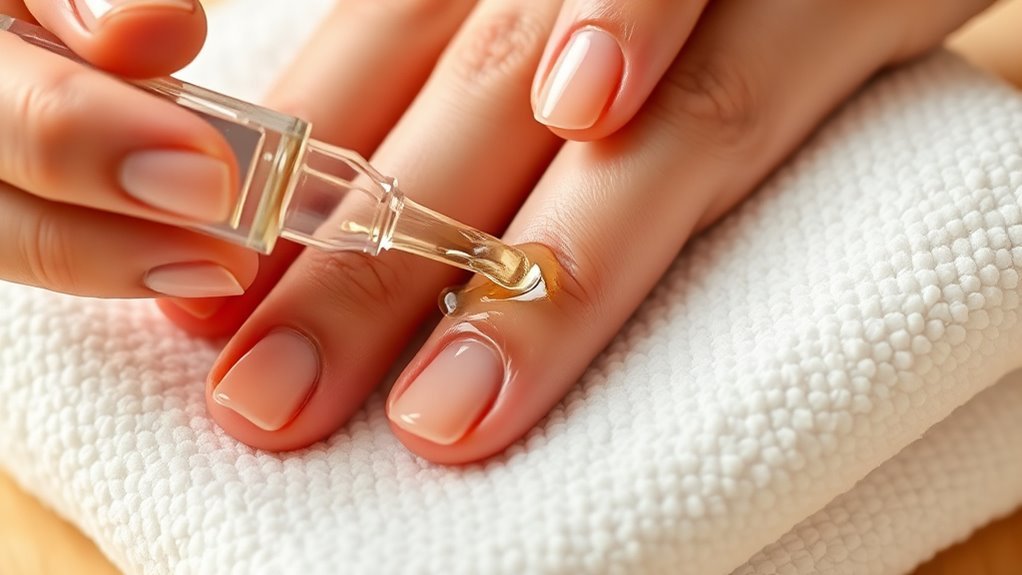
Cuticle oil helps soften the skin around your nails, restore moisture, and reduce dryness that can lead to cracking, peeling, and hangnails.
You support the nail plate by maintaining flexibility in the periungual tissue, which can reduce mechanical stress and help preserve a smoother nail edge.
The main cuticle oil benefits include improved hydration, a more resilient barrier, and less visible roughness around the nail fold.
This matters because chronically dry cuticles can constrain nail growth and make your hands look neglected, even when you’ve done everything else right.
You don’t need to accept that. With consistent use, you give your nails a better environment to grow in, while keeping the surrounding skin supple and intact.
Effective application techniques matter, because the oil works best when it reaches the cuticle margin and adjacent skin, where it can coat, condition, and reduce transepidermal water loss over time.
How Do You Apply Cuticle Oil?
Start by washing and drying your hands so the oil can contact clean skin, then place a small drop at the base of each nail and along the cuticle margin. Use the pad of your index finger or a brush to spread it in a thin, even layer. Massage gently in small circles until the surface looks lightly coated, not greasy. For precise cuticle oil application techniques, work one hand at a time and keep pressure low to avoid irritating the skin.
| Step | Action | Result |
|---|---|---|
| 1 | Clean hands | Better contact |
| 2 | Dispense drop | Controlled dose |
| 3 | Spread evenly | Full coverage |
| 4 | Massage briefly | Better absorption |
| 5 | Wipe excess | Clean finish |
Choosing cuticle products matters: select formulas with lightweight oils, minimal fragrance, and a fine-tipped applicator. This method supports disciplined care and protects your autonomy over nail maintenance.
When Should You Use Cuticle Oil?
You should use cuticle oil whenever your nails and surrounding skin feel dry, tight, or rough, and it’s most effective after handwashing, bathing, or exposure to sanitizers and detergents. At those moments, you restore lipids that support cuticle care and protect nail health without waiting for damage to accumulate.
Use cuticle oil when nails feel dry or tight, especially after washing, bathing, or sanitizer use.
Apply it when you notice white edges, peeling skin, or a brittle surface, because those signs indicate moisture loss and barrier stress.
- After removing water, pat hands dry, then seal in moisture.
- Before bed, use it to support overnight recovery.
- Before a manicure, soften tissue for cleaner grooming.
You can also apply it after cold weather or frequent cleaning, when the nail unit needs more support.
Consistent attention helps keep the cuticle flexible, reduces mechanical splitting, and lets you maintain polished hands on your own terms, with less friction and more control.
How Often Should You Use Cuticle Oil?
How often you use cuticle oil depends on your skin’s dryness and exposure, but once or twice daily is a solid baseline for most people. Your cuticle oil frequency should rise if you wash your hands often, work in dry air, or use solvents that strip lipids.
Apply it after washing and before bed for the most consistent daily application. If your cuticles stay supple, you don’t need to overapply; excess won’t improve performance. Use a small amount, massage it in, and let it absorb before gloves or polish.
On lower-exposure days, one application may be enough. On harsher days, reapply after handwashing or whenever your skin feels tight. Track how your nails respond and adjust with intention.
The goal isn’t ritual for its own sake; it’s maintaining flexibility, protection, and autonomy over your routine without wasting product or time.
Why Cuticle Oil Helps Dry, Cracked Skin
Cuticle oil helps reinforce your skin’s moisture barrier, which reduces water loss and supports faster recovery from dryness.
When you apply it consistently, it softens cracked cuticles and improves flexibility in the surrounding skin. This makes the area less prone to splitting, peeling, and irritation.
Moisture Barrier Support
When cuticles and the surrounding skin dry out, their lipid barrier weakens, allowing moisture to escape and increasing the risk of cracking, peeling, and irritation.
You can restore moisture barrier support by applying cuticle oil regularly, so your skin retains water instead of losing it to the environment. This targeted emollient layer strengthens nail health and delivers clear hydration benefits without heaviness.
Use it to:
- reduce transepidermal water loss
- reinforce surface lipids
- support resilient, comfortable skin
When you keep the barrier intact, you create better conditions for flexibility and protection. That means less reactive dryness, fewer rough edges, and more consistent comfort at the nail fold.
Consistency matters; your skin responds best when you make hydration routine, not occasional.
Softens Cracked Cuticles
Cracked cuticles soften as cuticle oil replenishes lipids and water-binding emollients at the nail fold, helping stiff, dry skin regain flexibility.
You lower friction, reduce micro-tears, and let the tissue move without splitting each time you type, grip, or wash your hands. That matters for nail health because damaged cuticles can invite inflammation and prolong healing.
With consistent cuticle care, you create a more resilient surface that resists peeling and pain.
Apply the oil to clean skin, massage it into the surrounding tissue, and reapply after handwashing or exposure to detergents.
You’re not masking damage; you’re giving your skin the resources it needs to repair itself and stay supple on your terms.
What Ingredients Should You Look For?
When you choose cuticle oil, look for hydrating base oils such as jojoba, sweet almond, or vitamin E oil, since they help reduce moisture loss and soften dry cuticles.
You should also check for supporting nutrients like antioxidants and essential fatty acids, which can reinforce the skin barrier and improve condition over time.
The most effective formulas combine strong emollients with targeted nutrients to support consistent hydration and repair.
Hydrating Base Oils
The best cuticle oils start with hydrating base oils that penetrate well and help seal moisture into the skin and nail plate. You want lightweight natural oils with strong hydrating properties, so the formula absorbs quickly instead of sitting on top.
That lets you soften dry cuticles without a greasy residue, which keeps your routine simple and effective.
- Jojoba oil mimics your skin’s sebum and spreads evenly.
- Sweet almond oil offers dependable slip and softening.
- Grapeseed oil feels light and supports fast absorption.
Choose blends that feel elegant on your skin and respect your autonomy. When the base oil performs well, you can apply it consistently, maintain flexibility, and support a clean, polished look without excess shine or buildup.
Supporting Nutrients
Beyond the base oil, you should also look for supporting nutrients that help protect the cuticle barrier and improve overall nail condition. You want formulas with essential vitamins such as A, C, E, and B-complex, because they can support keratin integrity and reduce visible dryness.
Antioxidants help limit oxidative stress, while humectants like glycerin or panthenol draw water into the tissue. If the product includes botanical actives, check that they’re present at meaningful levels, not just marketing traces.
Better nutrient absorption happens when the oil is paired with regular massage, since that improves contact and penetration. Choose clean, fragrance-light options if your skin reacts easily.
When you select ingredients deliberately, you claim more control over nail health, not less.
Common Cuticle Oil Mistakes to Avoid
Even a simple cuticle oil routine can backfire if you apply it incorrectly. You can sidestep common cuticle oil myths by recognizing that more product isn’t better; excess oil just sits on the nail plate and skin. You also need precise application techniques: target the cuticle margin, not the entire finger, and let the oil absorb instead of rubbing it off immediately.
- Don’t apply oil to dirty hands; debris blocks contact and weakens performance.
- Don’t use it over wet skin; water dilutes the oil and reduces retention.
- Don’t treat cuticle oil like a cure-all; it supports flexibility, but it won’t replace protective habits.
If you skip these basics, you waste product and miss the point of the routine. Apply with intention, keep your method consistent, and let the oil do its work without unnecessary interference.
How to Get Better Results From Cuticle Oil
For better results, apply cuticle oil when your skin is warm and slightly damp from washing, since softened tissue absorbs emollients more effectively. You’ll maximize cuticle oil benefits by using application techniques that prioritize consistency, not excess. Massage one drop per nail into the cuticle, lateral folds, and nail plate edge, then wait before handwashing. Use this matrix:
| Variable | Best practice |
|---|---|
| Timing | After washing, before bed |
| Dose | 1 drop per nail |
| Motion | Slow circular massage |
| Frequency | 2-3 times daily |
| Seal | Pair with hand cream |
Repeat daily to restore flexibility, reduce cracking, and support a cleaner nail perimeter. If your hands are dry, reapply after sanitizer use. Liberation starts with low-maintenance care that works while you move, type, create, and live. Track results for two weeks; you’ll see improved shine, less hangnail formation, and better moisture retention.
Related Nail Care Guides: Check shelf life in does cuticle oil expire and prep nails properly with how to use gel nail polish.
Frequently Asked Questions
Can You Use Cuticle Oil on Toenails?
Yes, you can use cuticle oil on toenails, and it can deliver cuticle oil benefits to dry, brittle skin around the nail folds.You should focus on applying cuticle oil to the cuticle area and surrounding skin, not just the nail plate.Massage it in after bathing or before bed. This supports hydration, reduces cracking, and helps you maintain healthier toenails with a simple, self-directed routine.
Does Cuticle Oil Expire?
Yes—cuticle oil can expire, and you should treat it like a 12-month tool, not a forever product.A bottle in my kit once turned cloudy and smelled rancid after a year; that’s the signal. You’ll get cuticle oil benefits only when the formula stays stable.Store it cool, tight-sealed, and check the label. For best application, use it within the stated shelf life and replace it when texture changes.
Can Cuticle Oil Stain Clothes?
Yes, cuticle oil can stain clothes if you use too much or let it soak in.You’ll reduce that risk by applying a small amount and massaging it into the nail fold. The cuticle oil application should stay controlled, so you can keep the cuticle oil benefits without transferring residue.If you do drip some, blot it fast and wash the fabric promptly to protect your clothing and your autonomy.
Is Cuticle Oil Safe During Pregnancy?
Yes, cuticle oil is usually safe during pregnancy, provided you choose safe ingredients.You’ll want to check labels for fragrance-free, plant-based formulas and avoid retinoids or harsh solvents.Think of it as a small shield for your nails: cuticle oil benefits include hydration, reduced cracking, and improved flexibility.If you’re unsure, you can ask your clinician, especially if you’ve got sensitive skin or allergies.
Can You Wear Nail Polish After Applying Cuticle Oil?
Yes, you can wear nail polish after applying cuticle oil, but you shouldn’t apply polish on oily nail plates.Wipe excess oil from the nail surface first, then let it absorb into the surrounding skin. That preserves cuticle oil benefits while supporting clean nail polish application.You’ll get better adhesion, smoother wear, and less lifting. For best results, oil your cuticles after polishing, not right before unless you cleanse thoroughly.
Conclusion
In short, you get the best results from cuticle oil when you apply it regularly, massage it in well, and use it on clean, slightly damp skin. A small amount goes a long way, so don’t overdo it. Choose ingredients that support moisture retention, and avoid skipping applications after washing your hands. If you stay consistent, cuticle oil can work like a daily shield, helping your nails and skin look healthier and feel less brittle.


[…] Never apply cuticle oil over an open, bleeding hangnail tear or a red, swollen, pus-filled nail fold (paronychia), and never share rollerball or brush applicators if anyone has a fungal nail infection. If you have nut allergies, check the ingredient label carefully before using cuticle oils containing sweet almond oil or macadamia oil—opt for pure 100% jojoba oil or squalane instead. For daily frequency schedules, see our companion guide on How to Use Cuticle Oil: Daily Timing Guide. […]