
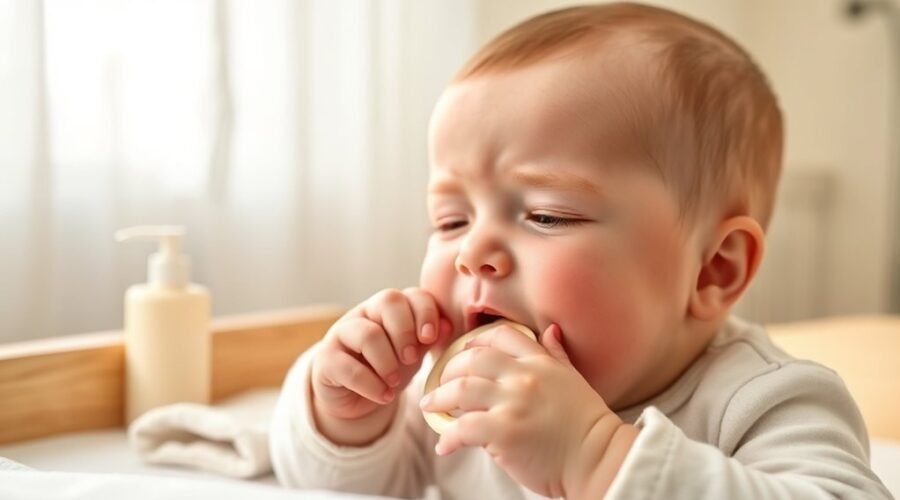
A teething rash (commonly called a drool rash) appears as flat or slightly raised red, chapped patches around a baby’s chin, mouth, lower cheeks, neck folds, and upper chest when excess saliva sits on delicate skin. Because teething rash is caused by digestive enzymes and moisture friction rather than a virus or bacteria, it is not contagious and typically clears within 3 to 7 days by patting drool dry, swapping wet bibs promptly, and applying a thin fragrance-free petrolatum or lanolin barrier ointment.
Teething Rash Explained: What It Looks Like & Where It Appears
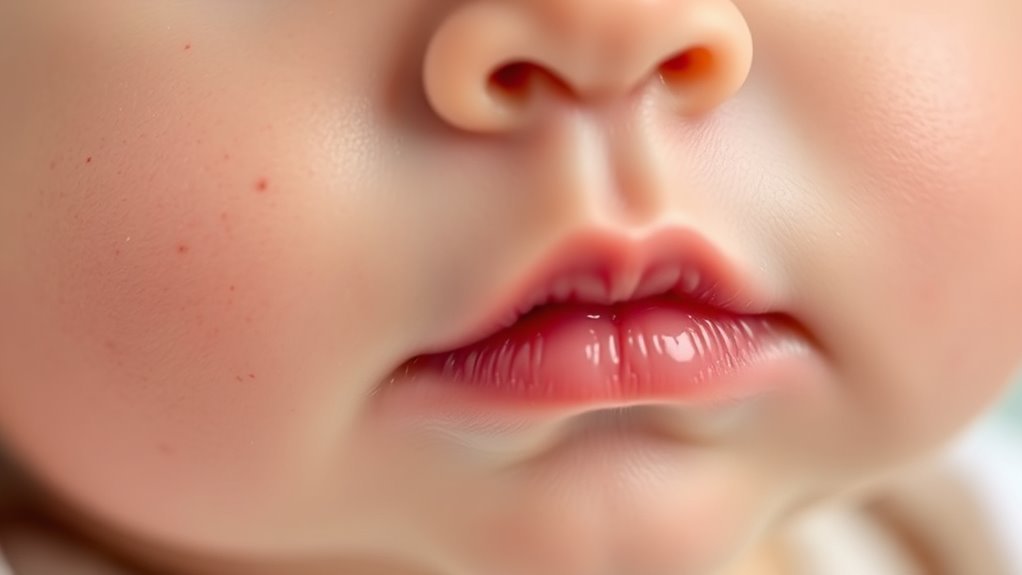
When an infant begins cutting teeth (most often between 4 and 24 months of age), the salivary glands ramp up drool production to cushion tender gums. A classic teething rash stays confined to the exact “drool track” where saliva pools or rubs against clothing and pacifiers:
- Perioral & Chin Area: Chapped, pink-to-red patches and tiny pinpoint bumps around the corners of the mouth and chin from pacifier or finger sucking.
- Cheeks: Glazed or dry red spots where drool smears across the cheek when your baby sleeps on their side or stomach.
- Neck Creases & Upper Chest: Moist red irritation hidden inside warm neck folds where dribbled saliva gets trapped without airflow.
Teething Rash vs. Other Baby Rashes & Red-Flag Symptoms
| Symptom or Feature | Typical Teething (Drool) Rash | When to Call the Pediatrician |
|---|---|---|
| Location | Mouth, chin, lower cheeks, neck folds & upper chest only | Spreads to trunk, back, arms, legs, or diaper area |
| Body Temperature | Normal temperature (or mild warmth under 100.4°F / 38°C) | True fever of 100.4°F (38°C) or higher (teething does NOT cause true fever) |
| Skin Surface | Dry, chapped, pink/red, or mildly bumpy | Honey-colored crusts, pus, oozing blisters, bleeding cracks, or hot swelling |
| Baby’s Behavior | Gum chewing, drooling, mild fussiness, normal feeding | Lethargy, refusal to drink fluids, wheezing, or inconsolable crying |
How to Treat and Prevent Teething Rash at Home
- Dab, Never Rub: Wiping a baby’s chin repeatedly with dry paper towels or textured burp cloths acts like sandpaper on wet skin. Gently dab drool away with a soft cotton cloth dampened with lukewarm water, then pat completely dry.
- Apply a Moisture-Repellent Barrier Ointment: Before naps, bedtime, and bottle or solid feeds, smooth a thin coat of plain fragrance-free petroleum jelly, Aquaphor healing ointment, or lanolin over clean, dry skin so saliva beads off instead of soaking into the epidermis.
- Rotate Absorbent Bibs & Air Out Neck Folds: Swap out damp bibs as soon as they get wet, and gently lift and pat dry your baby’s neck creases after feeds.
- Skip Scented Wipes & Harsh Soaps: Avoid alcohol-based or fragranced wipes on the face; wash the chin with plain warm water or a gentle, non-foaming cleanser like CeraVe Hydrating Cleanser or Vanicream gentle skincare.
Frequently Asked Questions
Can teething rash spread to other parts of the body?
No. Because teething rash is a localized contact irritation from saliva, it stays around the mouth, chin, cheeks, neck creases, and upper chest. A rash appearing on the torso, back, arms, or legs points to a viral rash, heat rash, or allergic reaction and should be evaluated by your pediatrician.
Is teething rash contagious?
No. Teething rash is caused by your baby’s own saliva enzymes and moisture friction rather than a contagious virus, fungus, or bacteria, so it cannot spread to siblings or caregivers.
How long does teething rash usually last?
With consistent drool dabbing and a plain barrier ointment applied before naps and feeds, most teething rash flare-ups calm down within 3 to 7 days, though mild redness can return periodically whenever a new tooth erupts.
Does teething cause a fever alongside a rash?
No. Pediatric guidelines confirm that teething does not cause a true fever (100.4°F / 38°C or higher). If your baby has a rash accompanied by a fever, oozing blisters, or lethargy, contact your pediatrician promptly.



[…] If you want a high-shine, sheer pink tinted lip gloss treatment with a sweet buttercream scent for daytime wear, compare our Summer Fridays Tinted Lip Butter Balm Review—and keep the unscented Aquaphor Stick in your pocket or nightstand for pure barrier repair (and for dabbing on dry winter cuticles or baby drool patches as noted in our Teething Rash Care Guide). […]