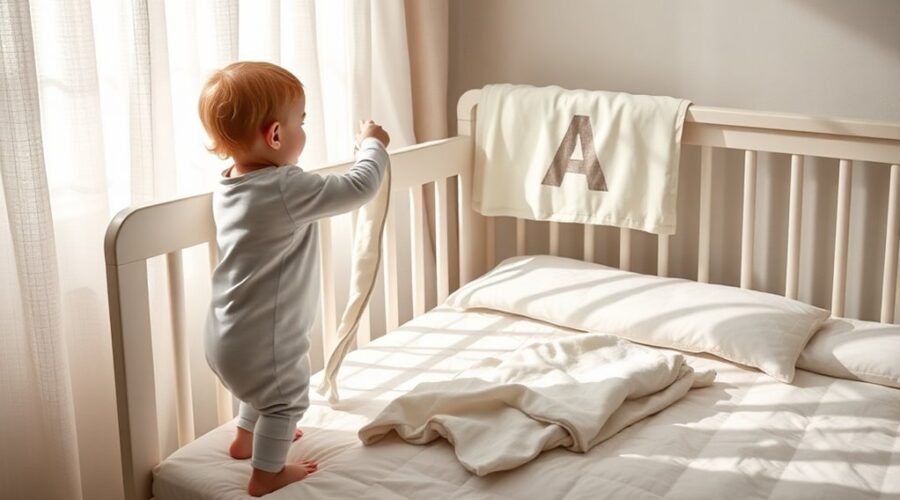
Wondering when to stop using sleep sack wear safely? There is no strict cutoff age—per the American Academy of Pediatrics (AAP), arms-free wearable blankets should be used instead of loose blankets until at least 12 months of age, and many toddlers safely continue wearing them until 18 to 36 months. The right time to stop is driven by fit, mobility, and crib-to-bed milestones rather than a birthday.
When to Stop Using Sleep Sack: AAP Safe Sleep Milestones

A common point of confusion for parents is mixing up swaddles with sleep sacks. Swaddling restricts the arms and must stop at the very first sign of rolling. By contrast, a standard sleeveless sleep sack leaves both arms completely free so your baby can reposition safely—which is why pediatricians recommend it as the safest way to keep a rolling baby warm. If you are still at the swaddle stage, start with our step-by-step swaddle-to-sleep-sack transition guide.
Under AAP safe sleep recommendations, the crib should remain completely bare of loose blankets, quilts, pillows, and plush toys through the entire first year. After 12 months, SIDS risk drops sharply and a lightweight breathable blanket becomes an option—though most 1-year-olds kick off loose blankets immediately, making a well-fitting sleep sack the more practical choice well into toddlerhood.
| Stage / Milestone | Typical Age | AAP-Aligned Guidance | Recommended Sleepwear |
|---|---|---|---|
| Rolling begins | 2–4 months | Stop swaddling immediately; keep arms free | Sleeveless, non-weighted sleep sack |
| Under 12 months | 0–12 months | Zero loose blankets or pillows in crib | Properly sized TOG-matched sleep sack |
| First birthday & beyond | 12–24 months | Loose blanket allowed, but sack still safe & warmer | Standard sleep sack or footed toddler sack |
| 35″ tall or climbing out | 24–36+ months | Transition from crib to toddler bed per AAP/CPSC | Footed pajamas, walker sleep bag, or light blanket |
5 Real Signs Your Child Is Ready to Stop Using a Sleep Sack
Rather than stopping early just because your baby can roll or stand, wait until one or more of these practical readiness or safety signs appear:
- Transitioning to a toddler bed (35 inches or crib climbing): The AAP and CPSC advise moving out of a crib once your child reaches 35 inches (89 cm) in height or climbs over the lowered rail. Closed-bottom sleep sacks become a tripping hazard when a toddler can get out of bed independently.
- Outgrowing the manufacturer’s weight or length limit: If your child’s feet press firmly against the bottom seam or the neckline/armholes become tight, size up—or transition out if they have outgrown the largest toddler size (typically around 30–36 lbs or 40 inches depending on brand).
- Consistently unzipping and removing it: If your toddler regularly takes the sleep sack off every night, they may be signaling readiness for snug two-piece pajamas or a lightweight blanket.
- Nighttime potty training: Toddlers getting up to use the bathroom need quick access without struggling with a long zipper pouch.
- Clear discomfort or overheating: If your child resists the sack despite switching to a lighter 0.5 TOG cotton layer, pajamas alone may suit their temperature preferences better.
Comparing Post-Sleep-Sack Options for Toddlers
Once your child is over 12 months and ready to move on from a closed-bottom wearable blanket, choosing the right replacement keeps nights warm without adding trip or tangle hazards. For newborns and younger infants, review our guides on safe swaddle weaning methods and how many swaddles to keep on hand before moving into toddler gear.
| Option | Minimum Age | Best For | Main Limitation |
|---|---|---|---|
| Footed Toddler Sleep Sack (Walker Bag) | 12+ months | Active toddlers who kick off blankets or walk in a toddler bed | Less convenient during overnight potty training |
| Warm Footed / Fleece Pajamas | Any age (snug-fit) | Kids who refuse sacks and cannot keep a blanket on yet | Requires adjusting room temperature seasonally |
| Lightweight Breathable Blanket | 12+ months (AAP) | Older toddlers (2–3+ yrs) who can pull covers back up | Most 12–24 month olds kick it off within minutes |
Step-by-Step Guide to Transitioning Out of a Sleep Sack
- Pick a calm week: Avoid dropping the sleep sack during illness, travel, teething flares, or the same week you switch from a crib to a toddler bed.
- Dress for warmth first: Use snug-fitting, breathable cotton or fleece pajamas matched to the room temperature (typically 68°F–72°F) so your toddler stays warm even when a blanket gets kicked off.
- Practice during daytime naps: Let your child nap without the sleep sack for 3 to 5 days so the new sleepwear feels familiar before changing bedtime.
- Introduce a single lightweight blanket (if 12+ months): Choose a small, breathable cotton or muslin toddler blanket rather than a heavy quilt, and practice pulling it up together during daytime play.
- Keep every other bedtime cue identical: Maintain the same bath, story, white noise, and lights-out routine so your child does not lose their sleep association all at once.
Sleep Sack Fit & Safety Checklist
- Neck and armholes: Snug enough that the neckline cannot slip over your baby’s chin or mouth.
- Hip room: Wide, bell-shaped bottom so hips and knees can bend and spread naturally (“frog-leg” posture).
- Zero added weight: Never use weighted sleep sacks or weighted blankets for infants (AAP advises against them).
- Temperature check: Feel the back of your child’s neck or chest—warm and dry is ideal; sweaty or flushed means drop to a lower TOG rating.
- Crib height check: Keep the crib mattress on its lowest setting once standing begins, and switch to a toddler bed at 35 inches or first climb-out.
Keeping the Sleep Sack vs. Transitioning: Pros & Limitations
Benefits of Keeping It Longer (12–30 Months)
- Provides consistent warmth all night without getting kicked off.
- Acts as a strong, predictable bedtime sleep cue.
- Can discourage early crib climbing by limiting leg lift over the rail.
- Eliminates loose bedding tangles in the crib.
Limitations & When to Stop
- Closed-bottom sacks pose a tripping risk once a child moves to a toddler bed.
- Outgrown sacks restrict leg extension and can cause wake-ups.
- Makes independent nighttime bathroom trips harder during potty training.
- Not suitable if your child consistently fights or unzips it at bedtime.
Frequently Asked Questions
Do I have to stop using a sleep sack when my baby starts rolling over?
No. You must stop swaddling at the first sign of rolling, but a standard sleeveless sleep sack leaves both arms completely free so your baby can push up and roll safely. Per AAP safe sleep guidance, arms-free wearable blankets remain safe well after rolling begins.
What is the earliest age my baby can sleep with a loose blanket instead of a sleep sack?
The American Academy of Pediatrics (AAP) recommends keeping all loose blankets, pillows, and soft bedding out of the crib until at least 12 months of age to reduce the risk of suffocation, entrapment, and SIDS.
How long can a toddler keep wearing a sleep sack?
Many toddlers comfortably wear a sleep sack until 2 to 3 years old—as long as it fits within the manufacturer height and weight limits and does not create a tripping hazard once they move to a toddler bed. Footed toddler sleep sacks (walker bags) are an option for mobile toddlers.
When should I stop using a sleep sack for a crib climber?
While a fitted sleep sack can sometimes delay crib climbing by limiting leg lift, the AAP and CPSC advise transitioning to a toddler bed once your child reaches 35 inches (89 cm) tall or successfully climbs out. Once out of the crib, switch to footed pajamas, a footed sleep sack, or a lightweight blanket so they do not trip when getting out of bed.
Are weighted sleep sacks safe for babies or toddlers?
No. The American Academy of Pediatrics explicitly advises against weighted sleep sacks, weighted swaddles, and weighted blankets for infants because added weight on the chest can interfere with safe breathing and arousal.