
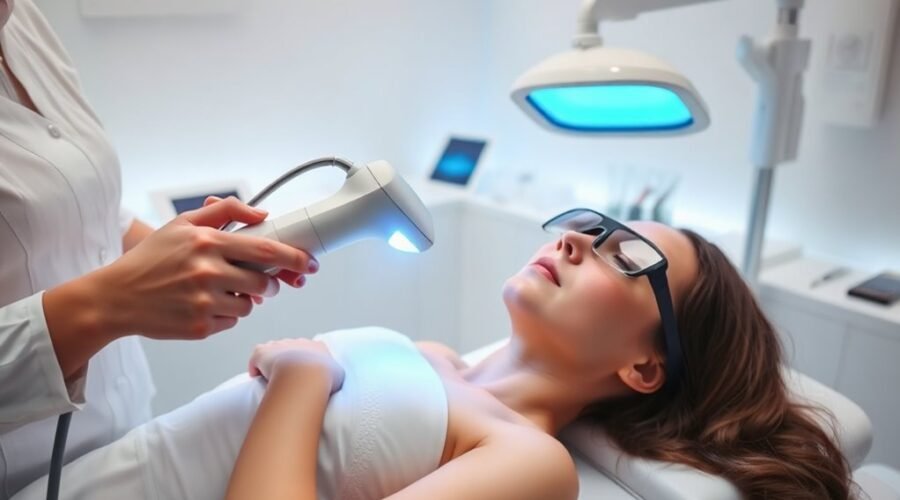
Is IPL hair removal permanent? No—intense pulsed light (IPL) delivers long-term hair reduction, not 100% permanent hair removal. Under FDA 510(k) device clearances, IPL devices are cleared for permanent hair reduction (a lasting drop in hair count and thickness), which still requires multiple sessions and periodic touch-ups—and works best on light-to-medium skin tones (Fitzpatrick types I–IV) with dark hair.
Quick Answer
IPL significantly slows and thins hair regrowth over a series of sessions, but it does not permanently eliminate every follicle. Only electrolysis is FDA-recognized for 100% permanent hair removal. Expect maintenance sessions every few months, and note that IPL is generally suited to Fitzpatrick skin types I–IV with brown or black hair.
Is IPL Hair Removal Permanent or Long-Term Reduction?
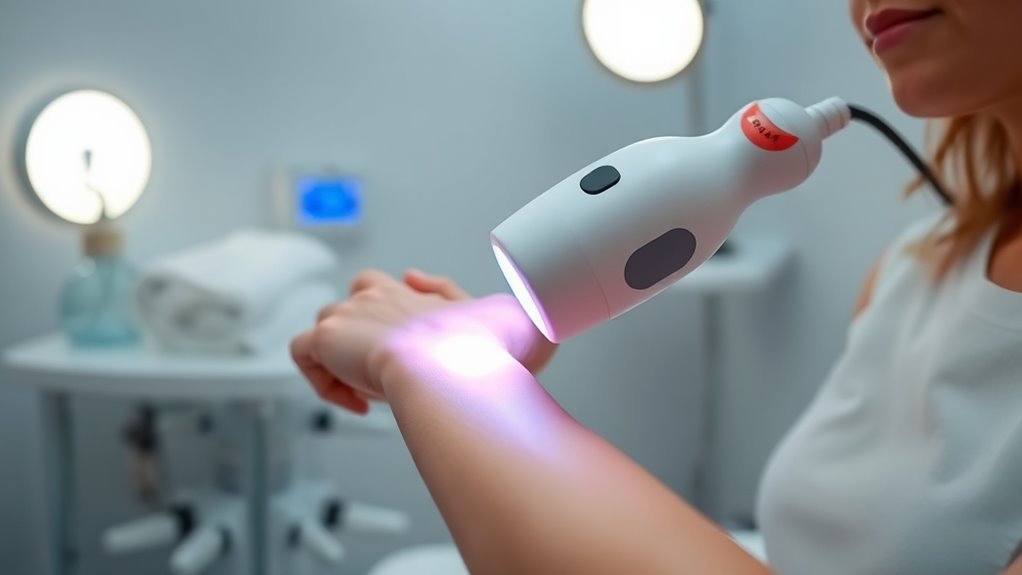
In dermatology and FDA terminology, permanent hair reduction means a long-term, stable decrease in the number of regrowing hairs after a full treatment course—not zero hair forever. IPL uses broad-spectrum light (multiple wavelengths) absorbed by melanin in the hair shaft and converted into heat to weaken follicles in their active growth (anagen) phase.
Because hair follicles cycle independently through active growth (anagen), transition (catagen), and resting (telogen) phases, a single flash only affects a fraction of hairs. Repeated treatments cumulatively suppress follicles so regrowth becomes sparser, finer, and slower, though hormonal shifts (such as pregnancy, menopause, or PCOS) can still stimulate dormant follicles later.
Fitzpatrick Skin Types and Hair Color Contrast Limits
IPL relies on selective photothermolysis—high contrast between dark hair melanin and lighter surrounding skin. According to dermatology reviews indexed on PubMed, higher epidermal melanin in darker complexions competes for broad-spectrum light, raising the risk of burns and post-inflammatory hyperpigmentation.
| Skin & Hair Profile | IPL Suitability | Better Alternative if Unsuitable |
|---|---|---|
| Fitzpatrick I–III + dark brown/black hair | High effectiveness and safety | In-clinic diode or alexandrite laser for faster clearance |
| Fitzpatrick IV (olive/light brown) + dark hair | Moderate; requires cautious energy settings and patch test | Clinician-supervised diode or Nd:YAG laser |
| Fitzpatrick V–VI (brown to deep dark skin) | Generally unsafe (burn & pigment-change risk) | Long-pulsed Nd:YAG (1064 nm) laser or electrolysis |
| Light blonde, red, gray, or white hair | Low effectiveness (insufficient melanin) | Electrolysis (targets follicle regardless of pigment) |
How to Prep and Get Safer, Better IPL Results
Consistent preparation improves light delivery into the hair shaft and lowers side effects such as redness or swelling:
- Shave—do not wax or pluck—24 hours before: Shaving leaves the pigmented root inside the follicle for the light to target, whereas waxing or epilating removes the target.
- Avoid sun exposure and self-tanners: Tanned skin absorbs extra energy and raises burn risk. Protect treated skin with fresh broad-spectrum SPF—check our guides on sun exposure and tanning with sunscreen and whether your sunscreen has expired.
- Pause irritating actives before treatment: Stop topical retinoids and strong exfoliating acids on the treatment area several days beforehand (see our retinol layering guide for safe barrier care).
- Patch test and follow your schedule: Test a small inconspicuous spot first, avoid tattoos and moles, and complete the full initial series before spacing out to maintenance sessions.
Safety Warning: Do not use IPL over tattoos, dark moles, broken skin, active infections, or recently tanned skin, and check with a clinician if you take photosensitizing medications or are pregnant.
Pros and Limitations of IPL Hair Removal
- Pros: Cuts down daily shaving and ingrown hairs; convenient at-home devices exist for Fitzpatrick I–IV; treats large areas like legs relatively quickly.
- Limitations: Requires ongoing maintenance sessions; less focused than clinical lasers (often needing more sessions); ineffective on blonde, red, gray, or white hair; unsuitable for Fitzpatrick V–VI skin tones.
Frequently Asked Questions
Can IPL Be Used on Facial Hair Safely?
Yes, IPL can be used on select facial areas below the cheekbones (such as the upper lip and chin) if your skin tone and hair color fit the device’s safety range. Never use IPL near the eyes or eyebrows without proper eye protection, and consult a dermatologist if you have melasma, darker skin, or hormonally driven facial hair.
Does IPL Work on Tattoos or Moles?
No. Never flash IPL over tattoos, dark moles, or pigmented lesions. Concentrated pigment absorbs broad-spectrum light intensely, which can cause burns, blistering, scarring, or ink distortion, and can mask changes in a mole that need medical evaluation.
How Often Should IPL Treatments Be Scheduled?
In-clinic IPL sessions are commonly spaced every 4 to 6 weeks for the face and every 6 to 8 weeks for the body, while lower-energy at-home devices often start weekly or biweekly for 6 to 12 weeks before shifting to monthly or occasional maintenance.
Can Men Use IPL Hair Removal Effectively?
Yes, provided there is strong contrast between dark, coarse hair and lighter skin (Fitzpatrick types I–IV). Coarse male chest, back, and leg hair often responds well, though dense beard hair is typically harder to treat evenly and carries higher discomfort.
Is IPL Safe for Dark Skin Tones (Fitzpatrick V–VI)?
Most IPL devices are not safe for Fitzpatrick skin types V and VI because high epidermal melanin absorbs the broad-spectrum light, increasing the risk of burns and hyperpigmentation. Dermatologists generally recommend a long-pulsed Nd:YAG (1064 nm) laser instead for deeper skin tones.
Conclusion
IPL hair removal is not 100% permanent, but it can provide meaningful, long-term hair reduction when matched to the right skin tone and hair color. If you fall within Fitzpatrick skin types I–IV with dark hair, follow sun-safety precautions, shave before each session, and plan for occasional maintenance—or consider Nd:YAG laser or electrolysis if IPL does not suit your skin or hair pigment.
Sources
- FDA 510(k) Clearance Summary (IPL Hair Removal Device): Permanent hair reduction indication and applicable skin tone types.
- PubMed: Laser and Light Treatments for Hair Reduction in Fitzpatrick Skin Types IV–VI: Melanin interference and safety considerations in darker skin.
- PubMed: Long-Pulsed Nd:YAG Laser-Assisted Hair Removal in Fitzpatrick Skin Types IV–VI: Safer laser alternative for deeper skin tones.

[…] you want to know how long these results last once you reach maintenance, read our breakdown of whether IPL hair removal is permanent and what long-term regrowth looks […]