Knowing the best time to take an ovulation test is essential for catching your luteinizing hormone (LH) surge accurately and pinpointing your peak fertile window. For standard urinary ovulation predictor kits (OPKs), the optimal testing window is between 11:00 AM and 8:00 PM rather than first thing in the morning, paired with a consistent two-hour fluid reduction so diluted urine does not mask a rising hormone peak.
What Is the Best Time to Take an Ovulation Test?
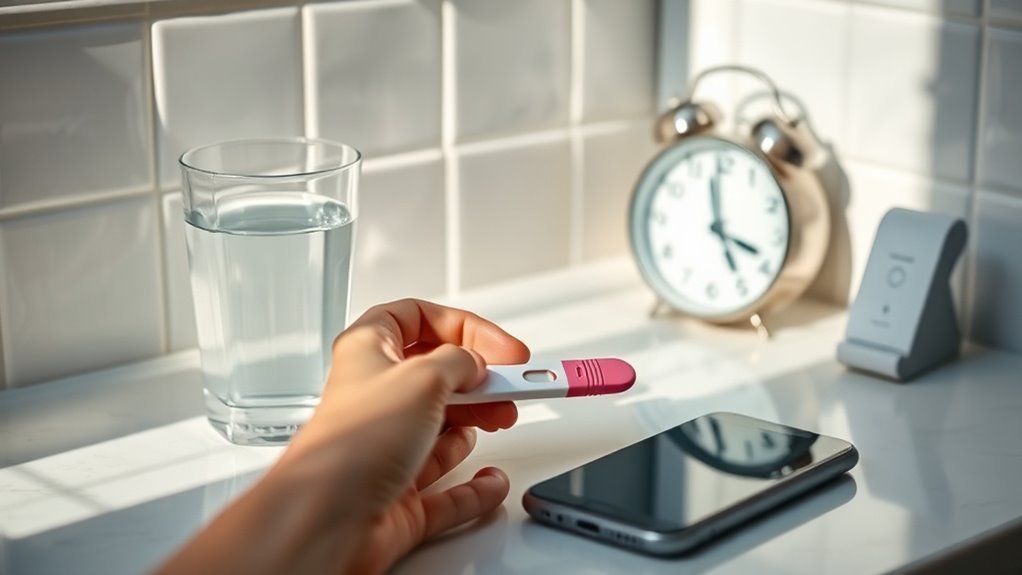
In most ovulatory cycles, the pituitary gland releases the primary luteinizing hormone surge in the early morning hours—often between 4:00 AM and 8:00 AM. Because peptide hormones require roughly four to six hours to circulate through the bloodstream, undergo renal filtration, and accumulate in urine, first-morning urine frequently misses the initial onset of the surge.
Testing in the late morning to early evening (11:00 AM to 8:00 PM) gives urinary LH concentrations enough time to cross the detection threshold of standard 20–25 mIU/mL test strips. When you approach your expected mid-cycle window, switching to twice-daily testing—once around 11:00 AM–1:00 PM and again between 5:00 PM–8:00 PM—helps capture rapid or short-duration LH peaks that last fewer than 12 hours.
Morning vs. Afternoon Ovulation Testing Comparison
Different ovulation test formats and hormone targets respond differently depending on when you collect your sample. Use this reference table to match your test type to the optimal collection window:
| Testing Window / Kit Type | Ideal Time of Day | Recommended Urine Hold | Best For |
|---|---|---|---|
| Late Morning to Early Afternoon (Standard LH Strips) | 11:00 AM – 3:00 PM | 2 to 3 hours with normal-to-light fluid intake | Catching the initial daytime rise of an early-morning pituitary LH surge |
| Late Afternoon to Early Evening (Second Daily Check) | 4:00 PM – 8:00 PM | 2 to 3 hours after limiting excess afternoon beverages | Detecting rapid or short LH surges during peak mid-cycle fertility days |
| First-Morning Urine (Dual-Hormone Digital Monitors) | First void upon waking (6:00 AM – 9:00 AM) | Overnight hold (4+ hours) | Digital tests measuring baseline estrogen (E3G) alongside LH (check brand leaflet) |
| Late Night (After 9:00 PM) | Not recommended for once-daily testing | 2+ hours | Only useful as a follow-up check if an afternoon strip was nearly positive |
Why Ovulation Test Timing Matters for Cycle Tracking
Unlike human chorionic gonadotropin (hCG) in early pregnancy—which doubles roughly every 48 hours and concentrates best in first-morning urine—luteinizing hormone rises and falls in a brief wave. In some individuals, the urinary LH peak remains above the positive threshold for 24 to 48 hours; in others, the surge clears within 10 to 12 hours.
If you test only once a day with diluted urine or at inconsistent hours, a rapid surge can start and finish between two tests. Building a steady daily routine alongside complementary family-care and wellness habits—such as keeping gentle skin barrier essentials on hand like our Aquaphor Healing Balm Stick Review or reviewing our How to Treat Baby Teething Rash: Fast, Gentle Relief guide for parents—keeps health tracking practical and stress-free.
Step-by-Step Preparation Before Taking an Ovulation Test
To prevent false negatives and evaporation reading errors, follow these five preparation steps every day during your testing window:
- Check Your Kit Instructions and Sensitivity: Confirm whether your test measures LH alone (usually 25 mIU/mL sensitivity) or both estrogen and LH, and verify the packet expiration date.
- Limit Fluids for 2 Hours Before Testing: Sip water only if thirsty during the two hours before your scheduled test so your urine remains concentrated enough for an accurate colorimetric reaction.
- Use a Clean, Dry Collection Cup: Collect urine in a clean plastic or glass cup and allow the sample to reach room temperature if needed before dipping the absorbent tip to the max line for 5 to 10 seconds.
- Lay the Strip Flat and Time the Read Window: Place the strip on a clean, flat, non-absorbent surface and read the result within the exact manufacturer time frame (typically 3 to 5 minutes for standard strips).
- Log Your Results Immediately: Photograph or record the test line intensity at the official read mark; lines that darken after 10 to 15 minutes are evaporation artifacts rather than true positives.
How to Read an Ovulation Test and Spot Physical Fertility Cues
A standard line-based ovulation test is positive only when the test line is as dark as or darker than the control line. Because small baseline amounts of LH circulate throughout the menstrual cycle, a faint second line is completely normal and counts as a negative result.
- Positive LH Surge: Test line equals or exceeds the control line in darkness; ovulation typically follows within 12 to 36 hours.
- Negative / Baseline LH: Test line is lighter than the control line; continue testing daily at your scheduled hour.
- Invalid Test: No control line appears within the read window, indicating insufficient urine absorption or a damaged strip.
- Supportive Secondary Signs: Pair your OPK strips with observations of fertile egg-white cervical mucus (clear, stretchy, and slippery) and a post-ovulatory basal body temperature (BBT) shift of 0.4°F to 0.8°F to confirm that ovulation successfully occurred.
While organizing your daily personal care shelf, you can also compare gentle dermatologist-tested basics in our CeraVe Moisturizing Cream Review.
How to Time Ovulation Tests With Irregular Cycles
When your cycle length fluctuates by more than five to seven days from month to month, calendar-day estimates alone can miss an early or delayed surge. Subtract 17 days from your shortest cycle over the past three to six months to determine which cycle day to begin testing. For example, if your recent cycles ranged between 26 and 34 days, begin testing on Cycle Day 9 (26 minus 17) and continue testing daily between 12:00 PM and 6:00 PM until you observe a clear positive surge.
Frequently Asked Questions
What is the best time of day to take an ovulation test?
The most reliable window to take a standard urinary luteinizing hormone (LH) ovulation test is between 11:00 AM and 8:00 PM. Because the pituitary gland typically initiates the LH surge in the early morning hours, the hormone usually takes four to six hours to filter from the bloodstream into urine at peak detectable concentrations.
How long should I hold my urine and limit fluids before testing?
For consistent LH test strip sensitivity, avoid drinking large volumes of water or diuretic beverages for about two hours before collecting your sample, and aim for a two-to-four-hour urine hold. Excessive fluid intake dilutes urinary LH levels and can produce a false-negative reading even during an active surge.
Can medications or medical conditions affect ovulation test results?
Yes. Fertility medications containing human chorionic gonadotropin (hCG) or menotropins, as well as hormonal conditions such as polycystic ovary syndrome (PCOS) or perimenopause, can elevate baseline LH levels and cause false-positive or persistently dark test lines.
Do digital ovulation tests use a different testing time than strip tests?
Yes, depending on the technology. Standard LH-only digital and strip tests perform best with late-morning or afternoon urine, whereas dual-hormone digital monitors that track both estrogen (estrone-3-glucuronide) and LH typically require first-morning urine as specified in the manufacturer packet.
How soon after a positive ovulation test does ovulation happen?
A positive ovulation test indicates that your LH surge is underway, and egg release typically occurs 12 to 36 hours after the initial positive reading. Because sperm can survive in fertile cervical mucus for up to five days, the day of the positive LH test and the following day represent your peak fertile window.