Sunscreen usually protects you for about two hours, but that clock starts the moment you apply it, not when you step outside. Sweat, water, towel drying, and direct sun can shorten that window fast, even if the label says SPF 50. A thicker SPF won’t buy you more time. The real question is whether you’ve applied enough, and whether the formula has already started to break down.
How Long Does Sunscreen Last on Skin?
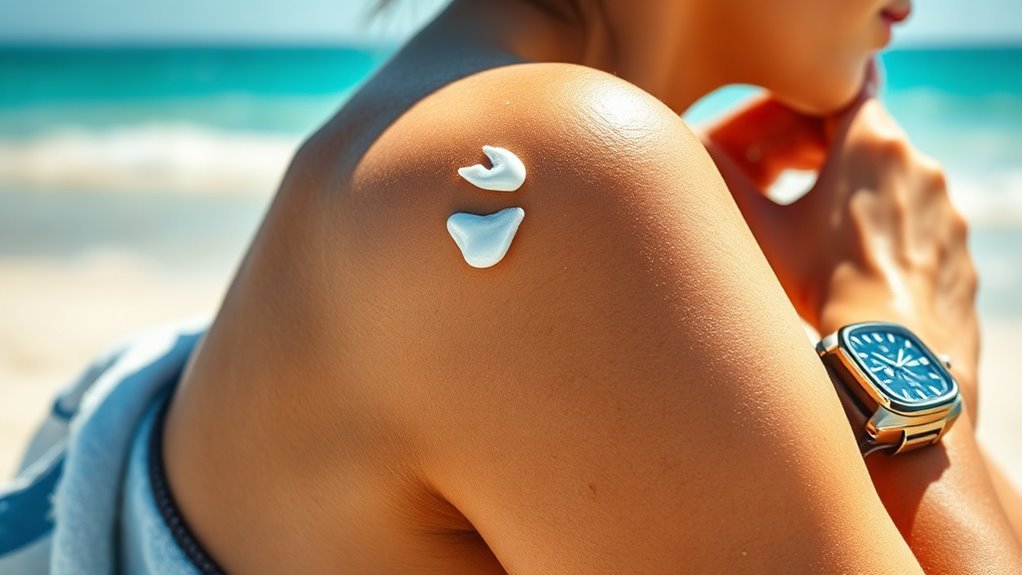
On skin, sunscreen generally remains effective for about two hours after application, and less time if you sweat heavily, swim, or rub it off. You should treat that window as the practical limit for reliable sunscreen effectiveness.
Sunscreen generally stays effective for about two hours, or less if you sweat, swim, or rub it off.
Within that period, the formula forms a protective layer across your skin surface, but it doesn’t stay fixed forever. As time passes, normal movement and skin absorption can reduce uniform coverage, so reapplication keeps your protection intact.
If you want freedom to stay outside longer, plan ahead and reapply before the two-hour mark rather than waiting for obvious wear. Use enough product to cover exposed areas fully, and don’t assume one morning application will last all day.
Your skin deserves consistent protection, not guesswork. If you’re out in daylight, choose a simple schedule: apply, wait, and reapply on time. That keeps your defense dependable and your choices autonomous.
What Makes Sunscreen Fade Faster?
Sunscreen fades faster when you stay in direct sunlight for long periods, because UV exposure breaks down its protective film.
Sweat and water also reduce coverage by washing or lifting it off your skin.
If you’re active outdoors or swimming, you’ll need to reapply more often to maintain protection.
Sunlight Exposure
Sunlight can break down sunscreen faster than many people realize. When you stay in direct sun exposure, UV radiation steadily degrades the active filters on your skin. That means your protection doesn’t stay static; it weakens as the day goes on, even if you feel dry and comfortable.
You can’t see this breakdown, but you can prevent it with disciplined reapplication. Apply enough product before you go outside, then reapply on schedule when you remain in bright light. Broad-spectrum formulas still need renewal because sunlight keeps challenging them.
Treat sunscreen as active armor, not a one-time shield. If you want real freedom outdoors, respect the dose, the timing, and the light.
Sweat And Water
Sweat and water can strip sunscreen from your skin much faster than dry conditions alone.
When you perspire, sweat absorption dilutes the film; as sweat evaporation occurs, it can lift product away from the surface. Water does the same, especially if you swim, rinse, or wipe your face.
You need to treat these exposures as active removal, not minor interference.
- Reapply after heavy sweating.
- Reapply after towel drying.
- Reapply after swimming.
- Reapply at least every two hours.
If you want real protection, choose water-resistant formulas, then renew them decisively.
That gives you control over your skin barrier and keeps outdoor time on your terms, not the sun’s.
How Often Should You Reapply Sunscreen?
How often should you reapply sunscreen? You should reapply every two hours during normal outdoor exposure, and sooner if you’ve been swimming, sweating, or towel-drying.
Reapply sunscreen every two hours outdoors, and sooner after swimming, sweating, or towel-drying.
This reapplication frequency protects you because the product film thins, shifts, and loses uniform coverage over time. Your sunscreen types matter, too: lotions, sprays, sticks, and mineral formulas all need renewed application once they’re exposed to friction, moisture, or prolonged sun.
Apply a full, even layer to all exposed skin, including ears, neck, scalp part lines, and the backs of your hands. Don’t wait for skin to feel hot; UV damage starts before discomfort does.
If you’re indoors near windows or outside briefly, you still need steady protection when exposure continues. Reapplying on schedule gives you control over your skin, your time, and your body’s defenses.
Consistency beats guesswork, and protection only works when you maintain it.
Does SPF 50 Last Longer?
SPF 50 doesn’t last longer than lower SPF formulas; it simply filters a higher proportion of UVB radiation when you first apply it. You don’t earn extra hours of protection from the number alone.
SPF longevity depends on film integrity, application thickness, and the product’s formulation differences, not on the label’s strength. Higher SPF can offer a wider margin for missed spots or slightly uneven coverage, which can feel liberating in real-world use, but it doesn’t extend wear time.
- SPF 50 blocks more UVB at baseline.
- Reapplication timing stays the same.
- Coverage quality matters more than the number.
- A higher SPF won’t excuse delayed renewal.
Choose SPF 50 if you want more initial protection, but treat it as a buffer, not a longer-lasting shield. Your freedom comes from disciplined reapplication, not from assuming the bottle buys you time.
How Do Water, Sweat, and Towels Affect Sunscreen?
Water, sweat, and towel use all reduce sunscreen’s protective film on your skin.
If you’re swimming or sweating, you’ll lose coverage faster, even when the product is water-resistant.
Towels can remove sunscreen directly, so you should reapply after drying off.
Water Exposure
Even a water-resistant sunscreen won’t stay effective indefinitely once you swim, sweat heavily, or towel off, because these actions can remove or thin the protective film on your skin.
You still get meaningful protection during swimming activities, but water resistance has limits. To stay covered, you need to treat reapplication as a controlled act of self-defense, not a nuisance.
- Reapply after swimming, even if the label says water resistant.
- Drying with a towel can reduce surface coverage.
- Broad, even application matters before water exposure.
- If you’ve been in water for long, restore your layer promptly.
Your freedom from sun damage depends on respecting those limits and keeping your shield intact.
Sweat And Towel Removal
Sweat and towel use can reduce sunscreen coverage just as surely as swimming can. When you perspire, moisture dilutes the film and can move product from high-exposure areas.
The sweating effects are strongest on the forehead, neck, chest, and shoulders, where runoff and friction are constant. If you wipe your skin with a towel, you remove more than water; you also lift off sunscreen, creating gaps in protection.
The towel impact is mechanical, immediate, and often underestimated. After heavy sweating or any towel drying, reapply sunscreen right away. Don’t wait for visible fading, because loss of coverage starts before you notice it.
You protect your freedom outdoors by treating sweat and friction as triggers for renewal, not as minor inconveniences.
Can Sunscreen Expire Before You Use It Up?
Yes—sunscreen can expire before you finish the bottle. You’re working with a time-sensitive formula, not a permanent shield. Most products carry an expiration date because sunscreen ingredients degrade, reducing protection against UV radiation. That loss can happen even if the bottle looks normal.
Sunscreen is time-sensitive: ingredients degrade, and an expired bottle may no longer protect you reliably.
- Check the printed date before each season.
- Treat opened and unopened products with the same caution.
- Respect storage conditions; heat and sunlight speed degradation.
- Replace any product that smells, separates, or changes texture.
You don’t need to tolerate uncertainty. If the formula is past date, or you can’t verify when you opened it, assume the active filters may be less reliable.
Using expired sunscreen can leave your skin exposed, which defeats the purpose of protection. For your freedom, choose certainty over guesswork: a valid product supports safer sun exposure and lets you move through the day with confidence.
How Can You Make Sunscreen Last Longer?
To make sunscreen last longer, you need to slow the factors that break it down and reduce waste each time you use it. Keep bottles cool, sealed, and out of direct sun; strong heat degrades filters and shortens shelf life. Good sunscreen storage protects your money and your skin.
| Action | Effect | Benefit |
|---|---|---|
| Store indoors | Limits heat | Preserves formula |
| Cap tightly | Reduces air exposure | Slows oxidation |
| Shake before use | Re-mixes ingredients | Restores even coverage |
| Apply measured amounts | Prevents overuse | Extends supply |
| Use efficient application techniques | Reduces missed spots | Improves protection |
Use enough to cover all exposed skin, then spread it evenly without rubbing it away. Don’t dilute it with lotion unless the label says you can. If you share a bottle, keep hands clean to avoid contamination. Replace sunscreen when it changes smell, texture, or color. Precision gives you freedom: you control waste, maintain protection, and keep your routine effective longer.
Frequently Asked Questions
Can I Use Sunscreen on Cloudy Days?
Yes, you can and should use sunscreen on cloudy days.
Clouds don’t block all UV exposure; significant rays still reach your skin through cloud coverage. You’ll reduce your risk of sun damage, premature aging, and skin cancer by applying broad-spectrum SPF 30 or higher every day.
Don’t let overcast skies give you a false sense of safety. Your skin deserves consistent protection, even when the sun isn’t visible.
Is Sunscreen Safe for Babies Under Six Months?
No, you shouldn’t rely on sunscreen for babies under six months. Their baby skin absorbs more, and many sunscreen ingredients haven’t been well studied in this age group.
You can protect your infant by using shade, lightweight clothing, and a hat instead. If you must be outdoors, limit direct sun exposure and ask your pediatrician for guidance.
You deserve clear, protective care that respects your child’s developing body.
Can I Wear Makeup Over Sunscreen?
Yes, you can wear makeup over sunscreen; that’s the cream of the crop.
Let your sunscreen set for 15 minutes first, so you don’t disrupt the film. Then apply makeup types suited to your skin, from tinted moisturizers to powders.
Choose compatible sunscreen formulations—ideally broad-spectrum, water-resistant, and non-pilling.
You control the process: layer lightly, avoid rubbing, and preserve protection while expressing yourself with precision and freedom.
Does Sunscreen Work on All Skin Tones?
Yes, sunscreen works on all skin tones. You need it because UV damage affects every skin color, even when you don’t burn easily.
Choose broad-spectrum formulas with proven sunscreen ingredients, and match them to your skin type for comfort and coverage.
Deeper skin can still develop hyperpigmentation, premature aging, and cancer risk. You deserve protection without compromise, so apply generously and reapply as directed for consistent defense.
Should I Apply Sunscreen Before Moisturizer?
You should usually apply sunscreen after moisturizer, not before.
Think of your skin as a fortress: moisturizer forms the base, then sunscreen seals it. This order supports sunscreen absorption and keeps layering products effective.
If you use a chemical sunscreen, apply it to clean, dry skin first; if it’s mineral, moisturizer can come before.
Either way, you’re protecting your skin with precision, autonomy, and daily discipline.
Conclusion
You should treat sunscreen as a time-limited shield, not a set-and-forget remedy. Reapply every two hours, and sooner after swimming, sweating, or towel use. SPF 50 does not grant extra wear time; only consistent, even application helps. Check the product for changes in smell, texture, or color, and replace it if it seems off. In this age of instant everything, your skin still demands old-fashioned discipline and care.