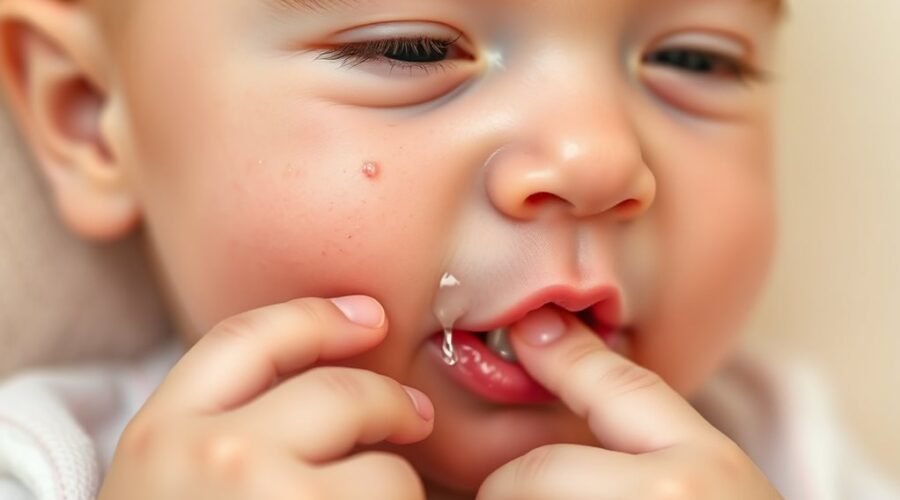
When you notice teething and face rash together, the culprit is almost always saliva contact irritation (drool rash) rather than internal tooth eruption itself: digestive enzymes and constant moisture in pooled saliva break down the lipid barrier on your baby’s chin, cheeks, perioral mouth area, and neck folds. Patting—never rubbing—the skin dry and sealing clean skin before naps and meals with a thin layer of fragrance-free petrolatum or healing ointment usually clears the redness within 3 to 5 days.
Teething and Face Rash vs. Food Allergy, Eczema & Infection
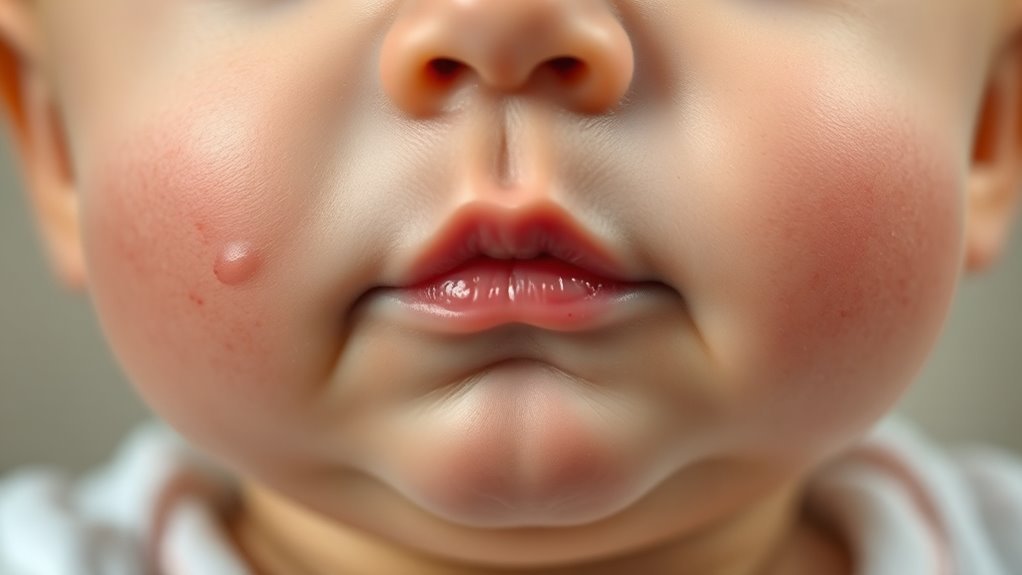
Not every red patch on a teething baby’s face comes from drool. Use this diagnostic table to distinguish a benign teething and face rash from eczema, food allergies, or bacterial/viral infections:
| Rash Type | What It Looks Like | Typical Location | Key Distinguishing Sign |
|---|---|---|---|
| Teething Drool Rash | Flat or slightly bumpy pink-red, chapped patches | Chin, lower cheeks, around lips, and front neck crease | Worsens after wet bibs, pacifier wear, or tummy/side naps; no fever |
| Acidic Food Contact Rash | Immediate blotchy redness right where food touched | Corners of mouth and chin during/after meals | Flares with berries, tomato, or citrus and fades within 30–60 minutes |
| True IgE Food Allergy | Raised, welted hives (white center with red flare) | Spreads beyond mouth to face, trunk, or limbs | May pair with lip/eyelid swelling, vomiting, coughing, or wheezing |
| Infant Facial Eczema | Dry, scaly, rough red plaques that itch intensely | Rounded cheeks, forehead, scalp, and outer arm/leg bends | Usually spares the wet tip of the nose and diaper area; chronic dry skin |
| Impetigo / Secondary Infection | Honey-colored crusts, oozing sores, or spreading blisters | Around nose and mouth over cracked chapped skin | Requires pediatric prescription antibiotic ointment |
Best Barrier Ointments & Daily Tools for Teething Drool Rash
Once saliva enzymes strip your baby’s outer stratum corneum, plain lotion often stings because water-based lotions contain preservatives and emulsifiers. Occlusive ointments shield the skin far better:
| Care Item | Best Formula Choice | When to Apply | Why It Works |
|---|---|---|---|
| 100% Pure Petrolatum / Healing Ointment | Fragrance-free petrolatum (e.g., Vaseline or Aquaphor Baby) | Before naps, bedtime, and solid-food meals | Forms an invisible, non-stinging waterproof shield against saliva enzymes |
| Fragrance-Free Ceramide Balm | Thick baby facial balm with ceramides & colloidal oatmeal | Morning and after bath on dry, flaky cheeks | Replenishes skin barrier lipids when drooling slows down |
| Absorbent Muslin / Fleece-Backed Bibs | Soft organic cotton muslin top with water-resistant backing | Swap out as soon as the collar feels damp | Stops soaked shirt collars from rubbing against the chin and neck fold |
Step-by-Step: How to Heal a Teething Face Rash at Home
- Dab with lukewarm water—skip baby wipes on raw cheeks: Even gentle baby wipes can sting chapped facial skin when rubbed ten times a day. Rinse after meals with a soft cotton cloth dipped in plain lukewarm water.
- Pat bone-dry before applying ointment: Trapping wet saliva underneath a thick layer of petrolatum locks moisture against the irritation. Pat gently with a dry muslin burp cloth and let air-dry for 30 seconds.
- Apply a “mealtime shield” before solids: Smooth a pea-sized veil of plain petrolatum around your baby’s mouth and chin 2 minutes before serving purees, berries, or tomato sauce so food acids slide right off.
- Air out the neck crease twice daily: During tummy time, gently lift the chin and pat the hidden neck fold dry—pooled drool and milk in deep neck creases can trigger yeast intertrigo if left damp.
- Clean pacifiers and teethers regularly: Friction from a wet plastic pacifier shield traps saliva in a ring around the mouth; limit pacifier use to sleep times while the rash heals.
Pros and Limitations of At-Home Barrier Care
What Barrier Ointments Do Well
- Stops stinging immediately by blocking digestive saliva enzymes and acidic foods from touching raw skin
- Safe if a small amount near the lips is accidentally licked off during feeding
When Home Care Is Not Enough
- Petrolatum alone will not cure secondary bacterial infection (honey-crusted impetigo) or yeast in deep, bright-red neck folds
- Teething never causes a full-body trunk rash or a fever of 100.4°F (38.0°C) or higher—those symptoms point to a viral illness like roseola or hand-foot-and-mouth disease
When to Call Your Pediatrician
Contact your pediatrician promptly if a facial rash develops yellow or honey-colored crusts, pus, fluid-filled blisters, or spreading warmth; if your baby has a fever (≥100.4°F / 38.0°C); or if raised hives, lip/tongue swelling, vomiting, or breathing changes appear after eating.
Related Teething and Baby Skin Care Guides
- Baby Food Allergy Mouth Rash: What Parents Should Do
- Aquaphor Baby Healing Ointment Review: Skin & Rash Barrier
- Can Teething Cause Vomiting? Pediatric Facts & Red Flags
Frequently Asked Questions
Can a teething drool rash appear weeks before the first tooth breaks through?
Yes. Salivary glands ramp up around 3 to 4 months of age as babies begin mouthing their hands—often weeks before the first lower central incisor visibly cuts through the gumline.
Why is my baby's teething face rash worse on one cheek than the other?
Drool rash frequently appears thicker on whichever cheek your baby presses against the crib sheet while sleeping, where saliva pools between the skin and mattress fabric.
Which solid foods make a teething face rash flare up faster?
Acidic and enzyme-rich foods—such as strawberries, citrus, tomatoes, pineapple, and cinnamon—sting chapped drool-rash skin on contact. Smoothing a thin layer of plain petrolatum or Aquaphor over your baby's chin and cheeks before meals blocks food acid from touching raw skin.
Do older babies and toddlers still get teething face rashes?
Yes. First molars (around 12 to 16 months) and second molars (around 20 to 33 months) have wide surface areas that often trigger a fresh wave of heavy drooling, finger chewing, and chin or cheek chapping.
How long does a teething-related face rash usually take to clear?
With gentle water pat-downs, dry bib swaps, and a bedtime barrier ointment (plain petrolatum or healing ointment), mild drool rash typically calms down within 3 to 5 days. Contact your pediatrician if it crusts over, oozes, or lasts beyond 7 days.