A rash around your baby’s mouth after eating is often caused by food, drool, or moisture irritating the skin where it touched the face. Acidic foods such as tomatoes, citrus, and berries are common triggers, but a local contact rash does not automatically mean your baby has a food allergy. The most important first steps are to gently clean the skin, watch for symptoms elsewhere on the body, and know the warning signs that need urgent medical care.
Quick Answer
If your baby gets a rash only where food touched the skin around the mouth, gently rinse the area, pat it dry, and watch your baby closely. Contact irritation is common and often improves quickly. Widespread hives, swelling, vomiting, wheezing, trouble breathing, or trouble swallowing can signal a food allergy and require prompt medical attention.
Key Takeaways
- A rash limited to skin that food touched is often a contact irritation or perioral food rash, not a true food allergy.
- Tomatoes, citrus, berries, sauces, and drool can irritate sensitive skin, but these should not automatically be treated as food allergens.
- Rinse the face with warm water after eating and pat it dry. Avoid repeated scrubbing or frequent soap use.
- Do not automatically remove major allergenic foods from your baby’s diet for weeks based only on a contact rash. Discuss a suspected allergic reaction with your pediatrician.
- Call 911 for trouble breathing or swallowing, severe swelling, collapse, or other signs of anaphylaxis. If your child has prescribed epinephrine, follow the emergency allergy plan immediately.
At a Glance
| Time Required | 1–2 minutes for cleanup, followed by observation for several hours |
| Difficulty | Easy for a mild, localized rash; urgent care may be needed for allergy symptoms |
| Tools Needed | Warm water, soft cloth, clean towel, and optional plain fragrance-free barrier ointment |
| Cost | Usually minimal if basic skin-care supplies are already at home |
Note: This article provides general educational information and cannot diagnose your baby’s rash. Infants can develop contact irritation, eczema, infection, hives, and true food-allergic reactions that may look similar. Contact your pediatrician whenever you are unsure about the cause.
Warning: Call 911 if your baby has trouble breathing or swallowing, sudden wheezing, severe swelling of the face or tongue, becomes limp or unusually unresponsive, or appears to be having anaphylaxis. If your child has prescribed epinephrine, follow the child’s emergency allergy plan immediately rather than waiting to see whether symptoms improve.
What Is Perioral Contact Dermatitis in Babies?
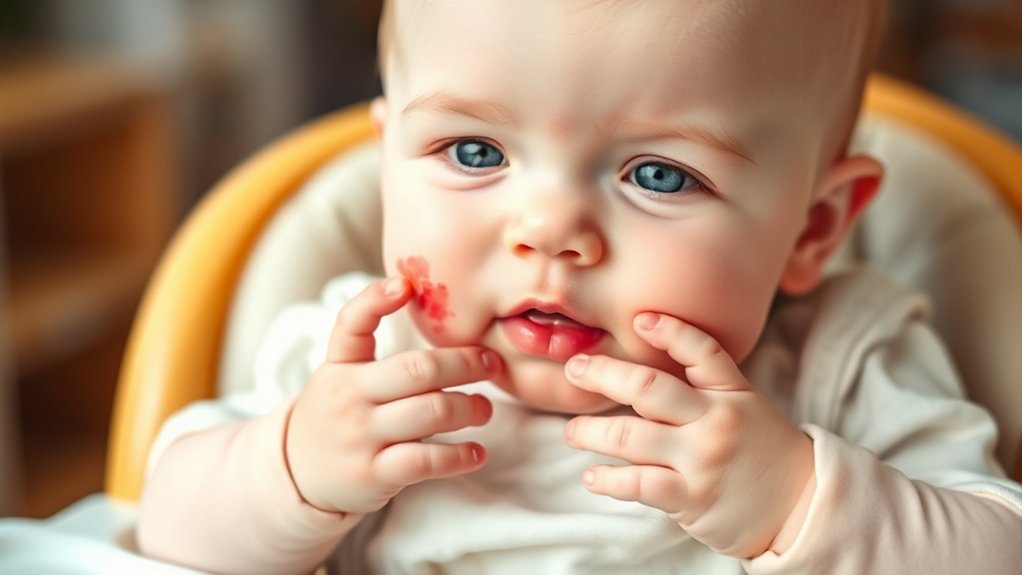
A perioral food rash, sometimes called perioral contact dermatitis, is a localized reaction that develops where food, saliva, or another irritant has touched the skin around the mouth, chin, or cheeks. The American Academy of Pediatrics notes that some children develop localized redness or hives when food is rubbed on the skin. AAP guidance on localized rashes lists food and other irritants among common causes.
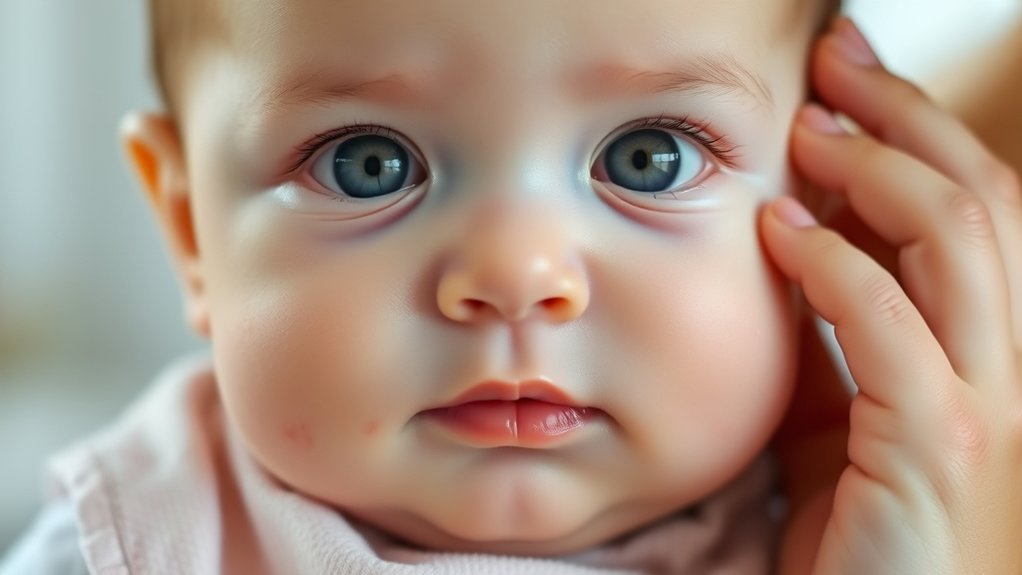
This type of rash is especially common in babies and toddlers because food and drool frequently remain on the face during meals. It may look like small red spots, patches of redness, or occasionally raised bumps where the food contacted the skin.
Do not confuse a short-lived perioral food rash with periorificial dermatitis, a separate skin disorder that can produce persistent bumps around the mouth, nose, or eyes and may need medical treatment. A rash that repeatedly returns, spreads, or lasts for days deserves a pediatric evaluation rather than repeated home treatment.
Signs and Symptoms of a Mouth Rash From Food
A contact rash usually appears mainly where food, drool, or sauce touched the skin. You may notice:
- Redness around the mouth or chin.
- Small red spots or raised bumps.
- Mild dryness or irritation.
- A pattern matching the areas where food was smeared.
- No symptoms elsewhere on the body.
A local rash can appear during a meal or afterward. In many cases it fades after the irritant is removed and the skin is allowed to recover.
True food-allergy symptoms can also begin within minutes to several hours after eating. According to the U.S. Food and Drug Administration, symptoms can include widespread hives, facial or lip swelling, vomiting, diarrhea, coughing, wheezing, throat swelling, or difficulty breathing.
A rash only where food touched the face is more suggestive of local irritation; symptoms spreading beyond that contact area raise more concern for an allergic or other systemic reaction.
Foods That Might Cause Your Baby’s Mouth Rash
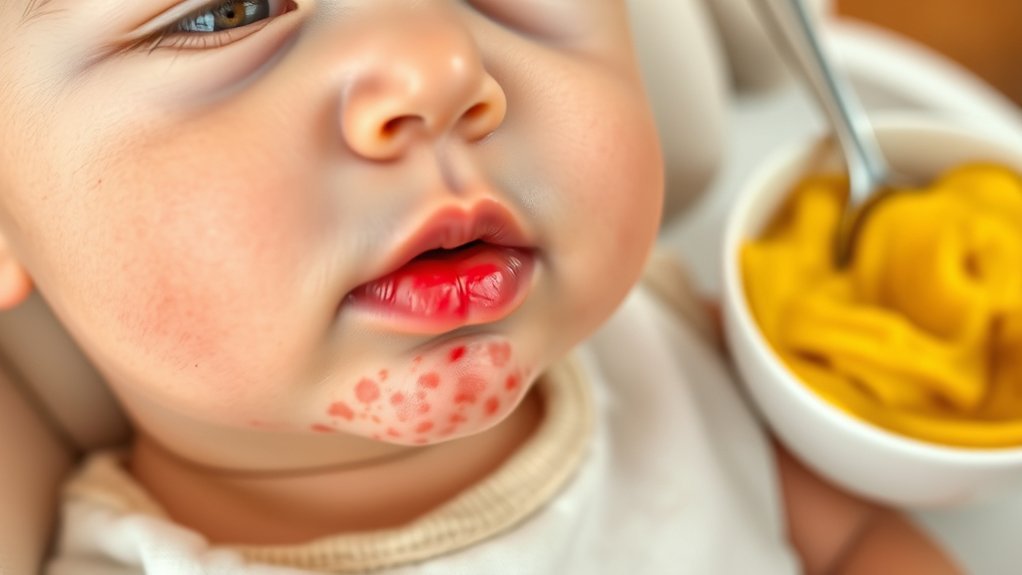
Some foods are more likely to irritate sensitive skin because they are acidic, wet, salty, or frequently smeared around the mouth. These foods may cause a contact rash even when your baby can safely eat them.
Common Allergens vs. Common Skin Irritants
It helps to separate common food allergens from foods that commonly cause skin irritation.
The nine major food allergens recognized in the United States are milk, egg, fish, crustacean shellfish, tree nuts, peanuts, wheat, soy, and sesame. These foods can cause immune-mediated allergic reactions in susceptible children.
By contrast, tomatoes, citrus fruits, berries, ketchup, fruit sauces, and similar acidic foods often irritate the skin simply through direct contact. A contact rash from tomato on the chin, for example, does not by itself prove that your baby is allergic to tomato.
Acidic Foods Effects
Acidic foods can sting or inflame already-sensitive skin, especially when your baby is drooling, teething, has eczema, or has chapped skin around the mouth.
| Food Type | Possible Effect | Practical Step |
|---|---|---|
| Citrus fruits | Acid may irritate chapped or sensitive skin | Rinse the face after eating and pat dry |
| Tomatoes and tomato sauces | May cause redness where sauce remains on the skin | Limit prolonged skin contact rather than assuming an allergy |
| Berries and fruit purées | Juice and acidity can irritate sensitive skin | Clean gently with water after the meal |
| Major allergenic foods | Can cause allergic symptoms in susceptible children | Watch for symptoms beyond the contact area and seek medical advice after a suspected reaction |
Pacifiers can worsen irritation when saliva and food remain trapped against the skin. Rinse a soiled pacifier and keep the skin as clean and dry as practical without repeatedly scrubbing it.
Identifying Trigger Foods
When a rash keeps returning, note exactly what your baby ate, when the rash began, where it appeared, and whether there were symptoms anywhere else on the body.
Pro Tip: Take a clear photo before the rash fades and keep a short food-and-symptom note. Photos, timing, and a list of ingredients can help your pediatrician distinguish a contact rash from eczema, infection, or food allergy.
If an acidic food repeatedly irritates broken skin, reducing direct skin contact while the area heals may help. However, do not automatically remove an important food or major allergen from your baby’s diet for weeks based only on a localized rash. Ask your pediatrician for guidance if you suspect an allergic reaction.
First Aid Steps for Treating Your Baby’s Mouth Rash
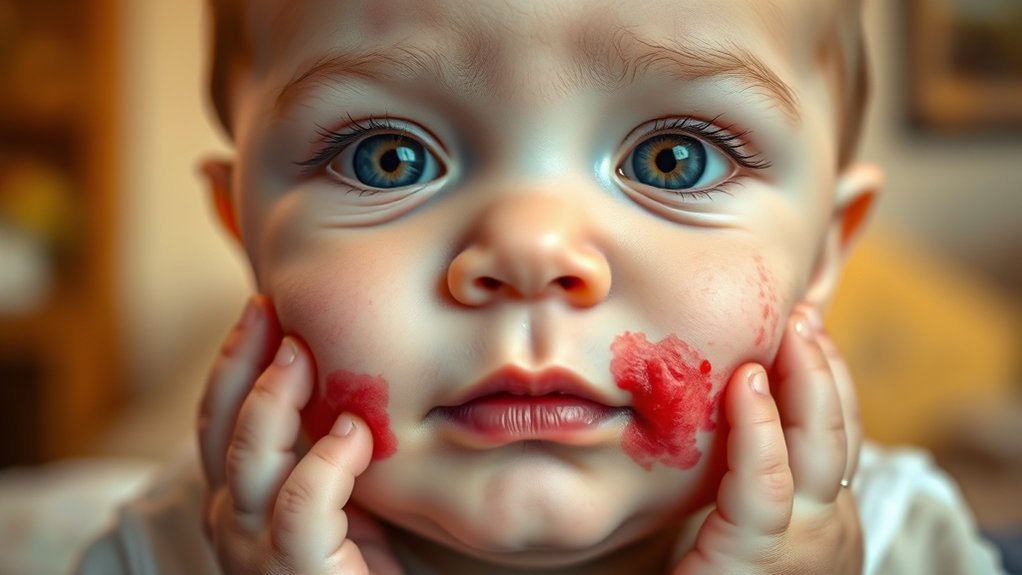
For a mild rash limited to the area where food touched the skin, simple skin care is usually the best first step.
Immediate Cleaning Measures
- Stop the meal briefly and look at the whole child. Check for widespread hives, swelling, vomiting, coughing, wheezing, trouble swallowing, or breathing difficulty.
- Remove food residue. Gently rinse the affected skin with lukewarm water. Mild soap or cleanser can be used once if sticky residue remains, but repeated soap use can dry and irritate the skin.
- Pat the skin dry. Do not scrub with a towel or wipe.
- Protect irritated skin. A very thin layer of plain fragrance-free petrolatum can reduce friction and moisture exposure if your baby tolerates it.
- Observe your baby. Watch for symptoms that spread beyond the original contact area or otherwise suggest an allergic reaction.
Skin Care Treatment Options
Most mild food-contact rashes do not need medication. Gentle water cleansing, avoiding rubbing, and protecting the skin barrier are usually enough.
If the skin is dry, use a simple fragrance-free moisturizer or ointment. The American Academy of Pediatrics recommends gentle, fragrance-free skin care for children with sensitive or eczema-prone skin and notes that ointments such as petroleum jelly can help protect the skin barrier. AAP eczema skin-care guidance provides additional information.
Do not routinely apply aloe vera, essential oils, fragranced balms, antibiotic creams, or other home remedies to an unexplained facial rash. Extra ingredients may worsen irritation or make the cause harder to identify.
Some pediatric rash guidance allows short-term 1% hydrocortisone for significant itching, but most perioral food rashes do not need a steroid. Because persistent rashes around the mouth can have other causes, check with your pediatrician or pharmacist before applying hydrocortisone to an infant’s face.
When to Consult a Pediatrician About a Mouth Rash
Contact your child’s pediatrician when:
- The rash is getting worse instead of improving.
- It lasts more than about a day or repeatedly returns after meals.
- Your baby develops widespread hives or swelling.
- Vomiting, diarrhea, coughing, wheezing, or unusual lethargy follows eating.
- The rash becomes very painful or is accompanied by fever.
- You see pus, expanding redness, blisters, or yellow or honey-colored crusts.
- Your child has severe eczema or has previously reacted immediately to a food.
- You are unsure whether the reaction is an allergy.
Honey-colored crusting around the mouth can occur with impetigo, a bacterial skin infection that needs a different treatment approach from simple food irritation.
Food Allergies vs. Skin Irritation: What’s the Difference?
The location and accompanying symptoms provide useful clues, although only a healthcare professional can diagnose a food allergy.
Common Rash Triggers
- Contact irritation: Food, saliva, wipes, soaps, or prolonged moisture can cause redness where they touch the skin.
- Acidic foods: Tomatoes, citrus, berries, and fruit sauces can sting sensitive or chapped skin.
- Drool: Teething and frequent pacifier use can keep the skin wet and irritated.
- Eczema: Babies with eczema have a weaker skin barrier and may develop redness around the face more easily.
- Food allergy: Immune-mediated reactions may cause hives, swelling, vomiting, coughing, wheezing, or other symptoms away from the contact site.
Symptoms Comparison
| Feature | Contact Irritation | Possible Food Allergy |
| Location | Mainly where food or drool touched the skin | May involve areas beyond the contact site |
| Skin symptoms | Localized redness, dryness, or small bumps | Widespread hives, flushing, or swelling may occur |
| Other symptoms | Usually none | Vomiting, cough, wheezing, swelling, breathing difficulty, or other systemic symptoms may occur |
| Typical response | Remove residue, protect skin, and observe | Stop the food and follow medical or emergency allergy guidance |
Diagnosis and Testing
A pediatrician or allergist starts with the history: what your baby ate, how much was eaten, how quickly symptoms started, what symptoms occurred, how long they lasted, and whether the reaction has happened before.
Skin-prick and blood tests can help identify possible IgE-mediated allergies, but a positive result alone does not prove that a child is clinically allergic. NIAID guidance emphasizes that testing must be interpreted with the medical history, and an appropriately supervised oral food challenge may sometimes be needed to confirm or rule out an allergy.
Do not deliberately test a food at home after a reaction involving breathing trouble, significant swelling, widespread hives, repeated vomiting, collapse, or another concerning systemic symptom.
Effective Aftercare for Baby’s Mouth Rash
Once the skin is clean, avoid repeatedly wiping or scrubbing it. Use lukewarm water when cleanup is needed, pat the area dry, and use a small amount of fragrance-free barrier ointment if the skin is chapped.
Keep food-covered pacifiers, bibs, and cloths away from irritated skin. Change a wet bib when needed so saliva is not held against the chin for long periods.
Simple aftercare works best: remove the irritant, reduce moisture and friction, protect the skin barrier, and monitor your baby for symptoms beyond the rash.
If a particular acidic food repeatedly causes irritation, you can reduce skin contact while the rash heals. That does not necessarily mean the food must be eliminated from the diet long term.
Preventing Future Rashes Around the Mouth
- Rinse your baby’s face with warm water after messy meals.
- Pat instead of rubbing the skin dry.
- Avoid fragranced wipes and harsh cleansers on irritated skin.
- Keep wet bibs and food-covered pacifiers from staying against the face.
- Use a thin layer of plain petroleum jelly before a particularly messy or acidic meal if your pediatrician agrees and your baby’s skin tolerates it.
- Treat underlying eczema according to your child’s skin-care plan.
- Record recurring food reactions instead of automatically restricting multiple foods.
For babies who are ready for solid foods, current AAP guidance on introducing allergenic foods does not recommend delaying foods such as egg or peanut simply to prevent allergy. Babies with severe eczema, egg allergy, or a previous immediate reaction should be discussed with a pediatrician before peanut or other high-risk food introduction.
How to Handle an Allergic Reaction to Foods
If you think your baby is having a food-allergic reaction, stop feeding the suspected food and watch closely.
For a mild, isolated symptom, contact your pediatrician for individualized guidance. Do not give an infant an antihistamine unless your healthcare professional has told you which medicine and dose are appropriate for that child.
For suspected anaphylaxis, do not wait for an antihistamine to work. If your baby has prescribed epinephrine, use it according to the emergency allergy plan and call 911. Epinephrine is the critical first-line treatment for anaphylaxis.
Emergency signs: Seek emergency help for trouble breathing or swallowing, wheezing, sudden hoarse voice, significant tongue or facial swelling, collapse, severe lethargy, or a rapidly worsening reaction. Widespread hives plus vomiting, breathing symptoms, or swelling also deserves urgent attention.
After any suspected allergic reaction, write down the food and ingredients, amount eaten, timing, symptoms, and treatment given. Bring that information and any photos to your pediatrician.
Eczema and Mouth Rashes: What’s the Connection?
Babies with eczema have a more easily irritated skin barrier, so food, saliva, heat, and rubbing can make redness around the mouth more noticeable. Eczema itself does not mean every food-related flare is a food allergy.
Current CDC/NCHS data show that 12.7% of U.S. children had diagnosed eczema in 2024, while 5.3% had a diagnosed food allergy.
- Eczema commonly causes dry, red, itchy skin and may affect the face in babies.
- Children with eczema have a higher risk of food allergy than children without eczema, particularly when eczema is severe.
- A food touching eczema-prone skin can cause irritation without being an allergy.
- Do not remove milk, egg, peanut, wheat, or multiple other foods solely because eczema is difficult to control unless your child’s clinician recommends it.
- Early, age-appropriate introduction of allergenic foods can help prevent some allergies in suitable infants, but a food that has already caused a suspected allergic reaction should not be deliberately challenged at home without medical guidance.
Frequently Asked Questions
Can I introduce new foods if my baby has a rash?
It depends on the rash. If your baby has an unexplained, active rash, it can be harder to tell whether a new food caused a change. Waiting until the skin is reasonably stable may make reactions easier to interpret. However, do not delay major allergenic foods for long periods solely to prevent allergy. Ask your pediatrician if your baby has severe eczema or has already had an immediate reaction to food.
Are there specific foods to avoid if my baby has allergies?
Avoid foods your baby has been diagnosed as allergic to and follow the pediatrician or allergist’s plan. Do not automatically eliminate peanuts, egg, dairy, wheat, soy, sesame, fish, shellfish, or tree nuts because of an isolated contact rash. Unnecessary restriction can make feeding more difficult and should be discussed with a healthcare professional.
How can I differentiate between a rash and an infection?
Simple irritation is usually superficial and limited to the contact area. Infection is more concerning when redness spreads, pain or swelling increases, fever appears, pus drains from the skin, or sores develop yellow or honey-colored crusts. Those signs should be evaluated by your child’s healthcare professional.
What home remedies can I use for my baby’s mouth rash?
Keep treatment simple. Rinse away food residue with lukewarm water, pat the skin dry, and use a small amount of plain fragrance-free petrolatum if a barrier is needed. Avoid essential oils, fragranced products, aloe mixtures, or multiple medicated creams unless your pediatrician recommends them.
Can teething cause a similar rash around the mouth?
Yes, indirectly. Teething can increase drooling, and saliva mixed with small amounts of food can irritate the chin and skin around the mouth. Keeping the area gently clean and dry and reducing prolonged moisture contact can help.
Does a rash around the mouth always mean a food allergy?
No. A rash limited to places where food touched the face commonly results from contact irritation. Food allergy becomes more concerning when symptoms appear beyond the contact area or include widespread hives, swelling, vomiting, coughing, wheezing, or breathing difficulty.
When is a baby’s mouth rash an emergency?
Call 911 for trouble breathing or swallowing, sudden severe swelling of the tongue or face, collapse, unusual unresponsiveness, or other signs of anaphylaxis. If your baby has prescribed epinephrine, use it according to the child’s emergency allergy plan.
Conclusion
A baby mouth rash after eating is often a local skin reaction caused by food, saliva, or moisture rather than a true food allergy. Gently rinse the skin, avoid repeated rubbing and harsh products, and monitor your baby for symptoms beyond the contact area. Do not unnecessarily restrict major allergens or repeatedly medicate an unexplained facial rash. When reactions are recurrent, widespread, or accompanied by swelling, vomiting, breathing problems, fever, or signs of infection, contact your child’s healthcare professional promptly.
Sources
- American Academy of Pediatrics — Perioral Food Rash — pediatric guidance on localized food-contact rashes.
- American Academy of Pediatrics — Localized Rash or Redness — causes, gentle skin care, and warning signs.
- U.S. Food and Drug Administration — Food Allergies: What You Need to Know — food-allergy and anaphylaxis symptoms.
- American Academy of Pediatrics — Introducing Common Food Allergens to Babies — current early-introduction guidance.
- American Academy of Pediatrics — Eczema in Babies and Children — eczema symptoms, skin sensitivity, and food-allergy context.
- CDC National Center for Health Statistics — Diagnosed Allergic Conditions in Children, 2024 — current U.S. eczema and food-allergy prevalence data.