If you want a gentler cleanse, if you have a sensitive scalp, if your hair is fine, baby shampoo can seem like a smart choice. It uses milder surfactants and usually fewer fragrance additives than adult formulas. But that same mildness can leave oil and product residue behind, especially if you style heavily or wash often. The real question is whether your hair needs less irritation or stronger cleansing—and the answer isn’t always the same.
Is Baby Shampoo Good for Your Hair?
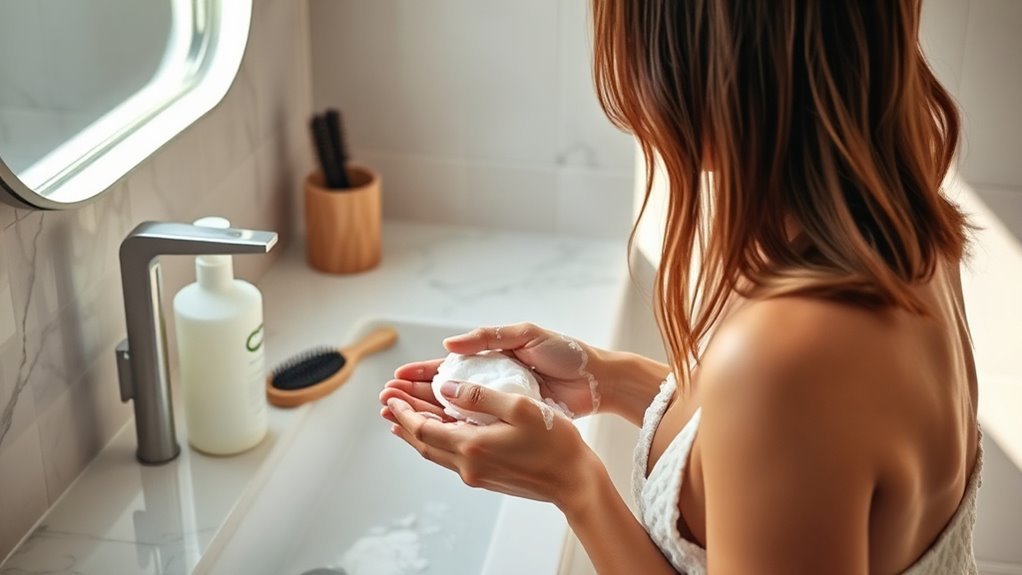
Baby shampoo can be a reasonable cleanser for some hair types, but it isn’t inherently better for hair than regular shampoo. If you have scalp sensitivity, you may tolerate its milder surfactants better, especially when your skin reacts to stronger detergents or fragrance.
Baby shampoo may suit sensitive scalps, but it isn’t automatically better for every hair type.
That said, your hair texture matters more than the label. Fine hair may feel softer and less stripped, while coarse, curly, or highly porous hair can need more conditioning and cleansing power than baby shampoo provides.
You shouldn’t assume “gentle” means universally beneficial; a product that leaves enough residue can weigh hair down and dull shine. If your scalp stays calm and your hair feels clean, manageable, and hydrated, baby shampoo can fit your routine.
If it doesn’t, you’re not failing—you’re just choosing a cleanser that better serves your body’s actual needs, not a marketing story.
What Baby Shampoo Is Made For
What baby shampoo is made for is straightforward: it’s designed to cleanse a child’s scalp and hair as gently as possible while minimizing eye irritation and skin discomfort.
You’re looking at a product built around gentle ingredients and a tear-free formula, not aggressive cleansing power. The goal is to respect scalp sensitivity, preserve the skin barrier, and reduce the risk of stinging during washing.
In practice, that means the shampoo removes light soil, sweat, and everyday residue without overstripping. You shouldn’t expect intensive hair nourishment from it; its primary function is basic cleansing with low irritation potential.
If you value autonomy in your care choices, this matters: you can choose products that support comfort, simplicity, and tolerability rather than marketing claims.
Baby shampoo is thus best understood as a mild hygiene product, optimized for delicate skin and eyes, not as a treatment for dry, damaged, or textured hair.
Baby Shampoo vs. Adult Shampoo
Compared with adult shampoo, baby shampoo usually uses milder surfactants, fewer potentially irritating additives, and a tear-reducing formula. This makes it better suited to sensitive eyes and skin than to thorough cleansing of oily scalp, heavy styling products, or product buildup.
You’ll often see lower sulfate content, but that doesn’t automatically make it superior; it simply changes how aggressively it removes oil and debris. Adult formulas usually contain stronger cleansing agents, conditioning polymers, or pH adjustments designed for varied hair types and greater cleansing demand.
If you have scalp sensitivity, baby shampoo may feel gentler, yet you may still notice residue or reduced lather on hair that needs more cleaning. The key difference is performance, not morality: your hair doesn’t need to conform to a single standard.
Choose the formula that matches your scalp condition, sebum level, and styling routine, so you keep control over care without overprocessing or undercleansing your hair.
When Baby Shampoo Works Best
It works best when your scalp is normal to dry, your hair is fine or lightly processed, and you want a gentle cleanser for frequent washing. In those cases, baby shampoo can reduce irritation risk while still removing loose oil, sweat, and light buildup.
You may notice the most value if you have sensitive scalps and prefer a low-foam formula that feels less harsh on the skin barrier. For daily use, it can fit a simple routine because it cleans without heavy conditioning agents that might weigh down fine strands.
If you wash often and your hair doesn’t need intensive cleansing, baby shampoo can support a calm, manageable scalp environment. Evidence suggests mild surfactant systems are useful when you prioritize comfort, consistency, and scalp tolerance over strong degreasing.
You’re choosing a restrained cleanser, not a treatment, so it works best as part of a minimalist, autonomy-centered hair-care approach.
When Baby Shampoo Is a Bad Choice
Baby shampoo is a poor choice when your hair needs stronger cleansing or more conditioning than a mild formula can provide.
If you use heavy styling products, dry shampoo, silicone serums, or oils, its low-detergent base may leave residue on your scalp and strands. That buildup can weigh down fine hair, dull curl definition, and interfere with the balance your hair texture needs.
You may also notice that baby shampoo underperforms if you have an oily scalp or hard-water exposure, because it doesn’t remove mineral deposits well.
Even with scalp sensitivity, it isn’t automatically the best option if you need targeted treatment for dandruff, inflammation, or excess sebum.
In those cases, choose a formula matched to your hair and scalp goals, not to marketing. Liberation means using products that serve your body’s actual chemistry, not someone else’s ideal of “gentle.”
Frequently Asked Questions
Can Baby Shampoo Help With Colored Hair?
Yes, baby shampoo can help colored hair if you want a gentler cleanse, but it won’t provide strong color protection.
You’ll likely preserve hair softness better than with harsher detergents, yet color-treated hair still needs a sulfate-free formula with proven antioxidants and UV filters for better retention.
Use baby shampoo sparingly between washes or after irritation, and patch-test first.
For liberation from damage, choose products designed specifically for dyed hair.
Is Baby Shampoo Safe for Daily Scalp Use?
Yes, you can usually use baby shampoo daily on your scalp, and it’s often safe if you tolerate it.
You’ll get gentle cleansing with fewer harsh detergents, which may support scalp health when your skin is sensitive or easily irritated.
Still, you shouldn’t assume it’s ideal for every scalp type. If you notice dryness, itch, flakes, or residue, switch products and consult a dermatologist for personalized guidance.
Does Baby Shampoo Remove Heavy Styling Products?
No, baby shampoo usually won’t remove heavy styling products effectively.
You’ll get gentle cleansing and preserve pH balance, but many formulas lack the surfactant strength needed to break down waxes, silicones, and strong hairsprays.
If you use rich pomades or buildup-prone products, choose a clarifying shampoo or double-cleanse.
That gives you cleaner strands, less residue, and more control over your hair without overstripping your scalp.
Can Baby Shampoo Cause Buildup Over Time?
Yes, baby shampoo can cause buildup over time if you use it regularly on hair that needs stronger cleansing.
You’re likely to notice residue from mild surfactants, oils, or conditioning agents, especially if you skip clarifying washes. Ingredient comparisons show many formulas clean gently but less completely.
If you’re prone to sensitivity reactions, choose fragrance-free options and monitor how your scalp and strands feel.
Rotate products when needed.
Is Baby Shampoo Suitable for Oily Hair?
Baby shampoo can suit oily hair if you want gentle cleansing without stripping too much hair moisture.
You’ll likely remove surface oil, but you may not clear heavy sebum or styling residue as effectively as a stronger clarifying shampoo.
If your scalp gets greasy fast, you can use baby shampoo occasionally, then switch to a more targeted cleanser when needed.
Monitor how your hair feels and adjust based on buildup, itch, or limpness.
Conclusion
So, is baby shampoo good for your hair? It can be, if your scalp’s sensitive, your hair’s fine, or you want a gentler cleanse. But if your scalp gets oily or you use heavy styling products, it may not remove enough buildup. The best choice often feels almost accidental: the shampoo that seems simplest may suit you best. Choose based on your hair’s needs, not the label, and you’ll get cleaner, healthier-feeling hair.