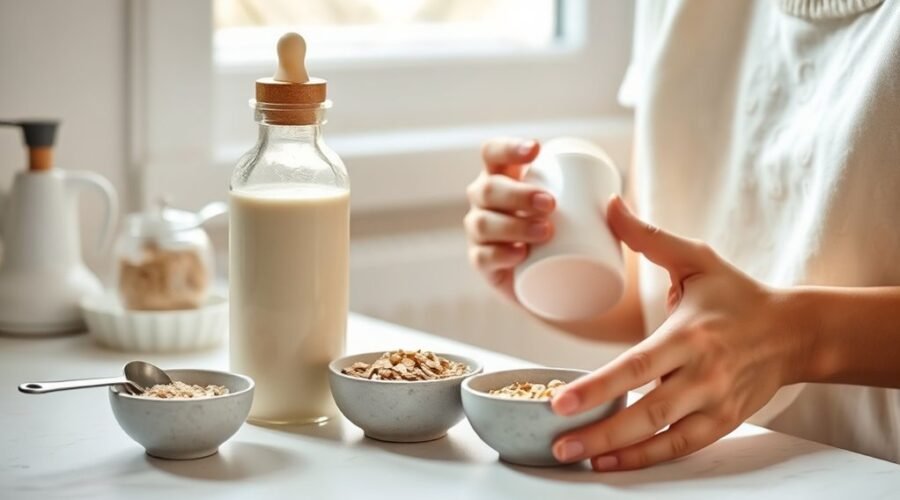
Like a carefully tuned recipe, plant-based baby formula can meet your little one’s needs when you choose it wisely. You’ll want to know what it is, who it may suit, and how to check the label for key nutrients like iron and DHA. You should also watch for ingredients to avoid, possible digestion issues, and when to call your pediatrician—because the details can make all the difference.
What Is Plant-Based Baby Formula?
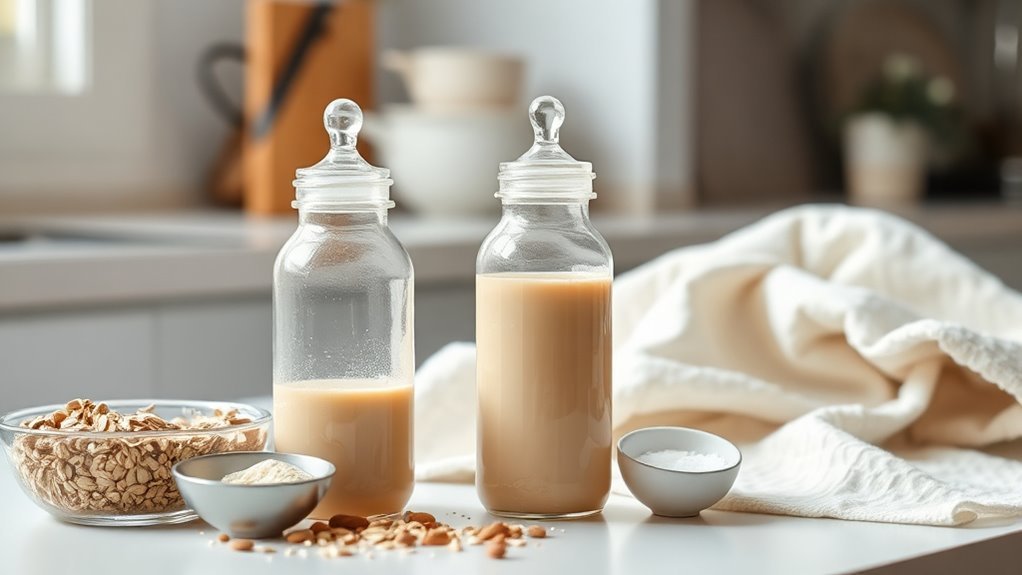
Plant-based baby formula is a formula made without cow’s milk, usually using proteins from soy or other plant sources instead. You might choose it when you’re looking for formula alternatives that fit your family’s values, access, or feeding goals.
These formulas are designed to provide nutrition in a bottle, and they can offer plant-based benefits for families who want to avoid dairy. You’ll usually find them in powdered or liquid forms, much like conventional formula, with added vitamins, minerals, fats, and carbohydrates to support infant feeding.
Some parents feel empowered by choosing options that align with cultural practices, ethical commitments, or personal preferences. If you’re exploring what’s available, you may see different ingredient profiles and branding claims, so reading labels matters.
Plant-based formula isn’t a trend to follow blindly; it’s one of several formula alternatives you can consider as you make informed, caring choices for your baby and your household.
Is Plant-Based Formula Safe for Babies?
Safety depends on the specific formula and your baby’s needs. Plant-based formulas can be safe when they meet infant nutrition safety standards and are designed to support growth. You can look for complete protein, iron, calcium, vitamin D, and DHA on the label. That’s where plant formula benefits can matter: some families prefer a dairy-free option that still delivers key nutrients. Check this quick guide:
| What to check | Why it matters |
|---|---|
| FDA or local approval | Confirms safety standards |
| Complete nutrition | Supports normal growth |
| Iron content | Helps prevent deficiency |
| Added DHA | Supports brain development |
| Soy or pea base | Common protein sources |
You should still ask your pediatrician before switching, especially if your baby has reflux, allergies, or growth concerns. Trust your instincts, read labels closely, and choose a formula that respects your family’s values while protecting your baby’s health.
Who It May Be Right For
Plant-based baby formula may be a good fit if your family follows a vegan lifestyle and you want feeding choices that match your values.
It can also help if your baby needs a dairy-free option because of a confirmed milk allergy or intolerance.
You should talk with your pediatrician to make sure the formula you choose meets your baby’s nutritional needs.
Vegan Family Choices
Vegan family choices may be a good fit if you follow a vegan lifestyle and want your baby’s nutrition to reflect your values, provided you can meet their needs with a carefully planned formula and regular pediatric guidance.
You can embrace vegan parenting without compromising care when you stay informed and responsive. Plant-based benefits may include alignment with your ethics and a sense of consistency at home, but your baby still needs complete nutrition for growth.
Use this checklist:
- Ask your pediatrician for individualized advice.
- Choose a formula that meets infant standards.
- Track feeding tolerance, weight gain, and development.
- Reassess as your baby’s needs change.
With support, you can make an empowered choice that honors both your family’s liberation and your child’s health.
Dairy-Free Needs
If your baby can’t tolerate cow’s milk protein, has a diagnosed milk allergy, or needs a formula that avoids dairy for medical reasons, a dairy-free infant formula may be the right fit.
You can look at dairy alternatives that still meet infant nutrition standards, but you’ll want guidance from your pediatrician or allergist first. They can help you weigh allergy considerations, confirm the diagnosis, and choose a safe option.
If your family values plant-based feeding, you deserve choices that support your baby’s health without forcing you into fear or guilt.
Watch for symptoms, read labels carefully, and monitor how your baby responds. With the right care plan, you can feed confidently and protect your child’s comfort, growth, and thriving.
What to Look for on the Label
When you read a plant-based baby formula label, start with the ingredient list so you can see exactly what’s in it and avoid surprises.
Look for nutrient fortification, since babies need formula that adds key vitamins and minerals to support healthy growth.
If a label seems unclear or incomplete, choose one that clearly lists its ingredients and added nutrients so you can make a more confident choice.
Ingredient List
A careful ingredient list can help you quickly tell whether a plant-based baby formula is likely to support your baby’s growth and digestion. You deserve clear choices, so read the label for ingredient sources and formula types that fit your family’s values and your baby’s needs.
Look for:
- A named plant base, like soy or pea, rather than vague blends.
- Carbohydrate sources that are easy to identify and not overloaded with fillers.
- Added fats from recognizable oils that help create a balanced texture.
- Protein sources listed first or near the top, since they usually make up more of the formula.
If you feel unsure, trust your questions. A transparent label should help you compare formula types without confusion or pressure, and it should support informed, confident care for your baby.
Nutrient Fortification
Nutrient fortification matters because plant-based baby formulas must replace nutrients that naturally occur in breast milk and standard infant formula.
When you read the label, look for iron, calcium, vitamin D, B12, iodine, and DHA, since these support growth, bone health, and brain development.
Check the nutrient sources too: some formulas use algae-based DHA or carefully blended minerals for better fit.
You’ll also want to see whether the formula includes choline and adequate protein, not just plant ingredients.
Fortification should meet infant standards, not adult trends.
If you’re unsure, ask your pediatrician whether the formula supports vitamin absorption and your baby’s needs.
Choosing a well-fortified product helps you feed with confidence and protect your child’s autonomy.
Ingredients to Look For and Avoid
As you compare plant-based baby formulas, focus on products that provide complete protein, essential fats like DHA and ARA, iron, calcium, vitamin D, vitamin B12, and iodine, since these nutrients support healthy growth and development.
Check the protein source; soy and other plant sources can work when they’re carefully formulated and tested. Keep allergy considerations in mind, especially if your baby has a family history of food allergies or needs a specific option.
- Look for clearly listed nutrients and amounts.
- Choose formulas with DHA from algae and added ARA.
- Avoid added sugars, syrups, and unnecessary thickeners.
- Skip products with vague blends or unverified health claims.
You deserve a formula that respects your values and your baby’s needs. Read labels closely, and ask your pediatrician if anything feels unclear.
Safety and nourishment can go together.
How It Compares With Dairy Formula
When you compare plant-based baby formula with dairy formula, the biggest difference is the protein source, but both can support normal growth if they’re properly fortified and meet infant nutrition standards. You’re choosing between formulas with different protein profiles, taste, and tolerance, not a “better” or “worse” option. Some babies do well on dairy formula; others need an option without dairy protein because of allergy risk or family preferences.
| Factor | Plant-based | Dairy |
|---|---|---|
| Protein | Non-dairy sources | Dairy protein |
| Allergy | Different triggers | Common allergen |
| Use | When recommended | Widely used |
Pay attention to allergen differences and your baby’s symptoms after feeds. If you notice rash, vomiting, blood in stool, or poor weight gain, call your pediatrician. You deserve feeding choices that fit your values and your baby’s needs, with support—not pressure—along the way.
How Plant-Based Formula Is Made
You’ll usually find plant-based formula starts with carefully sourced plant ingredients, such as pea, soy, or rice.
Manufacturers then extract and refine the protein, and they blend it with fats, carbohydrates, vitamins, and minerals to match infant nutrition needs as closely as possible.
This process is tightly controlled so you can look for products that meet safety standards and provide balanced nourishment.
Plant Ingredients Sourced
Plant-based baby formula starts with carefully selected plant ingredients, often including hydrolyzed proteins from soy, pea, or rice, along with added fats, carbohydrates, vitamins, and minerals to match an infant’s nutritional needs.
You can look for brands that explain sourcing practices and ingredient sustainability, because transparent supply chains support trust and accountability.
- Choose crops grown with verified quality controls.
- Prefer formulas that track allergens and contamination risks.
- Check fortification levels against infant nutrition standards.
- Seek companies that share testing and origin data.
These choices don’t just reflect ethics; they help you feed your baby with confidence.
When you understand where ingredients come from, you gain more control over what enters your child’s body and your family’s future.
Protein Extraction Process
After growers source the raw crops, manufacturers isolate the proteins through a careful extraction process that removes most of the starch, fiber, and other unwanted compounds while preserving key nutrients for infant formula.
You’ll often see protein sources like soy, pea, or rice selected for their digestibility and steady amino acid profiles.
Different extraction methods, such as wet milling, filtration, and gentle heat treatment, help concentrate the protein without stripping away what matters.
You deserve clear labeling and transparent processing, because informed choices support your family’s autonomy.
Evidence shows that controlled processing can improve consistency and safety.
Still, quality depends on testing, low contaminant levels, and strict manufacturing standards.
When you read a label, look for detail, not vague promises, so you can choose confidently.
Nutrient Blending Steps
Once manufacturers isolate and test the protein, they blend it with the other ingredients that make a complete infant formula. You can think of this as a precise recipe, where nutrient sources are matched to infant needs, not trends.
Producers use blending techniques to combine fats, carbohydrates, vitamins, minerals, and amino acids evenly, so every scoop delivers the intended balance.
- They measure each ingredient with tight controls.
- They mix powders or liquids to prevent clumping.
- They test nutrient levels for accuracy and safety.
- They package the formula to protect freshness and quality.
This process helps you trust that plant based formula is built for nourishment, stability, and infant growth. It’s a practical step toward feeding choices that support your family’s freedom.
Common Nutritional Concerns
When you choose a plant-based baby formula, the main nutritional concerns usually center on whether it provides enough protein, fat, calories, iron, calcium, vitamin D, vitamin B12, and essential fatty acids for healthy growth.
You want nutritional balance that supports developmental milestones without relying on guesswork. Check protein quality, because babies need complete amino acid coverage, and review ingredient sourcing so you know where key nutrients come from.
Nutritional balance supports developmental milestones, so check protein quality and ingredient sourcing for complete amino acid coverage.
Digestive health matters too: some babies tolerate certain blends better, and allergy considerations can shape what works for your family. Look for formulas designed to improve vitamin absorption, since plant compounds can affect how your baby uses minerals and vitamins.
Taste preferences may matter, but nutrition comes first. If your baby seems unusually fussy, constipated, or slowed in growth, talk with your pediatric clinician or a registered dietitian.
You deserve feeding options that honor your values and still meet your baby’s needs safely.
How to Switch Your Baby Safely
To switch your baby safely to a plant-based formula, do it gradually unless your pediatric clinician tells you otherwise. A gradual change helps your baby’s digestive system adjust and gives you room to notice how they’re doing.
Use calm, evidence-based switching strategies and keep the process flexible, because your family deserves choice without guesswork.
- Replace one bottle at a time with the new formula.
- Increase the new formula over 3 to 7 days.
- Watch for stool changes, gas, spit-up, or feeding refusal.
- Keep the old routine steady so your baby feels secure.
Offer each bottle at a comfortable temperature and prepare formula exactly as directed. Track intake and diaper output so you can spot patterns early.
If your baby seems unsettled, slow the pace and continue the gradual change. You’re not failing by adjusting; you’re responding thoughtfully.
With patience and clear observation, you can support a smooth switch that honors your baby’s needs and your values.
When to Ask Your Pediatrician
If your baby has a medical condition, was born prematurely, or isn’t thriving on a plant-based formula, check in with your pediatrician before making further changes.
If your baby has a medical condition or was born prematurely, check in with your pediatrician before making changes.
You should also ask for pediatrician advice if feeding seems stressful, vomiting is frequent, stools change suddenly, or your baby won’t finish bottles. Trust your observations: poor weight gain, dehydration, rash, wheezing, or extreme fussiness deserve prompt attention.
You can bring a simple log of feeds, diapers, and growth checks to make the visit more useful. Ask whether the formula meets your baby’s protein, iron, calcium, and vitamin needs, and whether any supplements are needed.
If you’re choosing a plant-based formula for ethical, cultural, or health reasons, your clinician should support your informed choice while keeping your baby safe.
Regular check-ins also help you track developmental milestones, so you can adjust early if growth or feeding patterns drift.
Frequently Asked Questions
Can Plant-Based Formula Cause Gas or Constipation in Babies?
Yes, plant-based formula can cause gas or constipation in some babies, depending on the formula ingredients.
You might notice digestive issues during the first days as your baby’s gut adjusts, especially if the protein, fiber, or fat blend differs from what they’re used to.
You can try smaller, more frequent feeds and watch stool changes.
If symptoms persist, you should talk with your pediatrician for guidance and support.
Does Plant-Based Formula Affect a Baby’s Taste Preferences Later?
Not likely on its own; your baby’s taste development usually grows from many small flavor exposure moments, like a garden shaped by rain.
You can feel reassured that plant-based formula doesn’t seem to lock in future preferences.
What matters more is variety when solids start. Offer different tastes gently, and you’ll help your baby explore without pressure.
If you’re unsure, your pediatrician can guide you with care.
Can I Mix Plant-Based Formula With Breast Milk?
Yes, you can usually mix plant-based formula with breast milk if your pediatrician says it’s appropriate.
You’ll want to check breast milk compatibility first, since some babies tolerate changes better than others.
Keep the formula shift gradual, and prepare the formula exactly as directed before combining it.
Use the mixed feeding plan that supports your body’s choices and your baby’s needs, without pressure to follow anyone else’s rules.
How Long Can Prepared Plant-Based Formula Sit Out Safely?
You can usually keep prepared plant-based formula at room temperature for up to 2 hours, or 1 hour if your baby has started drinking from it.
Follow formula temperature guidelines and refrigerate unused prepared formula storage promptly. If the room feels warm, shorten that window.
When in doubt, toss it—your baby’s safety matters more than saving a bottle. Trust your instincts, and prepare only what you’ll likely use soon.
Are Plant-Based Formulas More Expensive Than Dairy Formulas?
Yes, you’ll often pay more for plant-based formulas than dairy formulas, but it depends on the brand, ingredients, and store.
When you do a cost comparison, you may see that plant-based ingredients, like specialized proteins and fats, can raise the price.
Still, if dairy doesn’t work for your baby, the extra cost may feel worthwhile.
You deserve options that fit your values, your baby’s needs, and your budget.
Conclusion
If you’re wondering whether plant-based baby formula is truly a safe, complete option, the evidence says it can be—when it’s properly fortified and used under pediatric guidance. You can choose confidently by checking for iron, DHA, and key vitamins, and by watching how your baby responds. If you switch gradually and stay alert to digestion or allergy signs, you’re doing the practical, caring thing. When in doubt, your pediatrician can help you decide.