

The safest, most reliable way to handle cooking rice and beans in a rice cooker is to pair rinsed rice with canned (drained and rinsed) or pre-cooked beans, using 1½ to 1¾ cups of water or broth per 1 cup of white rice on the standard White Rice cycle. Never dump raw dried beans—especially red kidney beans—straight into a standard rice cooker with rice: the short cycle will leave dried beans undercooked, and raw kidney beans contain a natural toxin that requires vigorous stovetop boiling to neutralize safely.
Quick Answer
Combine 1 cup rinsed long-grain white rice, 1½–1¾ cups broth or water, 1 can (15 oz) drained, rinsed beans (black, pinto, or kidney), and spices in your rice cooker. Run the standard White Rice cycle, rest 10 minutes with the lid closed, and fluff gently. If using dried beans, soak and boil them thoroughly on the stove first.
Critical Food Safety Warning (Raw Dried Beans): Raw red kidney beans (and to a lesser extent white kidney/cannellini and broad beans) contain phytohaemagglutinin (PHA), a lectin toxin that causes severe gastrointestinal illness. Per FDA Natural Toxins in Food and the FDA Bad Bug Book, low-temperature or slow-cook cycles do not reliably destroy PHA—and heating beans around 176°F (80°C) can actually increase toxicity. Always soak dried kidney beans for at least 5 hours, discard the soaking water, and boil vigorously in fresh water for at least 10 minutes (FDA recommends 30 minutes) before adding them to a rice cooker—or use canned beans, which are already safely cooked.
At a Glance
| Total Time | 30–40 minutes (white rice + canned beans, including 10-min rest) |
| Best Bean Choice | Canned (drained & rinsed) or fully pre-boiled/pre-cooked beans |
| Recommended Cooker Size | 5-cup to 8-cup capacity (avoids starchy boil-overs) |
| Fridge Storage | Cool within 2 hours; store at ≤40°F for 3–4 days (USDA) |
Canned vs. Pre-Cooked vs. Raw Dried Beans in a Rice Cooker
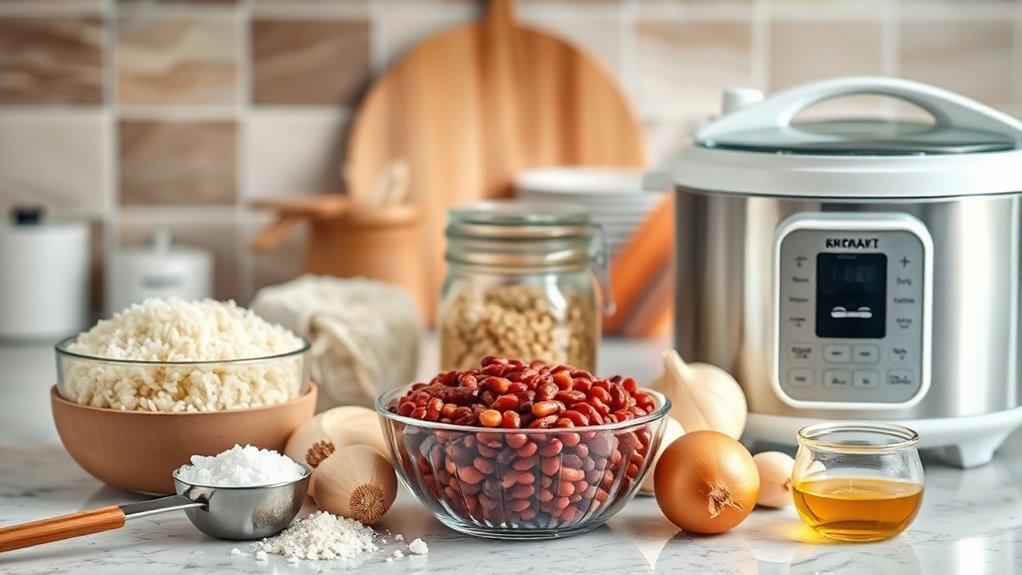
Because rice cookers automatically switch off as soon as free water evaporates (usually 20 to 35 minutes for white rice), the bean type you choose determines whether dinner turns out tender and safe or crunchy and risky.
| Bean Type | Safe in Standard Rice Cooker? | Prep Needed | Best Use |
|---|---|---|---|
| Canned beans (black, pinto, kidney) | Yes — safest & fastest | Drain and rinse thoroughly | Weeknight one-pot rice and beans |
| Pre-cooked dried beans | Yes — safe once boiled & tender | Soak 5–12 hrs, boil 30+ min until tender | Budget meal prep from bulk dried beans |
| Raw dried beans (unboiled) | No (undercooked + PHA risk in kidney beans) | Must cook separately on stove or pressure cooker first | Not recommended for standard rice cookers |
If you prefer starting from dry beans without watching a stovetop pot, cook them in a pressure cooker first using our Instant Pot black beans timing guide, then fold the cooked beans into your rice cooker.
Ingredients and Exact Water Ratios
For 4 hearty servings using long-grain white or jasmine rice:
- 1 cup long-grain white or jasmine rice (rinsed 2–3 times until water runs mostly clear)
- 1½ to 1¾ cups low-sodium chicken or vegetable broth (or water; follow your cooker’s white rice line)
- 1 can (15 oz) black, pinto, or red kidney beans, drained and rinsed (or 1½ cups fully cooked dried beans)
- Seasonings: ½ teaspoon kosher salt, 1 teaspoon ground cumin, ½ teaspoon garlic powder, ½ teaspoon onion powder, ½ teaspoon smoked paprika, and 1 bay leaf
- Optional flavor boosters: 1 tablespoon olive oil, ¼ cup diced bell pepper, or 2 tablespoons salsa (reduce broth by 2 tablespoons if adding watery salsa)
Want to swap in whole-grain brown rice instead? Switch your machine to the Brown Rice setting and adjust water ratios using our brown rice in a rice cooker guide, then fold in the drained canned beans during the last 10 minutes of cooking or right after the cycle finishes so they warm through without turning mushy.
Step-by-Step: Cooking Rice and Beans in a Rice Cooker
- Rinse the rice: Place 1 cup of rice in a fine-mesh strainer or bowl and rinse under cool water 2–3 times until the cloudy surface starch clears. Drain thoroughly.
- Drain and rinse the beans: Rinse canned beans under cool water for 15–20 seconds to remove thick canning liquid, which can cause excess foaming or gummy rice.
- Combine rice, liquid, and spices: Add the rinsed rice, broth or water, oil, salt, cumin, garlic powder, paprika, and bay leaf to the inner pot. Stir gently so spices dissolve evenly.
- Layer the beans on top: Spread the drained beans evenly over the rice without mashing them. Keeping beans near the top helps prevent scorching on the bottom heating plate.
- Cook: Wipe the outside of the inner pot dry, close the lid, and select the White Rice (or standard Cook) setting. Do not lift the lid during cooking.
- Rest and fluff: When the cooker switches to Keep Warm, let the pot rest undisturbed for 10 minutes so residual steam finishes hydrating the grains. Remove the bay leaf, fluff gently from the edges inward with a rice paddle, and finish with fresh lime juice and chopped cilantro.
Pro Tip: Avoid adding acidic ingredients like tomato paste or lime juice in large amounts before cooking—acid can slow starch gelatinization and keep rice grains firm. Stir in fresh lime juice, cilantro, or hot sauce right after fluffing.
Simple Flavor Variations
- Cuban-style black beans and rice: Use black beans, ½ teaspoon dried oregano, ¼ teaspoon cumin, 1 bay leaf, and finish with fresh lime juice and diced scallions.
- Tex-Mex pinto rice: Use pinto beans, ½ teaspoon chili powder, ½ teaspoon smoked paprika, and fold in thawed sweet corn and diced avocado after cooking.
- Caribbean-inspired coconut rice and red beans: Replace ½ cup of the broth with canned unsweetened coconut milk, add ¼ teaspoon dried thyme, and use rinsed canned red kidney beans.
For more hands-off dinner ideas in the same appliance, check out our one-pot rice cooker recipes.
Safe Cooling, Storage, and Bacillus cereus Prevention
Cooked rice requires strict cooling habits because uncooked rice grains can harbor heat-resistant spores of Bacillus cereus. When cooked rice sits at room temperature (between 40°F and 140°F), surviving spores can germinate and produce toxins that reheating will not destroy.
- Cool and refrigerate within 2 hours: Per USDA FSIS Leftovers and Food Safety, never leave cooked rice and beans sitting in an unplugged or turned-off rice cooker overnight. Divide leftovers into shallow containers and refrigerate within 2 hours (1 hour if ambient temperatures exceed 90°F) at 40°F (4°C) or below.
- Refrigerator & freezer limits: Eat refrigerated leftovers within 3 to 4 days, or freeze cooled portions in airtight containers for up to 3 months.
- Reheat thoroughly: Sprinkle with 1–2 tablespoons of water, cover loosely, and heat until steaming hot throughout—at least 165°F (74°C)—reheating only the portion you plan to eat.
Pros and Limitations
- Pros: True one-pot meal in 30–40 minutes; minimal cleanup; easy to scale for budget-friendly weekly meal prep.
- Limitations: Standard rice cookers cannot safely cook raw dried kidney beans from scratch; acidic tomato sauces or excess liquid from un-rinsed canned beans can trigger early shutoff or mushy texture.
Key Takeaways
- Always use canned (drained & rinsed) or pre-boiled beans in a standard rice cooker—never raw dried beans.
- Dried kidney beans must be soaked 5+ hours and boiled vigorously in fresh water for 10–30 minutes (FDA recommends 30 min) to destroy phytohaemagglutinin.
- Use 1 cup rinsed white rice + 1½–1¾ cups broth + 1 can (15 oz) drained beans, then rest 10 minutes before fluffing.
- Refrigerate leftovers in shallow containers within 2 hours at ≤40°F to prevent Bacillus cereus growth.
Frequently Asked Questions
Can I Cook Raw Dried Beans Directly With Rice in a Rice Cooker?
No. A standard rice cooker cycle (20 to 35 minutes) is far too short to soften raw dried beans, leaving them hard while the rice turns mushy. Worse, raw dried kidney beans contain phytohaemagglutinin (PHA), a natural lectin toxin that requires vigorous boiling on the stovetop (at least 10 minutes, with the FDA recommending 30 minutes after soaking) to neutralize safely. Always use canned or fully pre-cooked beans in a standard rice cooker.
Why Are Raw Red Kidney Beans Dangerous in Low-Temp Cookers?
According to the FDA Bad Bug Book, raw red kidney beans contain high levels of phytohaemagglutinin (PHA), which can cause severe nausea, vomiting, and diarrhea. Heating soaked kidney beans at lower temperatures (around 176°F/80°C) without a vigorous boil does not destroy the toxin and can increase toxicity. Soak dried kidney beans at least 5 hours, drain, and boil in fresh water for 30 minutes before adding them to any rice cooker or slow cooker.
What Water Ratio Should I Use for Rice and Canned Beans?
For 1 cup of rinsed long-grain white or jasmine rice plus one 15-ounce can of drained, rinsed beans, use 1½ to 1¾ cups of water or broth (matching your cooker's standard white rice water line). Because canned beans are already cooked and drained, they do not require extra water.
What Size Rice Cooker Works Best for Rice and Beans?
A 5- to 6-cup (uncooked capacity) rice cooker comfortably holds 1 to 2 cups of dry rice plus 1 to 2 cans of beans without foaming over the steam vent. For larger family batches, use an 8- to 10-cup cooker and never fill past the maximum water line.
How Do I Store Leftover Rice and Beans Safely to Prevent Bacillus cereus?
Uncooked rice can carry heat-resistant Bacillus cereus spores that multiply rapidly if cooked rice sits at room temperature. Transfer leftovers to shallow airtight containers and refrigerate within 2 hours of cooking (1 hour above 90°F) at 40°F or below. Eat within 3 to 4 days (or freeze up to 3 months) and reheat thoroughly to 165°F.
Sources
- FDA: Natural Toxins in Food — Phytohaemagglutinin lectin warning and 5-hour soak + 30-minute boiling guidance for raw kidney beans.
- FDA: Bad Bug Book (Second Edition) — Red kidney bean poisoning and low-temperature cooking risks.
- USDA FSIS: Leftovers and Food Safety — 2-hour cooling rule, 40°F refrigeration, and 165°F reheating temperature.
- Ohio State University Extension: Bacillus cereus Fact Sheet — Cooked rice temperature danger zone (40°F–140°F) and spore risks.



[…] If you also cook grains alongside legumes without a dedicated pressure unit, see our guide to cooking rice and beans in a rice cooker for stovetop and rice-cooker timing […]