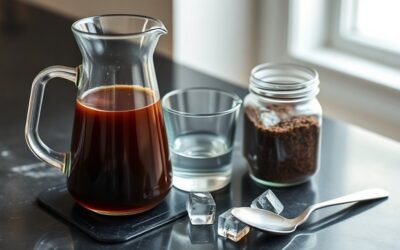
Cold brew espresso is a concentrated, cold-steeped coffee brewed at a tight 1:4 to 1:5 coffee-to-water weight ratio for 12 to 16 hours to mimic the bold intensity of espresso without an espresso machine. Unlike true espresso—which uses hot water under roughly 9 bars of pressure to form crema—cold brew espresso relies on time and a high coffee dose to create a smooth, syrupy base for iced lattes, tonics, and coffee cocktails.
Quick Starting Recipe
Combine 100 g of coarsely ground medium-dark coffee with 450 g (about 2 cups) of cold filtered water (a 1:4.5 ratio). Steep covered for 12–16 hours, strain through a fine mesh and paper filter, and pour 2–3 oz over ice with 4–6 oz of milk or water.
What Is Cold Brew Espresso?
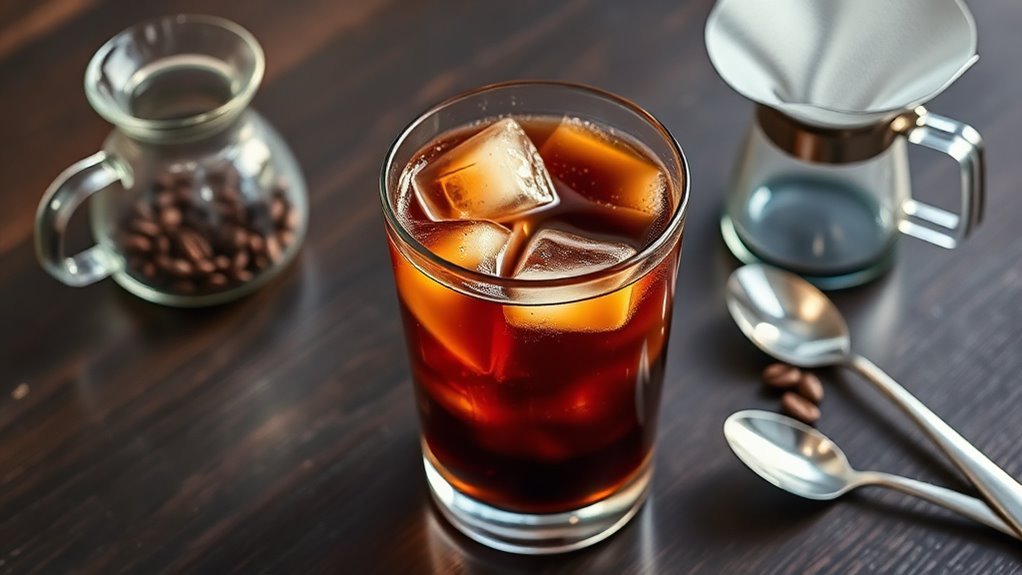
In everyday coffee lingo, the phrase “cold brew espresso” refers to one of two things: an ultra-strong cold brew concentrate designed as a no-machine espresso alternative, or a traditional hot espresso shot pulled directly over ice (sometimes called iced espresso). Most home brewers use the term for the first method—steeping coarsely ground beans in cold water at a heavy dose so every ounce packs enough punch to cut through milk and ice.
Understanding how cold brew espresso differs from traditional espresso helps set realistic expectations for flavor, texture, and caffeine:
| Feature | Cold Brew Espresso (Concentrate) | Traditional Hot Espresso |
|---|---|---|
| Brew Method | Cold immersion (12–16 hours) | Pressurized percolation (~9 bars, 25–30 sec) |
| Typical Ratio (by weight) | 1:4 to 1:5 | 1:2 (e.g., 18 g coffee to 36 g yield) |
| Grind Size | Coarse (like sea salt) | Fine (powdery, slightly gritty) |
| Crema | None (can be shaken for foam) | Rich, emulsified golden crema |
| Flavor Profile | Chocolatey, nutty, lower perceived sharpness | Bright, aromatic, intense, velvety |
Because cold water extracts fewer volatile aromatics and lower total titratable acids than near-boiling water, cold-steeped concentrate tastes rounder and less sharp on the palate. Research from Thomas Jefferson University notes that hot and cold coffee share similar pH readings (roughly 4.85 to 5.13), so cold brew is not acid-free—even though lower titratable acidity makes it taste noticeably smoother.
Choosing Beans and Grind Size
Your bean choice and grind consistency determine whether a cold brew espresso concentrate tastes like rich dark chocolate or muddy bitterness.
- Roast level: Medium to medium-dark espresso blends work best because they highlight cocoa, caramel, and toasted nut notes that hold up to cold milk. Light roasts can taste thin or tart when steeped cold, while very dark oily roasts may turn smoky or ashy.
- Freshness: Choose whole beans roasted within the past 2 to 4 weeks and store them in an airtight, opaque container away from heat and light.
- Grind size: Always grind coarse—roughly the texture of kosher sea salt—using a burr grinder if possible. Fine espresso grinds clog filters during long immersion steeps and over-extract harsh, astringent flavors.
How to Make Cold Brew Espresso Step by Step
You do not need specialized bar equipment to brew a clean, concentrated batch. A wide-mouth glass mason jar, a kitchen scale, and a two-stage filter setup (a fine-mesh strainer followed by a paper pour-over filter) produce café-quality clarity.
- Weigh your coffee and water: Start with a 1:4.5 weight ratio—for example, 100 g of coarse coffee to 450 g of cold filtered water. For a broader look at scaling concentrate versus ready-to-drink strengths, see our cold brew coffee ratio guide.
- Combine and saturate evenly: Add the grounds to your clean jar, pour in half the water, stir gently to break up dry clumps, and top with the remaining water.
- Steep for 12 to 16 hours: Cover the jar and let it steep undisturbed in the refrigerator (for a cleaner, slower extraction) or at cool room temperature (for a slightly fuller body).
- Double-strain the concentrate: Pour the brew through a fine-mesh sieve to catch the bulk grounds, then pass the liquid slowly through a rinsed paper coffee filter to remove fine sediment.
- Bottle and chill promptly: Transfer the finished concentrate into a clean, airtight glass bottle and refrigerate immediately.
Expect to lose roughly twice the weight of the dry coffee in absorbed water—so 100 g of grounds steeped in 450 g of water will yield around 250 mL (about 8.5 fl oz) of rich concentrate.
Serving Ideas and Dilution Ratios
Because a 1:4 to 1:5 concentrate is intense and can pack a substantial caffeine dose, most people dilute it with ice, water, or milk before drinking. If you are curious how a poured glass stacks up against standard espresso shots, check our comparison of cold brew vs. espresso caffeine.
| Drink Style | Concentrate | Mixer & Ice |
|---|---|---|
| Iced Cold Brew Americano | 2–3 oz | 3–4 oz cold water + large ice cubes |
| Iced Cold Brew Latte | 2–3 oz | 4–6 oz dairy, oat, or almond milk + ice |
| Shaken Cold Brew Espresso | 2 oz | 0.5 oz simple syrup + ice, shaken 10 sec for foam |
| Espresso Martini Base | 1.5–2 oz | Spirits/liqueur + ice, shaken vigorously |
Use large ice cubes or coffee ice cubes whenever possible—crushed ice melts quickly and waters down the drink before you finish it.
Pros and Limitations of Cold Brew Espresso
- Pro — No expensive machine required: A simple jar and filter let you build strong, milk-ready coffee drinks at home for a fraction of the cost of an espresso setup.
- Pro — Make-ahead convenience: One batch stays ready in the fridge all week, turning morning iced lattes into a 30-second pour.
- Limitation — No true crema or pressure-extracted aromatics: Without 9 bars of pressure and hot water, cold concentrate cannot replicate the velvety micro-emulsion or bright top notes of a freshly pulled shot.
- Limitation — Advance planning needed: You must steep your batch 12–16 hours ahead of time, so it cannot satisfy a spontaneous craving on the spot.
Troubleshooting and Safe Storage
If your first batch tastes off, change only one variable at a time on your next brew:
- Tastes bitter or muddy: Your grind was likely too fine or the steep ran past 18 hours. Switch to a coarser grind and filter through paper.
- Tastes weak or watery: Tighten the ratio from 1:5 to 1:4, stir thoroughly at the start to eliminate dry pockets, or extend the steep closer to 16 hours.
- Tastes sour or hollow: Try a medium-dark roast instead of a light roast, or steep at cool room temperature rather than inside a very cold fridge.
Food Safety Reminder: Cold brewing uses no heat-sanitizing step. Always wash your jar and filters thoroughly before brewing, keep finished concentrate sealed in the refrigerator at 40°F (4°C) or below per FDA refrigeration guidance, and aim to finish homemade batches within 5 to 7 days. Never store pre-mixed milk drinks for multiple days.
For detailed spoilage signs and container tips, read our guide on how long cold brew stays good in the fridge.
Frequently Asked Questions
Can I use pre-ground coffee for cold brew espresso?
Yes, you can use pre-ground coffee, though a coarse grind works best for clean filtering. Standard medium-fine pre-ground coffee can still brew a strong concentrate, but you should strain it through a paper filter to remove silt and shorten the steep to 10–12 hours to avoid harshness.
Does cold brew espresso have crema like real espresso?
No. True espresso relies on roughly 9 bars of pressure and hot water to emulsify coffee oils and trap carbon dioxide into crema. Cold-steeped concentrate is brewed at atmospheric pressure, so it delivers bold strength and syrupy body without natural crema—though shaking it hard over ice creates a light foam.
Can I make cold brew espresso without a special brewer?
Yes. A clean glass jar, coarse coffee grounds, cold filtered water, and a paper coffee filter or fine-mesh strainer lined with cheesecloth are all you need. Steep at a 1:4 or 1:5 weight ratio for 12–16 hours, then strain slowly into a sealed bottle.
Does cold brew espresso have more caffeine than hot espresso?
Per fluid ounce, true hot espresso is typically more concentrated (around 63 mg per 1 oz shot per USDA data). However, because cold brew espresso concentrate is often poured in larger 2 to 4 oz servings for iced lattes, a full glass can easily match or exceed a single or double espresso shot.
How long does cold brew espresso stay fresh in the fridge?
Undiluted cold brew concentrate tastes freshest within 5 to 7 days when stored in an airtight glass container at 40°F (4°C) or below. Discard any batch that smells sour, looks cloudy, or shows signs of spoilage, and never add milk until you are ready to serve.