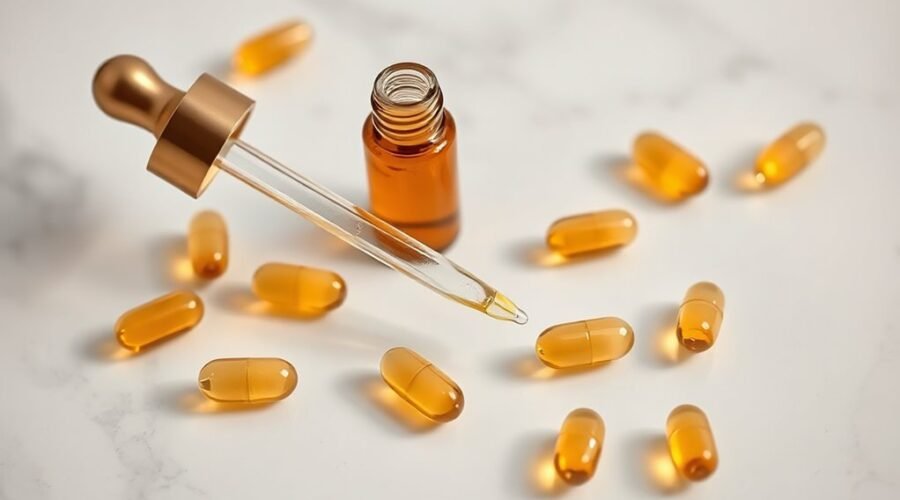
Encapsulated retinol is a stabilized form of vitamin A enclosed inside microscopic lipid, phospholipid (liposome), or polymer spheres that penetrate the upper epidermis before breaking down gradually over several hours. Unlike traditional “free” retinol—which dumps its full active concentration onto the skin surface immediately and oxidizes quickly when exposed to air—micro-encapsulation slows the release rate to reduce redness, stinging, and flaking while preserving potency from the first pump to the last.
Encapsulated Retinol vs. Standard Free Retinol & Retinaldehyde
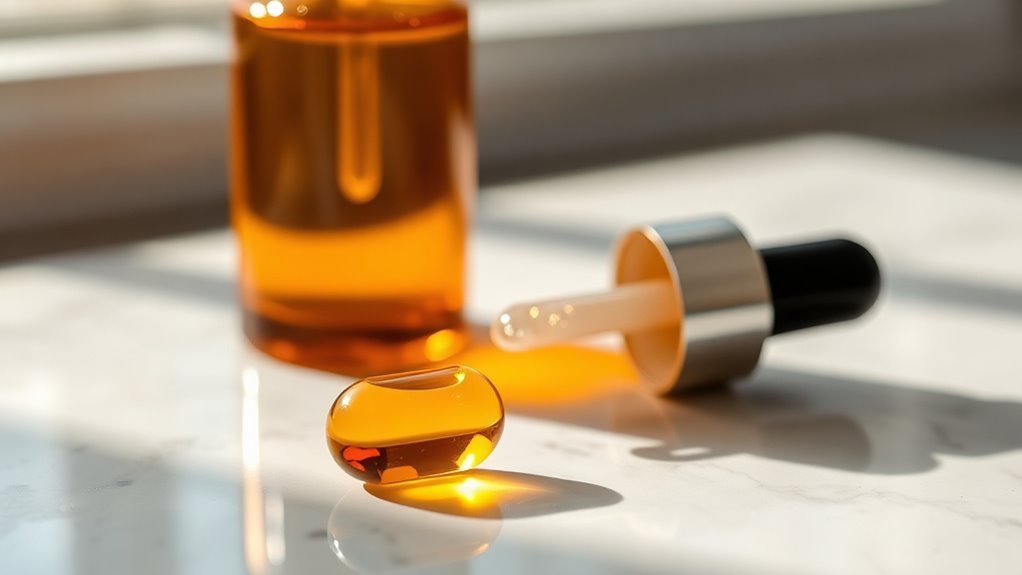
Before reach the cellular receptors in your skin, all cosmetic retinol must undergo a two-step enzymatic conversion (Retinol → Retinaldehyde → Retinoic Acid). Encapsulation does not change that biological pathway, but it changes how fast and how intact the retinol molecules arrive at those enzymes. You can see what changes to expect at each milestone in our week-by-week retinol before and after timeline.
| Feature | Encapsulated Retinol | Standard (Unencapsulated) Retinol | Retinaldehyde (Retinal) |
|---|---|---|---|
| Delivery Mechanism | Wrapped in lipid liposomes, silica, or polymer micro-spheres | Free vitamin A suspended directly in emulsion/oil base | 1-step precursor (often encapsulated or stabilized in emulsion) |
| Release Speed on Skin | Time-released (2–6+ hours) as skin enzymes dissolve shell | Immediate (all at once) upon application | Fast conversion (1 enzymatic step to retinoic acid) |
| Irritation & Peeling Risk | Low (avoids sharp surface concentration spikes) | Moderate to High during weeks 2–4 retinization | Low to Moderate depending on strength (0.05%–0.1%) |
| Air & Light Stability | High (capsule shell shields retinol from oxidation) | Low (degrades quickly unless sealed in airless aluminum tube) | Moderate |
| Best Skin Types | Beginners, sensitive, dry, combination, and eye-area formulas | Experienced retinoid users with resilient, oily skin | Intermediate users targeting stubborn fine lines and acne |
How Micro-Encapsulation Technology Works on the Skin Barrier
Cosmetic chemists encapsulate retinol using three main carrier systems, each designed to solve traditional retinol’s biggest flaws—instability and surface burn:
- Phospholipid Liposomes & Ceramide Bilayers: Microscopic spheres made from lecithin and phospholipids mimic your skin’s own intercellular lipid bilayers. Instead of sitting on top of dead corneocytes and causing flaking, the liposome fuses smoothly with the stratum corneum and releases retinol deeper down.
- Porous Silica or Polymer Micro-Sponges: Porous micro-spheres hold retinol inside tiny internal channels and release it slowly as natural skin sebum and temperature warm the formula.
- Cyclodextrin & Polysaccharide Shells: Sugar-derived ring molecules shield each retinol molecule from oxygen and UV degradation inside the bottle, ensuring a 0.3% formula still performs like 0.3% six months after opening.
Step-by-Step Night Routine for Encapsulated Retinol Beginners
Even though time-release capsules buffer the initial sting, retinol still accelerates keratinocyte turnover (see whether retinol is an exfoliant vs. AHAs/BHAs), so a phased ramp-up schedule is essential:
- Cleanse & Pat Completely Dry: Wash with a gentle, non-stripping cleanser and wait 3 to 5 minutes. Applying retinoids to damp skin accelerates penetration too rapidly and bypasses the slow-release benefit.
- Protect Sensitive Corners: Dab a rice-grain dot of plain moisturizer or petrolatum around the outer eye corners, nasal creases, and lip borders where product tends to pool.
- Apply a Pea-Sized Amount Across 5 Facial Zones: Dot one pea-sized pump across the forehead, both cheeks, nose, and chin, then smooth outward gently without aggressive rubbing.
- Seal With a Barrier Moisturizer: Wait 1 to 2 minutes, then apply a ceramide- and glycerin-rich night cream. If your skin is ultra-dry, review our guide on applying moisturizer before or after retinol (the sandwich method).
- Follow the 1-2-3 Retinization Ramp-Up: Apply once every 3rd night for Weeks 1–2, every other night for Weeks 3–4, and up to 4–5 nights per week from Week 5 onward if zero flaking occurs. Always wear broad-spectrum SPF 30+ every morning.
Pairing Rules: What to Combine & What to Separate
- Pair In the Same Routine: Niacinamide (calms redness and boosts ceramide synthesis), hyaluronic acid, glycerin, peptides, panthenol, and squalane.
- Alternate on Different Nights: If you use BHA for clogged pores, follow our schedule for alternating salicylic acid and retinol safely rather than layering them together at night.
- Look for Airless Opaque Pumps: Even encapsulated retinol loses potency inside clear dropper bottles exposed to bathroom light and air; choose opaque airless pumps or collapsible aluminum tubes.
Frequently Asked Questions
Is encapsulated retinol weaker than regular pure retinol?
No. At the same active percentage (such as 0.25% or 0.5% pure retinol inside the capsules), encapsulated retinol delivers the same cellular retinoid activity—and often better bioavailable stability—because the outer shell shields the vitamin A molecule from oxidizing before it penetrates the stratum corneum.
Do you still need the moisturizer sandwich method with encapsulated retinol?
Because micro-capsules release retinol over several hours rather than all at once, many users can apply encapsulated retinol directly to clean, dry skin followed by a single top coat of ceramide moisturizer. However, if you have rosacea-prone or reactive skin, applying a thin base moisturizer first adds extra comfort during weeks 1 to 3.
Can you use encapsulated retinol with vitamin C or salicylic acid?
Avoid layering encapsulated retinol in the exact same evening slot as low-pH L-ascorbic acid or salicylic acid (BHA), as acidic pH can destabilize the carrier shell and over-strip your skin barrier. Use vitamin C in the morning under SPF 30+ and alternate salicylic acid on non-retinol nights.
Is encapsulated retinol safe during pregnancy or breastfeeding?
No. Dermatologists and OB-GYNs advise avoiding all topical vitamin A derivatives—including encapsulated retinol, retinaldehyde, and retinyl esters—during pregnancy. Switch to pregnancy-safe alternatives like 10%–15% azelaic acid, niacinamide, or bakuchiol.
How can you tell on an ingredient list if a retinol is encapsulated?
Brands typically highlight “micro-encapsulated” or “time-released retinol” on the front label, while the INCI ingredient list pairs Retinol with capsule-forming carriers such as Lecithin, Phospholipids, Cyclodextrin, Polymethyl Methacrylate, Silica, or Cellulose micro-spheres.