Disclosure: As an Amazon Associate, we earn from qualifying purchases. If you click a link on this page and make a purchase, we may receive a small commission at no extra cost to you.
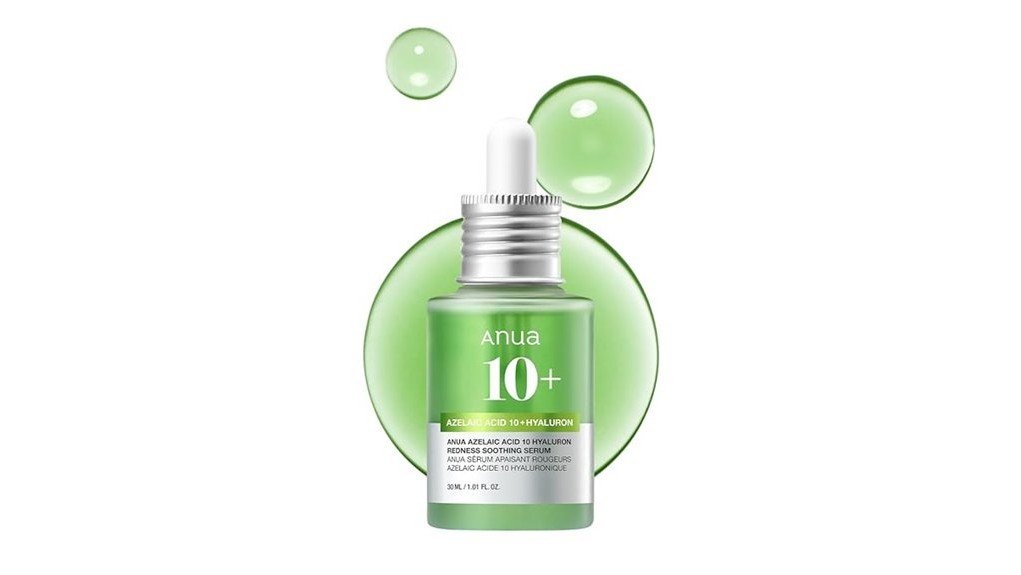
Redness-prone or blemish-prone skin can make active serums difficult to choose, especially when you also want hydration without a heavy finish. The ANUA Azelaic Acid 10 Hyaluron Redness Soothing Serum combines 10% azelaic acid with hydrating and calming ingredients in a lightweight 30 mL formula. Its main appeal is targeted cosmetic support for visible redness, uneven-looking texture, and blemish-prone areas while keeping the routine relatively simple. The tradeoff is that 10% azelaic acid is still an active ingredient, so sensitive skin should start slowly rather than jumping straight to twice-daily use.
Quick Verdict
Rating: 8.5/10, Recommended with caveats
Best For: Oily, combination, blemish-prone, or sensitive-feeling skin that needs a lightweight azelaic acid serum.
Bottom Line: You get a verified 10% azelaic acid formula with added hydration and a non-greasy texture. The main limitation is that sensitive or already-irritated skin may need a slower introduction, and results will vary from person to person.
| Specification | Detail |
|---|---|
| Brand | ANUA |
| Product | Azelaic Acid 10 Hyaluron Redness Soothing Serum |
| Product Type | Facial serum |
| Size | 30 mL / 1.01 fl oz |
| Azelaic Acid | 10% |
| Hydration | Three types of hyaluronic acid, plus glycerin and other humectants |
| Supporting Ingredients | Panthenol, niacinamide, aloe, Centella-derived ingredients, squalane, zinc PCA, ceramide NP, allantoin |
| Texture | Lightweight, watery, non-greasy serum |
| Fragrance | No artificial fragrance |
| Testing | Brand reports non-comedogenic and low-irritation testing |
| Starting Use | 1 to 2 drops, 1 to 2 times per week |
| Maximum Suggested Use | Gradually increase up to 5 drops and as often as twice daily if tolerated |
| Daytime Note | ANUA recommends SPF 30 or higher when used during the day |
What Is the ANUA Azelaic Acid 10 Hyaluron Redness Soothing Serum?
The ANUA Azelaic Acid 10 Hyaluron Redness Soothing Serum is a 30 mL facial serum built around 10% azelaic acid. ANUA positions it for skin that is oily, sensitive, blemish-prone, or visibly red from dryness and external irritation.
Unlike a basic single-active treatment, the formula combines azelaic acid with humectants and skin-conditioning ingredients. The ingredient list includes sodium hyaluronate, glycerin, panthenol, niacinamide, aloe, several Centella asiatica components, squalane, zinc PCA, ceramide NP, and allantoin. This makes it more hydration-focused than a dry or powdery azelaic acid treatment.

Power your essentials anywhere with a 999Wh pure sine wave power station delivering up to 1000W continuous with 2000W surge. It supports fast charging via USB-C PD 60W and USB-A QC 18W, plus simultaneous output for multiple devices through AC, USB, wireless, and car/DC ports. Recharge using AC, car, or solar with a built-in MPPT controller and dual cooling fans, while the upgraded battery management system protects against surges, short circuits, and overheating.

[Target Stubborn Spots And Breakouts] Contains 10% Azelaic Acid to effectively fade the look of post-blemish dark spots. This solution refines uneven texture and bumps without irritation.

ROLLING SOLUTION - 10% Azelaic Acid is a specialized treatment that has been formulated for people with skin that feels irritated, characterized by redness and uneven and spotted skin tone
Who Should Buy It?
Best For
- You want a 10% azelaic acid serum in a lightweight, watery texture.
- Your skin tends to look red, uneven, or blemish-prone but still needs hydration.
- You have oily or combination skin and prefer a serum that does not feel heavy or greasy.
Skip If
- Your skin is currently broken, peeling, severely irritated, or stinging from other active products.
- You want a very basic formula with as few active or supporting ingredients as possible.
- You expect a serum to diagnose or treat persistent redness, acne, rosacea, or another medical skin condition.
Before You Buy: This is cosmetic skincare, not a substitute for medical care. Persistent redness, painful breakouts, swelling, or ongoing irritation deserves assessment from a dermatologist or other qualified healthcare professional.
Key Ingredients and What They Add
10% Azelaic Acid
The headline ingredient is 10% azelaic acid. In this formula, it is intended to support a calmer-looking, more even complexion and improve the appearance of blemish-prone or troubled areas. ANUA specifically qualifies its redness claims as redness associated with dryness or external irritation rather than a disease.
A 10% concentration also means you should treat this as an active skincare step. More frequent use is not automatically better, particularly during your first few weeks with the product.
Three Types of Hyaluronic Acid and Humectants
ANUA pairs the active ingredient with three types of hyaluronic acid. The formula also contains glycerin and other moisture-binding ingredients. This combination is intended to help your skin retain moisture while avoiding the heavy feel of a rich cream.
The hydration component matters because some active-focused routines become uncomfortable when they contain too many drying or exfoliating steps. You still need a moisturizer, but the serum itself is designed to add moisture rather than leave a dry finish.
Panthenol, Centella, Aloe, and Barrier-Supporting Ingredients
The ingredient list includes panthenol, aloe leaf juice, Centella asiatica extract and related Centella components, allantoin, squalane, ceramide NP, and green tea leaf water. These ingredients support the serum’s calming and conditioning role without turning it into a heavy moisturizer.
Niacinamide and zinc PCA are also present. Because ANUA does not publish a concentration for these ingredients on the product page, you should not buy the serum specifically for a high-dose niacinamide or zinc treatment.
Texture, Finish, and Layering
The serum has a lightweight, watery texture that is easier to layer than a thick azelaic acid cream or suspension. That is useful if your routine already includes toner, moisturizer, and sunscreen.
ANUA directs you to apply the serum between toner and moisturizer. Give it a moment to spread and settle before applying the next product rather than using a large amount in an attempt to speed up results.
Pro Tip: Start with the smallest recommended amount. One or two drops lets you judge tolerance more accurately and reduces the chance that too much serum will feel sticky when layered under moisturizer or sunscreen.
How to Use ANUA Azelaic Acid Serum
ANUA recommends a gradual introduction rather than immediate daily use. Begin with 1 to 2 drops per application, 1 to 2 times per week. If your skin remains comfortable, you can slowly increase the frequency and eventually use up to 5 drops per application.
The brand says the serum can ultimately be used as often as twice daily when tolerated. In a daytime routine, ANUA recommends finishing with SPF 30 or higher.
A Simple Routine Order
- Cleanse your face with a gentle cleanser.
- Apply toner if toner is already part of your routine.
- Apply 1 to 2 drops of the ANUA serum when you are starting out.
- Follow with moisturizer.
- Finish your morning routine with sunscreen.
Using It With Retinol or Other Actives
ANUA states that the serum can generally be used with retinol, but recommends introducing the combination gradually. If your routine already contains retinoids, acids, or other potentially irritating actives, alternating nights is a simpler way to learn how your skin reacts.
The ingredient list also includes betaine salicylate, so people with highly reactive skin should avoid building an unnecessarily aggressive routine around several exfoliating products at once.
How It Performs in Real Use
For Everyday Layering
The watery texture is one of the product’s most practical strengths. It can fit between toner and moisturizer without adding the dense, silicone-heavy feel associated with some azelaic acid treatments. This makes it especially convenient if you already use several lightweight skincare steps.
For Oily or Combination Skin
ANUA describes the formula as non-comedogenic and suitable for oily and blemish-prone skin. Because it provides hydration without relying on a heavy cream texture, it makes more sense for oily or combination skin than a rich treatment that leaves a noticeable film.
For Sensitive-Feeling Skin
The formula includes several conditioning ingredients, and ANUA reports low-irritation testing. However, that does not guarantee zero irritation for you. Azelaic acid remains an active ingredient, so sensitive skin should follow the brand’s slow-start instructions rather than assuming the calming ingredients eliminate the need for caution.
For Travel
The 30 mL / 1.01 fl oz bottle is compact enough for a skincare bag and falls below the usual 3.4 fl oz liquid limit used for U.S. carry-on screening. Keep the cap secured and place liquids in an appropriate travel bag to reduce the chance of leakage.
Skin Safety and Formula Notes
The current ingredient list includes azelaic acid, propylene glycol, panthenol, betaine salicylate, glycerin, niacinamide, aloe, Centella-derived ingredients, squalane, zinc PCA, and ceramide NP. ANUA also lists the serum as having no artificial fragrance and reports non-comedogenic and low-irritation testing.
Do not apply active skincare over open, picked, or otherwise damaged skin. If your face is already burning, peeling, or reacting to another product, allowing the skin to recover before adding another active is the more cautious approach.
If you are pregnant, breastfeeding, being treated for a skin condition, or using prescription skincare, ask your healthcare professional to review the complete ingredient list. Azelaic acid itself is commonly used in pregnancy guidance, but that should not be treated as automatic approval of every multi-ingredient cosmetic formula for every person.
Pros and Cons
Pros
- Verified 10% azelaic acid concentration.
- Three types of hyaluronic acid add hydration to an active-focused formula.
- Lightweight, watery texture suits layered routines.
- Contains panthenol, Centella-derived ingredients, squalane, ceramide NP, and allantoin.
- Brand reports non-comedogenic and low-irritation testing.
Cons
- 10% azelaic acid may still irritate very reactive or compromised skin.
- You may need several weeks of gradual use before knowing how well it fits your routine.
- The multi-ingredient formula may be more complex than necessary if you prefer minimalist skincare.
Is It Worth the Price?
The ANUA serum sits in the accessible-to-mid-range part of the facial-serum market rather than the premium treatment category. Its value comes from combining a clearly disclosed 10% azelaic acid concentration with hydration and several supporting ingredients in one lightweight step.
It is worth considering if you specifically want azelaic acid but dislike thick suspension-style formulas. It offers less value if you already own separate products that provide the same active and hydration benefits, or if your skin reacts better to very simple formulas.
How It Compares to Alternatives
There are several competing 10% azelaic acid options. The INKEY List SuperSolutions 10% Azelaic Acid Serum is another serum-style option aimed at visible redness, while Peach Slices Redness Relief Azelaic Acid Serum combines 10% azelaic acid with additional soothing ingredients. The Ordinary Azelaic Acid Suspension 10% is also widely available but uses a thicker suspension format rather than the watery serum texture found here.
The ANUA formula makes the most sense when you care about a lightweight K-beauty serum texture plus added hydration. If your priority is the simplest possible azelaic acid treatment or a different texture, comparing those alternatives before buying is worthwhile.
Is ANUA Azelaic Acid Serum Right for Your Skin?
This serum is a strong match if your main concerns are visible redness related to dryness, blemish-prone areas, uneven-looking texture, and maintaining hydration without a heavy finish. Oily and combination skin may particularly appreciate the lightweight texture.
You should be more cautious if your skin barrier is currently damaged or you already use several strong actives. Starting slowly gives you a much clearer picture of whether the product itself suits your skin.
Frequently Asked Questions
How often should you use ANUA Azelaic Acid 10 Serum?
ANUA recommends starting with 1 to 2 applications per week using 1 to 2 drops. If your skin tolerates it, you can gradually increase the amount to as many as 5 drops and the frequency to as often as twice daily.
Can you use this serum with retinol?
ANUA says the serum can generally be used with retinol, but recommends a gradual introduction. If your skin is sensitive, using the products on alternate evenings is a simple way to reduce the number of active products applied at the same time.
Is ANUA Azelaic Acid Serum fragrance-free?
ANUA and current retailer information describe it as having no artificial fragrance. Always check the ingredient list on your own package if fragrance sensitivity is a major concern because cosmetic formulas can be updated.
Is it suitable for oily or acne-prone skin?
ANUA positions the lightweight serum for oily, sensitive, and blemish-prone skin and reports non-comedogenic testing. That does not guarantee that every acne-prone person will tolerate every ingredient, so introduce it gradually and stop if irritation develops.
How long does one 30 mL bottle last?
ANUA has stated that a 30 mL bottle typically lasts about four to six weeks when a small amount is used twice daily. Your bottle may last longer if you use it less frequently or remain at the 1-to-2-drop starting amount.
Can you use ANUA Azelaic Acid Serum during pregnancy or breastfeeding?
Azelaic acid itself appears in professional pregnancy skincare guidance, but this serum is a multi-ingredient cosmetic formula. If you are pregnant or breastfeeding, ask your obstetrician, dermatologist, or other qualified healthcare professional to review the complete ingredient list before use.
What is the shelf life after opening?
A verified product-specific period after opening was not available for this review, so check the PAO symbol and expiration information printed on your bottle or packaging. Store the serum according to the package directions and avoid excessive heat or direct sunlight.
The Bottom Line
The ANUA Azelaic Acid 10 Hyaluron Redness Soothing Serum earns an 8.5/10 recommendation for buyers who want 10% azelaic acid in a lightweight, hydration-focused formula. Its strongest points are the clearly disclosed active concentration, watery texture, and supporting moisturizing ingredients, while its main limitation is that sensitive skin still needs to introduce the active gradually.
If your skin is currently damaged, severely irritated, or being treated for a medical condition, skip self-experimentation and get professional guidance first. For a stable routine that needs a lightweight azelaic acid step, this is a well-rounded option worth considering.