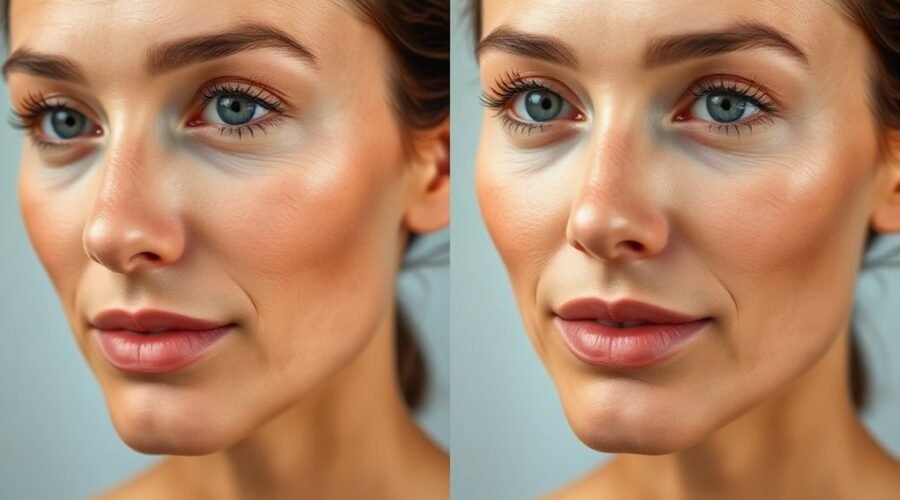
Realistic retinol before and after changes happen gradually over 8 to 24 weeks—not overnight. While Weeks 1 to 4 often bring temporary dryness, mild flaking, or a brief acne purge (“retinization”), consistent nighttime use paired with daily SPF 30+ typically delivers smoother texture and clearer pores by Weeks 6 to 8, noticeably faded dark spots by Week 12, and firmer fine-line support by Months 4 to 6.
Retinol Before and After Timeline: Week 1 to Month 6
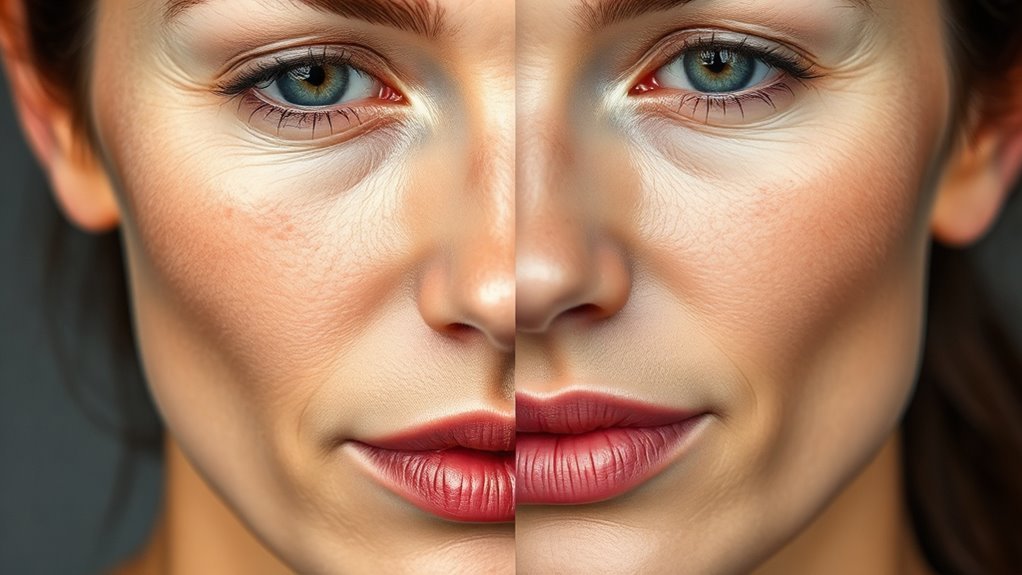
Because over-the-counter retinol must convert in the skin into retinoic acid before accelerating cell turnover and collagen synthesis, tracking your retinol before and after milestones by skin concern prevents quitting too early during the adjustment phase:
| Timeframe | What Happens in Your Skin | Typical Before & After Appearance | Recommended Routine Focus |
|---|---|---|---|
| Weeks 1–4 (Retinization) | Stratum corneum turnover speeds up; micro-comedones surface faster | Mild tightness, light flaking around mouth/chin, or temporary whitehead purge | Use a pea-sized drop 2 nights/week; buffer with ceramide moisturizer |
| Weeks 6–8 (Early Clarity) | Pore shedding normalizes; barrier adapts to steady retinoid signaling | Fewer clogged pores, calmer breakouts, softer surface texture | Step up to every other night (3–4x/week) if skin shows zero stinging |
| Weeks 12–16 (Tone & Spots) | Melanin clusters disperse faster; early dermal collagen support builds | Post-acne marks and sun spots look lighter; shallower fine lines | Maintain steady nighttime schedule + strict morning SPF 30+ |
| Months 6+ (Long-Term Remodeling) | Sustained collagen and elastin support in the dermis | More even tone, firmer crow’s feet/forehead lines, durable glow | Continue 3–5+ nights/week as your long-term maintenance baseline |
Retinol Purging vs. Irritation: What to Expect Early On
Many beginners mistake normal early retinization for an allergic reaction—or push through true barrier damage thinking it is a purge. Use this side-by-side check during your first 6 weeks:
| Marker | Normal Retinol Purge / Adjustment | Barrier Irritation (Slow Down or Pause) |
|---|---|---|
| Where It Appears | Chin, forehead, or T-zone where you usually get clogged pores | New areas where you never break out, or raw patches near eyes/nostrils |
| How It Feels | Mild dryness or brief tightness that calms after moisturizer | Hot stinging when applying plain water or bland lotion |
| Duration | Clears progressively within 4 to 6 weeks | Worsens each week you continue applying retinol |
| Best Fix | Keep using 2–3x/week with the moisturizer “sandwich method” | Pause retinol for 5–7 days until barrier feels completely calm |
How to Maximize Your Retinol Before and After Results
- Wash and wait until skin is dry: Damp skin absorbs retinoids faster and deeper, which increases stinging without improving long-term collagen results.
- Use only a pea-sized amount for your whole face: Dot it across your forehead, cheeks, and chin, keeping clear of your eyelids, nostril creases, and lip corners.
- Buffer with the “sandwich method” if sensitive: Apply a thin layer of plain, fragrance-free moisturizer first, smooth your retinol on top, and seal with a second light layer of moisturizer.
- Skip competing exfoliants on retinol nights: Do not layer glycolic acid, salicylic acid (BHA) toners, benzoyl peroxide, or physical scrubs in the same evening session.
- Wear broad-spectrum SPF 30+ every single morning: Freshly renewed skin burns and hyperpigments easily; skipping sunscreen undoes dark-spot and anti-aging gains.
Pros and Limitations of Over-the-Counter Retinol
What Retinol Does Well
- Targets three major concerns at once: clogged pores/acne, post-inflammatory dark spots, and fine lines
- More accessible and gentler on the skin barrier than prescription tretinoin for beginners
- Delivers cumulative texture and firmness improvements that build over months of use
Realistic Limitations
- Requires 8 to 12+ weeks of patience before meaningful “after” photos show visible tone or line changes
- Cannot replicate deep in-office procedures for severe cystic scarring or deep static folds
- Must be paused during pregnancy and protected daily with broad-spectrum sunscreen
Safety Notes and Contraindications
Do not use retinol or any vitamin A derivative during pregnancy, and consult your healthcare provider before using topical retinoids while breastfeeding. Pause retinol at least 5 to 7 days before facial waxing, laser/IPL treatments, or chemical peels so fragile surface skin does not lift or burn.
Related Skincare and Retinol Guides
- Clean & Clear Deep Action Face Wash: How to Use Safely
- How Long Does Sunscreen Last? Reapplication & Expiry Guide
- Do You Apply Concealer Before or After Foundation? Guide
Frequently Asked Questions
Can retinol be used during pregnancy or breastfeeding?
No. Dermatologists and OB-GYNs advise avoiding all retinoids (including over-the-counter retinol and retinaldehyde) during pregnancy, and most recommend waiting until after breastfeeding or consulting your clinician for pregnancy-safe alternatives like azelaic acid or bakuchiol.
Should retinol be applied before or after moisturizer?
On resilient skin, apply a pea-sized amount of retinol to clean, completely dry skin before your moisturizer. If your skin is sensitive or in the first 4 weeks of retinization, use the "sandwich method" (a thin layer of moisturizer, then retinol, then moisturizer) to buffer dryness without blocking results.
Can retinol be combined with vitamin C in the same routine?
Yes, by separating them by time of day: apply vitamin C antioxidant serum in the morning under broad-spectrum SPF 30+, and reserve retinol for your nighttime routine.
Does retinol expire, and how should it be stored?
Yes. Retinol degrades when exposed to heat, oxygen, and UV light. Store opaque or airless pump tubes tightly capped in a cool, dark drawer rather than a steamy windowsill, and replace any formula that turns dark orange-brown or develops a rancid smell.
Which skin types should avoid starting retinol?
Pause or avoid retinol if you have an active eczema flare, severe rosacea flare, sunburned skin, or a damaged, stinging skin barrier—and never use retinoids during pregnancy.