Mastering shaving head with safety razor technique delivers a close, bump-free dome shave at a fraction of cartridge refill costs when you combine warm-shower prep, a mild closed-comb razor, and light, controlled strokes. Hold the blade near a 30-degree angle with zero downward pressure, shorten your strokes over the curved occipital bone at the back of your skull, and finish with a fragrance-free scalp moisturizer and SPF 30+ sunscreen.
Quick Answer
Clip hair down to stubble first, soften your scalp in a warm shower for 2 to 3 minutes, and apply a slick wet-shaving lather. Shave with the grain using short strokes, feel contours with your free hand—especially around the occipital ridge and behind the ears—and rinse with cool water before moisturizing.
Choosing the Right Safety Razor and Blade for Head Shaving

Head shaving involves curved bone surfaces you cannot see directly, so forgiving hardware matters more than extreme blade exposure:
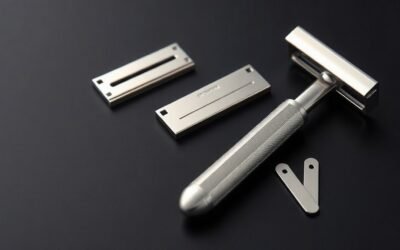
- Closed-comb mild head: A solid safety bar guides the blade smoothly across crown curves and lowers nick risk while you learn.
- Knurled, grippy handle: Wet, soapy hands slip easily on smooth chrome. Choose deep knurling or a textured matte handle; medium-length handles (around 3.2 to 3.7 inches) make it easier to pivot behind your head without bumping your neck.
- Sharp, coated stainless blade: Start with a smooth platinum- or PTFE-coated blade and swap it every 3 to 5 head shaves (scalp surface area dulls edges faster than facial shaving).
If you are still deciding between a double-edge handle and multi-blade disposables, our comparison of whether safety razors are better than cartridge razors breaks down blade economics and ingrown-hair rates. You can also explore blade coatings and lifespan in our complete razor blade guide.
Warm-Shower Scalp Prep Checklist
Dermatology guidelines from the American Academy of Dermatology and DermNet emphasize hydrating hair before the blade touches skin. Never dry-shave your scalp.
- Trim long hair first: If growth exceeds 2 to 3 mm (about 1/8 inch), buzz it down with clippers and no guard so the safety razor does not clog or tug.
- Soak in a warm shower (2–3 minutes): Warm water swells and softens coarse scalp hair and loosens sebum. Wash with a gentle shampoo or mild cleanser rather than harsh bar soap.
- Check for bumps or moles: Run your fingertips across your crown and nape to locate any raised moles, pimples, or dry scabs you must shave carefully around.
- Build a hydrated, slick lather: Apply a rich, wet shaving cream or brush-whipped soap across the entire dome. Add a few drops of water if the foam looks stiff or chalky—water provides the glide that prevents razor drag.
Shaving Head With Safety Razor: Contour & Occipital Bone Guide
Holding a fixed ~30-degree angle is easy on flat cheeks, but the skull curves constantly—especially over the occipital bone (the bony ridge at the lower back of your head) and behind the ears. Use your non-dominant hand to trail just behind the razor, feeling for missed stubble and guiding your wrist angle rather than relying only on mirrors.
| Scalp Zone | Typical Hair Growth | Angle & Stroke Technique |
|---|---|---|
| Top & Crown | Forward toward forehead (swirls at crown) | Medium 2-inch strokes from crown to hairline; let razor weight glide |
| Sides & Temples | Downward toward ears and jaw | Short downward strokes; fold top of ear gently down with free hand to clear skin behind ear |
| Occipital Bone & Back | Downward toward neckline | Tuck chin slightly toward chest to flatten the ridge; use short 1-inch strokes and adjust wrist angle over the curve |
| Nape & Neckline | Often grows sideways or upward | Map grain first; avoid aggressive against-the-grain passes to prevent razor bumps |
If you have never used a double-edge handle before, practice finding the cutting angle on your cheeks first with our beginner guide on how to use a safety razor with a 30-degree angle and zero pressure.
- Pass 1 (With the Grain): Shave systematically in sections—top, sides, then back—rinsing the razor head under warm water every 2 to 3 strokes.
- Re-lather before any cleanup: Never run the blade over bare, unlathered scalp to chase a missed spot.
- Optional Pass 2 (Across the Grain): If you want a smoother finish, apply fresh lather and make light cross-grain passes. Skip against-the-grain (ATG) passes on the back of the neck if you are prone to razor bumps or ingrown hairs.
How to Prevent Nicks, Razor Burn, and Scalp Ingrowns
Safety Note: Never slide a safety razor sideways across skin—lateral motion causes instant slices. If you nick your scalp, apply steady pressure with a clean damp cloth or a styptic pencil until bleeding stops, and avoid shaving over the scab until it heals.
- Zero pressure: Pressing down forces the blade into skin folds around the occipital bone and behind the ears.
- Rinse frequently: Scalp lather traps dense stubble quickly; flush both sides of the double-edge head often.
- Limit passes: Two well-lathered passes (WTG + XTG) leave most scalps clean without provoking razor burn.
Post-Shave Scalp Care and Daily Sun Protection
- Cool-water rinse: Wash away every trace of lather and loose stubble, then pat dry with a clean towel without rubbing.
- Calm and moisturize: Apply an alcohol-free, fragrance-free balm or lightweight scalp lotion rather than a heavy, alcohol-based facial splash that stings and dries out scalp skin.
- Wear SPF 30+ daily: Exposed scalp skin receives direct overhead UV exposure year-round. Apply a matte, broad-spectrum SPF 30+ sunscreen every morning or wear a hat outdoors.
Pros and Limitations of Safety Razor Head Shaving
- Pros: Very low refill cost, single-blade pass reduces ingrown hairs on the nape, rinses clean without clogging, and gives crisp control around sideburns and ears.
- Limitations: Steeper learning curve than a pivoting cartridge or electric rotary head shaver, requires slower focus around the occipital ridge, and takes 10 to 15 minutes with proper wet-lather prep.
Frequently Asked Questions
How often should I replace my safety razor blade when shaving my head?
Replace your double-edge blade every 3 to 5 head shaves (up to 7 shaves for finer hair). Because the scalp has a larger surface area and denser hair than the face, blades dull faster—swap immediately if you feel tugging or skipping.
Should I shave my head before or after a warm shower?
Always shave during or immediately after a warm shower. Warm water hydrates the scalp and softens coarse hair shafts, reducing blade drag, nicks, and post-shave razor burn.
How do I avoid nicking the occipital bone at the back of my head?
Slow down over the occipital ridge, use short 1-inch strokes, tilt your chin slightly toward your chest to flatten the skin at the nape, and keep your wrist locked near a 30-degree angle with zero pressure. Use your free hand to feel for uneven bumps before each pass.
Can I shave my head with a safety razor every day?
Yes, if your scalp tolerates daily shaving without redness or bumps. Stick to a single with-the-grain pass with a sharp blade, slick lather, and light pressure, and skip a day whenever your scalp feels tender or dry.
Do I need sunscreen after shaving my head?
Yes. A freshly shaved scalp has no hair barrier against UV rays and burns quickly. Apply a lightweight, broad-spectrum SPF 30 or higher sunscreen daily whenever your bare head is exposed to daylight.