Yes, you can remove gel nails with nail polish remover, provided your bottle contains acetone—either 100% pure acetone (which swells and lifts UV/LED gel in 10 to 15 minutes) or a standard acetone-based drugstore remover (which takes 20 to 30 minutes due to added water and conditioning oils). Because cured gel polish forms a tightly cross-linked methacrylate polymer shell, non-acetone nail polish removers made with ethyl acetate will not dissolve gel unless you first buff away the bulk with a 180-grit file and use a warm soapy oil soak.
Remove Gel Nails With Nail Polish Remover: 4 Formulas Compared
While our general walkthrough on how to remove gel nail polish at home covers standard salon soak-off kits, many people reach into their bathroom cabinet and only find a regular bottle of drugstore polish remover. Checking the active ingredient on the back label tells you how long you need to soak and how much top-coat filing is required.
| Nail Polish Remover Type | Active Solvent | Breaks Down UV/LED Gel? | Required Top-Coat Filing | Foil Soak Time |
|---|---|---|---|---|
| 100% Pure Acetone | 100% Acetone | Yes (Best & Fastest) | Break glossy seal only (10–15 strokes) | 10–15 minutes |
| Regular / Conditioning Remover | ~60%–70% Acetone + Water/Oils | Yes (Slower) | Buff off 100% of top coat + top color layer | 20–30 minutes |
| Non-Acetone Polish Remover | Ethyl Acetate / Propylene Carbonate | No (Does Not Dissolve Gel) | Must file away 80%–90% of gel thickness first | Use warm soapy oil soak instead |
| Gel Peel-Off / Steam Remover | Warm Acetone Vapor or Burst Resin | Yes (Soft Soak-Off Gels) | Full matte buff across entire nail plate | 12–18 minutes |
Step-by-Step: How to Remove Gel Nails With Acetone Nail Polish Remover
Whether you are using 100% pure acetone or a regular acetone-based bottled remover, breaking the non-porous top coat first is mandatory so the solvent can penetrate the color layers:
- Protect Surrounding Skin With Cuticle Oil or Petrolatum: Coat the skin around your nail folds and fingertip pads with petroleum jelly or jojoba oil—keeping the nail plate itself dry—to prevent solvent dehydration. Protect nearby clothing and upholstery as well (see does nail polish remover stain or damage clothes).
- File Off the Glossy Top Coat Completely (180-Grit File): Use a medium 180-grit nail file in light, criss-cross strokes until every millimeter of surface shine turns chalky and matte. If you are using diluted drugstore remover instead of 100% acetone, file down about 30% to 50% of the color thickness without touching the natural nail plate.
- Saturate Nail-Sized Cotton Pieces: Cut lint-free cotton pads or unroll cotton balls into small squares matching the exact size of your fingernails. Saturate each piece thoroughly with your acetone nail polish remover.
- Seal Tightly With Aluminum Foil or Soak Clips: Place a soaked cotton piece over the nail and wrap a 3-inch strip of aluminum foil snugly around the fingertip, folding the top edge down to trap body heat and stop acetone from evaporating before it penetrates the gel.
- Wait the Full Soak Window (Do Not Peek Early): Leave wraps undisturbed for 10 to 15 minutes with 100% acetone, or 20 to 25 minutes with regular diluted acetone remover. Resting a warm, dry washcloth over your foil-wrapped hand speeds up polymer swelling.
- Slide Off & Flake Away Loosened Gel: Squeeze the foil wrap gently and twist it off one finger at a time. The gel should curl up like crinkled paint; push it toward the free edge with a flat wooden orangewood stick held at a low 30-degree angle. Re-wrap stubborn spots for 5 more minutes rather than scraping.
What to Do If You Only Have Non-Acetone Nail Polish Remover
If your bottle says “Acetone-Free” or “Non-Acetone”—or if you have no remover at all (see how to remove nail polish without remover or acetone for regular lacquer rules)—soaking cotton pads in non-acetone liquid will not dissolve cured UV gel. Use this safe mechanical + warm-soak fallback instead of peeling:
- Debulk With a 180-Grit File, Then Switch to 240-Grit: Carefully file down the top coat and color layers in good lighting until only a paper-thin, semi-transparent veil of base coat remains. Stop immediately when you no longer see pigmented dust.
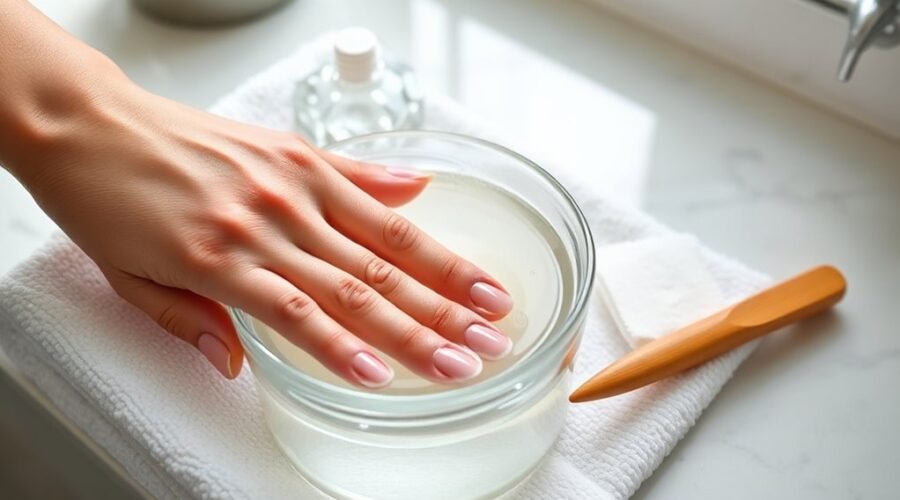
- Soak in Warm Water, Dish Soap & Cuticle Oil (15 Minutes): Combine 1 cup of warm water, 1 teaspoon of liquid dish soap, and 1 teaspoon of olive or cuticle oil in a bowl. Soak your fingertips for 15 minutes until the natural nail plate hydrates and expands slightly beneath the thinned base coat.
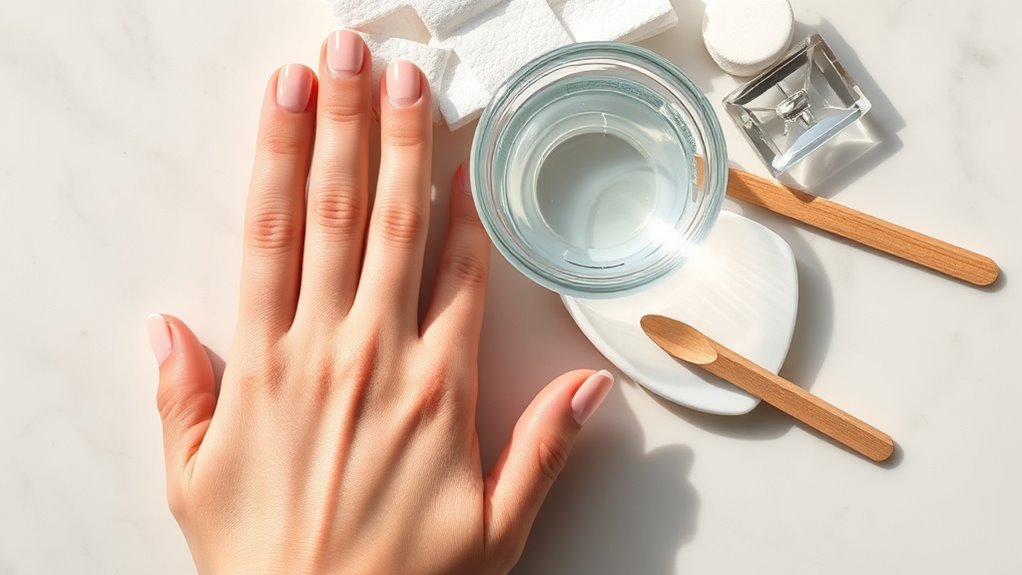
- Nudge Lifted Edges & Buff Smooth: Gently slide a wooden cuticle stick under any lifting perimeter edges, then lightly smooth the surface with a fine 240-grit sponge buffer.
Post-Removal Recovery for Dehydrated Nails
Acetone nail polish remover temporarily extracts lipids from the intercellular spaces of the nail plate, making nails feel brittle or look chalky for the first hour:
- Wash & Rehydrate Immediately: Rinse away solver residue with lukewarm water and mild soap, pat dry, and massage oil into the matrix, sidewalls, and hyponychium (follow our guide on how to apply cuticle oil properly).
- Keep Nails Short for 7 to 10 Days: Trim free edges short and round the corners in one direction with a glass file so weakened keratin layers do not catch and split.
- Never Peel or Pry Partial Gel: Pulling lifted gel sheets strips away dorsal nail corneocytes, causing white keratin granulations and paper-thin spots that take 3 to 4 months to grow out completely.
Frequently Asked Questions
Can you remove gel nails with regular non-acetone nail polish remover?
Non-acetone nail polish remover (made with ethyl acetate or propylene carbonate) cannot chemically dissolve cross-linked UV/LED gel polish on its own. If you only have non-acetone remover, you must file off 80% to 90% of the gel color layer with a 180-grit file and soak your fingertips in warm water, dish soap, and cuticle oil to loosen the remaining base coat.
Why is my bottled acetone nail polish remover taking 30 minutes to lift gel?
Most drugstore “strengthening” or “moisturizing” nail polish removers dilute acetone with water, glycerin, and oils down to 60%–70% concentration. Diluted acetone takes 20 to 30 minutes to swell cured gel polymers—twice as long as 100% pure acetone—and requires buffing off the entire shiny top coat first.
How can I remove gel nails with nail polish remover without aluminum foil?
If you do not have aluminum foil, use reusable plastic nail-soak clips to hold soaked cotton pads tightly against the nail plate, or use the double-bowl warm method: place a small glass dish of acetone remover inside a wider bowl of warm (never boiling) water and soak your buffed fingertips for 12 to 15 minutes.
Does nail polish remover dissolve hard gel or builder gel extensions?
Soft soak-off builder gels (BIAB) swell and lift in 100% acetone after 15 to 20 minutes once bulk thickness is filed down. True hard UV sculpting gel has a tighter cross-linked polymer matrix that will not dissolve in acetone or nail polish remover and must be filed down to a thin protective layer.
Why do my nails turn chalky white after soaking off gel polish?
The chalky white film on bare nails immediately after an acetone soak is temporary surface dehydration—the solvent strips superficial lipids and moisture from the upper keratin layers. Washing with mild soap and massaging jojoba-based cuticle oil into the nail plate restores normal translucency within minutes.