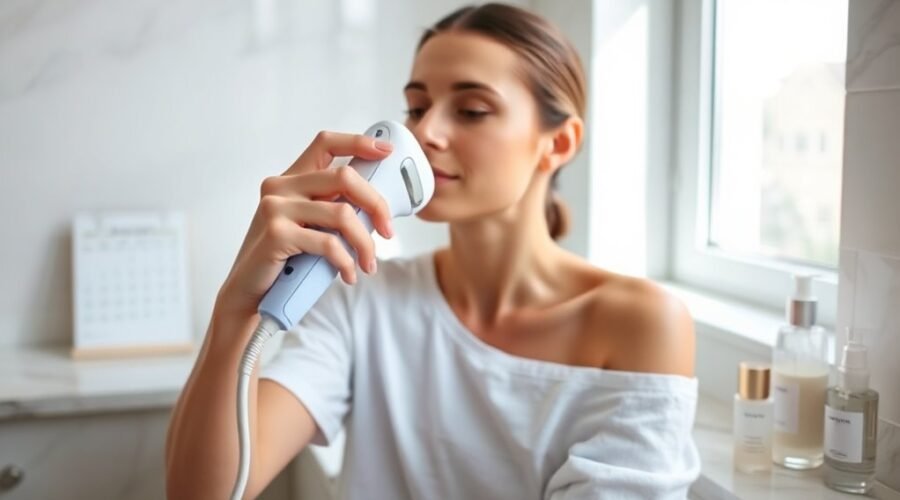
If you are wondering how often to use IPL hair removal, most at-home devices require 1 session every 1 to 2 weeks for a 4- to 12-week startup phase, followed by monthly maintenance touch-ups every 4 to 8 weeks. Never use IPL daily: hair follicles only respond during their active anagen growth phase, and over-flashing skin raises the risk of burns, blistering, and post-inflammatory hyperpigmentation (PIH).
Quick Answer
Follow your device manual for a startup phase of once per week (or once every 2 weeks) for 4 to 12 weeks until regrowth thins, then drop to maintenance flashes once every 4 to 8 weeks. Never treat the same skin daily—extra sessions will not accelerate results and can cause thermal burns or dark pigment spots.
How Often to Use IPL Hair Removal: Phase-by-Phase Schedule
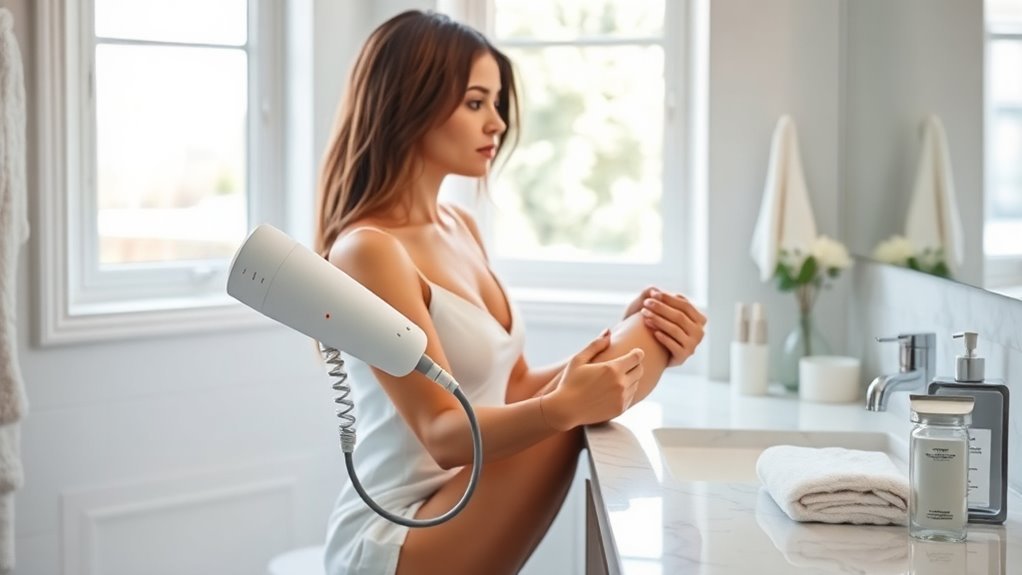
Intense Pulsed Light (IPL) delivers broad-spectrum light pulses absorbed by melanin in the hair shaft, heating the follicle root to slow future growth. Because hair grows in staggered cycles, spacing sessions across months—not days—is the only way to catch newly emerging follicles without overheating the surrounding skin.
| Treatment Phase | Typical Frequency | Duration | What to Expect |
|---|---|---|---|
| Startup Phase | Once every 1 to 2 weeks (per manual) | 4 to 12 weeks | Gradual shedding, slower stubble return, finer regrowth |
| Transition Phase | Once every 2 to 4 weeks | Weeks 12 to 20 | Patchy clearance; only stubborn zones need touch-ups |
| Maintenance Phase | Once every 4 to 8 weeks (as needed) | Ongoing | Keeps dormant follicles suppressed as new cycles awaken |
If you want to know how long these results last once you reach maintenance, read our breakdown of whether IPL hair removal is permanent and what long-term regrowth looks like.
Why the Hair Growth Cycle Dictates Your IPL Schedule
Dermatology literature on intense pulsed light therapy notes that follicles are most responsive during the anagen (active growth) phase, when the hair shaft is anchored to the dermal papilla and packed with pigment. At any given moment, only about 20% to 30% of body hairs are in the anagen phase; the rest are transitioning (catagen) or resting (telogen).
Treating every 1 to 2 weeks during the first 4 to 12 weeks catches successive waves of hairs as they cycle into anagen. Once most follicles in a zone have been disrupted, stretching sessions out to once a month (or every 6 to 8 weeks) maintains smooth skin with far less cumulative light exposure.
Why You Should Never Use IPL Daily (Burn and PIH Risks)
Flashing the same area every day will not force resting follicles to enter the anagen phase faster. Instead, repeated pulses trap excess thermal energy in the upper layers of skin before the barrier recovers.
Safety Warning: Overusing IPL or treating tanned or darker skin at excessive energy levels can cause first- or second-degree burns, blistering, swelling, and post-inflammatory hyperpigmentation (PIH)—dark patches that can take months to fade. Clinical case reports (such as second-degree burns after IPL on Fitzpatrick IV skin) highlight why conservative spacing and skin-tone screening are essential.
Stop immediately and let your skin fully recover if you notice any signs of overexposure:
- Redness or heat that lasts longer than 24 hours after a session
- Blistering, crusting, oozing, or tender swollen follicles
- New dark spots (hyperpigmentation) or pale patches (hypopigmentation)
- Stinging when applying gentle fragrance-free moisturizer or sunscreen
How Body Area, Hair Color, and Skin Tone Affect Timing
Different body regions cycle at different speeds, so your maintenance calendar will not be identical everywhere:
| Treatment Zone | Startup Cadence | Practical Considerations |
|---|---|---|
| Underarms & Bikini Line | Weekly or biweekly for 6–12 weeks | Coarse, dark hair responds well; skin is thinner and often slightly darker, so use lower intensity if sensitive |
| Lower Legs & Arms | Weekly or biweekly for 4–12 weeks | Larger surface area takes 15–30 minutes; avoid overlapping flashes |
| Upper Lip & Chin (Female) | Weekly for 6–12 weeks | Hormonal facial hair often needs ongoing monthly touch-ups; never flash near the eyes |
| Chest & Back | Weekly or biweekly for 8–12 weeks | Dense male body hair can require more sessions and a partner to avoid missed or double-flashed spots |
IPL works best when there is clear contrast between dark hair and lighter skin (typically Fitzpatrick skin types I–III, and some IV tones with skin-tone sensor devices). Very dark skin absorbs too much broad-spectrum light, while white, gray, red, and very light blonde hairs lack enough melanin to respond reliably.
Step-by-Step Pre-Session and Aftercare Checklist
- Shave 12 to 24 hours before treatment: A clean shave lets light reach the root without burning surface hair. Using a gentle single-blade technique—covered in our guide on how to use a safety razor cleanly—with a fresh razor blade helps prevent pre-session razor burn.
- Cleanse and dry completely: Remove lotions, deodorants, self-tanners, and oils before flashing.
- Patch-test first: Test 2 to 3 flashes on a small inconspicuous area and wait 24 to 48 hours to confirm no blistering or dark marks develop.
- Use single, non-overlapping passes: Stamp or glide steadily without double-flashing the same square inch of skin.
- Protect skin afterward: Apply a cool compress and bland fragrance-free moisturizer if warm, skip scrubs or retinoids for 48 hours, and wear broad-spectrum SPF 30+ on exposed areas daily.
Pros and Limitations of At-Home IPL Schedules
- Pros: Lower long-term cost than clinic laser packages, privacy at home, noticeably slower regrowth and fewer ingrown hairs after 4 to 8 weeks, and flexible monthly maintenance.
- Limitations: Requires strict consistency for 2 to 3 months, provides long-term hair reduction rather than guaranteed permanent removal, cannot safely treat tattooed or very dark skin, and does not work on light blonde, red, or gray hair.
Frequently Asked Questions
Can I use IPL hair removal every day for faster results?
No. Using IPL daily does not speed up hair reduction because only follicles in the active anagen growth phase respond to light pulses. Flashing the same area every day causes heat buildup in the epidermis and significantly raises the risk of burns, blistering, and post-inflammatory hyperpigmentation (PIH).
Should I shave before every IPL hair removal session?
Yes. Shave the treatment area 12 to 24 hours before each IPL session so the light energy travels directly down to the follicle bulb instead of singeing surface hair. Avoid waxing, plucking, or epilating between sessions, because removing the root eliminates the melanin target IPL needs.
What happens if I miss a weekly IPL session?
Simply complete your missed session as soon as you remember and resume your regular 1- to 2-week spacing from that new date. Never double up sessions or flash the same patch twice in one week to catch up, as stacking treatments irritates the skin barrier.
Who should avoid at-home IPL hair removal?
Avoid IPL over tattooed skin, dark moles, open wounds, active rashes, recently tanned skin, or very dark skin tones (Fitzpatrick V–VI) where high epidermal melanin raises burn and pigment-change risks. IPL is also generally avoided during pregnancy and while taking photosensitizing medications unless cleared by a clinician.
Does IPL work on blonde, red, gray, or white hair?
No. IPL targets dark melanin pigment inside the hair shaft and follicle, so very light blonde, red, gray, and white hairs absorb too little light energy to disable the follicle effectively. Dark brown or black hair on lighter-to-medium skin tones responds best.