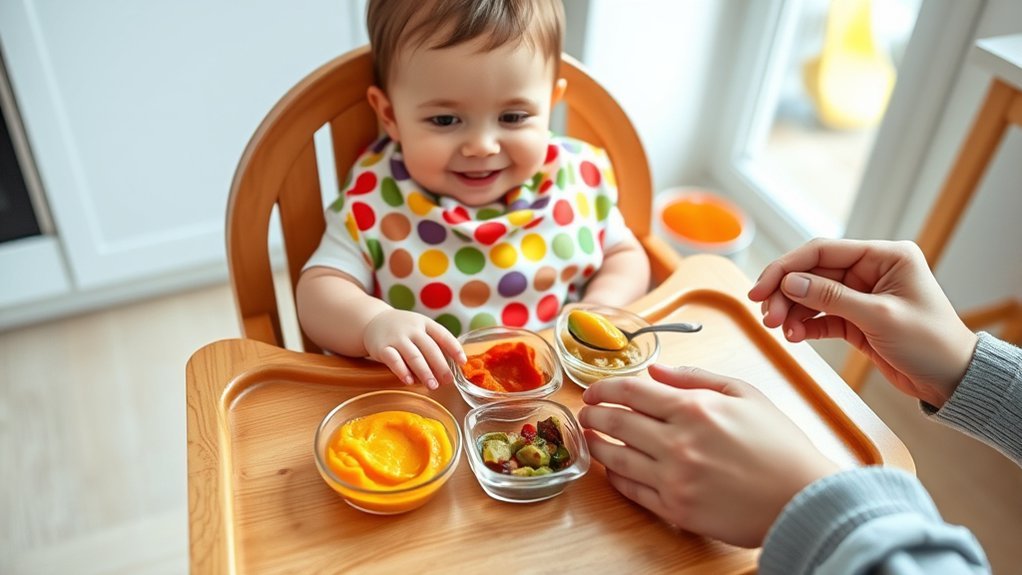
You do not have to choose between baby-led weaning and purées. A mixed approach lets your baby practice self-feeding with soft finger foods and a preloaded spoon while also eating smooth, mashed, or lumpy foods. Start when your baby is developmentally ready—usually around six months—and make food preparation, upright seating, supervision, and iron-rich choices the priorities.
Quick Answer
Combine baby-led weaning and purées by offering soft finger foods beside a purée on a preloaded baby spoon. Let your baby decide what to pick up and how much to eat. Begin around six months when readiness signs are present, include an iron-rich food often, and follow strict choking-prevention practices.
Key Takeaways
- Baby-led weaning and spoon-feeding are not mutually exclusive; a baby can self-feed both finger foods and purées.
- Start at about six months only when your baby can control their head and neck, sit upright with support, reach for food, and swallow it.
- Offer a soft finger food, a preloaded spoon, and an iron-rich food without pressuring your baby to finish.
- Neither purées nor finger foods eliminate choking risk. Food preparation, upright seating, constant supervision, and avoiding choking hazards are essential.
- Introduce allergens in baby-safe forms and ask a clinician about peanut introduction if your baby has severe eczema or an egg allergy.
- Continue breast milk or infant formula throughout the first year while complementary foods gradually become a larger part of the diet.
At a Glance
| Time Required | A few minutes of food preparation plus an unhurried, fully supervised mealtime |
| Difficulty | Beginner, with careful attention to developmental readiness and choking prevention |
| Tools Needed | Supportive high chair with harness, shallow bowl, baby-safe spoon, fork or masher, and an open or straw cup |
| Cost | Usually low; appropriately modified family foods can be used instead of special baby meals |
Note: This guide provides general feeding information, not individualized medical advice. Speak with your child’s pediatric clinician before starting solids if your baby was born prematurely, has poor growth, severe eczema, an egg allergy, low muscle tone, developmental differences, or difficulty chewing or swallowing.
Understanding Baby-Led Weaning and Purées

Baby-led weaning, often shortened to BLW, generally means allowing a baby to pick up appropriately prepared foods and feed themselves. Traditional complementary feeding often begins with an adult offering puréed or mashed food on a spoon.
These methods can work together. Your baby can pick up a soft strip of food, grasp a preloaded spoon, dip a finger food into a purée, or accept occasional responsive spoon-feeding. Using a spoon does not prevent a baby from learning to self-feed.
The possible benefits of self-feeding include practice with grasping, hand-eye coordination, textures, and family meals. However, research on the long-term advantages of strict baby-led weaning is limited. The American Academy of Pediatrics advises families that purées can be nutritious and that the baby-led approach can be adjusted to suit the child and family.
A flexible feeding method is not a failure at baby-led weaning. The goal is responsive, safe feeding—not following a rigid label.
Check for Readiness Before Starting
Most babies begin complementary foods at about six months, but the calendar is only one part of the decision. According to the CDC’s infant-feeding readiness guidance, look for several signs together:
- Your baby can sit upright alone or with support and maintain a stable position.
- Your baby has steady head and neck control.
- Your baby opens their mouth when food approaches.
- Your baby swallows food instead of consistently pushing it out with the tongue.
- Your baby reaches for objects or food and brings objects to the mouth.
- Your baby shows interest in eating and can participate in a calm, seated meal.
Do not begin complementary foods before four months unless your child’s medical professional has given specific guidance. A premature baby’s readiness may need to be considered using corrected age and individual development.
Safety Rules for Purées and Finger Foods
Choking can occur with either spoon-feeding or self-feeding. Purées do not cancel the risk, and finger foods are not automatically dangerous when they are prepared correctly. Follow the same safety rules at every meal.
Warning: Seat your baby upright in a stable high chair and secure the harness. Watch continuously while your baby eats. Do not offer food while the baby is lying down, crawling, walking, riding in a stroller, or traveling in a moving vehicle. Choking may be quiet; seek emergency help immediately if your baby cannot breathe, cry, or make sound.
Use the Softness Test
Cook or select foods that are soft enough to mash easily between your thumb and forefinger or with a fork. Remove bones, pits, tough skin, gristle, and hard seeds. The CDC recommends preparing food in a shape, size, and texture suited to the child’s development.
Early finger foods are often easier to grasp when they are soft and long enough for part of the food to extend beyond the baby’s fist. As the pincer grasp develops, babies can practice with smaller soft pieces. Avoid round or coin-shaped pieces that can seal the airway.
Avoid Common Choking Hazards
The CDC choking-hazard list includes foods that are hard, sticky, round, tough, or difficult to break down. Do not offer:
- Whole grapes, cherries, berries, or cherry tomatoes
- Raw apple, raw carrot, or other hard fruit and vegetable chunks
- Whole or chopped nuts and seeds
- Thick spoonfuls or chunks of nut or seed butter
- Popcorn, chips, hard pretzels, or hard candy
- Whole beans that remain firm
- Sausage or hot dog rounds
- Large chunks of meat or cheese
- Fish or meat containing bones
- Sticky globs of food that are difficult to clear from the mouth
Understand Gagging and Choking
Gagging is a protective reflex that may happen as a baby learns to manage a new texture. A gagging baby may cough, make noise, push the tongue forward, or spit food out. Choking means the airway is partly or fully blocked and requires an immediate response.
Ask your pediatric clinician about infant choking first aid, and consider completing an infant CPR and first-aid course before complementary feeding begins. Do not rely on social-media videos as a substitute for qualified training.
How to Introduce Purées Alongside Finger Foods
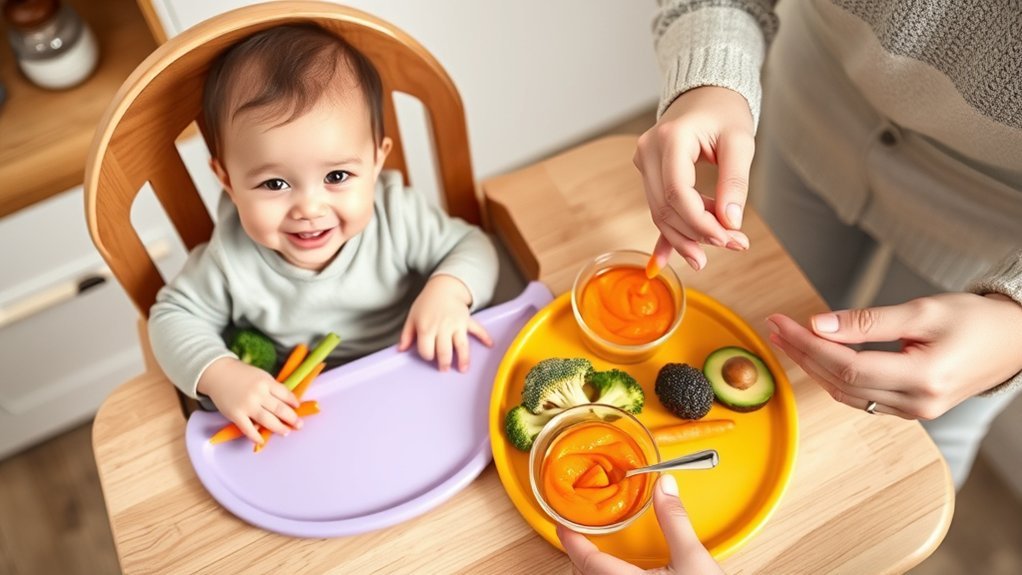
- Choose a calm time. Seat your baby upright when they are alert and not extremely hungry, tired, or upset.
- Start with a small amount. Place one or two soft finger foods on the tray and add a small serving of purée or mash.
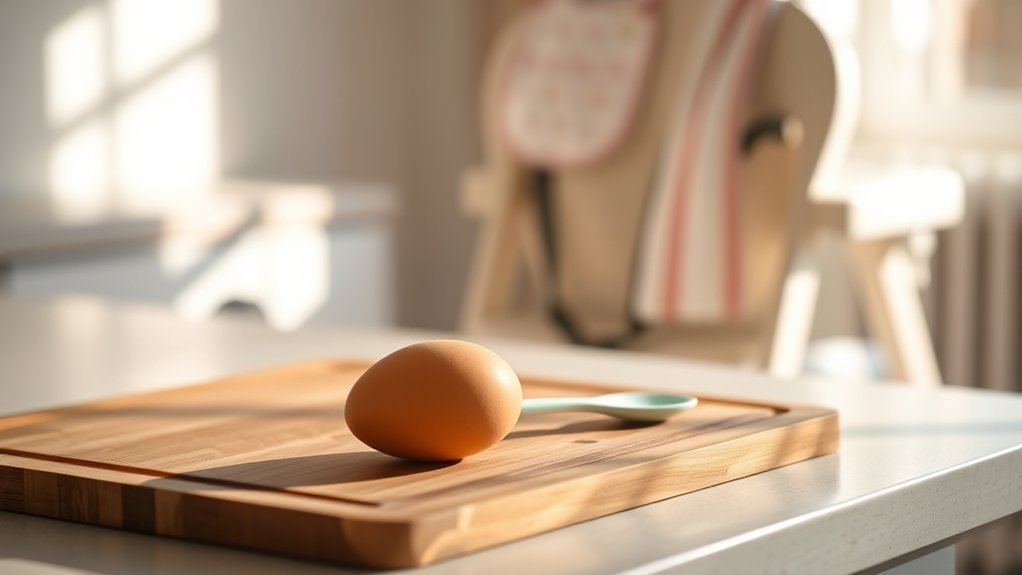
- Load the spoon for your baby. Dip a short, baby-safe spoon into a thick purée and place it on the tray with the handle facing your baby.
- Let your baby bring the spoon to their mouth. Reload it as needed. Avoid scraping food into the mouth or forcing another bite.
- Offer finger foods beside the spoon. Your baby may alternate between grasping food, touching the purée, licking the spoon, and eating.
- Progress gradually. Move from smooth purées to thicker mashed foods and soft lumps as your baby develops the ability to manage them.
- Stop when your baby signals fullness. The amount eaten may be small during early meals. Exploration is part of learning.
The Preloaded Spoon Technique
The preloaded spoon technique allows a baby to self-feed foods that cannot be safely picked up, such as yogurt, iron-fortified cereal, hummus, mashed beans, or vegetable purée. Use a thick consistency that stays on the spoon instead of a very thin liquid that immediately runs off.
You can model bringing a spoon to your mouth, but allow your baby to control their own spoon. Keeping a second spoon available can reduce frustration: while your baby holds one, you can prepare the other.
Pro Tip: Use purées as dips instead of treating them as a separate feeding stage. Try unsweetened yogurt with a soft pear slice, mashed beans with a soft toast strip, or vegetable purée with a soft broccoli floret.
Top First Foods for Baby-Led Weaning
There is no required order for first foods, but nutrient-dense options are more useful than foods that provide little iron, protein, or energy. Include iron-rich foods regularly because an infant’s iron needs become increasingly important during the second half of the first year.
A practical mixed meal includes an iron-rich food, an energy-rich food, and a soft fruit or vegetable.
| Food Group | Purée or Preloaded Spoon | Soft Finger-Food Option |
|---|---|---|
| Iron-rich food | Iron-fortified oat cereal, smooth meat purée, mashed lentils, or mashed beans | Tender shredded meat, soft lentil patty, omelet strip, or soft tofu strip |
| Energy-rich food | Mashed avocado, full-fat unsweetened yogurt, or smooth nut butter thinned into cereal | Soft avocado wedge or toast with a very thin layer of smooth nut butter |
| Fruit or vegetable | Mashed pear, peach, peas, squash, sweet potato, or broccoli | Soft cooked vegetable spear or ripe fruit slice without pits or hard skin |
| Grain or starch | Thick oatmeal, mashed potato, soft polenta, or mashed rice and beans | Soft toast strip, tender pasta, potato wedge, or soft pancake strip without added sugar or honey |
Fish, eggs, pasteurized cheese, and pasteurized unsweetened yogurt can provide protein and other nutrients. Choose lower-mercury fish, remove every bone, cook eggs fully, and be mindful that some cheeses and processed family foods contain a large amount of sodium.
Building Nutritionally Balanced Meals for Babies
You do not need to create a perfectly balanced plate at every sitting. Look at the pattern across several meals and days. A simple meal-building formula is:
- Add an iron-rich food. Examples include meat, poultry, fish, eggs, beans, lentils, tofu, and iron-fortified infant cereal.
- Add energy and healthy fat. Try avocado, olive oil mixed into vegetables, full-fat unsweetened yogurt, or safely prepared smooth nut or seed butter.
- Add color and texture. Include a soft fruit, cooked vegetable, or whole-grain food in a texture your baby can manage.
Breast milk or iron-fortified infant formula should continue throughout the first year while solid foods gradually increase. Early complementary meals are opportunities to learn, not a reason to abruptly replace milk feeds.
Sample Mixed-Feeding Meals
- Breakfast: Iron-fortified oat cereal on a preloaded spoon with a soft ripe pear slice.
- Lunch: Mashed lentils and sweet potato as a dip with a soft broccoli floret.
- Dinner: Fully cooked omelet strips with mashed avocado and a soft toast strip.
- Another option: Tender shredded chicken with vegetable purée and a soft potato wedge.
Serve a small amount of water in an open or straw cup with meals once complementary feeding begins. Water is for practice and hydration alongside meals; it should not replace breast milk or infant formula.
Introducing Allergenic Foods Safely
Potential allergens can be introduced when your baby is ready for complementary foods, using a texture that is safe for their development. Examples include fully cooked egg, smooth peanut butter thinned with warm water or mixed into cereal, pasteurized yogurt, wheat cereal, well-cooked fish without bones, and smooth sesame paste thinned into another food.
- Introduce one new major allergen at a time so a reaction is easier to identify.
- Offer a small amount when your baby is healthy and you can observe them.
- Never give whole nuts, nut pieces, or a thick spoonful of nut butter.
- After an allergen is tolerated, continue including it in your baby’s normal diet rather than offering it only once.
- Stop feeding and seek medical advice if you suspect an allergic reaction. Seek emergency help for a severe reaction.
The NIAID peanut-allergy guidance recommends speaking with a medical professional before peanut introduction when a baby has severe eczema, an egg allergy, or both. Some high-risk babies may be advised to begin age-appropriate peanut-containing food between four and six months under a clinician’s plan.
Cow’s-Milk Foods Versus Cow’s Milk as a Drink
Pasteurized, unsweetened yogurt and suitable pasteurized cheese can be introduced with other complementary foods. However, cow’s milk should not replace breast milk or infant formula as the main drink before 12 months. The CDC distinguishes dairy foods from cow’s milk as a beverage.
How to Read Your Baby’s Cues
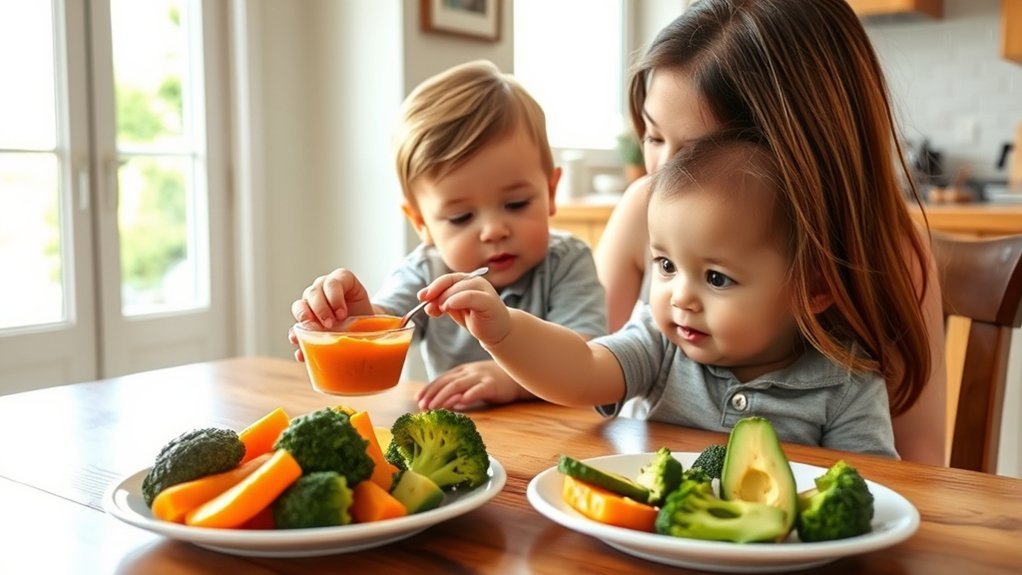
Responsive feeding means the caregiver decides what safe foods to offer and when to offer them, while the baby decides whether to eat and how much. Some meals will involve more eating; others will involve touching, smelling, licking, dropping, or refusing food.
Recognizing Hunger Signals
Your baby may be ready to continue eating when they:
- Lean toward the food or spoon
- Reach for food
- Open their mouth when food is offered
- Become alert or excited when food appears
- Make sounds or gestures asking for more
Identifying Fullness Indicators
Your baby may be finished when they:
- Close their mouth when food is offered
- Turn their head or body away
- Push food or the spoon away
- Slow down and lose interest in eating
- Focus on playing rather than bringing food to the mouth
Do not distract, bribe, pressure, or repeatedly place food into a closed mouth. End the meal calmly and offer food again at the next planned eating opportunity.
Handling Common BLW and Purée Challenges
Progress is rarely a straight line. A baby may enjoy a lumpy texture one day and prefer a familiar purée the next.
Your Baby Refuses a New Texture
Offer a small amount of the new texture beside a familiar food without hiding it or forcing a taste. A baby may need repeated, low-pressure exposure before accepting a food. Move gradually from smooth purée to thicker purée, mashed food, soft lumps, and finger foods according to your baby’s skills.
Your Baby Eats Very Little
Small intake is common during early meals because much of the experience involves learning. Continue breast milk or infant formula and prioritize nutrient-dense foods, especially iron-rich options. Speak with your child’s clinician if you are concerned about growth, hydration, persistent feeding refusal, or very limited food intake.
Your Baby Gags Often
Occasional gagging can occur while a baby learns new textures. Review whether the food is soft enough and suited to the baby’s developmental ability. Contact a pediatric clinician or feeding specialist if gagging is severe, happens at nearly every meal, causes distress, or is accompanied by coughing during feeds, a wet-sounding voice or cry, breathing changes, recurrent chest infections, or poor growth.
Meals Are Very Messy
Mess is part of self-feeding. Use a washable mat, offer small portions, and add more food as needed. Keep two spoons available and use a shallow bowl that helps your baby scoop. Avoid wiping the baby’s face after every bite, which can interrupt exploration and create frustration.
How to Adapt Family Meals for a Baby
Family foods can reduce extra preparation, but modify the baby’s portion before adding honey, excess salt, hot spices, hard toppings, or choking hazards. Examples include:
- Remove a portion of cooked vegetables before heavily salting the family dish.
- Shred tender meat and check carefully for bones, skin, and gristle.
- Mash beans or serve them in a soft patty rather than offering firm whole beans.
- Spread vegetable purée, avocado, hummus, or a very thin layer of smooth nut butter on soft toast strips.
- Serve thick soup ingredients as a mash while keeping thin broth portions small.
- Cut soft family foods into shapes your baby can safely grasp and manage.
A combination of purées and finger foods at the same meal can make this transition easier. Your baby can experience the family’s flavors without being expected to manage adult textures or seasoning.
Foods and Drinks to Avoid or Limit
The CDC’s foods and drinks guidance recommends the following precautions:
- No honey before 12 months, including honey baked or mixed into food, because of infant botulism risk.
- No cow’s milk as the main drink before 12 months.
- No unpasteurized milk, cheese, yogurt, or juice.
- Avoid added sugars during infancy and early childhood.
- Limit high-sodium foods, including processed meats and heavily salted packaged foods.
- Avoid high-mercury fish and choose lower-mercury varieties instead.
- Do not offer juice before 12 months. Whole fruit is the better choice.
Storing and Reheating Purées Safely
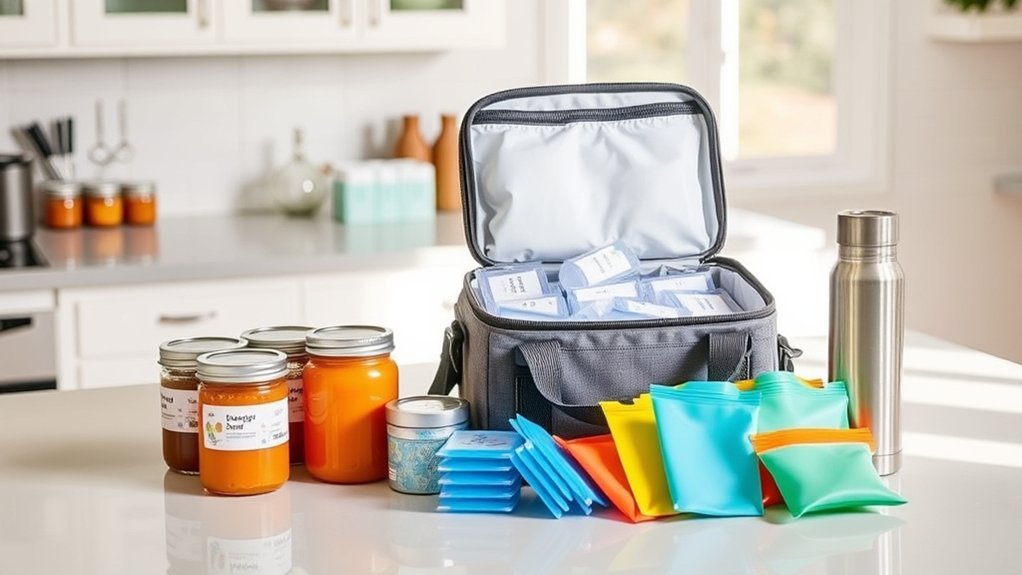
- Start clean. Wash your hands, preparation surfaces, utensils, and storage containers.
- Cool and refrigerate promptly. Do not leave perishable food at room temperature for more than two hours, or more than one hour in temperatures above 90°F.
- Use short storage times. The FoodSafety.gov baby-food chart lists one to two days in the refrigerator and one to two months in the freezer for homemade baby food.
- Freeze small portions. Use a clean covered tray or freezer-safe container, then label it with the food and date.
- Thaw safely. Thaw in the refrigerator, in cold water, or in the microwave—not on the counter.
- Reheat only the needed portion. Stir heated food thoroughly, allow it to stand, and check the temperature in several places before serving.
- Prevent saliva contamination. Transfer a serving to a separate bowl. Do not return food touched by the baby’s used spoon or mouth to the storage container.
- Discard serving-bowl leftovers. The FDA advises discarding food left in the baby’s serving dish because saliva can introduce bacteria.
Warning: Microwaves can create hot spots. Stir purées thoroughly, let them stand after heating, and test the temperature before feeding. Never assume that the outside of a container reflects the temperature of the food inside.
Sources
- CDC: When, What, and How to Introduce Solid Foods — readiness, first foods, allergen timing, textures, and food preparation
- CDC: Choking Hazards — seating, supervision, preparation, and hazardous foods
- CDC: Foods and Drinks to Avoid or Limit — honey, cow’s milk, juice, sodium, sugar, mercury, and unpasteurized foods
- American Academy of Pediatrics: Baby-Led Weaning—Is It Safe? — benefits, limitations, flexibility, iron, and safety considerations
- NIAID Peanut-Allergy Prevention Guidelines — early peanut introduction and high-risk infants
- FoodSafety.gov: Safe Storage of Puréed and Solid Baby Food — refrigerator and freezer storage limits
Frequently Asked Questions
Can I mix purées with finger foods for my baby?
Yes. Offer a purée on a preloaded spoon beside one or two soft finger foods. Your baby can choose whether to use the spoon, pick up food, dip the finger food, or alternate between them. Keep the meal responsive and do not pressure your baby to finish.
When should I start introducing purées and finger foods?
Most babies are ready at about six months. Look for steady head control, upright supported sitting, interest in food, reaching and bringing objects to the mouth, and the ability to swallow food rather than consistently pushing it out. Ask a clinician for individual guidance if your baby was premature or has developmental or feeding concerns.
Does offering purées reduce the risk of choking?
Not by itself. Choking can occur with purées, lumpy foods, or finger foods. Reduce risk by preparing the correct texture and shape, seating your baby upright, watching continuously, avoiding known choking hazards, and learning infant choking first aid.
Does my baby need teeth to eat finger foods?
No. Babies can manage many very soft foods with their gums. The food should mash easily between your fingers or with a fork. Avoid hard, round, sticky, or tough foods, regardless of whether teeth have appeared.
How do I store leftover purées safely?
Store homemade baby food in a clean covered container for one to two days in the refrigerator or one to two months in the freezer. Place only the amount needed in the baby’s bowl and discard food that has contacted the used spoon or the baby’s mouth.
What if my baby refuses purées?
Try a thicker mash, a preloaded spoon, or a purée used as a dip. Continue offering varied textures without pressure. Refusal at one meal does not mean the food must be removed permanently. Ask for professional help if refusal is persistent or affects growth or hydration.
Are there allergy concerns with combined feeding methods?
The feeding method does not remove allergy risk. Introduce allergens in safe forms, one new major allergen at a time, and observe your baby. Ask a clinician before introducing peanut if your baby has severe eczema, an egg allergy, or both.
Can my baby drink cow’s milk with these meals?
Cow’s milk should not replace breast milk or infant formula as the main drink before 12 months. Pasteurized unsweetened yogurt and suitable pasteurized cheese can be introduced as foods when your baby begins complementary feeding.
Conclusion
Combining baby-led weaning and purées can provide flexibility without sacrificing self-feeding practice. Begin when your baby shows developmental readiness, offer iron-rich and energy-rich foods in safe textures, use a preloaded spoon, and follow hunger and fullness cues. The feeding label matters less than upright seating, active supervision, choking-safe preparation, responsive care, and steady progress toward varied family foods.