

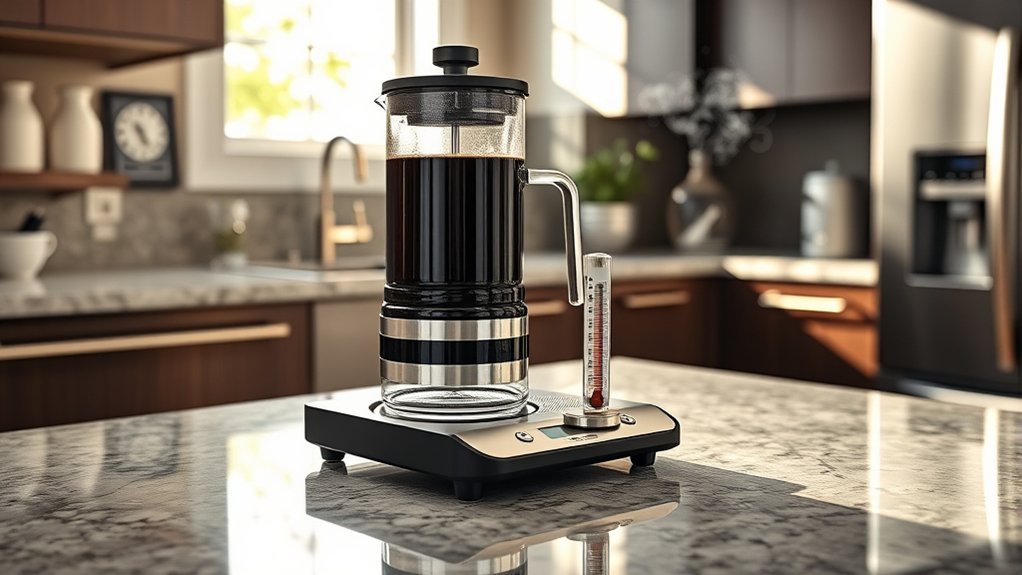
Keeping coffee warm without making it taste harsh is mostly a matter of reducing heat loss rather than continually adding more heat. A clean, preheated vacuum-insulated thermal carafe is usually the best option. It holds the brewed coffee away from a hot plate while helping preserve its aroma, temperature, and original concentration.
Quick Answer
Preheat a clean thermal carafe with hot water, empty it, and transfer the coffee as soon as brewing finishes. Close the lid promptly and pour only what you need. Avoid placing a thermal carafe on a hot plate unless its manufacturer specifically approves direct heating.
Key Takeaways
- Use a vacuum-insulated thermal carafe instead of continuously heating brewed coffee on a hot plate.
- Preheat the carafe with hot water so its cool interior does not immediately pull heat from the coffee.
- For drip and pour-over coffee, extraction ends when the liquid separates from the grounds; prolonged holding causes aroma loss and other flavor changes, not further extraction.
- Decant French press coffee after plunging because the brewed liquid remains in the same vessel as the grounds.
- Reheat only the amount you will drink, using short microwave intervals or another gentle, manufacturer-approved method.
At a Glance
| Time Required | About 2–5 minutes of preparation |
| Difficulty | Easy |
| Tools Needed | Thermal carafe, hot water, coffee brewer, and an optional beverage thermometer |
| Cost | No added cost if you already own a thermal carafe; otherwise, the cost of the carafe |
Why Proper Coffee Temperature Matters
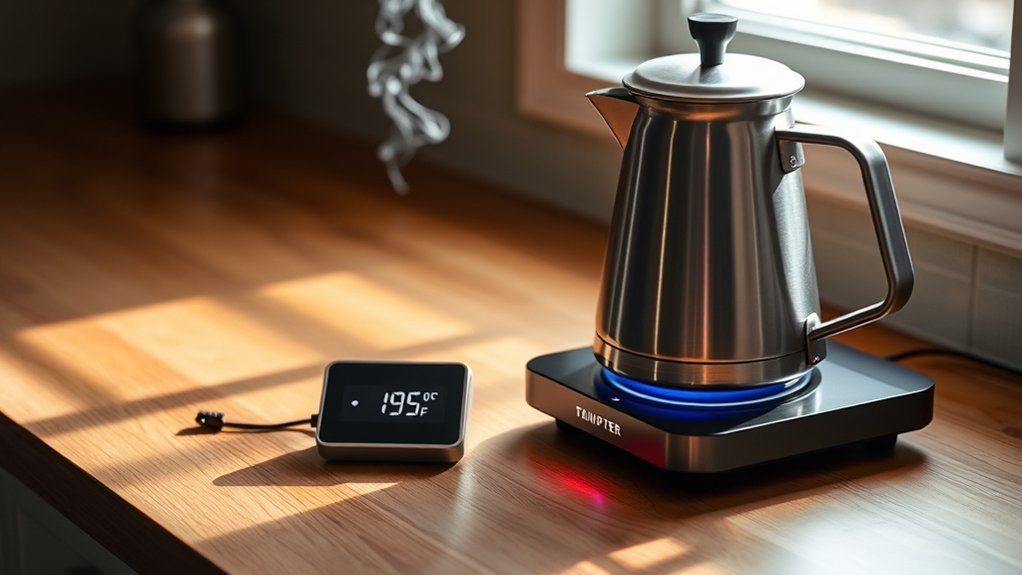
Brewing temperature, holding temperature, and drinking temperature are not the same thing. Water near 195–205°F is a common target for hot coffee brewing, although the correct setting depends on the brewer, roast, grind, and recipe. The Specialty Coffee Association’s standards program covers brewing performance and equipment consistency.
Once coffee reaches your cup, it normally needs to cool. A 2022 consumer study led by UC Davis researchers found that acceptance was highest across approximately 58–66°C, or 136–151°F. That does not mean every person should drink coffee at the upper end of that range.
Warning: Coffee hot enough to brew is too hot to drink immediately. The International Agency for Research on Cancer defines beverages consumed above 65°C or 149°F as “very hot.” Let coffee cool to a comfortable temperature and test it carefully before taking a full sip.
If brewed coffee remains on a hot plate, heat can drive off volatile aroma compounds and evaporate water. Its acidity and other sensory properties may also change over time. That process is different from over-extraction because filtered coffee is no longer touching the grounds.
The goal is not to keep coffee at its original brewing temperature. It is to slow cooling without continually cooking the finished drink.
Power your essentials anywhere with a 999Wh pure sine wave power station delivering up to 1000W continuous with 2000W surge. It supports fast charging via USB-C PD 60W and USB-A QC 18W, plus simultaneous output for multiple devices through AC, USB, wireless, and car/DC ports. Recharge using AC, car, or solar with a built-in MPPT controller and dual cooling fans, while the upgraded battery management system protects against surges, short circuits, and overheating.

68 OZ Thermal Coffee Carafe: You will receive 2 pcs stainless steel coffee carafes and 2 pcs cleaning brushes, providing convenience for your daily use and cleaning needs, and bringing a pleasant experience.

EASY TO CLEAN COFFEE CARAFE INSULATED » Our big carafe for hot drinks, including coffee, tea, hot chocolate or milk carafe, is designed with a large mouth opening to make filling and cleaning a breeze. It’s even an ideal hot cocoa dispenser for parties. Simply wipe the water dispensers inside with a sponge. The easy-detachable lid is leak proof and always locks into place when closing your coffee pitcher!
Common Myths About Keeping Coffee Hot
Several common beliefs confuse extraction, heat retention, reheating, and flavor loss. Correcting those distinctions makes it easier to choose a method that suits your brewer.
- Myth: Any hot plate causes over-extraction. Once drip or pour-over coffee leaves the grounds, extraction has stopped. A hot plate can still change the finished coffee through prolonged heat, evaporation, and aroma loss.
- Myth: Microwaving always burns coffee. A microwave can heat unevenly, but short intervals and stirring reduce that problem. The more important risks are an overheated container, splashing, and superheated liquid.
- Myth: Pressing a French press completely stops extraction. The plunger pushes the grounds down but usually leaves them in the same vessel. Decanting the coffee separates the liquid more completely.
- Myth: Hotter always tastes better. Very high drinking temperatures can mask flavors, cause discomfort, and create a burn risk.
- Myth: Every thermal carafe is safe on a warming plate. A carafe designed to retain heat is not automatically designed to receive direct heat.
For most households, passive insulation is more dependable than continuous heating. It requires less monitoring and avoids exposing the entire batch to additional heat every minute it is held.
Top Strategies to Keep Coffee Warm in a Carafe
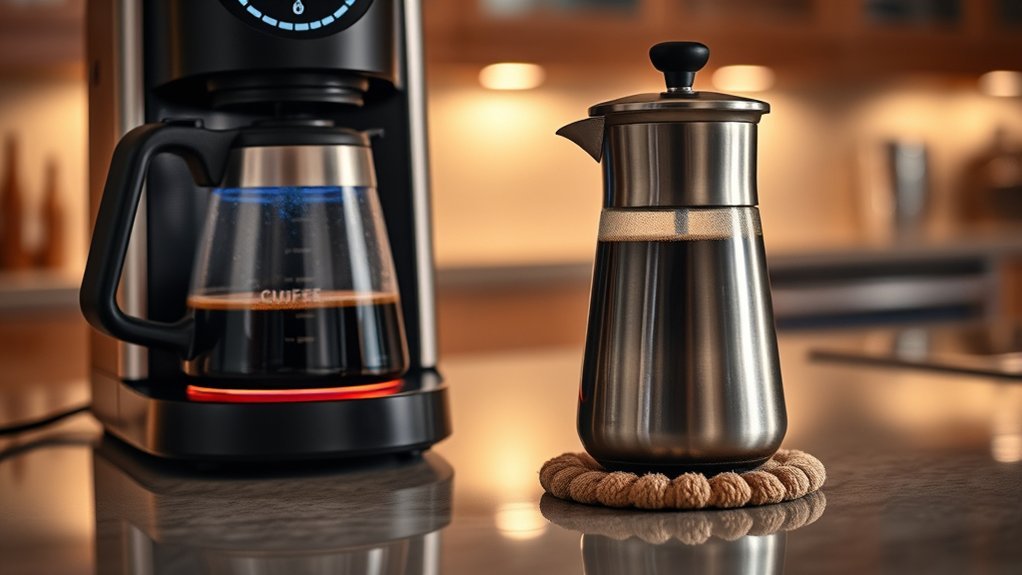
The most effective routine combines a preheated vessel, prompt transfer, a closed lid, and sensible batch size. Each step reduces heat loss without adding unnecessary direct heat.
Advantages of an Insulated Carafe
A vacuum-insulated carafe uses two walls with a low-pressure space between them to reduce heat transfer. Unlike a glass pot on a warming plate, it does not need a powered heating element to maintain warmth.
- Heat retention: Insulation slows heat loss from the sides and base.
- Flavor protection: The coffee is not held against a continuously heated glass surface.
- Portability: You can move the carafe to a table, desk, meeting room, or outdoor serving area.
- Controlled pouring: A well-designed lid reduces the amount of time the vessel remains fully open.
- Durability: Stainless steel models are generally less vulnerable to impact than glass-lined vessels.
Carafe performance varies by capacity, lid design, insulation quality, starting temperature, and how frequently the lid is opened. Avoid relying on an advertised holding time as a guarantee under every condition.
Preheat the Carafe
A room-temperature carafe absorbs heat from freshly brewed coffee. Preheating reduces that initial temperature drop.
- Fill the clean carafe with hot tap water or hot kettle water.
- Close the lid and let the water warm the interior for one or two minutes.
- Empty the carafe completely.
- Transfer the coffee while the interior is still warm.
- Close the lid as soon as the transfer is complete.
Pro Tip: Brew only the amount you expect to serve. A nearly full carafe generally loses heat more slowly than the same vessel holding a small amount, but never fill past the manufacturer’s maximum line.
Use Gentle Heating Methods When Needed
If the coffee has cooled below your preferred temperature, reheat a single serving rather than reheating the full carafe repeatedly.
- Microwave: Transfer one serving to a microwave-safe mug. Heat it in short intervals, stir, and handle it carefully.
- Stovetop: Warm a small amount in a suitable saucepan over low heat. Remove it before it simmers.
- Manufacturer-approved warming plate: Use only with a vessel specifically rated for that heat source.
- Insulated wrap: A fitted cover can slow cooling on a non-heated carafe. Keep fabric away from burners, hot plates, flames, and vents.
The USDA recommends stirring liquids during microwave heating and using a suitable vessel. Do not microwave a metal carafe, a sealed container, or a mug that is not labeled microwave-safe.
How to Keep Coffee Warm Without Burning It
- Clean the carafe. Old coffee oils can make a fresh batch taste stale even when its temperature is correct.
- Preheat the vessel. Add hot water, wait one or two minutes, and empty it.
- Complete the brew normally. Follow the brewer’s water, grind, dose, and cleaning instructions.
- Separate the coffee from the grounds. Let a drip cycle finish fully. For French press coffee, pour the finished brew into a separate carafe after plunging.
- Transfer immediately. Do not leave the batch sitting in an open brewer while preparing cups or food.
- Close the lid. Keep the lid shut between pours to reduce heat and aroma loss.
- Pour only what you need. Avoid leaving a full mug exposed while you are occupied elsewhere.
- Reheat individual servings if necessary. Use short, controlled heating rather than repeatedly warming the full batch.
Comparing Coffee-Warming Methods
| Method | Best Use | Main Advantage | Main Limitation |
| Vacuum-insulated carafe | Holding a batch for later servings | Retains heat without continuous heating | Performance depends on the lid, capacity, and insulation |
| Glass carafe on hot plate | Short holding periods in a compatible coffee maker | Keeps the pot visibly warm and ready to pour | Continued heat can change flavor and concentrate the remaining coffee |
| Insulated mug | One person or one serving | Reduces repeated opening of the main carafe | Does not hold a full batch |
| Microwave reheating | A cooled individual serving | Fast and convenient | Requires stirring and careful handling to manage uneven heating |
How Insulated Carafes Keep Your Coffee Hot
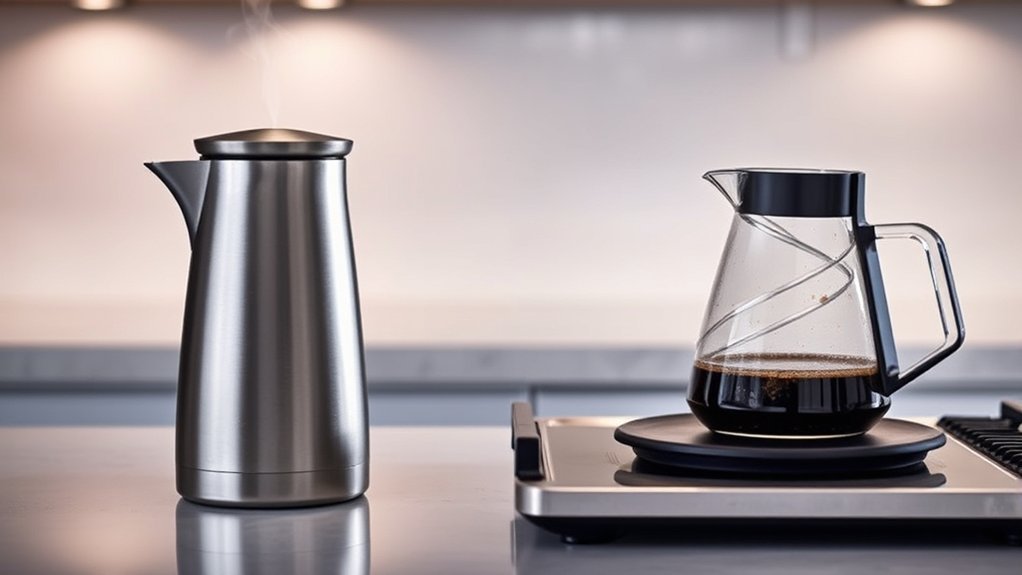
Insulated carafes slow conduction, convection, and radiant heat loss. Double-wall vacuum construction is especially effective because the space between the walls contains very little material through which heat can travel.
A fitted lid also matters. Every time the lid is removed, hot air and aromatic compounds escape. A lid that closes securely and pours without being fully removed can improve practical heat retention.
Improve Heat Retention
- Preheat the interior before adding coffee.
- Match the carafe capacity to the amount you normally brew.
- Close the lid promptly after filling and pouring.
- Keep the carafe away from cold windows, air-conditioning vents, and cold countertops.
- Pour into a preheated or insulated mug.
- Check the lid gasket for residue, damage, or poor seating.
Do not sacrifice safe handling to keep every last degree of heat. Leave enough room to close the lid without forcing it, and wipe drips from the exterior before carrying the carafe.
Prevent Flavor Degradation and Continued Extraction
The correct prevention method depends on how the coffee was brewed.
- Drip or pour-over: Once the liquid has passed through the filter and separated from the grounds, additional extraction has stopped. Transfer the coffee to protect it from prolonged direct heat.
- French press: The grounds remain inside the press after plunging. Pour the finished coffee into a separate thermal carafe to reduce further contact.
- Other immersion brewers: Remove the filter basket, grounds, or brew chamber according to the manufacturer’s instructions before holding the drink.
A 2023 study of post-brew holding time and carafe type evaluated coffee held for up to three hours. More sensory attributes decreased than increased over time, suggesting that loss of volatile aroma compounds is an important part of perceived staling. However, the professional panel did not universally prefer the shorter-held sample, showing that acceptable holding time is partly subjective.
Avoiding Over-Extraction While Keeping Coffee Warm
Over-extraction happens during brewing when water removes more soluble material from the grounds than intended. It may result from a grind that is too fine, excessive contact time, too much agitation, or an unsuitable recipe.
Keeping already-filtered coffee warm does not restart that brewing process. Use these terms accurately:
- Continued extraction: Coffee remains in contact with grounds, as it can in a French press.
- Heat-related flavor change: Brewed coffee remains on a hot surface after the grounds are gone.
- Oxidation and aroma loss: Brewed coffee remains exposed to air or sits for an extended time.
- Concentration: Water evaporates while dissolved coffee solids remain.
For a French press, plunge at the end of the intended brew time and decant the full batch. For a drip machine, allow the basket to finish draining before removing the carafe so coffee does not drip onto the warming plate.
How to Choose a Thermal Carafe
Look beyond capacity and appearance. The following details have a direct effect on everyday performance:
- Vacuum insulation: Generally retains heat more effectively than a basic single-wall vessel.
- Lid design: Choose a lid that closes securely, disassembles for cleaning, and pours without excessive dripping.
- Capacity: Select a size close to the amount you usually brew.
- Interior material: Stainless steel is durable; glass-lined designs may resist some retained flavors but require more careful handling.
- Opening size: A wide opening is easier to clean but may release more heat while open.
- Handle and balance: A full carafe should feel stable and controllable when poured.
- Compatibility: Confirm that the carafe fits beneath your brewer and follow all heat-source restrictions.
Recommended Accessories for Maintaining Coffee Temperature
A few simple accessories can improve heat retention and make the carafe easier to maintain.
- Insulated mug with lid: Keeps an individual serving warm without repeatedly opening the main carafe.
- Beverage thermometer: Helps you compare holding methods and avoid drinking coffee while it is uncomfortably hot.
- Soft bottle or carafe brush: Reaches the lower walls without scratching the interior.
- Small cleaning brush: Removes residue from lid channels, valves, and gaskets.
- Replacement gasket: Restores the seal if the manufacturer sells a compatible part.
Note: Coffee containing milk, cream, or another perishable creamer needs additional food-safety care. Do not leave a dairy-containing drink at room temperature for more than two hours, or one hour when the surrounding temperature is above 90°F. Refrigerate it promptly if you plan to keep it.
Clean the Carafe to Prevent Stale Flavor
A carafe can hold the correct temperature and still produce disappointing coffee if old oils remain inside it. The National Coffee Association’s drip-coffee guidance recommends cleaning the pot or carafe after each use.
- Empty the carafe soon after use.
- Rinse it with warm water.
- Wash removable lids and gaskets according to the manufacturer’s directions.
- Use a soft brush and suitable dish detergent when permitted.
- Rinse thoroughly so no detergent odor remains.
- Allow the carafe and lid to dry completely before reassembly.
Do not use abrasive pads, chlorine bleach, dishwasher cycles, or harsh cleaners unless the manufacturer specifically allows them. Some finishes, seals, glass liners, and vacuum lids require special care.
Troubleshooting Coffee That Will Not Stay Warm
Coffee Cools Too Quickly
- Preheat both the carafe and serving mug.
- Check whether the lid is fully closed.
- Inspect the gasket for damage or residue.
- Use a carafe closer to the batch size you brew.
- Move the vessel away from drafts and cold surfaces.
Coffee Stays Hot but Tastes Stale
- Clean the carafe, lid, valve, and gasket more thoroughly.
- Reduce the holding time.
- Keep the lid closed between pours.
- Do not mix a fresh batch with old coffee.
- Check the brewer and filter basket for old coffee oils.
The First Cup Is Hot but Later Cups Are Lukewarm
- Preheat the vessel longer.
- Avoid repeatedly opening the lid.
- Do not leave the carafe nearly empty for an extended period.
- Check for a loose, warped, or missing lid seal.
The Carafe Retains Coffee Odor
- Disassemble and wash the lid where permitted.
- Clean hidden pour channels with a small brush.
- Let all parts dry separately.
- Follow the manufacturer’s deep-cleaning instructions rather than improvising with harsh chemicals.
Frequently Asked Questions
How long can coffee stay in a carafe without losing flavor?
Coffee is most aromatic soon after brewing, but there is no universal 30- or 45-minute cutoff. Research has measured sensory changes over several hours, while individual acceptance varies. A clean, preheated vacuum carafe generally preserves coffee better than an open vessel or a pot exposed to continuous heat.
Is it safe to reheat coffee in a microwave?
Yes, when you use a microwave-safe mug and heat one serving in short intervals. Stir between intervals and handle the mug carefully. Do not microwave a metal carafe, a sealed container, or liquid that has been heated for an excessive time because superheating can cause sudden bubbling or splashing.
What type of carafe is best for keeping coffee hot?
A double-wall vacuum-insulated carafe is usually the best choice for passive heat retention. Compare its lid seal, capacity, pouring control, cleaning access, warranty, and manufacturer instructions rather than choosing by material alone.
Can I use a hot plate with a thermal carafe?
Only when the carafe manufacturer explicitly states that the exact vessel is safe for that heat source. Most thermal carafes are intended to retain heat rather than receive direct heat. An incompatible hot plate can damage the base, coating, seals, handle, or vacuum construction.
Does coffee taste different when kept warm for hours?
It can. Aroma compounds dissipate, acidity may shift, and evaporation can make the remaining coffee taste more concentrated. The amount of change depends on the roast, vessel, temperature, exposure to air, and holding time.
Should I preheat a thermal carafe?
Yes. Warming the interior with hot water reduces the immediate heat loss that occurs when fresh coffee enters a cool vessel. Empty the preheating water completely before adding coffee.
Can I refrigerate leftover coffee and reheat it later?
Yes. Transfer it to a clean, covered container and refrigerate it promptly. Reheat only the amount you plan to drink. The flavor will not be identical to freshly brewed coffee, but refrigeration is preferable to leaving it at room temperature for an extended period.
Does adding milk or cream change how long I can keep coffee?
Yes. Dairy milk and many creamers are perishable. Follow the product’s storage instructions and refrigerate the drink within two hours, or within one hour when the surrounding temperature is above 90°F. When serving a group, it is safer to hold black coffee in the carafe and let each person add milk to an individual cup.
Sources
- Specialty Coffee Association Standards — coffee equipment, brewing performance, and industry standards.
- National Coffee Association: Drip Coffee — brewing, extraction, equipment cleaning, and hot-beverage safety.
- Impact of Beverage Temperature on Consumer Preferences for Black Coffee — consumer acceptance across drinking temperatures.
- The Effect of Post-Brew Holding Time and Carafe Type on Drip Coffee — sensory changes during holding in glass, jacketed, and vacuum-insulated carafes.
- International Agency for Research on Cancer: Very Hot Beverages — definition and evaluation of beverages consumed above 65°C.
- USDA Food Safety and Inspection Service: Microwave Ovens — safe microwave vessels, stirring, and precautions against superheating.
Conclusion
The simplest way to keep coffee warm without degrading it is to use a clean, preheated thermal carafe and avoid continuous direct heat. Transfer drip coffee when brewing ends, decant French press coffee away from its grounds, and keep the lid closed between pours. If a serving cools, reheat only that portion and follow basic hot-liquid safety precautions. This approach preserves more aroma and gives you better control over temperature from the first cup to the last.