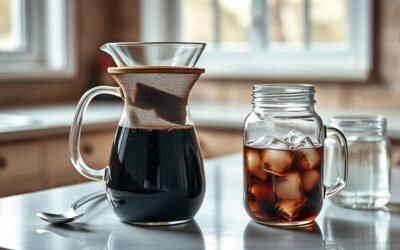
Is cold brew stronger than regular hot coffee? It depends on whether you mean brew concentration (TDS), perceived taste intensity, or total caffeine. Undiluted cold brew concentrate is significantly more concentrated in dissolved solids than standard drip coffee, yet once diluted 1:1 or 1:2 with water, milk, and ice, it often matches—or even trails—a bold hot drip cup in both taste intensity and caffeine per serving.
Is Cold Brew Stronger? TDS vs. Taste vs. Caffeine
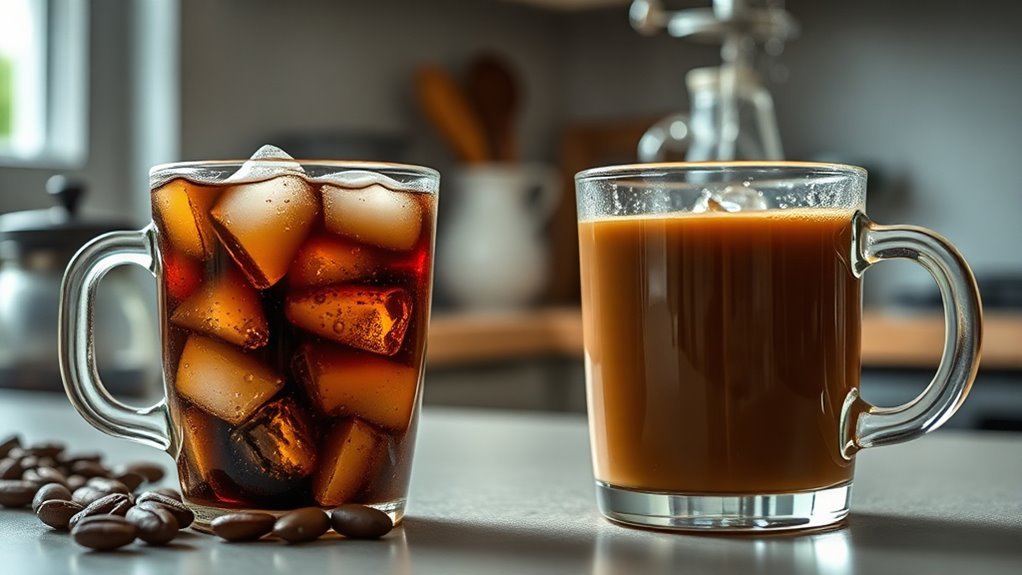
Coffee drinkers use the word “strong” to describe three completely different measurements, which is why cold brew confuses so many people:
- Brew strength (TDS — Total Dissolved Solids): The exact percentage of dissolved coffee particles suspended in water. Under Specialty Coffee Association (SCA) brewing guidelines, balanced filter coffee sits around 1.15% to 1.45% TDS (at 18%–22% extraction yield). Cold brew concentrate brewed at 1:4 or 1:5 easily exceeds 2%–4% TDS before dilution.
- Taste strength (perceived intensity): How bold, roasted, bitter, or syrupy a sip feels on your palate. Cold water extracts fewer harsh bitter compounds and sharp acids than hot water, so cold brew frequently tastes milder and sweeter than a hot cup with the exact same TDS.
- Caffeine strength (milligrams per serving): Driven primarily by the dry weight of coffee beans used and the bean species (Robusta carries more caffeine than Arabica), not by flavor bitterness. For a dedicated breakdown of caffeine science across methods, see our guides on whether cold brew has more caffeine and cold brew vs. espresso caffeine.
Concentrate vs. Diluted: How Strength Perception Changes
The biggest reason people assume cold brew is automatically stronger is confusing concentrate with ready-to-drink (RTD) cold brew. Once you dilute concentrate with water, milk, or melting ice, its TDS drops right back into everyday drip territory:
| Serving Style | Typical Brew / Dilution | Concentration (TDS) | Perceived Taste |
|---|---|---|---|
| Cold Brew Concentrate (Undiluted) | 1:4 to 1:5 coffee-to-water by weight | Very high (2.5%–4%+) | Syrupy, cocoa-heavy, intense body |
| Diluted Cold Brew (1:1 or 1:2) | Equal parts concentrate + water/milk over ice | Moderate (roughly 1.1%–1.6%) | Smooth, sweet, low bitterness |
| Ready-to-Drink Immersion | 1:8 to 1:12 steep, served straight over ice | Standard (roughly 1.1%–1.4%) | Clean, refreshing, easy-drinking |
| Standard Hot Drip Coffee | 1:15 to 1:17 hot water extraction | Standard (1.15%–1.45% SCA target) | Brighter acidity, sharper perceived bite |
The stealth strength trap: Because chilled drinks suppress perceived bitterness and cold extraction pulls fewer sharp acids, it is easy to sip a tall glass of lightly diluted concentrate quickly without realizing how much dissolved coffee—and caffeine—you are taking in.
How to Tune Cold Brew Strength: Ratios, Roast & Steep Time
Instead of guessing, control strength systematically by adjusting one variable at a time:
- Dial in your brew ratio by weight: Ratio is the single biggest lever for TDS. Use 1:4 to 1:5 for a versatile concentrate meant for milk or 1:1 dilution, or 1:8 to 1:10 for a ready-to-pour batch. For exact gram and cup measurements across every strength tier, use our cold brew coffee ratio master chart.
- Pick your roast for flavor strength, not caffeine: Dark roasts dissolve more readily and deliver smoky, chocolatey heaviness that reads as “stronger” through milk and ice. Medium roasts balance caramel sweetness and body; light roasts emphasize fruity brightness that can feel thinner when iced.
- Keep grind coarse and consistent: Aim for a coarse sea-salt texture. Grinding too fine increases surface area and raises TDS faster, but it also clogs paper filters and leaves muddy, bitter silt in the cup.
- Stop steeping at 12–18 hours: Extraction slows rapidly once the water nears saturation. Room-temperature steeps generally finish in 12–16 hours, while refrigerated steeps take 16–20 hours. Pushing past 24 hours rarely adds pleasing strength—it mostly extracts stale, woody notes.
Troubleshooting Strength: Fixing Weak or Overpowering Batches
- Tastes watery or hollow: Tighten your coffee-to-water ratio on the next batch (for example, move from 1:10 to 1:7), serve over large ice cubes or frozen coffee cubes, and verify your beans are freshly roasted and coarse-ground rather than pre-ground stale coffee.
- Feels too syrupy or intense: Dilute in small increments—start with 1 part concentrate to 1 part cold water or milk, stir, and taste. Remember that adding water softens flavor intensity and lowers TDS, but does not remove total caffeine from the concentrate already in your glass.
- Caffeine safety note: Because smooth cold brew masks intensity, track your concentrate pour size. The U.S. FDA cites 400 mg of caffeine per day as a general upper limit for most healthy adults, though individual sensitivity varies.
Pros and Limitations of Cold Brew Strength Control
- Pros: Making a high-TDS concentrate lets you customize every glass on demand—strong over a single cube, balanced 1:1 with water, or creamy in a cold latte—while keeping bitterness low.
- Limitations: Requires 12–18 hours of planning ahead, uses more coffee beans per finished cup than hot pour-over, and makes it harder to judge caffeine intake by taste alone.
Frequently Asked Questions
What does TDS mean when comparing cold brew strength?
TDS stands for Total Dissolved Solids—the percentage of dissolved coffee compounds in your cup. Standard drip coffee typically lands around 1.15% to 1.45% TDS under Specialty Coffee Association guidelines, whereas undiluted cold brew concentrate often measures 2% to 4%+ TDS before you add water or milk.
Why does cold brew taste smoother even when it is concentrated?
Cold water extracts fewer bitter, astringent, and sharp volatile compounds than near-boiling water. Because cold brew lacks the harsh bite of hot drip coffee, a high-TDS concentrate can taste syrupy and mild even when it packs substantial dissolved coffee and caffeine.
Does diluting cold brew concentrate reduce its total caffeine?
Diluting concentrate with water, milk, or ice lowers the strength (TDS) and caffeine per fluid ounce, making each sip taste lighter. However, if you pour 4 ounces of concentrate and drink the entire diluted glass, you still consume the exact same total milligrams of caffeine.
Does a dark roast make stronger cold brew than a light roast?
Dark roasts taste bolder, smokier, and heavier in body, which makes the drink feel stronger on the palate. However, roasting does not add caffeine—measured by weight, light and medium roasts have comparable (and sometimes slightly higher) caffeine while preserving brighter, chocolatey sweetness.
How long should I steep cold brew for maximum strength without bitterness?
Most coarse-ground cold brew batches reach balanced strength between 12 and 18 hours (slightly longer in a cold refrigerator). Steeping past 24 hours yields minimal extra strength and tends to pull woody, flat, or overly astringent flavors from the grounds.