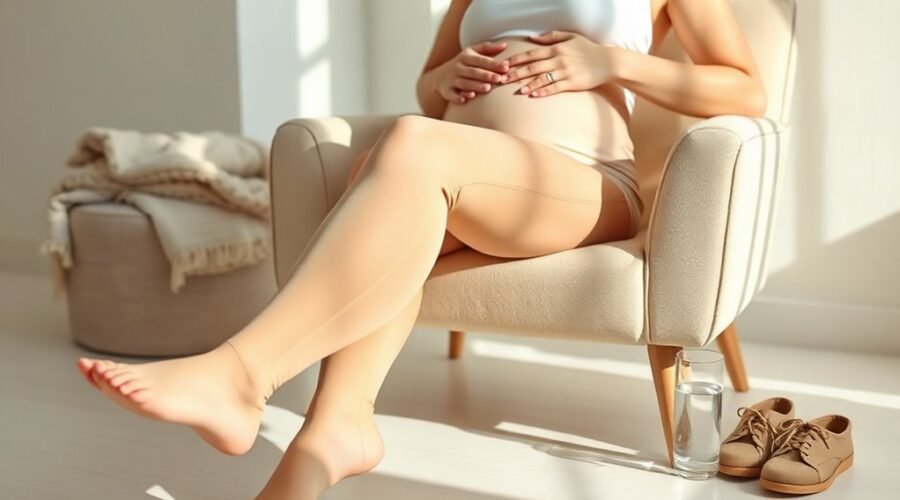
Pregnancy can make your legs feel like they’re carrying more than their share, and maternity compression hose may be part of the answer. You get graduated pressure that supports circulation, helps limit swelling, and can ease discomfort during long days on your feet or while traveling. When fitted well, they’re generally safe and useful, but the right size and compression level matter. So how do you choose, wear, and care for them?
What Are Maternity Compression Hose?
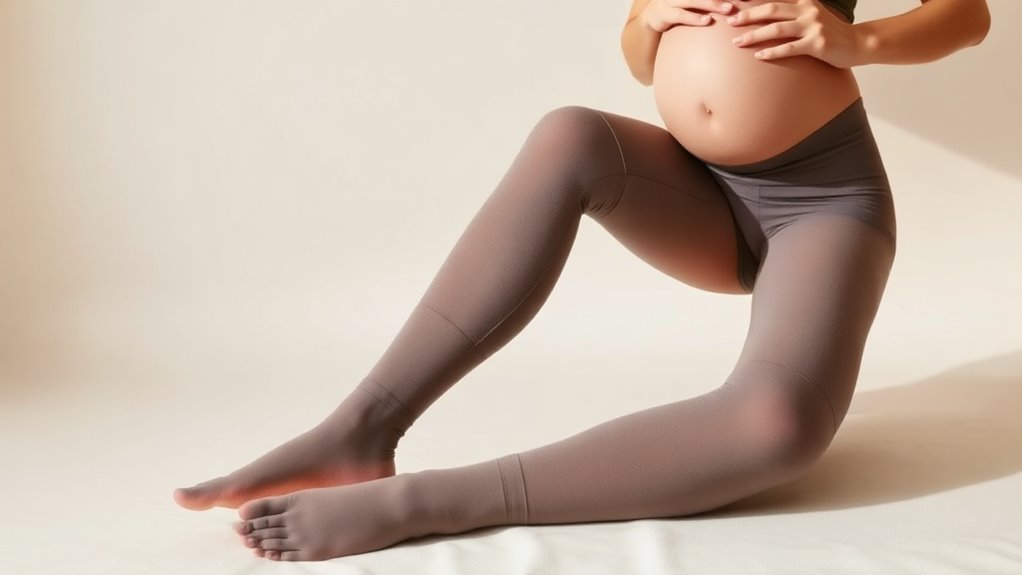
Maternity compression hose are specially designed stockings that apply graduated pressure to your legs and feet, helping support circulation during pregnancy.
You wear them to create gentle support that’s firmer at the ankle and lighter upward, which can ease that heavy, tired feeling in your legs. This benefits overview helps you see them as practical tools, not cosmetic add-ons.
Gentle support from ankle to thigh can ease heavy, tired legs and make daily comfort more manageable.
They may also help reduce swelling during long days, travel, or extended standing, giving you more freedom to move through your routine with less discomfort.
For usage tips, choose the correct size, pull them on in the morning, and smooth them evenly without bunching. If your pregnancy changes your shape, recheck the fit.
You can pair them with comfortable clothing and regular movement to support daily comfort.
Are Maternity Compression Hose Safe?
Yes—when they’re properly fitted and used as directed, compression hose are generally considered safe during pregnancy and are often recommended to help reduce leg swelling, discomfort, and venous pooling.
You should follow safety guidelines from your clinician or midwife, especially if you have high blood pressure, diabetes, skin irritation, or a history of circulation problems.
Choose the correct size and compression level; a poor fit can create discomfort or uneven pressure.
Check your skin daily for redness, numbness, or pinching, and remove them if symptoms worsen.
You shouldn’t assume all styles are equal, so ask about medical-grade options if you need more support.
Potential risks are usually low, but they can increase if you wear hose that are too tight, too loose, or worn incorrectly.
If you feel pain, shortness of breath, or sudden swelling, contact your provider promptly.
Your comfort and safety matter, and you deserve care that supports both.
How Maternity Compression Hose Help During Pregnancy
When you wear maternity compression hose as directed, they can help improve blood flow in your legs and reduce the pressure that builds up during pregnancy. You may notice steadier leg circulation, less heaviness, and fewer end-of-day aches. By applying gentle graduated pressure, they support the veins that work harder while you’re carrying extra weight and fluid.
- They can ease swelling in your calves and ankles.
- They may reduce that tired, dragging feeling in your legs.
- They can support pregnancy comfort during long periods of standing or sitting.
- They may help you move with more ease and confidence.
You deserve support that doesn’t restrict your life. These hose can fit into your routine without demanding much from you, while helping your body manage the changes of pregnancy.
If your legs feel strained, compression can offer practical relief and a calmer, more mobile day.
When to Start Wearing Maternity Compression Hose
You can start wearing maternity compression hose as soon as early pregnancy signs make your legs feel heavy or achy, especially if you already notice mild swelling.
If swelling begins in your feet, ankles, or calves, compression hose can help support circulation and improve comfort.
Your clinician can help you choose the right timing and fit based on your symptoms and pregnancy risk factors.
Early Pregnancy Signs
Even early in pregnancy, rising blood volume and hormonal changes can trigger leg swelling, heaviness, varicose veins, or a feeling of pressure in the calves and ankles.
You don’t need to wait until discomfort takes over. Pay attention to early symptoms and choose maternity compression hose when you notice:
- End-of-day leg fatigue
- Mild ankle puffiness
- Visible veins or aching
- A need for support during standing or travel
Compression can help you move with more ease and confidence, supporting circulation without restricting your freedom.
If your symptoms feel new or persistent, talk with your clinician. They can help you find the right fit and pressure level. Early support may keep you comfortable, mobile, and in control as your body changes.
When Swelling Begins
As soon as swelling starts to show up, maternity compression hose can help reduce discomfort and support circulation before symptoms worsen. You don’t have to wait until your ankles feel heavy or your calves ache.
Start wearing them when you notice swelling triggers like long periods of standing, heat, travel, or the end of the day. Early use may ease pregnancy discomfort and help you stay mobile, comfortable, and in control of your body.
Choose a fit that feels firm but never restrictive, and put them on in the morning before swelling builds.
If you have sudden, one-sided swelling, pain, or shortness of breath, contact your clinician right away. Your comfort matters, and you deserve support that lets you move freely.
How to Choose the Right Compression Level
Choosing the right compression level starts with understanding the difference between mild and moderate support.
Mild compression can ease everyday swelling and fatigue, while moderate compression may be more helpful if you’re managing more noticeable discomfort or edema.
Your provider can help you choose the safest option based on your symptoms and pregnancy needs.
Mild vs. Moderate Compression
If you’re deciding between mild and moderate compression, the best choice usually depends on your symptoms, daily activity, and any guidance from your clinician.
Mild compression often feels easier for all-day wear and suits you if you have light swelling or fatigue. Moderate compression gives firmer support and may help when your legs feel heavier or more achy.
- Choose mild compression for comfort and routine wear.
- Choose moderate compression for stronger support.
- Match the level to your swelling and standing time.
- Prioritize what helps you move freely.
You deserve support that doesn’t restrict you.
If one level feels too tight, it isn’t the right fit for your body today.
Ask Your Provider
Your provider can help you choose the right compression level based on your swelling, discomfort, circulation, and pregnancy history. You deserve care that fits your body, not a one-size-fits-all rule.
Ask about mild, moderate, or higher compression, and share any varicose veins, prior clots, or blood pressure concerns. Provider recommendations should reflect your symptoms, daily activity, and whether you’ll wear them for work, travel, or long days on your feet.
If you’re unsure, request expert opinions from your obstetric clinician or a certified fitter. They can also check proper sizing, because the wrong fit can reduce comfort and support.
With the right guidance, you can choose hose that help you move through pregnancy with more ease and confidence.
How to Choose the Right Fit for Pregnancy
How do you find maternity compression hose that fit properly during pregnancy? You start by measuring your ankles, calves, and thighs in the morning, when swelling is lowest, then compare those numbers with the size chart. This helps you choose support that feels secure without squeezing. Pay attention to fabric types; breathable blends can reduce heat and improve comfort as your body changes.
- Measure both legs, since pregnancy swelling can be uneven.
- Match your measurements to the manufacturer’s size chart, not your usual clothing size.
- Choose a rise that stays comfortable over your belly without digging in.
- Try them on and walk; they should feel firm, not painful.
If you feel numbness, pinching, or tingling, the fit isn’t right. You deserve compression hose that support circulation while still letting you move freely, work, rest, and take up space with ease.
Maternity vs. Regular Compression Hose
When you compare maternity and regular compression hose, you’ll notice differences in fit and support that affect comfort during pregnancy.
Maternity styles usually give you more room through the abdomen and hips, along with graduated compression designed to match changing body needs.
Regular compression hose can still help, but they may feel restrictive or provide less pregnancy-specific support.
Fit And Support Differences
Maternity compression hose are shaped to accommodate a changing abdomen, wider hips, and often a need for gentler pressure around the waist, while regular compression hose typically assume a more standard leg-and-torso fit.
You’ll notice the difference in how they contour, support, and move with you. Choose based on comfort, circulation needs, and how your body feels now.
- Maternity styles ease waist pressure.
- Regular styles may feel restrictive.
- Support styles vary by compression level.
- Sizing options better match pregnancy changes.
When you try them on, you should feel secure, not squeezed.
The right pair supports your legs without fighting your shape, helping you stay mobile, informed, and free to choose what serves your body best.
Pregnancy-Specific Design Features
Unlike regular compression hose, maternity versions are built with pregnancy-specific details that support your changing body more comfortably.
You’ll notice a wider, nonbinding waistband that sits above or below the abdomen without digging in, plus softer knit zones that accommodate swelling and shifting contours.
Many pairs use graduated pressure that eases leg heaviness while protecting circulation, and some add reinforced panels for abdominal support.
These design benefits help you move with less strain during work, travel, or rest.
You also get comfort features like moisture-wicking fabric, flat seams, and stretch that adapts through each trimester.
With the right pair, you can feel supported without sacrificing autonomy, because your clothing should respond to you, not the other way around.
How to Put Them On and Take Them Off
Put on maternity compression hose first thing in the morning, before swelling builds, and roll them gradually over the foot and heel rather than pulling hard on the fabric. Good donning techniques protect the knit and help you feel supported, not trapped.
Put them on before swelling starts, gently rolling over foot and heel to protect the knit.
If you’re using a helper, let them guide the hose upward in small sections while you steady your balance.
- Sit down, relax your leg, and bunch the hose to the toe.
- Slide it over the heel, then smooth it upward.
- Check that the heel and toe sit correctly.
- To remove, turn the top down and peel slowly from the ankle.
These removal methods reduce strain and make the process gentler when your legs feel tender.
If you notice pinching, rolling, or numbness, readjust at once. You deserve compression that works with your body, preserving comfort, circulation, and autonomy throughout the day, without extra effort or stress.
How to Care for Maternity Compression Hose
Because compression hose work best when the fibers stay elastic, you’ll want to wash them gently after each wear, using cool water and a mild soap.
These washing tips support compression care without wearing down the knit. Rinse well, then press out excess water; don’t wring or twist, since that can weaken the pressure profile and shorten their life.
Lay them flat on a clean towel or hang them away from direct heat and sunlight. Heat can damage the elastic and reduce support.
Skip bleach, fabric softener, and rough washing cycles. If you use a machine, place them in a mesh bag and choose a delicate setting, but handwashing is usually kinder.
Store them folded neatly, not stretched over sharp edges. Check the fabric regularly for thinning, runs, or loss of firmness, and replace them when they no longer feel supportive.
When to Talk to Your Doctor
Talk to your doctor if your legs swell suddenly, one leg becomes painful or red, or you notice shortness of breath, chest pain, or a rapid heartbeat.
These symptoms concern needs prompt doctor consultation, because they can signal something more serious than normal pregnancy swelling. You deserve clear answers and care that supports your freedom to move safely.
- Report new pain, warmth, or redness.
- Seek advice if swelling worsens fast.
- Call right away for breathing changes.
- Ask before wearing compression hose if you have heart, kidney, or circulation issues.
You should also mention numbness, skin color changes, or a hose that feels too tight.
Your doctor can check whether the fit, pressure, or timing needs adjustment. Trust your body’s signals; you don’t have to wait and wonder. Early guidance helps you protect your health and stay comfortable.
Frequently Asked Questions
Can Maternity Compression Hose Be Worn During Flights?
Yes, you can wear maternity compression hose during flights, and they may support circulation and reduce swelling.
For flight safety, choose the right compression level and make sure they fit comfortably without pinching. Ask your clinician first if you have pregnancy complications or clotting risks.
Helpful travel tips include staying hydrated, moving your feet often, and walking when allowed.
You deserve ease and freedom while you travel, so prioritize comfort throughout.
Are Maternity Compression Hose Comfortable in Hot Weather?
Yes, you can find maternity compression hose that feel comfortable in hot weather, especially if you choose breathable fabrics and lighter summer styles.
You’ll likely do better with moisture-wicking, thinner knits that support circulation without trapping heat. If you’re prone to swelling, they may still help you feel better, but fit matters.
You deserve comfort and freedom, so look for options with soft waistbands and open-toe designs when possible.
How Many Hours per Day Should I Wear Them?
You should wear them most of the day, like a steady hand supporting you through a long climb, usually 8 to 12 hours, unless your clinician advises otherwise.
Start gradually, and take them off at night.
The benefits explained include improved circulation and less swelling.
Use proper sizing tips so they fit without pinching.
If you feel pain, numbness, or excessive heat, you should stop and ask your provider.
Can I Wear Maternity Compression Hose Overnight?
You can wear maternity compression hose overnight only if your clinician recommends it.
In some cases, you’ll get benefits pregnancy and circulation improvement while you sleep, but you shouldn’t assume it’s always safe.
You need the right fit, proper compression, and no signs of numbness, pain, or swelling.
If you feel restricted, remove them and call your provider.
Your body deserves comfort, choice, and careful support.
Do Maternity Compression Hose Come in Different Colors?
Yes, they do; even in this modern age, you’ll find maternity compression hose in several colors.
You can choose classic nude, black, and white, plus some brands offer navy, gray, or fun shades.
Style options vary by manufacturer, and material choices affect opacity and appearance.
Pick a pair that supports your legs, fits your wardrobe, and helps you feel confident, comfortable, and free during pregnancy.
Conclusion
Maternity compression hose can be a steady anchor for your legs during pregnancy, helping ease swelling, improve circulation, and support your comfort day to day. When you choose the right fit and compression level, they work like a gentle hug for tired legs. Remember to wear them as directed, care for them properly, and check with your doctor if you have concerns. With the right guidance, they can make pregnancy feel a little lighter.