If you’re starting preschool potty training, you can make the process easier by watching for readiness signs, setting up the right supplies, and using a simple routine your child can follow. You’ll also want to know how to respond to accidents calmly and how to keep progress steady when setbacks happen. The first few days matter, but the real key is what you do next.
How to Know Your Preschooler Is Ready
How do you know if your preschooler is ready for potty training? You look for readiness signs across daily routines, not a single cue. Your parental observations matter: your child may stay dry for longer periods, notice wet diapers, or ask to use the toilet.
Developmental milestones also help you judge readiness. Can your child follow simple directions, pull clothing up and down, and show body awareness? Those skills support physical readiness.
You should also weigh emotional readiness. A child who can tolerate small frustrations and accept gentle guidance often handles toilet learning better.
Child interest counts, too; curiosity about the bathroom or imitating older children signals motivation. Social cues matter when your preschooler wants privacy or dislikes soiled diapers.
Finally, timing factors affect success. Choose a stable period with fewer stressors, so you can support learning without pressure.
Gather Preschool Potty Essentials
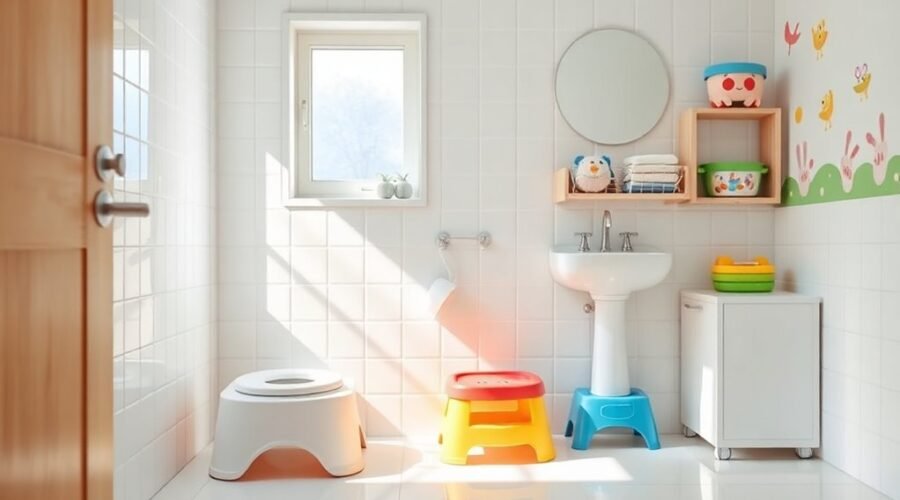
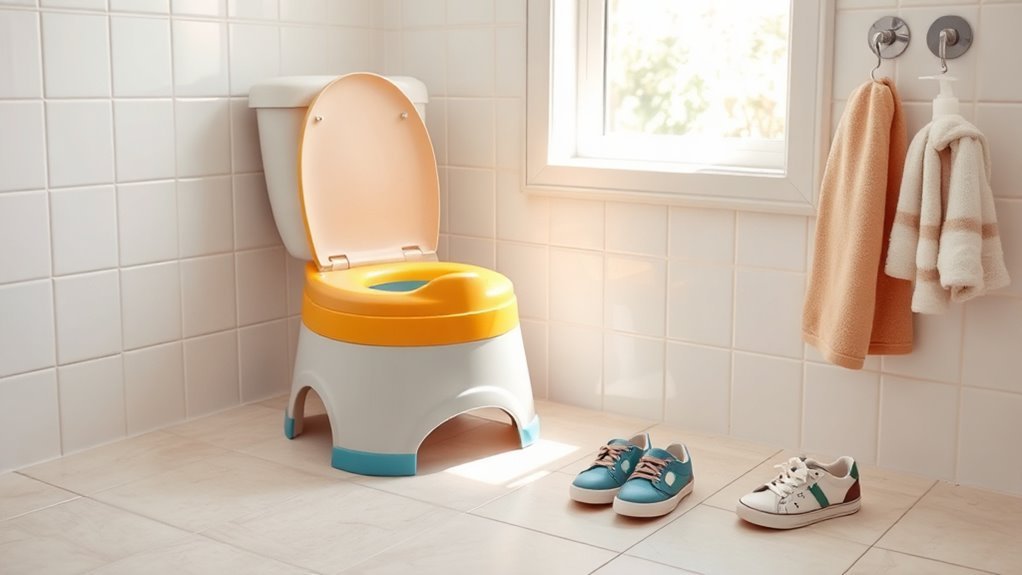
You’ll want to gather a few key potty essentials before you begin, including a child-sized potty chair or seat that feels stable and easy to use.
Stock enough training pants so you can handle accidents without stress, and keep them within easy reach.
A simple cleaning supply kit with wipes, disinfectant, and spare clothes can help you respond quickly and calmly.
Potty Chair Essentials
A well-stocked potty chair setup makes toilet learning smoother and less stressful for both you and your preschooler.
Choose from practical potty chair types, such as standalone chairs or seat reducers, based on your child’s size and confidence.
Compare potty chair materials for stability, easy cleaning, and comfort; smooth plastic often works best for quick sanitation.
Keep the chair in a consistent, accessible spot so your child can act independently.
Add toilet paper, flush-safe wipes, and a nearby step stool if your child uses the regular toilet.
A small book or visual cue can help your preschooler relax and understand the routine.
When you prepare the space well, you support autonomy, reduce anxiety, and make progress feel achievable.
Training Pants Stock
Once the potty chair is ready, stock enough training pants to support consistent practice and quick cleanup. You’ll want several pairs so your child can keep learning without interruption.
Choose training pants materials that balance absorbency with breathability, because comfort supports participation and reduces friction. Check training pants sizes carefully; a snug but gentle fit helps your child notice wetness while still feeling secure.
Keep a mix on hand for daytime use and for backup during changes. When you offer reliable supplies, you give your child more freedom to practice at their own pace.
That steady access also lowers stress for you, making the routine feel orderly, doable, and respectful of your child’s growing independence.
Cleaning Supply Kit
Gather a small cleaning supply kit before you begin potty training so you can respond quickly to accidents and keep the area sanitary.
Keep gentle cleaning supplies within reach: paper towels, disinfectant wipes, laundry-safe stain remover, gloves, and a sealed trash bag.
Choose simple storage solutions, such as a caddy or labeled bin, so you can grab what you need without delay.
Place the kit near the bathroom and another in the car if you travel often. This setup helps you clean calmly, protect your child’s skin, and reduce stress.
When you act fast and consistently, you support hygiene without shame, giving your child more freedom to learn independence.
Replace used items promptly and review the kit weekly so it stays ready.
Set Up a Potty Routine
You can build a steady potty routine by setting regular toilet times, such as after meals, before leaving home, and before bed.
This schedule helps your child learn when to try, even if they don’t feel the urge right away.
Use simple positive reinforcement cues, like praise or a small reward, to encourage consistent success.
Regular Toilet Times
Regular toilet times help your child build bladder awareness and make potty learning more predictable. You can anchor trips to a morning routine, after meals, and before sleep, so your child’s body learns a steady pattern. These check-ins support autonomy and reduce stress for both of you.
| Time | Action |
|---|---|
| Wake-up | Sit on the potty |
| After breakfast | Try again |
| Midday | Pause for a visit |
| Before nap | Offer a quiet chance |
| Evening | Use evening reminders |
Keep the schedule simple and consistent. If your child resists, stay calm and return to the plan later. Regular timing helps you protect dignity while guiding progress. Over time, your child may start to anticipate the need without pressure.
Positive Reinforcement Cues
Positive cues can make your potty routine feel safe, predictable, and rewarding. You can use positive phrases like “You did it” or “Your body knows what to do” to support confidence without pressure.
Speak calmly before, during, and after toilet time so your child links the routine with success and dignity. Reward systems can help too, but keep them simple: a sticker, extra story time, or a brief celebration works better than bribes or complex charts.
Praise effort, not perfection, and let your child choose when possible, which builds autonomy. If accidents happen, stay neutral and brief.
Consistent encouragement helps your child learn that toileting is a normal skill, not a test, and that they’re free to grow at their own pace.
Start the First Few Days Smoothly
In the first few days, keep the routine simple and predictable so your child can adjust without feeling overwhelmed. You set initial expectations by explaining that accidents are normal and learning is gradual. Use change techniques like giving a brief warning before bathroom time and guiding your child calmly from play to potty. This supports autonomy while reducing resistance.
| Action | Purpose |
|---|---|
| Offer brief prompts | Helps your child notice bodily cues |
| Use calm language | Lowers stress and supports cooperation |
| Keep supplies ready | Makes each visit efficient |
You don’t need to force mastery. Instead, observe patterns, respond neutrally, and let your child practice in a way that feels safe and liberating. Your steadiness builds confidence, and confidence supports independence. If your child hesitates, pause, breathe, and try again later. The goal is not perfection; it’s a smooth, respectful start that protects dignity and encourages progress.
Make the Routine Stick
As the first few days settle into a pattern, you can help the routine stick by keeping expectations consistent and easy to follow. Use routine consistency to support habit formation: offer bathroom trips at predictable times, such as after waking, meals, and outings.
Visual schedules can show your child what comes next, reducing uncertainty and increasing cooperation. Keep your language positive and direct, naming the behavior you want: “Let’s use the potty now.”
Visual schedules reduce uncertainty, and positive language helps your child know exactly what to do next.
Family involvement matters, so everyone should use the same words and steps. Social modeling also helps; your child learns by seeing trusted adults and older siblings follow the same routine.
Reward systems can be simple and immediate, like praise, a sticker, or a small choice. Notice sensory cues such as fidgeting, freezing, or a sudden quiet focus, and respond calmly.
When you stay steady, you give your child structure without pressure, helping them build confidence and independence.
Handle Accidents Without Stress
When accidents happen, stay calm and treat them as part of learning rather than a setback. Your accident response should be brief, neutral, and respectful, so your child feels safe and free from shame. Offer emotional support without overexplaining; a simple, “It’s okay, let’s clean up,” protects dignity and keeps progress moving.
- Acknowledge what happened calmly.
- Guide your child to the bathroom or changing area.
- Help clean up quickly and matter-of-factly.
- Return to the routine without punishment or drama.
This approach teaches bodily awareness and builds confidence. You’re not ignoring the accident; you’re showing that mistakes don’t threaten independence. Use plain language, maintain a steady tone, and keep expectations consistent.
If your child seems upset, pause and offer reassurance, not pressure. With calm repetition, accidents become manageable learning moments, and your child can move toward potty freedom with less stress, more trust, and growing self-control.
Fix Common Potty Training Setbacks
Setbacks are common during potty training, and most can be corrected with small, consistent adjustments. You can reduce potty training challenges by spotting common mistakes early: rushed reminders, inconsistent routines, or pressure after accidents.
Check emotional readiness first; if your child resists, pause and rebuild confidence. Review environmental factors too: noisy bathrooms, hard-to-reach seats, or distracting toys can block progress.
Use timing strategies like scheduled sits after meals and before outings. Keep reward systems simple and immediate, such as praise, stickers, or a favorite song.
If sibling influence or peer pressure is shaping behavior, talk openly and emphasize your child’s own pace. Your calm matters; parental anxiety often amplifies resistance.
Use communication tips that are brief, direct, and respectful: “Let’s try again,” or “Your body can learn this.” When you respond with steadiness, you give your child room to practice, adapt, and move forward with dignity.
Prep for Daycare and School
Before your child starts daycare or school, help them practice the routine they’ll follow there so the change feels familiar. Review potty readiness signs, such as staying dry for longer periods, noticing body cues, and asking to use the toilet. When you match home practice to the center’s schedule, you support autonomy and reduce stress.
Use these daycare preparation tips:
- Ask staff how often they offer bathroom breaks.
- Send easy clothing your child can manage alone.
- Teach simple words for potty needs and accidents.
- Pack spare underwear, wipes, and a sealed bag.
You can also explain where bathrooms are located and who to ask for help. Keep instructions brief and consistent, so your child can act without shame or confusion.
This preparation helps them enter group care with more control, dignity, and confidence in their own body.
Celebrate Progress and Build Confidence
Small successes build momentum, so notice and praise each step your child makes toward potty independence. You can reinforce progress milestones by naming what you see: staying dry, asking for help, sitting on the toilet, or washing hands.
Specific praise supports confidence building because it links effort with success. Keep your tone calm and matter-of-fact; you’re teaching skill, not perfection. Offer small rewards only when they support motivation, such as stickers, a special song, or extra story time, and keep them brief so your child’s sense of agency stays strong.
If setbacks happen, treat them as normal learning, not failure. Reassure your child that bodies learn at different speeds, and that accidents don’t erase progress.
When you celebrate without pressure, you help your child feel capable, respected, and free to master this new routine at their own pace.
Frequently Asked Questions
What if My Preschooler Refuses the Potty at Home?
If your preschooler refuses the potty at home, you can stay calm and keep offering it without pressure.
Use potty training strategies like scheduled sits, choice of underwear, and small rewards. You can also enlist sibling support by letting an older child model bathroom routines.
Keep expectations consistent, praise any cooperation, and avoid punishment. Most children respond better when you respect their pace and let them feel safe, capable, and in control.
How Do I Clean and Sanitize a Potty Chair Properly?
You clean a potty chair like a trusted shield: empty it, rinse it, then wash all surfaces with warm water and mild soap.
Use cleaning techniques that scrub crevices and the seat, then apply sanitizing solutions approved for child items.
Let it sit as directed, rinse if needed, and air-dry completely.
Wash your hands afterward.
This routine helps you keep your child’s space safe, fresh, and confidently free.
Should I Switch From a Potty Chair to a Toilet Seat?
Yes, you can switch when your child seems steady, interested, and can sit safely on the toilet.
A potty chair benefits your child by offering stability and independence, while a toilet seat change can build confidence and routine.
You don’t need to rush; use a step stool, keep feet supported, and praise each try.
If your child resists, stay flexible and return to the potty chair briefly.
What Underwear Works Best for Early Potty Training?
You’ll often do best with training pants that catch small dribbles while still letting your child feel the wetness.
Choose breathable underwear styles in soft cotton, with snug waistbands and plenty of size options. Fun designs can help your child feel proud and willing to wear them.
Avoid bulky layers that hide accidents, since quick feedback supports learning. You’re helping your child gain independence, and that freedom starts with comfort.
How Do I Manage Potty Training While Traveling?
You can manage potty training while traveling by planning ahead and keeping routines steady.
Pack potty supplies, including wipes, extra clothes, a portable seat, and bags for wet items.
Use travel tips like scheduling bathroom stops, offering frequent chances to go, and praising effort rather than perfection.
Stay calm if accidents happen; they’re expected.
You help your child feel secure, capable, and free to practice anywhere with confidence.
Conclusion
You can make preschool potty training feel manageable by watching for readiness, preparing the right supplies, and keeping a steady routine. Remember that about 25% of children are still not fully toilet trained by age 3, so setbacks aren’t unusual. Stay calm during accidents, keep praising small wins, and adjust as needed for daycare or school. When you stay consistent and reassuring, you help your child build confidence and lasting success.