Disclosure: As an Amazon Associate, we earn from qualifying purchases. If you click a link on this page and make a purchase, we may receive a small commission at no extra cost to you.
High-frequency facial wands can look simple, but the electrode shapes, intensity control, cleaning routine, and safety limits matter before you use one on your skin. The TUMAKOU High Frequency Facial Skin Wand Machine, Model 1, is a corded handheld kit with four glass electrodes for broad facial areas, smaller areas, targeted application, and scalp use. Its main advantage is giving you several attachment choices without a large tabletop machine, while the glass electrodes require careful handling and the device is not appropriate for everyone. This review explains what is included, how the controls work, where each electrode fits, and the limitations you should understand before buying.
Quick Verdict
Rating: 8/10, Recommended with caveats
Best For: Home users who want a compact high-frequency wand with several electrode shapes and manual intensity control.
Bottom Line: The TUMAKOU Model 1 offers a useful four-electrode setup in a relatively compact handheld design. Its glass attachments, electrical operation, and health-related precautions mean you need to follow the instructions carefully rather than treating it like an ordinary facial massager.
Key Specifications
| Specification | Detail |
|---|---|
| Brand | TUMAKOU |
| Model | 1 |
| Product type | Handheld high-frequency facial skin wand |
| Dimensions | 9.06 × 2.17 × 1.98 inches |
| Weight | 1.46 pounds |
| Power design | Corded electrical operation |
| Intensity | Manually adjustable with the wand control knob |
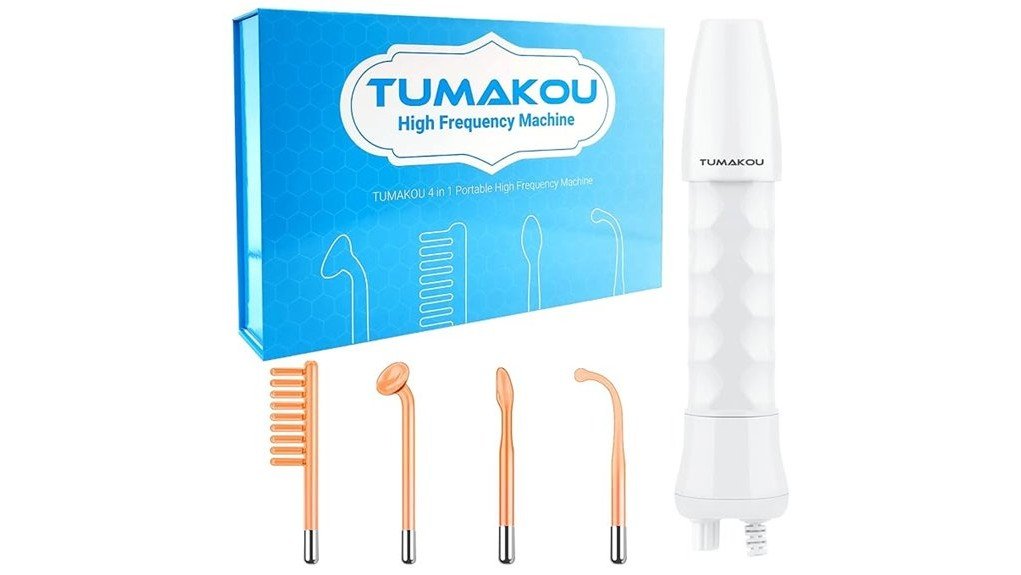
| Included electrodes | Mushroom, tongue, bent, and comb glass tubes |
| Suggested frequency | 2 to 3 times per week according to the product instructions |
| Suggested session | About 5 to 10 minutes according to the product instructions |
| Warranty | One year |
| ASIN | B07YXQW4H1 |
What Is the TUMAKOU High Frequency Facial Machine?
The TUMAKOU Model 1 is a portable handheld high-frequency skin-care device that sends electrical current through interchangeable glass electrodes. You insert one glass tube into the handpiece, connect the wand to a suitable outlet, and adjust the intensity with the control knob.
The four supplied electrodes are the main reason to consider this kit. The mushroom electrode covers broad facial areas, the tongue electrode is intended for smaller or more delicate areas, the bent electrode gives you a more precise contact point, and the comb electrode is designed for use through the hair on the scalp.
This is best viewed as a cosmetic skin-care tool rather than a medical treatment device. The manufacturer describes several skin-care applications, but you should not rely on a home facial wand to diagnose, cure, or manage acne, hair loss, inflammation, or another medical condition.
Who Should Buy It?
Best For
- You want one handheld wand with four electrode shapes instead of a large tabletop system.
- You prefer manual intensity adjustment so you can begin at a low setting.
- You want separate attachments for broad facial areas, smaller areas, precise application, and scalp use.
Skip If
- You want a cordless device or do not want to handle fragile glass electrodes.
- You are pregnant, have a pacemaker, or have a medical condition and have not received appropriate professional guidance.
- You expect a home wand to replace professional evaluation or treatment for a skin or scalp condition.
Before You Buy: The product instructions say not to use the wand on broken, irritated, or inflamed skin and advise professional guidance if you are pregnant, have a pacemaker, or have another medical condition. It must also be kept away from water during operation.
Design and Intensity Control
The TUMAKOU uses a straightforward handheld layout rather than a separate control console. The wand measures about 9.06 inches long and weighs 1.46 pounds for the listed product package, making it easier to store than a full-size facial machine.
The adjustment knob controls the operating intensity. The manual tells you to begin at the lowest level and increase gradually to a comfortable setting. That approach is more useful than immediately selecting a high level because stronger sensation does not automatically mean better cosmetic results.
You should also test the selected electrode and intensity on your hand before moving to your face. A mild buzzing or tingling sensation can occur during operation, but discomfort is a reason to reduce the setting or stop rather than continue pushing the intensity higher.
What Each Glass Electrode Is For
| Glass Tube | Intended Area | Why It Matters |
|---|---|---|
| Mushroom Tube | Cheeks, forehead, jawline, and other broad facial areas | Its larger contact area makes it easier to cover wider sections without repeatedly repositioning a narrow tip. |
| Tongue Tube | Smaller and more delicate facial areas | The narrower shape gives you more control where the mushroom electrode feels too broad. |
| Bent Tube | Small targeted areas such as around the nose | Its curved profile can make precise positioning easier in areas that are difficult to reach with a flat electrode. |
| Comb Tube | Hair and scalp | The comb shape helps separate hair so the electrode can be moved across the scalp more easily. |
The source article described the fourth attachment only as an “additional tube.” For this exact model, the documented fourth attachment is a comb electrode. That makes the set more versatile than a face-only collection, although scalp use should still follow the manufacturer’s instructions and should not be treated as a medical hair-loss therapy.
How to Use the TUMAKOU High Frequency Facial Machine
Because the attachments are glass and the device uses electrical current, setup deserves more attention than simply turning the knob. Use the instructions supplied with your unit as the final authority, especially if packaging or included components differ from the documented Model 1 kit.
- Start with the device unplugged. Select the glass electrode that matches the area you plan to use it on.
- Insert the electrode gently. Push it into the wand until it is secure. Do not force the glass tube.
- Check your skin. The instructions call for clean, dry skin and say not to use the device over broken, irritated, or inflamed areas.
- Connect the wand to a suitable outlet. Keep the device, cord, and electrodes away from water.
- Test the intensity on your hand first. Turn the control on at its lowest setting and increase only to a comfortable level.
- Use the technique specified in the manual. The Model 1 instructions describe direct and indirect application methods for different uses.
- Keep sessions controlled. The documented guidance is about 5 to 10 minutes per session, 2 to 3 times per week.
- Finish safely. Turn the intensity down, switch off the device, unplug it, and allow the electrode to be handled safely before cleaning.
Pro Tip: Choose the electrode before plugging in the wand. It reduces unnecessary handling of a fragile glass attachment while the device is connected to power and lets you begin each session with the intensity at its lowest setting.
How It Performs in Real Use
For Broad Facial Areas
The mushroom electrode is the most practical starting point when you want to move across areas such as the cheeks, forehead, or jawline. Its wider shape covers more surface area than the tongue or bent tube, so you spend less time trying to position a narrow electrode over a large section.
For Small or Hard-to-Reach Areas
The tongue and bent electrodes give you better control when a full mushroom tube feels oversized. The bent tube is especially useful for positioning around contours such as the nose. Use caution around delicate areas and never make direct contact with the eye itself.
For Scalp Use
The comb tube is shaped differently from the facial electrodes because its teeth can move through hair. This makes it the logical attachment when following the manufacturer’s scalp-use instructions. It should not be presented as a substitute for medical evaluation of hair thinning, shedding, scalp disease, or alopecia.
For Storage and Occasional Travel
The handheld unit itself is compact, but the four glass electrodes are the limiting factor when packing or storing the kit. Keep them dry and protected from impact. The product instructions recommend storing the electrodes in their original packaging or another safe, dry location to reduce the chance of damage.
Safety and Skin-Contact Precautions
This section matters more than cosmetic promises. The Model 1 instructions state that you should not use the device on broken, irritated, or inflamed skin. They also tell you to avoid water during operation, unplug the device when it is not in use, and keep it out of reach of children.
The manual specifically recommends consulting a healthcare professional before use if you are pregnant, have a pacemaker, or have another medical condition. Do not ignore that warning simply because the product is sold for home skin care.
High-frequency skin-care devices are not a substitute for diagnosing acne, persistent inflammation, hair loss, infection, or another health issue. If a problem is severe, worsening, painful, or unexplained, professional assessment makes more sense than increasing the wand intensity or treatment frequency.
Cleaning and Maintenance
Glass electrodes contact your skin, so cleaning them after use is part of normal maintenance. TUMAKOU’s Model 1 instructions recommend gently wiping the electrodes with a soft cloth dampened with rubbing alcohol or another appropriate disinfectant.
Allow each electrode to dry completely before putting it away. Store the glass attachments somewhere dry and protected rather than leaving them loose in a drawer where they can strike other objects.
Do not immerse the powered handpiece in water. If an electrode becomes cracked or damaged, stop using it rather than trying to continue a session with compromised glass.
Troubleshooting Common Problems
The Wand Does Not Turn On
Check that the power connection is secure and that the control knob has been moved into an operating position. If the outlet and controls appear correct but the unit still does not work, stop troubleshooting before opening or modifying the electrical housing and contact support.
The Electrode Does Not Light or Buzz
Confirm that the glass electrode is fully and correctly inserted into the handpiece. The Model 1 troubleshooting guidance also recommends checking the application technique described in the instructions.
There Is Too Much Sparking
Reduce the intensity. The manufacturer’s troubleshooting instructions also recommend making sure the electrode is making appropriate contact with the skin or the thin gauze or tissue specified for the applicable method.
Pros and Cons
Pros
- Includes four verified electrode shapes rather than one general-purpose attachment.
- Mushroom, tongue, and bent electrodes cover different facial-area needs.
- Comb electrode expands the kit to manufacturer-directed scalp use.
- Adjustable intensity lets you begin at a low setting.
- One-year warranty is documented for the Model 1 machine.
Cons
- Glass electrodes are fragile and need careful insertion, cleaning, and storage.
- Corded operation is less convenient than a rechargeable handheld device.
- Medical conditions, pregnancy, pacemakers, and irritated or broken skin create important usage limitations.
Customer Support and Warranty Information
The exact Model 1 documentation lists a one-year warranty and directs owners to TUMAKOU customer service when troubleshooting does not resolve a problem. Keep your purchase information and any warranty documentation that arrives with the unit because these may be useful if you need service.
A warranty does not remove the need to handle the glass electrodes carefully. Physical damage from improper handling may be different from a manufacturing defect, so check the warranty terms supplied with your purchase before assuming a damaged attachment is covered.
Is It Worth the Price?
Functionally, the TUMAKOU sits toward the basic end of the high-frequency wand category. You get a corded handpiece, adjustable intensity, and four glass electrodes rather than a display, presets, battery system, or large control console.
That simple design can be a good value if your priority is having several electrode shapes without paying for features you do not need. The value becomes less compelling if you specifically want cordless use, more extensive controls, or a kit where the electrode gas type and other technical details are clearly documented.
Because marketplace prices and seller availability change, compare the current offer with the warranty and exact contents shown on the listing before deciding.
How It Compares to Alternatives
Project E Beauty’s Faisca Neon and Faisca Argon are two current high-frequency wand alternatives that also use multiple electrodes. One buying difference is that those products explicitly separate neon and argon versions, which may appeal to shoppers who want the electrode gas type clearly specified before purchasing.
The TUMAKOU Model 1 makes more sense if you mainly want a straightforward four-electrode kit with mushroom, tongue, bent, and comb attachments. If documented gas type, a different electrode collection, or a more premium support package matters more to you, compare those alternatives before choosing.
Frequently Asked Questions
How often should you use the TUMAKOU Model 1?
The documented instructions suggest using it 2 to 3 times per week, with sessions of about 5 to 10 minutes. More frequent or more intense use should not be assumed to produce better results.
Which four glass tubes come with this TUMAKOU machine?
The Model 1 documentation lists mushroom, tongue, bent, and comb glass electrodes. The mushroom covers broad facial areas, while the smaller tubes provide more targeted positioning and the comb is intended for scalp use.
Can you use the TUMAKOU high-frequency wand on sensitive skin?
Start with the lowest setting and test the intensity before applying it to your face. Do not use the wand on broken, irritated, or inflamed skin, and stop if you experience significant discomfort or an unexpected reaction.
Can you use it if you have a pacemaker or are pregnant?
The product instructions advise consulting a healthcare professional before use if you are pregnant, have a pacemaker, or have another medical condition. Do not ignore this precaution because the device uses electrical current.
How should you clean the glass electrodes?
The Model 1 instructions recommend gently wiping the electrodes with a soft cloth dampened with rubbing alcohol or an appropriate disinfectant. Let them dry completely before storing them in a protected, dry place.
Does the TUMAKOU wand treat acne or hair loss?
You should treat this product as a cosmetic home skin-care device rather than a medical treatment. Persistent acne, scalp problems, hair loss, infection, or other health concerns should be evaluated appropriately instead of relying on a home wand.
What should you do if the machine stops working?
Check the power connection, control knob, and whether the electrode is fully inserted. If those basic checks do not solve the problem, stop using the machine and contact TUMAKOU support rather than attempting to open or modify its electrical components.
The Bottom Line
The TUMAKOU High Frequency Facial Skin Wand Machine Model 1 is worth considering if you want a compact corded system with four purpose-shaped glass electrodes and straightforward intensity adjustment. Its strongest feature is the useful attachment selection, while its biggest limitations are fragile glass components and important electrical and health-related precautions. Skip it if you want cordless convenience or expect a home cosmetic wand to replace professional care for a skin or scalp condition.
Ready to Buy?
Check the latest price, seller, included attachments, and product details before you decide.