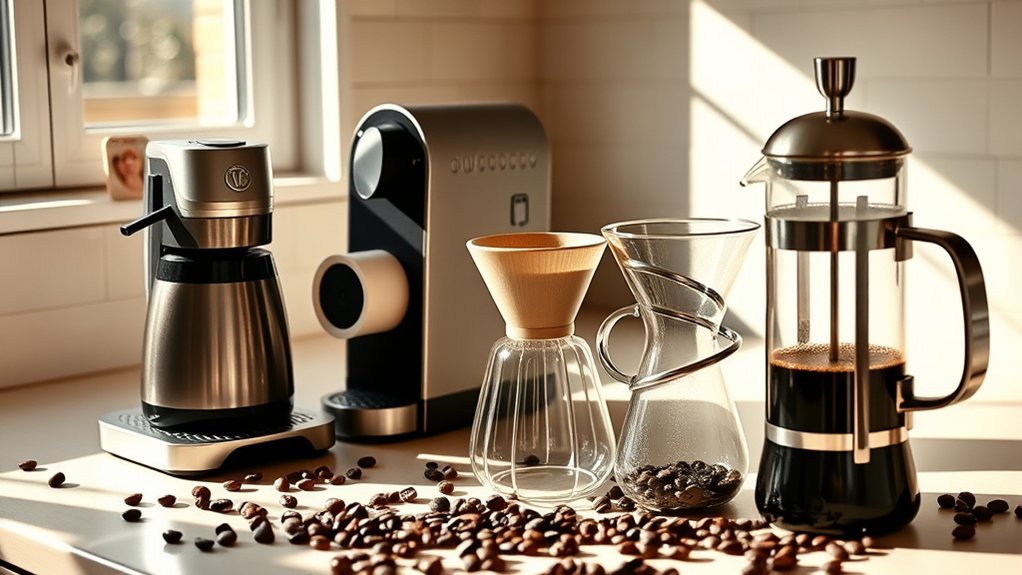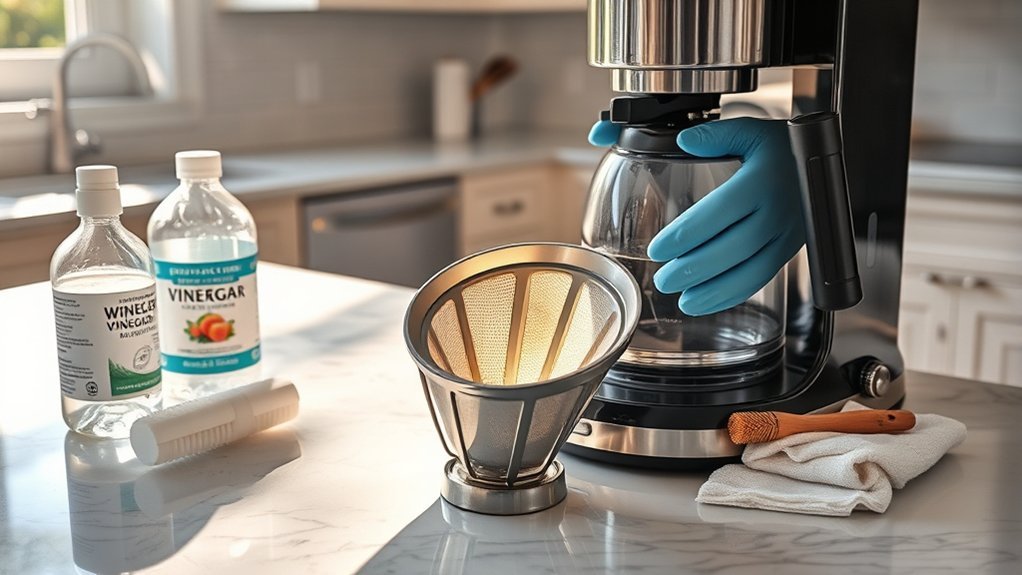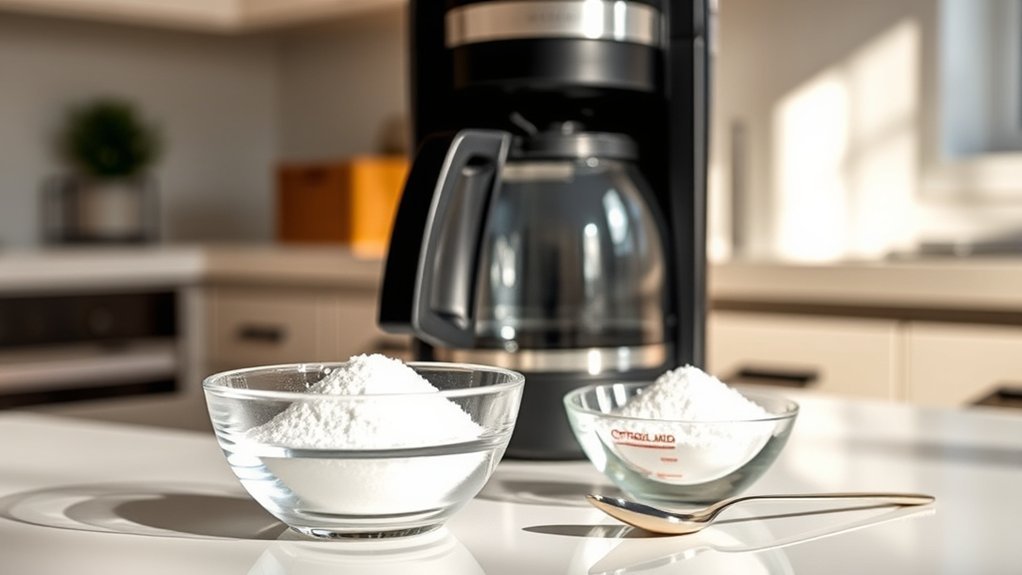
Citric acid can remove mineral scale from some coffee makers, but the correct product, concentration, and cycle depend on the machine. Before putting any acid in the reservoir, check your exact model’s manual. Some manufacturers approve a formulated citric-acid descaler, while others require a different solution or a programmed maintenance cycle.
Quick Answer
Check the manual first. If your coffee maker permits citric acid, use the manufacturer-approved product and concentration. Remove coffee and any water filter as directed, run the specified descale cycle, discard the solution, and complete every required fresh-water rinse before brewing coffee again.
Key Takeaways
- Citric acid is not approved for every coffee maker. Your exact model’s manual overrides general advice.
- There is no safe universal citric-acid-to-water ratio for all drip, pod, and espresso machines.
- A formulated citric-acid descaler and loose citric-acid powder are not automatically interchangeable.
- Use a fresh, fully dissolved solution at the concentration specified by the manufacturer or approved descaler label.
- Remove coffee, paper filters, and replaceable water-filter cartridges before descaling unless the manual says otherwise.
- Rinse volume is model-specific. Some manufacturers, including KitchenAid for applicable coffee makers, require two complete fresh-water brewing cycles.
- For severe scale, repeat an approved cycle or contact the manufacturer instead of making the acid solution stronger.
At a Glance
| Time Required | Model-dependent; allow enough time to complete the full descale cycle and every required rinse |
| Difficulty | Easy, provided the manufacturer permits the product and you follow the model-specific procedure |
| Tools Needed | Approved descaler or loose food-grade citric acid only when explicitly permitted, measuring scale or supplied scoop, water, collection container, and clean carafe |
| Cost | Varies by the approved descaling product and machine |
Warning: Do not combine a citric-acid descaler with chlorine bleach or any other cleaning product. Acids can react with chlorine bleach and release dangerous chlorine gas. Do not add vinegar, ammonia, or another cleaner to the descaling solution; use only the single product and water specified by the manufacturer. If an accidental cleaner mixture produces fumes, leave the area for fresh air and follow CDC chlorine-exposure guidance. Keep citric-acid powder and solution out of your eyes, do not drink the solution, and never immerse the coffee maker’s electrical base.
What Is Citric Acid and Why Use It for Descaling?
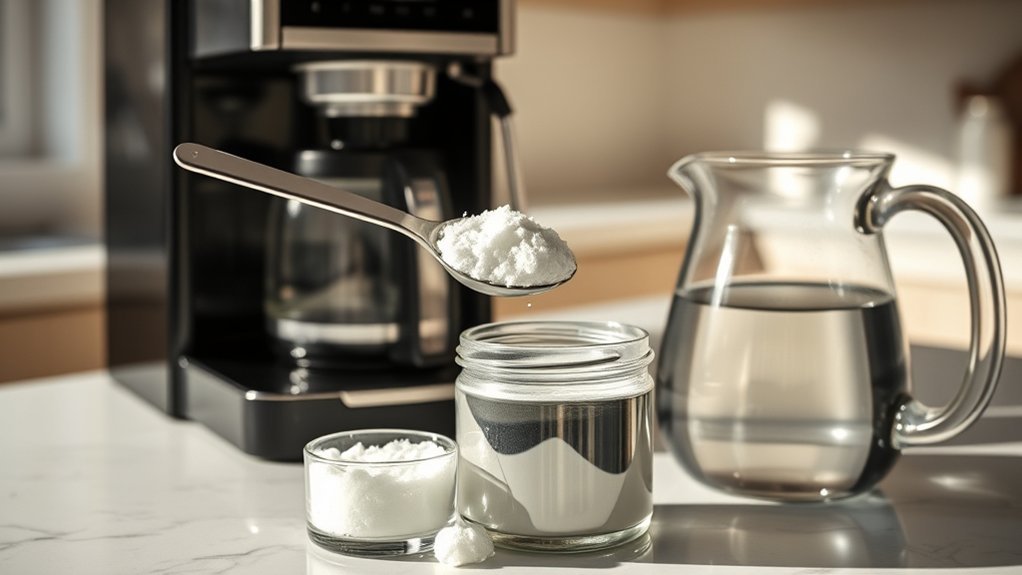
Citric acid is a weak organic acid found naturally in citrus fruits. In a descaling product, it can react with calcium-containing scale and other mineral deposits left behind when water is repeatedly heated inside a coffee maker.
Descaling is different from ordinary cleaning. A descaler targets mineral deposits inside the water path and heating system. Dish soap or a coffee-machine cleaner targets coffee oils and residue on parts such as the brew basket, carafe, lid, or reusable filter.
Descaling removes mineral deposits; it does not replace routine washing that removes coffee oils and grounds.
Some manufacturers approve citric-acid-based formulas. For example, Moccamaster recommends formulated Biocaf or Dezcal descaling powders. It notes that Biocaf primarily uses citric acid, while Dezcal contains both citric and sulfamic acids, and warns against putting pure citric or sulfamic acid into the brewer.
Philips tells owners of applicable SENSEO models to use only a suitable citric-acid-based SENSEO descaler.
That does not mean loose citric-acid powder is approved for every brewer. De’Longhi states that its coffee-machine descaling cycles are designed for lactic acid and advises against improvised citric-acid mixtures.
Power your essentials anywhere with a 999Wh pure sine wave power station delivering up to 1000W continuous with 2000W surge. It supports fast charging via USB-C PD 60W and USB-A QC 18W, plus simultaneous output for multiple devices through AC, USB, wireless, and car/DC ports. Recharge using AC, car, or solar with a built-in MPPT controller and dual cooling fans, while the upgraded battery management system protects against surges, short circuits, and overheating.

100% PURE- Fine, high-quality granular citric acid is packaged in the USA and bagged to ensure safe packaging and protected delivery

UNIVERSAL DESCALING SOLUTION: Bluevua Descaling Powder is ideal for a variety of devices, including coffee makers, espresso machines, kettles, and all ROPOT models. It effectively removes limescale and mineral buildup, enhancing device performance.
Manufacturer Guidance Varies by Brand and Model
The word “citric acid” on its own is not enough to determine compatibility. Manufacturers may approve a formulated citric-acid product, require another acid, or direct you to a commercial descaler without approving loose powder.
| Manufacturer / Example | Official Guidance | What It Means for Citric Acid |
|---|---|---|
| Moccamaster | Recommends formulated Biocaf or Dezcal products. | A formulated product containing citric acid may be approved, but Moccamaster specifically warns against putting pure citric acid directly into the brewer. |
| Philips SENSEO | Requires a suitable citric-acid-based descaler for applicable SENSEO models. | Use the SENSEO-compatible descaling product and procedure specified for your exact model. |
| De’Longhi | States that its descaling process is designed for lactic acid. | Do not substitute a homemade citric-acid recipe for the manufacturer-recommended descaler. |
| KitchenAid coffee makers | Its general support guidance allows a commercial descaling agent or vinegar for applicable coffee makers. | The general support page does not establish loose citric acid as a universal KitchenAid option. Follow the instructions for your model or approved commercial product. |
Is Citric Acid Safe for Your Coffee Maker?
Citric acid is suitable only when the coffee maker’s current manual or manufacturer support page permits the specific product or formulation you plan to use. Check the exact model number, not just the brand name, because descaling products and procedures can differ within the same product line.
Citric Acid May Be Suitable When
- The manual names citric acid or a citric-acid-based coffee-machine descaler.
- The descaler package lists your type of machine as compatible.
- The machine has no warning against homemade acids or unapproved products.
- You can follow a complete model-specific descale and rinse procedure.
Do Not Use It When
- The manufacturer specifies another active ingredient, such as lactic acid.
- The manual requires a branded cartridge, tablet, liquid, or programmed service kit.
- The machine is under warranty and prohibits unapproved descalers.
- You cannot confirm whether the product is compatible with the machine’s internal materials.
- The machine is leaking, smoking, producing a burning smell, or failing electrically.
Note: “Citric-acid-based descaler” and “plain citric-acid powder” are not always interchangeable. A commercial formula may contain more than one active ingredient or use a concentration developed for a specific type of machine.
Signs Your Coffee Maker Needs Descaling
Use the machine’s descale light or maintenance message when one is available. Other possible signs include:
- A brew cycle that takes longer than normal
- Reduced water output or a partially filled carafe
- Gurgling, sputtering, or unusual brewing noise
- A change in coffee temperature or taste
- Visible white mineral deposits around the reservoir or water outlet
- A descale or cleaning indicator that has turned on
These symptoms can also be caused by a blocked needle, dirty showerhead, incorrectly installed filter, damaged pump, or another mechanical fault. Descaling should not be treated as a cure for every brewing problem.
How to Prepare Your Coffee Maker for Descaling
Gather Necessary Supplies
- Your coffee maker’s current manual or official support instructions
- The approved citric-acid product or other manufacturer-recommended descaler
- Fresh water
- A measuring scale, supplied scoop, or complete premeasured packet
- A clean carafe or a container large enough to catch the discharged solution
- Warm, soapy water for removable parts
Clean Machine Components
Turn the machine off and let hot parts cool. Unplug it before removing or hand-washing components unless the manual gives different instructions.
- Discard used grounds, pods, capsules, or paper filters.
- Remove the replaceable water-filter cartridge if the manufacturer directs you to do so.
- Wash the carafe, brew basket, lid, and reusable filter according to the manual.
- Rinse away loose coffee grounds so they do not block the water path during descaling.
- Reassemble the parts needed for the descale cycle.
- Place the carafe or a large container beneath every outlet that will dispense solution.
Do not put dish soap, loose grounds, or a paper coffee filter in the machine during the descaling cycle unless the manufacturer specifically requires a pod or filter as part of its procedure.
Mixing the Right Citric Acid Solution for Your Coffee Maker
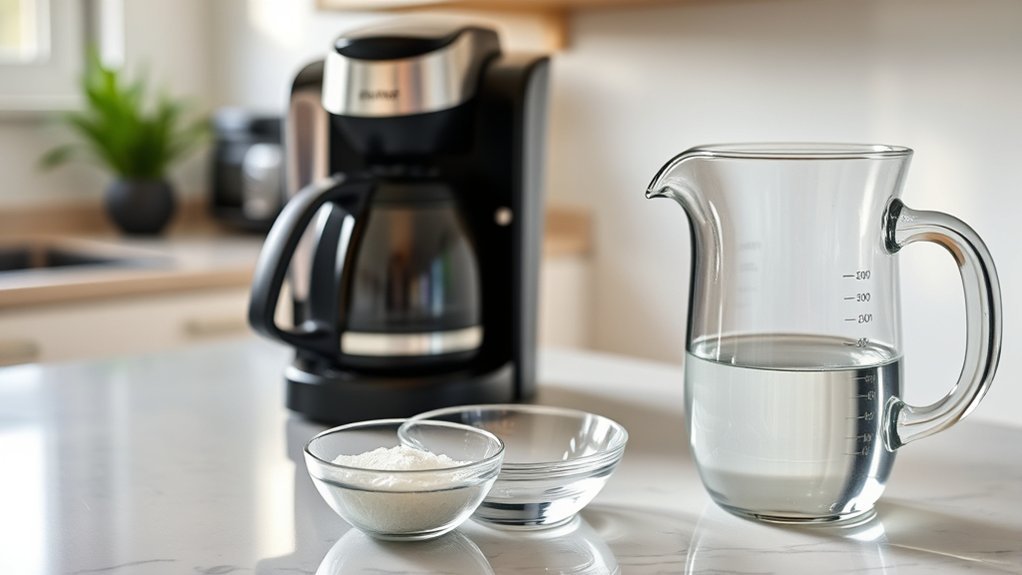
There is no universal citric-acid concentration that is correct for every coffee maker. Use the amount printed in the manual or on the approved descaler’s package.
- Measure by weight when the instructions give grams. Household spoons vary and can create an inaccurate mixture.
- Dissolve loose powder completely in a separate container when the manufacturer permits loose citric acid.
- Use the water temperature stated by the manufacturer or descaler label. Do not substitute boiling water unless the instructions specifically call for it.
- Do not pour dry powder directly into a narrow reservoir or water inlet unless the approved product’s instructions explicitly tell you to do so.
- Do not increase the concentration to speed up the process.
- Prepare a fresh solution for each descaling attempt.
Pro Tip: Photograph the model label and save the official descaling page before starting. That makes it easier to confirm the button sequence, water volume, filter instructions, and descale-light reset while the machine is unavailable.
How to Descale a Coffee Maker With Citric Acid
- Confirm compatibility. Verify that the exact model permits the citric-acid product you plan to use. Use another approved descaler if the manual requires it.
- Cool and prepare the machine. Remove coffee, grounds, pods, and any water-filter cartridge that the instructions say to remove.
- Clean removable parts. Wash coffee-oil residue from the carafe and basket separately. Descaling solution is not a substitute for soap and water on washable parts.
- Prepare the solution. Measure the approved dose and dissolve it completely in the specified amount of water when mixing is required.
- Fill the reservoir. Pour in the prepared solution without exceeding the reservoir’s maximum line.
- Start the correct cycle. Select the machine’s descale or cleaning mode when one exists. Use a normal brew cycle only when the manufacturer’s directions tell you to do so.
- Allow programmed pauses to finish. Some machines dispense in stages or require a soaking period. Do not cancel the cycle or turn off the machine unless the instructions direct you to.
- Discard the used solution. Do not reuse it in the coffee maker or another appliance.
- Rinse the reservoir and removable parts. Remove any loosened flakes or residue.
- Complete the rinse program. Fill the reservoir with fresh water and run every rinse stage specified for the model.
- Perform a final check. Continue rinsing if the discharged water smells or tastes acidic. Reinstall or replace the water filter only after the rinse process is complete.
- Reset the indicator if required. Some machines reset automatically only after the full descale program. Others require a model-specific button sequence.
Rinsing and Final Cleaning After Descaling

Rinsing removes dissolved minerals, loosened particles, and remaining descaling solution from the water path. Follow the complete programmed rinse sequence for your model.
Do not assume that one or two rinses is correct for every brewer. Use the rinse volume and number of cycles specified by the manufacturer. KitchenAid, for example, directs owners of its applicable coffee makers to complete two full fresh-water brewing cycles after descaling.
- Rinse the emptied reservoir before refilling it when the manual permits reservoir rinsing.
- Use fresh water for each rinse cycle.
- Empty and rinse the carafe between cycles.
- Inspect the carafe for white flakes loosened during descaling.
- Run another full rinse if the discharged water has an acidic smell or taste.
- Do not brew coffee until the rinse water is clear and neutral.
What to Do About Heavy Scale Buildup
Do not double or triple the amount of citric acid. A stronger unapproved solution can damage internal components and is not a substitute for the manufacturer’s recommended descaling procedure.
Instead:
- Finish the first approved descale and rinse procedure.
- Check whether the manufacturer permits a second cycle.
- Use a fresh dose at the approved concentration.
- Switch to the manufacturer’s commercial descaler if recommended.
- Contact support if the machine still has poor flow, unusual noise, or repeated errors.
A machine with no water flow, an active leak, overheating, smoke, or a burning smell needs troubleshooting or service rather than a stronger acid treatment.
How Often Should You Descale Your Coffee Maker?
Follow the machine’s descale alert or maintenance schedule. There is no single interval that fits every brewer.
Frequency depends on:
- Local water hardness
- How many brews you make
- Reservoir capacity
- Whether the machine uses a water filter
- The manufacturer’s programmed cup count
- Changes in brew speed, sound, volume, or temperature
For example, Philips recommends descaling the cited SENSEO models about once every three months. Philips also says the CALC light on applicable models normally appears after about 400 cups. Other brands and models use different schedules.
If you have hard water or brew several pots per day, your machine may need attention sooner. If you use softened or filtered water, do not assume scale is impossible; continue following the manufacturer’s indicator or schedule.
Maintenance Tips to Reduce Scale and Residue
- Use the water type recommended in the manual.
- Replace water-filter cartridges on schedule.
- Do not leave old water standing in the reservoir for long periods.
- Wash the carafe, basket, lid, and reusable filter regularly to remove coffee oils.
- Wipe the showerhead or outlet only when the manual identifies it as user-cleanable.
- Record the descaling date so you can compare it with changes in water hardness and brewing frequency.
- Do not use abrasive pads or sharp tools on reservoirs, coatings, needles, or seals.
Troubleshooting After Descaling
The Coffee Tastes Sour
Run another full reservoir or the additional rinse procedure specified by the manufacturer. Rinse the carafe and brew basket again. Do not brew coffee until the discharged water has no acidic smell or taste.
White Flakes Appear in the Carafe
These may be loosened mineral deposits. Empty and rinse the carafe, then continue the fresh-water rinse cycles. Stop and contact support if particles continue after repeated complete rinses.
The Machine Still Brews Slowly
Do not make a stronger acid solution. Check the manual for a cleanable showerhead, pod needle, reusable filter, or water-filter cartridge. Slow flow can also indicate a pump, valve, heater, or internal obstruction that requires service.
The Descale Light Stays On
The programmed cycle may not have finished or the machine may require a model-specific reset. Reopen the official instructions and complete the exact rinse volume and button sequence. Random reset combinations can start the wrong mode.
No Water Comes Out
Turn the machine off. Confirm that the reservoir and filter are seated correctly and that the manual permits user troubleshooting. Do not repeatedly run concentrated acid through a machine with no flow.
The Machine Leaks, Smokes, or Smells Burned
Unplug it immediately and stop the descaling process. Allow it to cool and contact the manufacturer or an authorized repair provider.
Frequently Asked Questions
Can I use citric acid for other appliances?
Only when that appliance’s manufacturer permits it. Kettles, dishwashers, bottle warmers, humidifiers, and irons use different materials and water systems. Follow the appliance-specific product, concentration, contact time, and rinse instructions rather than reusing a coffee-maker recipe.
What type of citric acid should I buy?
Use a coffee-machine descaler specifically approved for your model whenever one is specified. If the manual explicitly permits loose powder, use unscented food-grade citric acid and measure it as directed. Do not substitute a scented bathroom descaler or another household cleaning acid.
Is citric acid safe for all coffee makers?
No. Some machines approve a formulated citric-acid descaler, while others specify lactic acid, a branded liquid, tablets, vinegar, or another product. Check the exact model’s manual before use.
How much citric acid should I use per liter of water?
Use the amount specified in the manual or on the approved descaler package. There is no universal ratio for every coffee maker, and increasing the concentration for heavy scale can damage or interfere with the machine.
How long does descaling take with citric acid?
There is no universal descaling time. The duration depends on the model’s programmed cycle, dispensing pauses, soaking stages, and required fresh-water rinses. Follow the manufacturer’s complete procedure and do not interrupt a programmed pause simply because water temporarily stops flowing.
Can I reuse the citric-acid solution?
No. Used solution contains dissolved scale and debris, and its remaining strength is unknown. Discard it according to the product instructions and prepare a fresh, correctly measured dose if the manufacturer permits another cycle.
Can I use vinegar instead of citric acid?
Only if the manufacturer lists vinegar as an approved option. Some coffee makers permit it, while others specify a different descaling product. Never combine vinegar with citric acid, bleach, or another cleaner in an attempt to make a stronger descaler.
Why is the descale light still on after rinsing?
The machine may not recognize a normal brew cycle as a completed descale program. Follow the exact model-specific instructions for entering descale mode, completing the required water volume, and resetting the alert.
Conclusion
Citric acid can be an effective descaler for a compatible coffee maker, but the safest method begins with the exact model’s manual rather than a universal recipe. Confirm whether the manufacturer approves loose citric acid or only a formulated product, use the specified concentration and descale mode, complete every required rinse, and never make the solution stronger to treat a blockage.
Sources
- Moccamaster: Can I Use Citric Acid to Descale My Moccamaster? — formulated citric-acid descaler compatibility and concentration cautions
- Philips SENSEO: Which Descaling Agent Should I Use? — model-specific citric-acid-based descaler guidance
- Philips SENSEO: How Often Should I Descale? — manufacturer frequency and CALC-alert guidance
- KitchenAid: Descale a Coffee Maker — filter removal, descaling, and two-cycle rinsing instructions for applicable coffee makers
- De’Longhi: Maintaining Your Coffee Machine — lactic-acid descaling guidance and cautions about DIY alternatives
- CDC: Chlorine Chemical Fact Sheet — warning about chlorine bleach releasing chlorine gas when mixed with certain cleaners