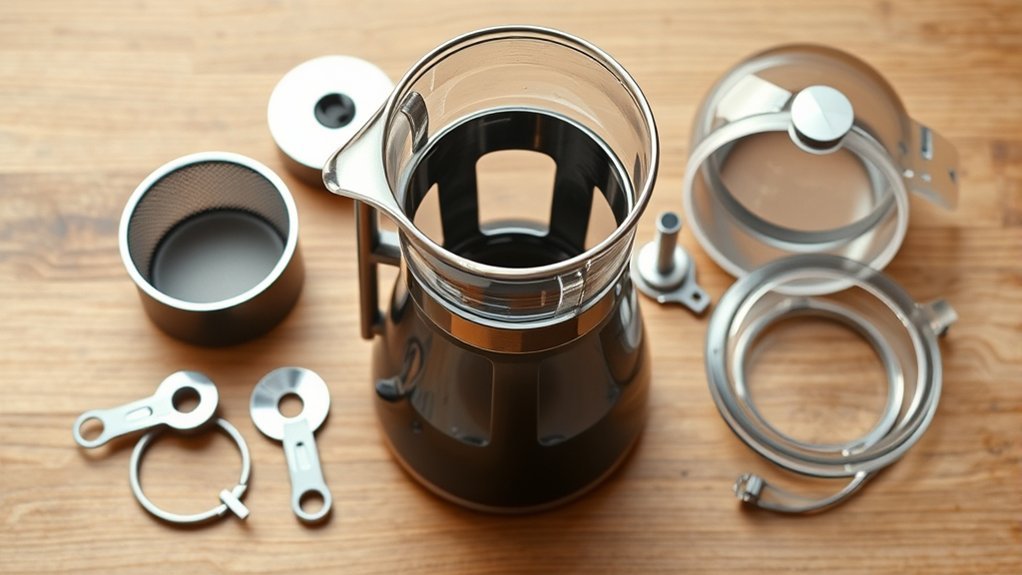
A drip coffee maker may look harmless, but its warming plate, glass carafe, steam, and freshly brewed coffee can all cause burns. Most accidents can be prevented by keeping the machine stable, preventing basket overflows, using the carafe handle, keeping children away, and allowing the brewer to cool before cleaning.
Quick Answer
Treat a coffee maker’s warming plate, carafe, steam, and brewed coffee as burn hazards. Place the brewer on a dry, stable surface, keep the carafe centered, prevent filter overflows, use handles rather than touching hot parts, turn the machine off after use, and let it cool completely before cleaning.
Key Takeaways
- A warming plate can remain hot enough to burn skin even after the coffee maker has been switched off.
- Set the machine on a flat, dry surface away from the counter edge, sink, towels, paper, and hanging cords.
- Keep the carafe lid in place and center the carafe correctly to reduce dripping and filter-basket overflow.
- Do not use a cracked or badly scratched glass carafe, a loose handle, or a coffee maker with a damaged cord or abnormal odor.
- For a thermal burn, use cool running water for 10–20 minutes. Do not use ice, butter, oil, or toothpaste.
- Check the exact model in the U.S. Consumer Product Safety Commission recall database if the brewer leaks, clogs, overheats, or behaves unexpectedly.
At a Glance
| Time Required | About 2 minutes for a pre-use check; 5–10 minutes for routine exterior cleaning after the machine cools |
| Difficulty | Easy |
| Tools Needed | Dry cloth, damp nonabrasive cloth, mild dish soap, and a dry heat-resistant mitt when needed |
| Cost | Usually $0–$15 with common household supplies |
Understanding Coffee Maker Hot Plate Risks

The warming plate is only one source of injury. Hot coffee, steam, a full filter basket, and a damaged glass carafe can also cause burns. The exact temperature of a warming plate varies by model, setting, and control cycle, so it is safer to treat the plate as hot until it has cooled completely.
A Hamilton Beach coffee maker manual, for example, warns users not to touch hot surfaces, to use handles or knobs, and to take care around spilled hot liquid. The same manual says to operate the brewer on a flat surface away from the counter edge.
| Hazard | How It Happens | Safer Practice |
|---|---|---|
| Contact burn | A hand touches the warming plate, carafe base, lid, or another hot part. | Use the handle or knob and wait for the machine to cool before cleaning or moving it. |
| Scald | Hot coffee spills while pouring, carrying, or serving. | Pour slowly, keep the lid secure, use a mug with a handle, and avoid filling it to the rim. |
| Basket overflow | Too much coffee, an incorrect filter, fine grounds, a clogged outlet, or a misplaced carafe blocks normal flow. | Use the correct filter and amount of grounds, seat the basket fully, and center the carafe before brewing. |
| Broken glass | A cracked, scratched, or thermally shocked carafe breaks while holding hot coffee. | Replace damaged glass and never set a hot carafe on a cold or wet surface. |
| Electrical or fire hazard | A damaged cord, overloaded outlet, internal fault, liquid intrusion, or failed shutoff causes overheating. | Stop using a damaged machine, avoid overloaded outlets, and check recalls by model number. |
Warning: Never reach through hot coffee, steam, or an overflowing filter basket to switch off the machine. If you can safely reach the controls or plug without contacting liquid, turn the brewer off and disconnect it. Otherwise, move away and cut power at the appropriate breaker or seek qualified help.
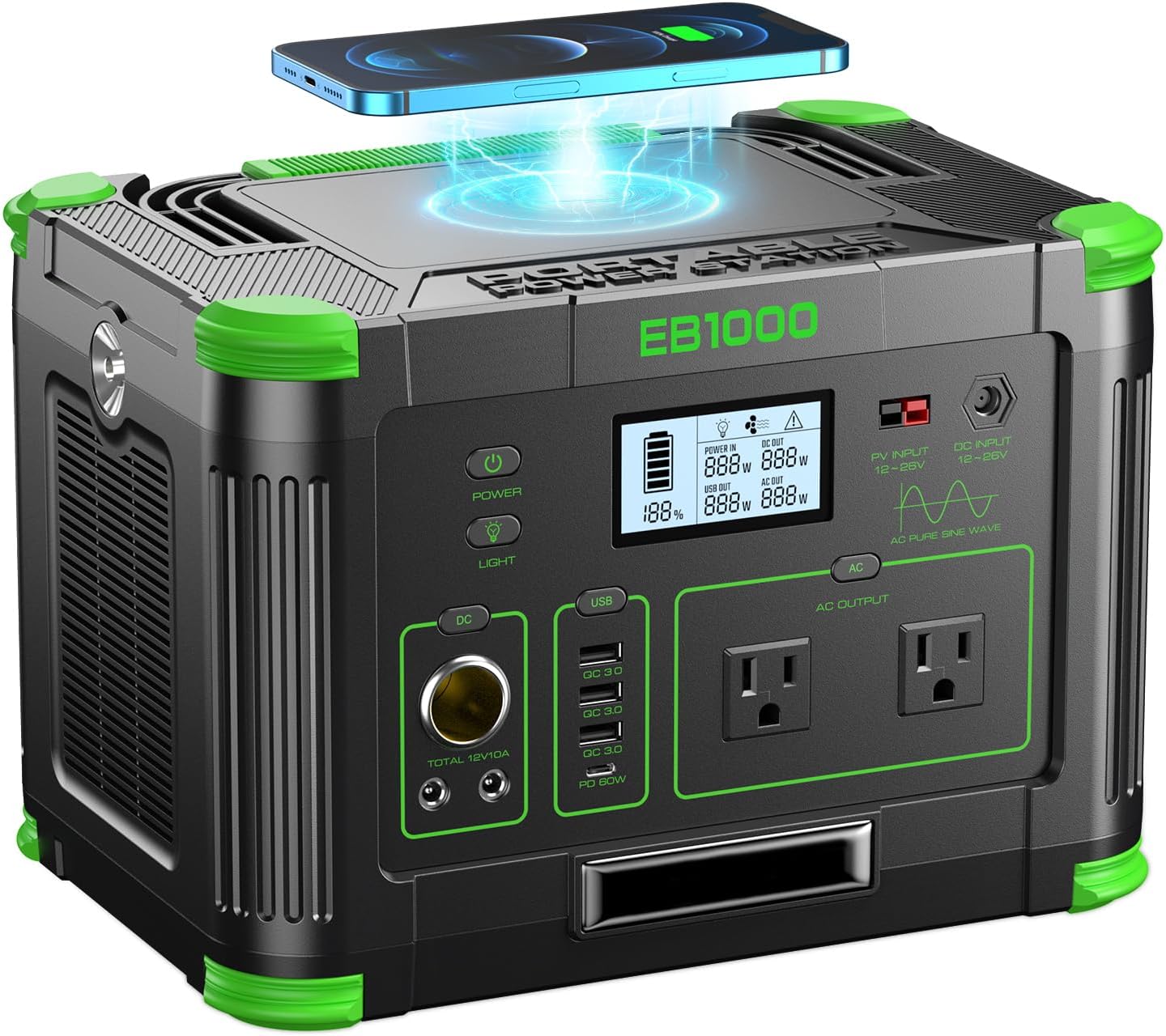
Power your essentials anywhere with a 999Wh pure sine wave power station delivering up to 1000W continuous with 2000W surge. It supports fast charging via USB-C PD 60W and USB-A QC 18W, plus simultaneous output for multiple devices through AC, USB, wireless, and car/DC ports. Recharge using AC, car, or solar with a built-in MPPT controller and dual cooling fans, while the upgraded battery management system protects against surges, short circuits, and overheating.

Keeps Drinks Hot & Cold: Double wall vacuum insulation keeps drinks hot for up to 4 hours or cold for up to 10 hours – ideal for morning coffee, iced tea, or cold water anytime. Perfect insulated mug for camping coffee mugs enthusiasts
Coffee Maker Safety Checklist
Before Brewing
- Read the model-specific manual. Controls, automatic shutoff times, pause-and-serve limits, cleaning methods, and carafe requirements differ.
- Choose a flat, dry surface. Keep the brewer away from the counter edge, sink, stove, and areas where it may be bumped.
- Clear nearby combustibles. Move paper towels, napkins, food packaging, and hanging cloths away from the warming plate and vents.
- Inspect the cord and plug. Do not use the machine if the cord is cracked, frayed, pinched, unusually warm, or loose at the plug.
- Inspect the carafe. Replace glass with cracks, deep scratches, chips, a loose handle, or a damaged lid.
- Check the basket and filter. Use the correct filter shape, keep grounds below the marked limit, and seat the basket fully.
- Center the carafe. The lid and carafe must engage the drip-stop or pause mechanism correctly.
The National Fire Protection Association electrical checklist identifies coffee makers as heat-producing appliances. It advises using only one heat-producing appliance per outlet, checking damaged cords, and buying appliances listed by a qualified testing laboratory.
During Brewing
- Keep children and pets outside the brewing and serving area.
- Keep the power cord away from counter edges where it can be pulled.
- Do not lift the lid or remove the basket while hot water is flowing.
- Do not move the coffee maker during a brew cycle.
- Watch for slow flow, leaking, sputtering, unusual steam, or coffee rising toward the top of the filter basket.
- Use pause-and-serve only as described in the manual, and return the carafe within the stated time.
- Stop using the machine if you notice smoke, sparks, a burning smell, loud popping, or abnormal overheating.
Pro Tip: If the filter basket has overflowed before, do not simply use fewer grounds and hope for the best. Check the filter size, grind, basket seating, drip-stop valve, carafe position, mineral buildup, and the troubleshooting section of the manual.
Pouring and Serving
- Grip the carafe by its handle rather than holding the hot glass or metal body.
- Make sure the lid is seated before pouring.
- Pour slowly with the spout directed away from people.
- Use a sturdy mug with a handle and enough empty space to prevent sloshing.
- Do not reach across another person, child, pet, or electrical cord while carrying coffee.
- Use a stable tray with a nonslip surface when carrying several drinks.
- Let coffee cool to a comfortable drinking temperature before serving it to a child or anyone who may have trouble sensing heat.
- Keep filled cups away from counter and table edges.
After Brewing
- Turn the brewer off when you are finished, even if it has automatic shutoff.
- Follow the manual’s unplugging instructions. NFPA also recommends unplugging appliances when they are not in use.
- Leave the machine in a place where nobody will touch the warming plate while it cools.
- Do not place an empty glass carafe on an energized warming plate.
- Do not put a hot glass carafe on a cold, wet, or heat-sensitive surface.
- Allow the carafe and machine to cool before washing, refilling, moving, or storing them.
A drip coffee maker should be treated as both a hot-liquid appliance and a heat-producing electrical appliance.
Do You Need Protective Gear for a Coffee Maker?
You normally should not need gloves to lift a properly designed carafe by its intact handle. A dry, heat-resistant oven mitt or hot pad is useful when the manual calls for it, when you must handle a warm removable part, or when working near a hot surface after the unit has been switched off.
Protective gear does not make an unsafe action safe. Thick gloves may reduce grip or make it harder to control a full carafe. Never use a damp towel or wet mitt on a hot part because trapped moisture can heat quickly and cause a steam burn.
| Item | When It Helps | Important Limit |
|---|---|---|
| Dry oven mitt | Handling a warm removable part when permitted by the manual | Do not use it to touch energized parts or reach through a spill. |
| Nonslip tray | Carrying several mugs or a carafe over a short distance | Do not overload the tray or carry it one-handed. |
| Apron and closed shoes | Busy food-service areas where spills are more likely | They reduce exposure but do not prevent all scalds. |
| Insulated travel mug | Transporting coffee with a secure, compatible lid | Inspect the lid and seal, and do not assume every mug is spillproof. |
What to Do After a Coffee Spill or Filter Overflow
Act calmly. Rushing to wipe an energized warming plate can turn a small spill into a burn or electrical incident.
- Keep people away. Move children and pets out of the area.
- Stop the brew if it is safe. Use the normal power control without reaching through hot liquid or steam.
- Disconnect power only when safe. Do not touch a wet plug, wet outlet, or cord lying in liquid.
- Do not remove an overflowing basket immediately. Hot water may still be trapped in the grounds and filter.
- Let the brewer cool. Wait until active dripping and steam have stopped and hot parts are no longer a burn hazard.
- Clean the cooled surface. Use a slightly damp, nonabrasive cloth, then dry the machine and counter completely.
- Find the cause before brewing again. Check the filter, grind, amount of coffee, basket position, carafe position, drip-stop valve, and mineral buildup.
Note: Do not pour water onto a hot warming plate to cool it. Sudden temperature change can damage the surface or glass carafe, while water near energized components can create an electrical hazard.
How to Handle a Coffee Burn

Hot coffee usually causes a scald, while touching the warming plate causes a contact burn. The American Burn Association recommends cooling a thermal burn with cool—not cold or icy—running water for 10–20 minutes.
Immediate First-Aid Steps
- Move away from the heat source. Stop contact with the hot liquid, plate, carafe, or steam.
- Remove nearby jewelry or tight clothing. Do this promptly before swelling begins, but do not pull away anything stuck to the skin.
- Cool the burn. Hold it under clean, cool running water for 10–20 minutes. The American Red Cross also recommends cool running water for burn cooling and pain relief.
- Do not use ice. Do not apply butter, cooking oil, toothpaste, or other home remedies.
- Cover it loosely. Use sterile nonstick gauze or a clean, dry cloth after cooling.
- Do not pop blisters. Protect the area from rubbing and contamination.
- Monitor the injury. Worsening pain, spreading redness, drainage, fever, or delayed healing requires medical advice.
Seek urgent medical care: Get prompt help for a burn larger than the injured person’s palm, a deep or white/charred burn, a burn on the face, hands, feet, genitals, groin, or over a major joint, or a blistering burn in a baby or older adult. Call emergency services for trouble breathing, loss of consciousness, signs of shock, a major electrical burn, or any severe or extensive injury.
Medical note: This is general first-aid information, not a diagnosis or a substitute for professional care. When the severity is unclear, contact a clinician, poison control service when relevant, or emergency services.
How to Keep Your Coffee Maker Safe

Regular inspection helps identify a problem before it causes a spill, fire, shock, or burn. Stop using the machine until it has been repaired or replaced when you notice any of the following:
- A cracked, chipped, or badly scratched carafe
- A loose, weakened, or damaged carafe handle
- A cracked plug, frayed cord, exposed wire, or loose electrical connection
- Water leaking from the housing or pooling beneath the brewer
- A warming plate that is warped, loose, badly corroded, or separating from the base
- A burning or rubber-like odor
- Sparks, smoke, unusual popping, or repeated circuit-breaker trips
- A machine that does not shut off as designed
- Unexpected bursts of steam, hot water, or coffee
- Repeated clogging or basket overflow after correct setup and cleaning
Do not remove the bottom cover or attempt an internal electrical repair unless the manufacturer specifically authorizes the work and you are qualified to perform it. Many coffee makers contain no user-serviceable electrical parts.
Check the Model for Recalls
Find the brand, model number, and date code on the product label, usually on the bottom or back of the machine. Search the exact details in the CPSC recalls and product-safety warnings database.
Current recall example: On June 11, 2026, CPSC recalled about 17,600 Kidisle KC101B coffeemakers because they could clog and unexpectedly release hot liquid or steam. Owners of that model should follow the official CPSC recall instructions. This recall does not apply to every Kidisle product or to coffee makers generally.
Features to Look for in a Replacement
No entire brand is automatically safer than another. Compare the exact model and look for:
- A listing or certification mark from a qualified testing laboratory
- Automatic shutoff with a clearly stated time
- A stable base and controls that are easy to reach
- A carafe with a secure handle, lid, and controlled-pour spout
- A thermal carafe if you prefer a design without an exposed warming plate
- A basket and water reservoir with clear maximum-fill markings
- Overflow or drip-stop instructions that are easy to follow
- Available replacement parts and an accessible user manual
- No unresolved recall covering the exact model
Cleaning the Coffee Maker and Warming Plate Safely
Clean spills before they become baked-on residue, but never clean an energized or hot warming plate. The exact procedure and approved cleaning products vary, so the model’s manual takes priority.
- Switch the machine off.
- Unplug it from the outlet. Make sure your hands and the plug area are dry.
- Let every part cool. Do not test the warming plate with a fingertip.
- Remove the carafe and washable parts. Wash only the components the manual identifies as hand-washable or dishwasher-safe.
- Wipe the warming plate. Use a soft, slightly damp cloth with a small amount of mild dish soap if needed.
- Loosen stuck residue gently. Rest a warm, damp cloth on the cooled plate for a few minutes, then wipe. Do not flood the surface.
- Avoid abrasive tools. Steel wool, metal scrapers, harsh powders, and aggressive chemicals may damage the coating or finish.
- Dry everything completely. Do not reconnect power until the exterior, plug, cord, and surrounding counter are dry.
Never immerse the coffee maker, cord, or plug in water. Descale the internal water path only with the product and method approved in the manual. A vinegar mixture is suitable for some models but not all machines, so avoid applying one universal recipe.
Common Coffee Maker Safety Mistakes
| Mistake | Why It Is Risky | Safer Choice |
|---|---|---|
| Touching the plate to see whether it is cool | A brief touch can still cause a contact burn. | Follow the manual’s cooling guidance and allow extra time when unsure. |
| Using a wet towel as a mitt | Moisture transfers heat and may create steam. | Use a dry, heat-resistant mitt when one is needed. |
| Leaving a hot carafe near an edge | It can be knocked over or pulled down. | Place it well back on a stable, heat-resistant surface. |
| Setting hot glass on a wet or cold counter | Thermal shock can crack the carafe. | Use a dry, heat-resistant surface or approved trivet. |
| Leaving an empty carafe on the hot plate | Excess heating can damage or weaken the carafe. | Turn the plate off and remove the empty carafe as directed. |
| Relying only on automatic shutoff | Settings vary, and a damaged unit may not behave normally. | Turn the machine off when finished and follow its unplugging instructions. |
| Continuing to use cracked glass or a damaged cord | It increases the risk of hot-liquid release, shock, or fire. | Stop using the machine and obtain an approved replacement or qualified repair. |
Frequently Asked Questions
How long does a coffee maker hot plate stay warm after use?
There is no universal cooling time. It depends on the model, plate material, room temperature, carafe, and how long the heater operated. Treat the plate as hot until the machine has been switched off, unplugged as directed, and given enough time to cool completely.
Can I use regular oven mitts around a coffee maker hot plate?
A clean, dry oven mitt can protect against brief contact with a warm removable part when the manual permits handling it. Do not use a wet mitt, and do not use any mitt to reach through spilled coffee, touch energized components, or handle a part that should first be allowed to cool.
What should I do if coffee spills on the warming plate?
Turn the brewer off if you can reach the control safely. Disconnect power only if the plug and surrounding area are dry and accessible. Keep people away, let the machine cool, then wipe the plate with a slightly damp nonabrasive cloth and dry it fully before reconnecting power.
Are certain coffee maker brands safer than others?
An entire brand should not be labeled safer without model-specific evidence. Compare the exact model’s testing-laboratory listing, automatic shutoff, stability, carafe design, manual, condition, customer safety notices, and recall status.
How can I teach other people to handle hot coffee safely?
Demonstrate how to use the carafe handle, center the carafe, pour away from the body, keep cups from edges, and respond to a spill without rushing. Show household members where the power control is, but teach children to move away and call an adult rather than approach a hot machine.
Can I leave a coffee maker warming plate on all day?
Use the warming plate only for the period allowed by the manufacturer. Long holding times can overheat or degrade the coffee and keep a burn hazard present. Turn the unit off when it is no longer needed, even when it has an automatic shutoff feature.
Why does the filter basket overflow?
Common causes include too many grounds, coffee ground too finely, the wrong filter, a collapsed paper filter, a clogged basket outlet, a carafe that is not centered, a drip-stop valve that is not opening, or mineral buildup. Switch the machine off safely and let the basket cool before inspecting it.
Should I unplug my coffee maker after every use?
Follow the manufacturer’s instructions for your model. Many manuals and NFPA safety guidance recommend unplugging small appliances when they are not in use. Always unplug before cleaning, provided your hands, the plug, and the outlet area are dry.
Conclusion
Coffee maker burns are most likely when hot surfaces, overflowing grounds, damaged glass, or spilled coffee are handled too quickly. Use a stable setup, keep the carafe and basket correctly positioned, stop using damaged equipment, and let the machine cool before cleaning. If a burn occurs, cool it with cool running water and seek medical help when its size, depth, location, or symptoms make it more than a minor injury.
Sources
- Hamilton Beach Use and Care Manual — hot-surface, spill, flat-surface, cord, cleaning, cooling, and automatic-shutoff precautions
- National Fire Protection Association Electrical Safety Checklist — outlet loading, cord inspection, testing-laboratory listing, and unplugging guidance
- American Burn Association: Thermal Burns — cooling, covering, prohibited remedies, and emergency-care guidance
- American Red Cross: Burns — first-aid cooling and burn assessment guidance
- U.S. Consumer Product Safety Commission Recall Database — current appliance recalls and product-safety warnings
- CPSC Kidisle Coffeemaker Recall — June 11, 2026 recall involving unexpected release of hot liquid or steam